
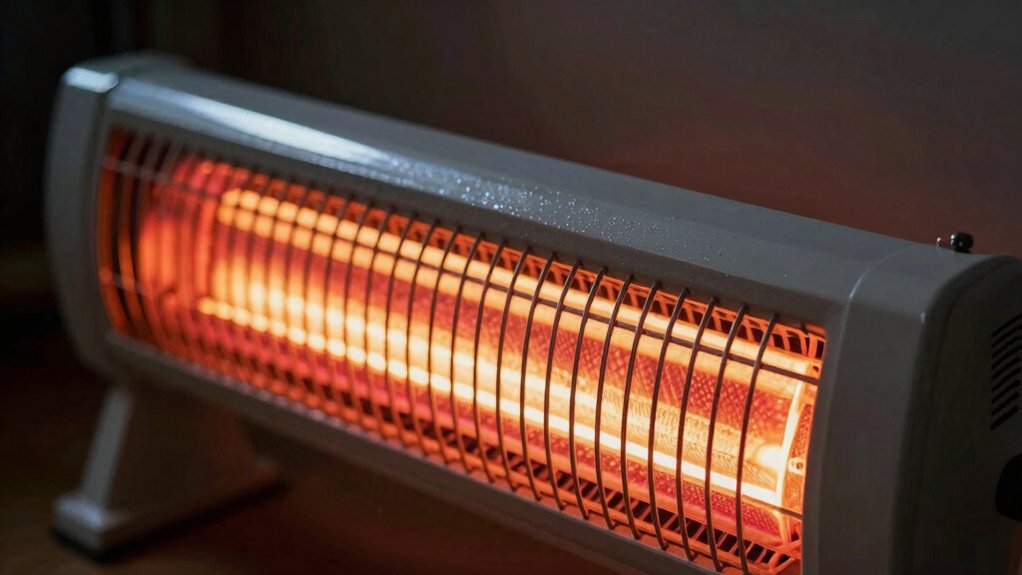
Infrared heaters emit radiant energy at specific wavelengths, traveling through the air to directly heat surfaces and objects in your space. You control heat delivery by choosing emitter type, wavelength, and output power. Short-wave radiators heat dense objects quickly; long-wave elements warm the air indirectly by heating surfaces. The surface absorbs photons, warms, and then conducts heat to surrounding materials, while convection distributes warmth. Safety and effectiveness depend on proper spacing, shielding, and setup, and you’ll uncover how to optimize all this as you go further.
How Infrared Heaters Actually Heat Space
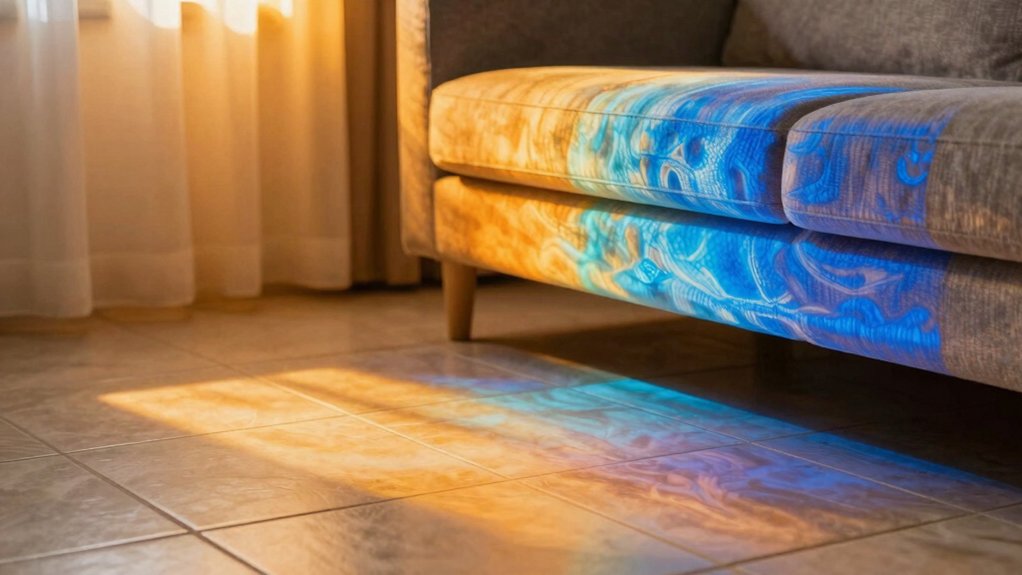
Infrared heaters heat space by emitting radiant energy that travels through the air and is absorbed by objects and surfaces. You control heat delivery by selecting wavelength, emitter type, and output power, which determine the radiant flux reaching targets.
Short-wave radiators transfer energy efficiently to warm dense objects, while long-wave elements primarily heat air indirectly through surface warming. The conversion process begins with electrical input powering the heater’s elements, generating infrared photons.
Emitted photons propagate until encountering an exposed surface, where absorption raises the surface temperature. Heat then conducts to adjacent materials, creating convection currents that distribute warmth.
System design balances emissivity, scene geometry, and thermal losses from windows, walls, and occupants. Real-time performance relies on precise control of duty cycle, temperature feedback, and environmental factors.
How They Differ From Other Heaters
Unlike conventional space heaters that primarily warm the surrounding air, infrared heaters deliver energy directly to objects and surfaces, creating heat where it’s most effective and reducing air warming losses.
You compare mechanisms: infrared devices emit radiant energy that travels without substantially warming the intervening medium, unlike convection-only systems that rely on air movement. This yields faster surface heating with lower volumetric temperature rise, and it minimizes drafts and stratification.
In practice, infrared heating targets occupant-relevant zones—floor and furnishings—while ambient air remains near steady state. Control strategies emphasize emitters, wavelengths, and surface interaction rather than solely airflow.
System efficiency hinges on emissivity, line-of-sight, and thermal mass of targets. By design, infrared units avoid excessive air mixing, enabling predictable, localized warmth without broad thermal cycling.
What Makes Infrared Radiation Safe and Effective
While infrared radiation delivers heat efficiently to objects and surfaces, safety and effectiveness hinge on controlling exposure, wavelength, and viewing geometry. You assess how emissivity, absorption bands, and skin/eye sensitivity shape safe use, not just raw warmth.
Shorter wavelengths generally heat surfaces quickly but can pose higher glare and eye risks, so devices incorporate shielding, diffuse reflectors, and rated irradiance limits. You examine spectral profiles: mid-IR bands target materials with minimal airborne heating, while long-wave components favor comfortable room-temperature feel with lower surface gradients.
System design also relies on precise installation, accurate spacing, and orientation to minimize stray exposure. Controls, sensors, and interlocks enforce safe duty cycles.
Effective performance emerges from balancing radiant power, spatial distribution, and user exposure, ensuring comfort without overexposure.
Choosing the Right Infrared Heater for Your Space
Choosing the right infrared heater for your space requires identifying how much heat you need, where it will be positioned, and how it will interact with the room’s materials and occupants. To select effectively, quantify target temperatures, heat flux, and zone coverage, then match heater type (short-, medium-, or long-wave) to your architectural context.
Assess insulation levels, thermal mass, and occupancy patterns to determine duty-cycle and runtime expectations. Consider mounting options, glare, and glare-free placement to minimize visual disruption and ensure even distribution.
Evaluate controls, such as thermostats and integrable smart devices, for stable setpoints and responsive ramping. Compare efficiency metrics, standby losses, and startup current.
Finally, verify compliance with safety ratings, warranty terms, and serviceability to optimize performance and lifecycle cost.
Safe Use, Maintenance, and Troubleshooting Tips
Regular use of infrared heaters hinges on safe operation, proactive maintenance, and clear troubleshooting steps. You should verify clearances from walls and combustibles before first use, and keep the unit on a stable surface with unobstructed airflow.
Inspect cords, plugs, and mounting hardware monthly, replacing damaged components promptly. Use the recommended power supply and avoid daisy-chaining multiple heaters.
Operate at proper setpoints; avoid overheating spaces or leaving units unattended for extended periods. Schedule routine cleaning to remove dust buildup from reflectors, vents, and sensors, and test for smooth startup after maintenance.
For troubleshooting, check error codes in the manual, reset the unit if applicable, and verify electrical supply integrity. If performance remains inconsistent, consult authorized service technicians to prevent safety risks.
Maintain logs of maintenance and faults.
Conclusion
Infrared heaters convert electrical energy into radiant heat that directly warms people and objects, not the air, for rapid comfort and reduced stratification. In one study, infrared panels delivered effective warmth up to 20–30% faster than conventional convection heaters in occupied spaces. You’ll see this reflected in lower energy use when maintaining stable temperatures. By selecting appropriate wavelength, wattage, and placement, you optimize efficiency while minimizing heat loss, ensuring safe, targeted heating with steady performance.