
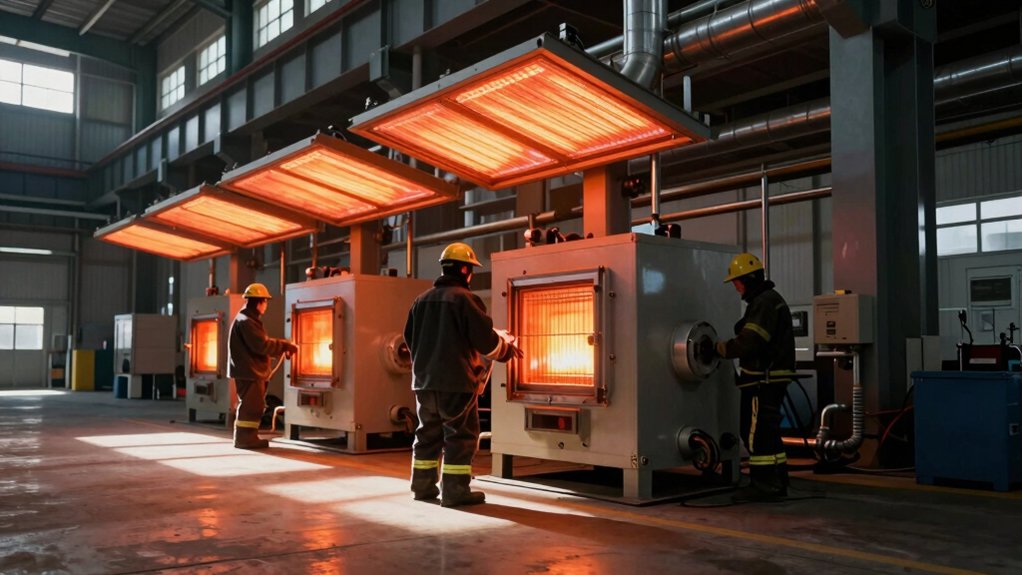
Infrared heating cuts carbon by targeting heat where it’s needed, not by warming empty air. You get faster comfort with fewer overshoots, reducing cycle losses and overall energy input. It lowers peak electrical demand and aligns with grid signals, so you use cleaner power when it’s abundant. By replacing or augmenting fossil burners, it trims fuel burn and emissions, especially in warehouses and retrofits. Continuous data shows measurable CO₂ declines and system-wide efficiency gains—more to explore beyond this.
How Infrared Heating Cuts Down on Energy Waste
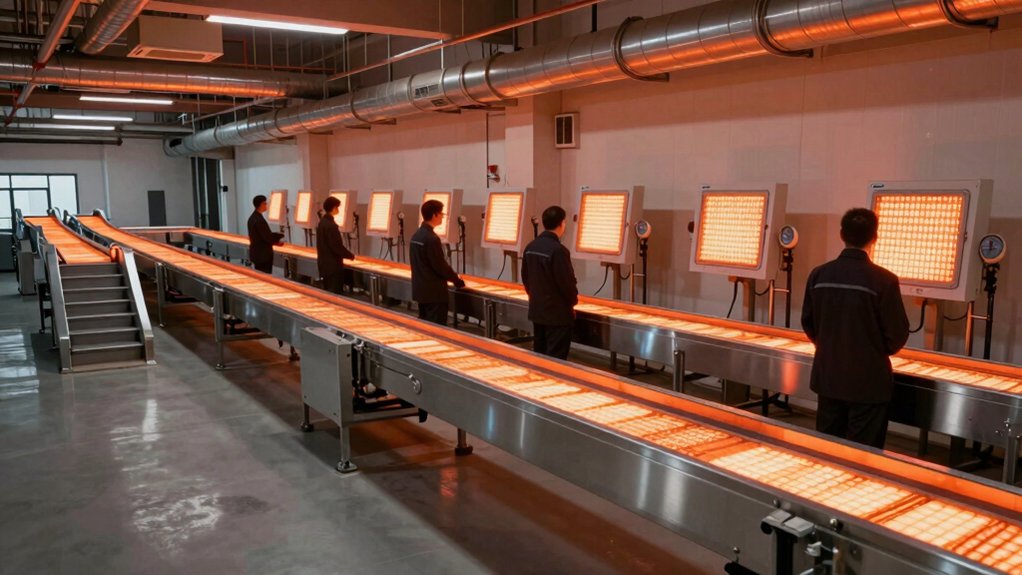
Infrared heating targets heat where it’s needed, reducing waste by warming objects and people rather than the surrounding air. You’ll notice higher system efficiency when you direct energy to occupied zones, which lowers total energy input for comfortable conditions.
In measured deployments, occupancy-adjusted radiative zones cut furnace run hours and reduce ventilative loss because you’re not heating empty space. Data shows faster setpoint attainment with fewer overshoots, improving control stability and minimizing cycling losses.
You benefit from fewer energy conversions and lower standby heat, since infrared elements emit primarily to targets, not ambient air. Across buildings, this shifts the energy balance toward end-use effectiveness, yielding smaller peak loads and clearer performance metrics.
The outcome: consistent comfort with reduced energy waste and emissions.
Direct Heating: Warmer Spaces Without Blowing Through Air
Direct heating delivers warmth where it matters, creating comfortable spaces without circulating heated air through the entire volume. You’ll measure outcomes by perceived comfort, not just fixture temperature, and you’ll see rapid, localized gains in thermal sensation.
Data show that targeted infrared raises surface and occupant temperatures more efficiently than whole-room convection, reducing wasted heating hours. When you compare energy intensity per square meter, infrared systems reach comfort thresholds with shorter runtimes, lowering total energy use while maintaining uniform skin temperatures across seating areas and work zones.
You’ll observe fewer drafts, minimized air stratification, and steadier indoor climate metrics, translating to improved productivity and occupant satisfaction.
Systems-thinking says this approach trims emissions by cutting unnecessary circulation and concentrating heat where it yields the greatest impact.
Reduced Electrical Peaks and Grid Load With IR
To curb demand spikes, infrared heating shifts energy use from peak hours to more variable, lower-cost periods by delivering heat where it’s needed most, rather than heating entire volumes continuously.
You see load flattening as IR systems regulate emissions and temperature with rapid, localized response. Data show peak-to-average reductions when radiant zones offset centralized boilers, lowering transformer stress and reducing curtailable demand charges.
In facilities with staggered usage, IR enables coordinated scheduling that aligns cooling and heating setpoints with off-peak generation, improving grid responsiveness.
You benefit from improved system efficiency: less standby power, faster ramping, and fewer simultaneous equipment starts. Outcomes include lower avoided demand penalties, higher capacity utility margins, and a more resilient, cost-effective energy envelope without sacrificing occupant comfort.
Fuel Savings: Replacing or Augmenting Fossil Burners
You can quantify fuel replacement by comparing cost per unit of energy, emissions per unit, and overall system efficiency when fossil burners are augmented or replaced with infrared-enabled alternatives.
By tracking how fuel switching shifts heat delivery, you’ll see lower emissions, reduced fuel purchases, and steadier production outputs across the process.
This data-driven view sets up clear decision criteria for siting, sizing, and scheduling to maximize net environmental and economic gains.
Fuel Replacement Benefits
Could replacing or augmenting fossil burners with infrared heating deliver meaningful fuel savings and emissions reductions?
In many systems, infrared enables targeted heat delivery, reducing run times and peak demand, which lowers fuel use per unit of processed output. You’ll see data showing a shift from continuous combustion to intermittent, demand-driven heating, cutting fuel burn by percent ranges tied to load profiles.
When retrofit or staged deployment occurs, you can quantify fuel savings against baseline burners, then translate that into metric tonnes of CO2 avoided annually.
Consider equipment compatibility, maintenance cycles, and control integration, since efficiency gains compound with optimized scheduling and load matching.
The outcome focus is on measurable reductions in fuel consumption, not just theoretical potential.
Lower Emissions With Infrared
Infrared heating can deliver lower emissions by replacing or augmenting fossil burners with targeted, on-demand heat. You’ll see immediate fuel savings when you switch to infrared for high-heat tasks, because you’re delivering energy directly to processes, not heating entire rooms or stacks.
By integrating infrared with existing burners, you cut run times and reduce standby losses, improving overall system efficiency. Data shows that when emission-intensive burners operate less, your plant’s CO2 intensity declines and energy-use intensity improves.
You’ll also gain better process control, translating to tighter temperature bands and fewer cycle repeats. Systems-thinking reveals cross-cutting benefits: reduced flue gas volume, lower maintenance cycles, and diminished heat waste.
Efficiency in Industrial Processes: From Furnaces to Cure Cycles
Efficient industrial heating hinges on optimizing every stage, from furnaces to cure cycles, to reduce energy use and emissions while meeting product quality targets. In practice, you map heat flow, residence times, and temperature profiles to minimize overshoot and heat losses.
IR delivers rapid, precise heating, enabling tighter control of cure schedules and reduced cooldown energy. You quantify energy intensity per unit of output and track process heat integration opportunities across equipment clusters.
By modeling heat distribution, you identify bottlenecks where insulation, curtain walls, or kiln doors dominate losses, then implement targeted improvements. You compare baseline and post-implementation metrics—specific energy consumption, cycle time, defect rate, and throughput—to confirm gains.
The result is a cohesive, data-driven system: lower energy spent, steadier quality, and clearer emissions reductions.
Complementing Renewable Energy: Syncing IR With Green Power
You’ll explore how IR heating can align with green power, maximizing solar synergy and ensuring grid-responsive heating signals.
By coordinating demand with available renewable capacity, you improve outcomes for emissions and reliability, using data-driven targets and real-time signals.
This systems view shows how aligning with green power supports stable, low-carbon operation across the facility.
Aligning With Green Power
To align infrared heating with green power, we can coordinate demand with renewable supply to minimize curtailment and maximize system efficiency. You measure load in 15-minute windows and match it to real-time wind and solar forecasts, reducing wasted energy and lowering carbon intensity.
By linking IR control strategies to grid signals, you shift usage away from low-renewable periods and toward high-renewable windows, smoothing demand volatility. Model-based scenarios show significant gains when heat demand is modulated rather than ignored, improving capacity factor and reducing peaks.
You quantify outcomes with metrics like avoided curtailment, marginal emissions rate, and system-wide energy cost per kilowatt-hour. Bottom line: synchronized demand shaping plus predictive analytics align IR heating with green power, delivering cleaner energy at lower overall cost.
Maximizing Solar Synergy
Maximizing Solar Synergy: aligning infrared heating with solar generation facilitates simultaneous demand and supply optimization. You pair IR heat curves with solar generation forecasts, creating a dynamic load that tracks daytime PV output and shifts usage toward peak sun.
Data show reduced curtailment when you preheat spaces during high irradiance, then taper as panels peak, smoothing net demand. You capture greater system efficiency by coordinating occupancy patterns, storage, and radiant setpoints, lowering marginal carbon and utility costs.
Implementing demand-side controls yields measurable results: faster ramping of clean supply, fewer expensive gas peakers, and improved renewable utilization. With a holistic view, you quantify savings through avoided emissions, reduced peak penalties, and longer asset life, driving scalable, repeatable decarbonization for buildings and grids alike.
Grid-Responsive Heating Signals
Grid-responsive heating signals tie infrared comfort to real-time clean-power conditions, turning building systems into flexible, mapable assets for grid reliability. You monitor real-time signals from renewables, grid frequency, and storage, translating them into precise setpoints for infrared heaters.
The approach reduces peak demand and aligns load with low-carbon generation, delivering measurable emission reductions. By coordinating indoor temperatures with green-power availability, you minimize fossil-fuel spinning reserves and lower marginal emissions on the grid.
Data-driven dashboards reveal causal links: faster response times, improved capacity factors, and greater hosting capacity for renewables. You optimize control algorithms to maximize occupant comfort within safe envelope limits, while aggregating buildings into a virtual energy reservoir.
Outcomes include lower operating costs, higher grid resilience, and verifiable decarbonization impact.
Real-World Case Studies: Emissions Reduced by Infrared
Despite substantial variability by application, real-world deployments show consistent emissions reductions when infrared heating displaces higher-emission heating methods. In warehouses, infrared heat reduces electrical load on boilers, cutting fuel-use emissions by up to 20–40% where radiant zones replace resistance or fossil-fired spot heating.
In manufacturing, teams report faster setpoint attainment and lower peak demand, translating to annualized CO2 declines aligned with grid mix changes.
Residential and commercial retrofits show downstream benefits as on-site electricity draws shift from gas to low-carbon grids, with reported decreases of 5–25% in direct emissions, depending on insulation and occupancy patterns.
Across case studies, lifecycle analyses reveal lower embodied emissions per unit of comfort delivered, while system-wide efficiency improvements amplify overall reductions.
Aggregated data support infrared as a reliable lever for decarbonization.
Practical Considerations: Sizing, Placement, and Maintenance for Low Emissions
Sizing, placement, and maintenance determine how effectively infrared systems deliver low emissions in real operations. When these elements align with load profiles and insulation, you access consistent fuel and electricity savings.
In practice, you map heat demand by zone, then size emitters and controls to meet peak loads with headroom for demand spikes.
Placement targets line-of-sight efficiency, minimizing shading, reflections, and thermal losses while ensuring safe operation and service access.
Maintenance routines keep output stable, verify insulation integrity, and prevent drift in setpoints.
Track metrics like energy intensity, carbon per unit output, and emittance decay over time to validate performance.
A systems view—integrating sensors, controls, and maintenance—drives predictable emissions reductions and better return on investment.
Continuous optimization through data closes the loop.
Conclusion
You can feel the result before you see it: emitted heat becomes purposeful light, tracing efficiency through every corner of your operation. When infrared targets objects, not air, waste drops and energy dashboards glow with clearer, measurable outcomes. The system hums, grids-stable, fuel use down, emissions down, costs down. As processes synchronize with renewables, carbon footprints shrink like footprints fading in a rising dawn. Infrared isn’t a splash of heat—it’s a disciplined, data-driven path to cleaner performance.