
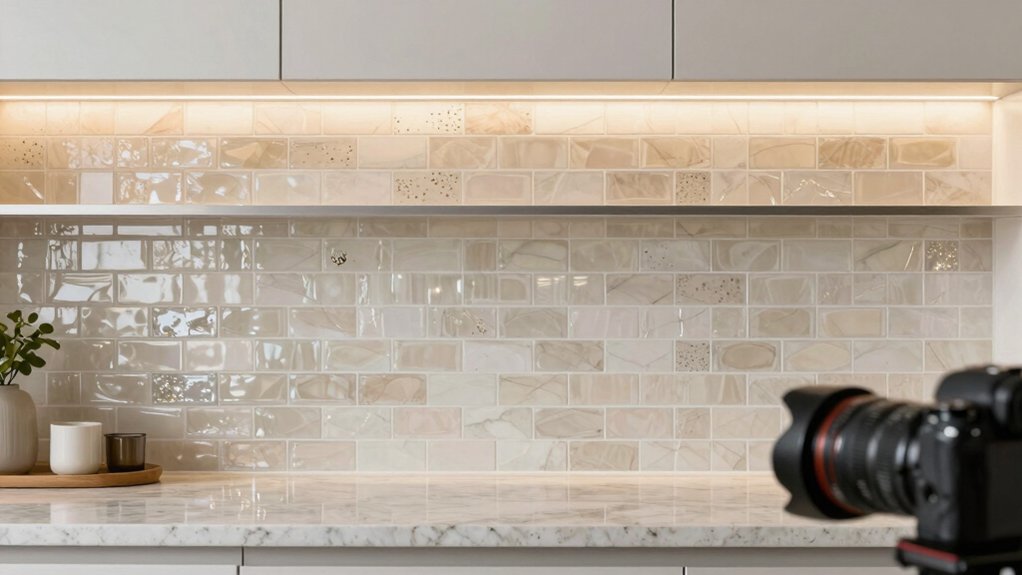
The best kitchen backsplash trends for 2026 center on texture-rich surfaces, warm neutrals, and bold color accents presented in expansive, seamless formats. You’ll favor large-format slabs with minimal seams, plus easy-care finishes like sealed glass or ceramic that resist fingerprints and etching. Sustainably sourced, recycled materials and tactile textures drive durability and style, while restrained jewel-tone mosaics or inlays provide focal points without overwhelming. Aim for a cohesive pattern/material framework to maintain harmony as you upgrade your space—more specifics await.
What 2026 Backsplash Trends Mean for Your Kitchen: Find Your Style Story
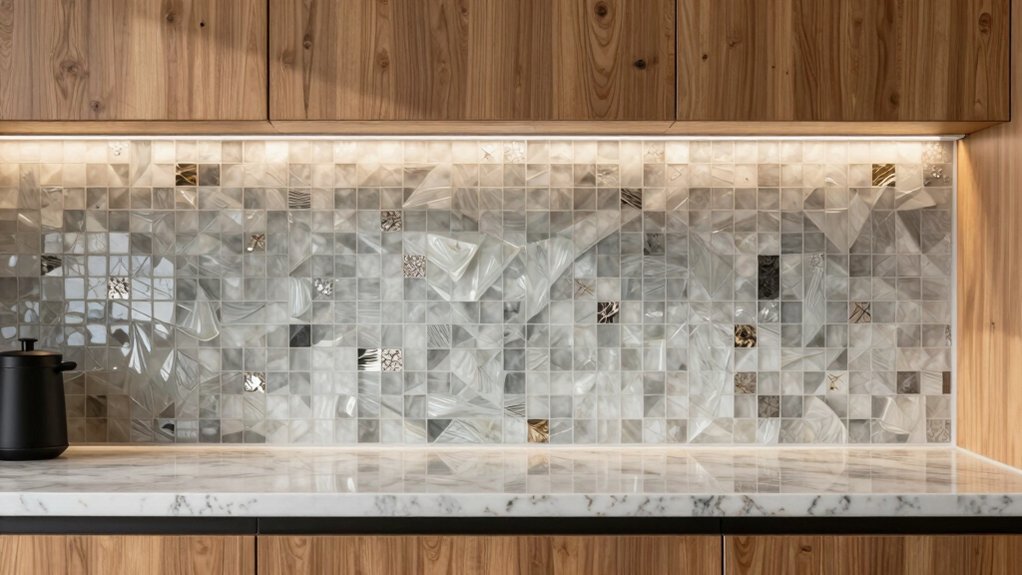
As you plan your kitchen upgrade, 2026 backsplash trends steer you toward intentional style decisions that impact both aesthetics and function. You’ll align your choices with proven principles, ensuring your backsplash supports workflow, durability, and ease of care.
By examining historical backsplash styles, you’ll recognize enduring cues that translate across modern palettes, helping you avoid fleeting fads. Your plan should define material durability, ease of cleaning, and long-term maintenance, guiding selections that reduce kitchen backsplash maintenance while preserving visual impact.
You’ll map your color story, texture, and grout strategy to your cabinets and countertops, creating a cohesive narrative. This approach fosters belonging in a like-minded design community, delivering a confident, grounded upgrade rather than a risky trend chase.
Texture-Rich Surfaces: Choosing Tiles, Slabs, and Their Feel
Texture comes from material choice and surface interaction, so prioritize tactile contrasts when selecting tiles and slabs.
You’ll weigh grout width, finish, and edge profiles to create a deliberate dialogue between rough, matte, and glazed textures.
Approach decisions with a clear plan for durability, cleaning ease, and how each texture reads under your kitchen lighting.
Texture Through Materials
Selecting backsplash materials with tactile variation starts with understanding how texture influences visual weight, light reflection, and maintenance. You’ll evaluate material families by their surface behavior: glazed ceramic reflects light for brightness, while unglazed stone yields depth and subtle shadows.
Consider the grain, pitting, and microtextures that add grip yet remain cleanable, reducing glare in busy kitchens. Choose tiles or slabs that align with your cooking techniques, ensuring that joints and grout resist staining and heat exposure.
Texture through materials also guides wall protection; denser surfaces dampen sound and shield substrate from splashes, while matte finishes minimize fingerprints. Establish a cohesive rhythm by mixing scale and texture thoughtfully, then verify installation tolerances and edge detailing.
This approach fosters belonging, confidence, and durable, easy-to-maintain backsplash performance.
Tactile Tile Dialogue
Tactile tile dialogue centers on how texture informs choice, performance, and feel under real kitchen use. You select texture to balance grip, glare, and maintenance, ensuring durability across daily tasks.
Consider surface tactility: knurling, pebbling, or linear ridges; each modifies slip resistance and cleaning effort. Slabs offer continuous skin under fingertips, but seams matter for stability and heat response.
Cultural influences shape preferences for warmth, patina, or bold tactility, while historical inspirations anchor you to revered patterns with modern performance. Specify grout taste and width to preserve texture while controlling staining.
Test samples at typical lighting and work zones; validate that texture supports fatigue-free prep. Document material certifications and warranty expectations, then harmonize with cabinet, countertop, and appliance finishes.
Informed texture choices deliver confident, cohesive kitchen experiences.
Warm Tones to Ground a Modern Kitchen: Color + Finish Guide
Warm tones anchor a modern kitchen by balancing high-contrast finishes with approachable warmth. So start with a cohesive color strategy that combines warm whites, beiges, and soft terracotta neutrals. You’ll establish depth without sacrificing clarity, using finishes that read as timeless rather than faddish.
1) Choose a neutral base: warm white walls, creamy cabinetry, and matte stone countertops for enduring compatibility.
2) Layer texture: incorporate rustic textures and vintage motifs through cabinetry detailing and ceramic accents to convey belonging.
3) Select finishes strategically: combine satin metals with soft, low-sheen surfaces to reduce glare while preserving presence.
4) Tie accents to a palette: keep terracotta, sand, and charcoal as unifying touches across backsplashes, trims, and hardware.
Jewel-Tone Mosaics and Color Inlays: Where to Add Bold Color
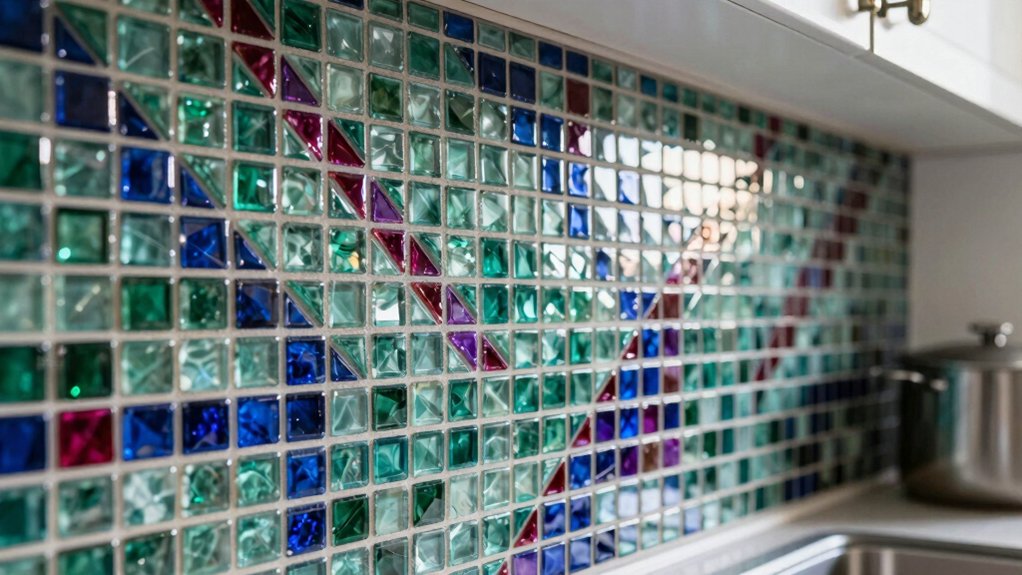
Bold color pairings define the impact of jewel-tone mosaics and inlays, so choose combinations that heighten contrast or harmonize with your cabinetry and countertops. Start with clear rules: limit the palette to two to three jewel tones per installation.
Vary tile scale to control visual weight, ensuring the color inlays reinforce key focal points. Implement precise placement—accent inlays at shelf edges, around hoods, or as a single framed panel—to maximize drama without overloading the space.
Bold Color Pairings
When you introduce jewel-tone mosaics or vivid color inlays, you create a focal point that anchors the backsplash while guiding the eye through the kitchen’s palette. Bold color pairings demand deliberate planning to maintain balance and cohesion across surfaces.
- Establish a dominant hue: color blocking your core area ensures the headlining tone reads as intentional, not random.
- Allocate accents: reserve two supporting tones for cabinets or counters to prevent color clash.
- Decide between paint vs. tile: assess durability and finish—tile handles moisture better, paint offers easier updates.
- Test placement: map the sequence before installation to confirm rhythm and avoid busy repetition.
Apply these steps with precision, ensuring the result reinforces belonging and confidence in your design leadership.
Jewel-Tone Mosaic Ideas
Jewel-tone mosaics and color inlays create a dynamic focal point that guides the kitchen’s rhythm while grounding the overall palette. You should deploy jewel tones in tight, high-contrast mosaics to anchor zones like the backsplash above the range or behind the sink, ensuring consistent color logic with your cabinetry and hardware.
Choose glass or ceramic pieces that reflect light and resist staining, then schedule precise grout to preserve clarity. Integrate cabinet hardware finishes that echo the mosaic’s metallics or glass hues for cohesive texture.
Use lighting accents to elevate the mosaic at night, creating depth without overpowering adjacent surfaces. This approach delivers a deliberate, inclusive aesthetic where bold color enhances function and belonging.
Accent Inlay Techniques
Accent inlays offer a precise way to place bold color without dominating the entire backsplash. You’ll apply controlled patterns that enhance architecture, leveraging marble veining and metallic accents for refined depth. Use this technique to cue focal points without overpowering surrounding surfaces.
1) Plan a restrained color map, placing jewel-toned pieces at logical intersections to create visual anchors.
2) Integrate marble veining motifs within the inlay to echo natural stone while preserving contrast.
3) Combine metallic accents with matte field tiles to achieve a balanced sheen that reads as cohesive.
4) Validate proportional contrast by testing in daylight and under kitchen lighting, ensuring the inlay remains legible and purposeful.
Sustainable Backsplash Materials You’ll Actually Use
Sustainable backsplash materials you’ll actually use combine durability, low environmental impact, and straightforward installation, so you don’t have to trade style for responsibility. You’ll choose options that perform under heat and moisture while remaining easy to source and install.
Prioritize materials with proven lifecycle data and stable colorfastness, so your kitchen sustains its value over time. Recycled glass offers crisp, reflective surfaces with durable composition and reduced landfill impact, ideal for modern kitchens.
Cork tiles provide sound dampening, gentle resilient texture, and rapid renewability, great for warm-toned schemes. Confirm compatibility with standard underlayment and simple adhesive systems to streamline installation.
Verify warranty coverage and supplier transparency, and select products with formal certifications. Implement these choices consistently to achieve cohesive, responsible design.
Easy-Care Finishes: Low-Maintenance Options That Last
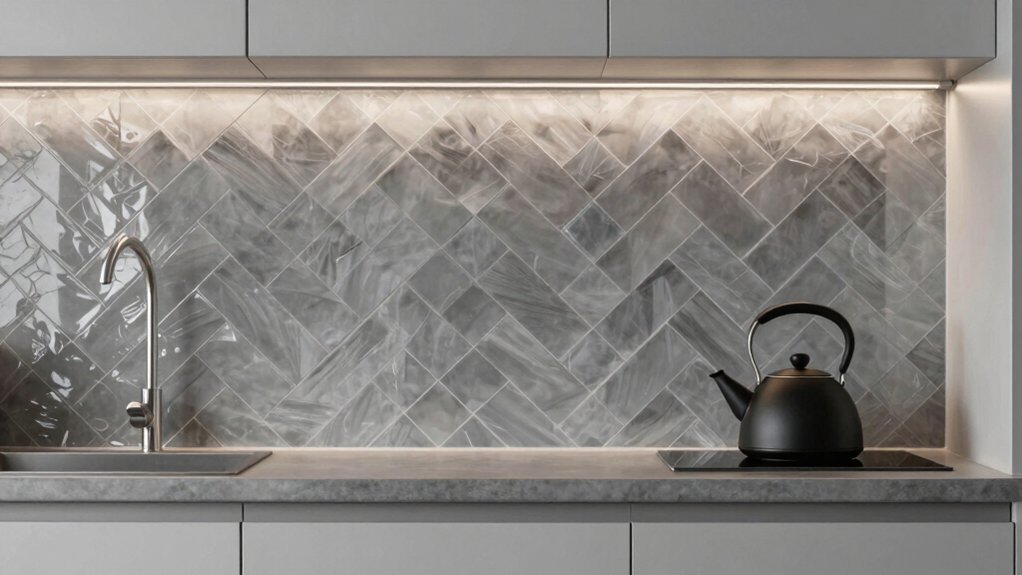
Easy-care finishes deliver long-lasting resilience with minimal maintenance, making them ideal for busy kitchens. You’ll notice that durability comes from engineered substrates and sealed surfaces, not surface pretensions. Choose options that support cleanability, stain resistance, and heat tolerance, so you retain a cohesive look longer. Incorporate vintage glass and metallic finishes for subtle texture without sacrificing wipe-down speed.
- Opt for sealed glass or ceramic panels that resist etching and fingerprints.
- Favor powder-coated or metallic finishes with reinforced topcoats for abrasion resistance.
- Use groutless or seamless designs to cut cleaning time and microbial buildup.
- Pair soft neutrals with metallic accents to maintain timeless appeal.
This approach delivers dependable performance and a sense of belonging through consistent, easy care.
Expansive Slabs and Seamless Edges: A Modern Perimeter Look
Expansive slabs and seamless edges define a modern perimeter by eliminating interruptions and creating a single visual plane. You should select uninterrupted panels with precise cuts to achieve this effect, ensuring alignment and grout minimization across the backsplash and adjoining surfaces.
The result is a cohesive backdrop that enhances perceived space, improves light reflection, and simplifies maintenance. Prioritize large-format slabs featuring controlled marble veining for a natural, continuous look, while preventing busy patterns from breaking the line.
Use edge detailing that remains invisible at the seam, reinforcing the seamless appearance. Introduce restrained metallic accents only where you want focal points, such as hardware or indirect lighting, to elevate sophistication without interrupting the flow.
Maintain consistent thickness, substrate stability, and professional installation to realize the intended modern perimeter.
Mixing Patterns and Materials Without Clashing: A Practical Framework
To create a cohesive backsplash when mixing patterns and materials, start with a clear hierarchy: establish a dominant material or pattern and support it with one or two secondary accents. You’ll achieve pattern clash avoidance by balancing scale, texture, and gloss levels, ensuring material harmony across the install. Follow a precise framework to guide decisions and foster belonging in your space.
- Define the primary element: choose a dominant tile or material and keep its color palette restrained.
- Select secondary accents: limit to two complementary patterns or textures that echo the dominant element.
- Align grout and edge details: use neutral tones to unify disparate materials.
- Test in situ: view under different lighting to confirm harmony before committing.
Frequently Asked Questions
How Do I Choose a Backsplash That Ages Well With Trends?
For longevity, pick durable materials and classic patterns, balancing trendy material choices with timeless design considerations; you’ll age gracefully by prioritizing versatility, maintenance ease, and cohesive color schemes that harmonize with your kitchen’s evolving aesthetic and functions.
Can a Small Kitchen Benefit From Bold Backsplash Color?
Yes, a small kitchen benefits from bold color, provided you balance contrasts for color coordination and maintain material durability. You’ll create a confident, cohesive space, feel included, and simplify maintenance while your walls anchor the room’s focal point.
What Maintenance Is Required for Glass or Metal Backsplashes?
“Cleanliness is next to godliness,” so you maintain glass or metal backsplashes with a wipe-down routine, avoiding abrasives. Stick to cleaning routines, inspect seals regularly, and consider durability considerations to guarantee long-lasting performance and safe use.
Do Homeowners Associations Restrict Certain Backsplash Materials?
HOA restrictions can limit certain backsplash materials; verify Backsplash regulations with your association before choosing. You’ll need approval, comply with specs, and document materials to guarantee alignment with HOA restrictions and preserve community standards.
How Much Does Backsplash Installation Typically Cost?
Backsplash installation typically costs a range, and you should budget for materials, labor, and permits. Conduct a cost comparison between options, and weigh professional vs DIY to guarantee you feel confident, supported, and part of a trusted community.