
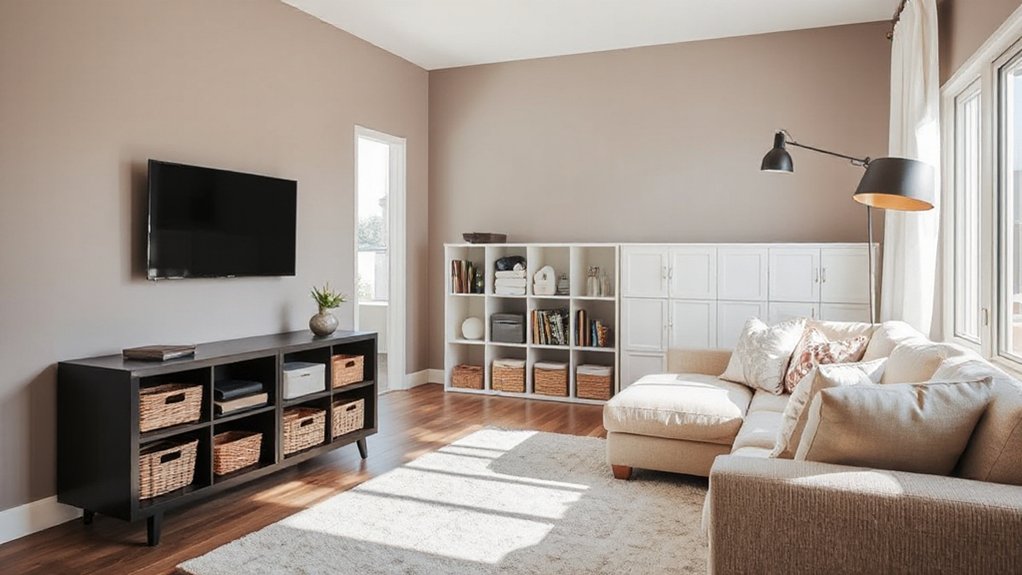
To add storage in your living room, start by defining priorities based on your daily use and traffic flow. Choose hidden storage behind armchairs, sofa panels, or lift-top coffee tables, and blend these with closed cabinets and open shelving for balance. Use multifunctional furniture with slim profiles and neutral finishes, plus lighting to highlight organized zones. Layer color and texture to unify storage with décor, and test layouts from multiple angles to refine flow. More tips await as you continue.
Define Your Storage Priorities for the Living Room
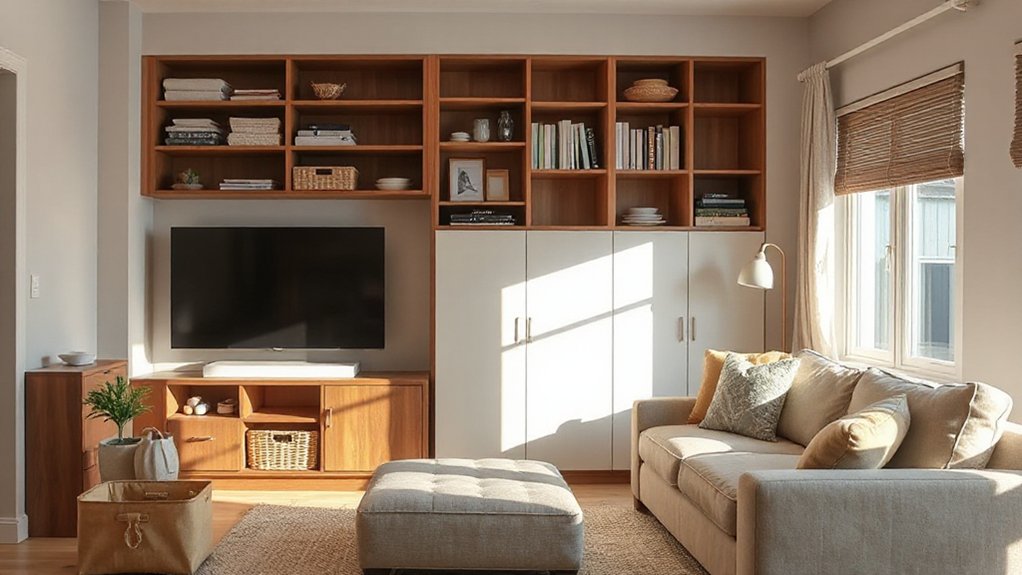
Before you add storage, map out your needs. You’ll define what must stay visible and what can hide. Start with daily routines: where do you relax, work, or entertain? Prioritize items you actually use weekly, not seasonal décor.
Consider the room’s flow and traffic: storage should support easy access without creating bottlenecks. Establish your targets for storage organization and clutter control—how much is necessary, where it belongs, and how it will look when tidy.
Decide on a mix of closed cabinets, open shelves, and multi-purpose furniture. Reserve space for media, games, and blankets, but avoid overbuilding.
Keep your justification simple: efficiency, calm, and belonging. Revisit priorities after measuring, then tailor solutions that feel natural, not forced.
Hidden Storage Ideas That Blend With Your Design
Hidden storage can hide in plain sight with integrated compartments and multifunctional decor. You’ll balance function and style by choosing pieces that conceal clutter while serving a purpose you use daily.
Start by evaluating what you want hidden and pair it with designs that look purposeful, not gimmicky.
Integrated Hidden Compartments
Choose built-in options that align with your furniture, like under-armchair cubbies, hollow ottomans, or sofa backs with slim, lift-up panels. Look for clean lines, neutral finishes, and concealed hinges that blend with the decor, not compete with it.
This approach leverages depth rather than surface area, preserving your style at every glance. Position compartments where you naturally pause—near seating, entertainment, and entryways—to keep daily items organized and accessible.
With thoughtful integration, you achieve hidden storage that supports comfort, belonging, and a calmer, more intentional room.
Multifunctional Decor Solutions
Multifunctional decor merges storage with style, so your living room stays tidy without sacrificing design. You’re curating pieces that conceal and reveal, balancing function with feel.
Think furniture that hides essentials behind doors, drawers, or ottomans, keeping surfaces clean for daily living. Integrate storage into coffee tables, benches, and shelving with slim profiles that don’t crowd space.
Choose materials and finishes that echo your room’s palette, so hidden elements blend rather than shout. Add vintage accents to create character while preserving practicality, and pair them with statement lighting to draw the eye and define zones.
Prioritize accessibility and ease of use, ensuring every hidden feature serves a purpose. This approach fosters belonging through thoughtful, purposeful decor you can trust.
Multipurpose Furniture: Storage Plus Seating and Surface
A good multipurpose piece combines storage with seating and a usable surface, so you can keep daily essentials close at hand without sacrificing floor space. You’ll choose a piece that feels intentional in your room, not gimmicky.
Look for hidden compartments, lift-top surfaces, or drawers that align with your decor themes and everyday needs. The right design offers sturdy seating and a stable top for daily tasks, plus discreet storage that minimizes clutter.
Pair it with adaptable lighting options: a nearby lamp or built-in LEDs enhance mood zones and task lighting without visual bulk.
Aim for versatility, durability, and a finish that complements your color story. With thoughtful selection, you gain functional furniture that reinforces belonging and steady, organized living.
Shelving That Hides Clutter and Showcases Style
Choose a mix of closed cabinets for hidden storage and open shelves for display. Keep daily essentials accessible but out of sight behind doors, so the room reads calm rather than crowded.
Layer decorative accents with intention: a few meaningful objects, a stack of books, and a plant to finish the vignette.
Integrate lighting options—under-shelf LEDs or a small brass fixture—to highlight collections without glare.
Use color and texture to unify disparate pieces, ensuring each shelf tells part of your story while remaining cohesive with the room’s seating and flooring.
Layout and Color Strategies for a Calm, Cohesive Space
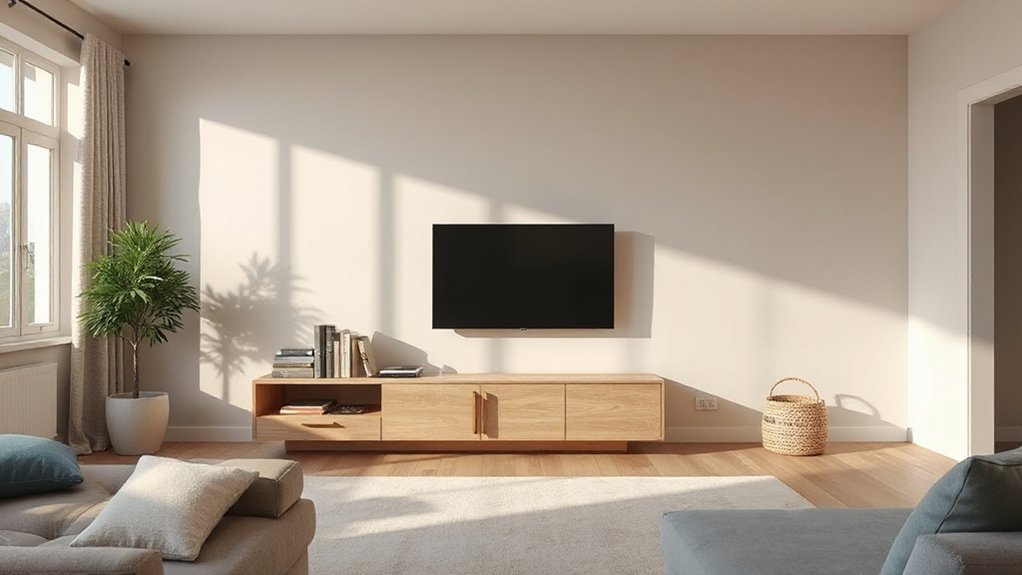
To create a calm, cohesive living room, start with a clear layout that prioritizes sightlines, circulation, and logical zoning. You’ll align furniture so paths stay open and focal points remain undisturbed, letting storage pieces breathe without clutter.
Choose a restrained color palette—soft neutrals with 1–2 accent hues—to unify textiles, furniture, and wall surfaces. Introduce decor accents that repeat motifs across pillows, trays, and art, reinforcing harmony without overstimulation.
Lighting techniques matter: layer ambient, task, and accent light to soften passages between zones and highlight storage without glare.
Keep textures varied but cohesive; weave tactile interest through rugs and throws that echo your color story.
In practice, test layouts from multiple angles, then refine until every corner feels intentional and welcoming.
Budget, Materials, and Installation Tips for Practical Planning
Careful budgeting and smart material choices set the foundation for practical planning, so start by outlining a realistic price range for furniture, storage solutions, and fixtures you’ll actually use. You’ll map costs against needs, prioritizing durable, modular pieces that grow with you.
Choose materials that balance price, weight, and practicality; avoid trend-driven buys that clutter later. Focus on Storage accessories and Organizational systems that simplify daily life and encourage belonging in your space.
1) Prioritize modular shelving and bins with clear labeling for quick access.
2) Select multifunction furniture (ottomans with storage, coffee tables with drawers) to maximize function.
3) Plan installation with wall anchors, anti-tip hardware, and easy-to-clean finishes for lasting stability.
Frequently Asked Questions
How Do I Assess Current Clutter Levels Effectively?
You can assess clutter levels by doing a quick clutter measurement: count items per surface, note rooms with most chaos, and time-box sorting. Then apply organization strategies, prioritizing essential items and creating visible, welcoming storage for belonging.
Which Materials Resist Wear in High-Traffic Living Rooms?
Backed by durability considerations, you should pick hard-wearing materials like leather, microfiber, and performance fabrics; they resist wear and cleaning woes. You’ll appreciate easy material maintenance, and you’ll feel belonging as you choose durable pieces for your space. (35 words)
What Are Cost-Effective Long-Term Storage Upgrades?
You can get cost-effective long-term storage upgrades with decorative storage bins and modular cabinets, plus hidden wheels and under-sofa drawers. Embrace creative solutions that fit your space, prioritize durability, and make you feel organized, connected, and empowered.
How Can Storage Impact Room Acoustics and Comfort?
You notice coincidence: better storage boosts room acoustics and comfort. You gain acoustic insulation and noise absorption, shaping calmer spaces. You’ll feel cozier, more centered, and connected as practical storage choices soften echoes and improve intelligibility.
Which Lighting Considerations Complement Hidden Storage?
Ambient illumination guides your hidden-storage layout, you’ll use ambient illumination to make the space feel cohesive, while accent lighting highlights clever storage features. You’ll combine practical placement with targeted accent lighting to reinforce belonging and effortless, organized comfort.
Conclusion
Discover a smarter living room by turning clutter into calm. Start with your priorities, then weave hidden storage into furniture, and choose multipurpose pieces that serve seating, surface space, and concealment. Use shelving to balance display with concealment, and craft a layout and color plan that feels cohesive yet flexible. Budget wisely, select durable materials, and plan the install like a pro. When you design this way, storage stops fighting the room and finally supports your everyday life.