
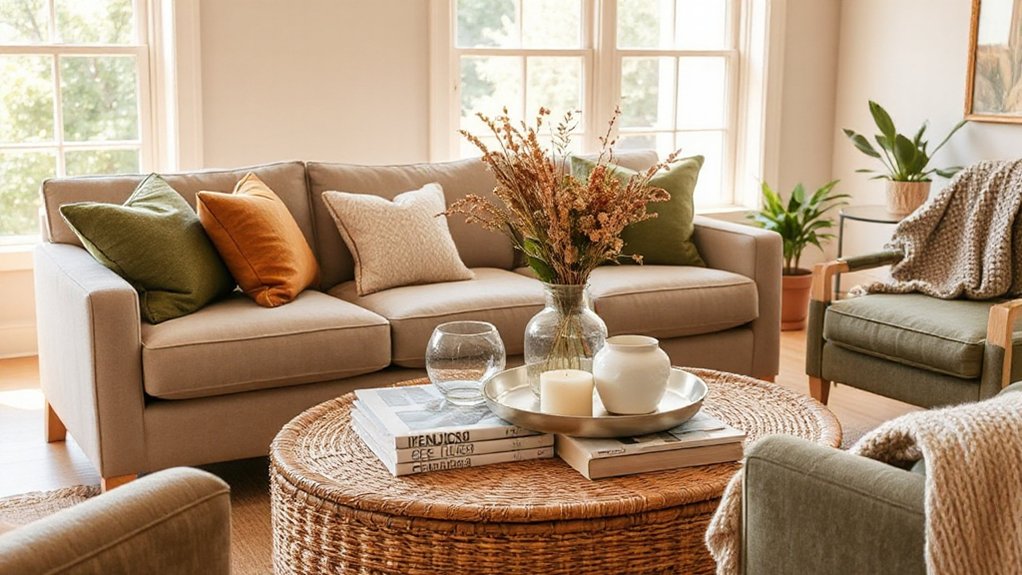
To refresh your living room with accessories, start with a clear goal: set the mood, plan lighting, and design for flow. Identify your baseline textures and colors, then craft a cohesive color story you repeat across pillows, art, and greenery. Layer textures in three quick moves, anchor the look with a bold piece, and balance rhythm and focal points. Mix metals carefully, personalize with art and memories, and shop smart to invest where it matters. If you keep going, you’ll uncover more actionable steps.
Set a Clear Refresh Goal for Your Living Room
Before you shop or rearrange, set a clear refresh goal for your living room. You’ll gain direction by defining what you want to feel and how you’ll measure progress.
Decide on Lighting ambiance you want for evenings, mornings, and entertaining, and connect it to how you’ll use the space.
Consider Furniture arrangement that supports flow, conversation, and accessibility, so every zone earns a purpose.
Write a simple goal statement: “I want a calmer, brighter lounge with easy traffic and a focal seating area.”
List 2–3 concrete indicators—pocket-lit corners, clearer pathways, a unified color note.
Align your accessories with that aim, then prune anything that doesn’t serve it.
Revisit the goal after a week and adjust as needed for lasting belonging.
Identify Your Baseline: Textures and Colors You Already Have
Start by taking stock of your Existing Texture Palette, noting fabrics, finishes, and patterns you already own.
Next, record your Color Foundation Notes to map which hues dominate, which are accents, and where they repeat.
Finally, do a quick Material Level Mapping to see where wood, metal, ceramic, and textiles sit in your space so you can plan balanced additions.
Existing Texture Palette
So, take stock of the textures and colors you already own to set a solid baseline for your refresh. Your Existing Texture Palette should read as a map you can trust: note fabrics, surfaces, and finishes that dominate rooms you love.
Identify the textures you favor—woven textiles, smooth leather, matte woods, glossy ceramics—and how they pair. Look for texture contrast that feels intentional rather than busy. If you have a soft rug, a sleek coffee table, and sturdy upholstery, you’ve got balance you can build on.
Plan accessory placement by grouping like textures in clusters to reinforce the palette, rather than scattering patterns. Use the baseline to guide new accents, ensuring cohesion and a welcoming, belonging-filled space.
Color Foundation Notes
Now that you’ve mapped your textures, it’s time to identify the color baseline you’ll build from. You’ll use the textures you already own as anchors for color decisions, not guesswork.
Look at your largest surfaces first—sofas, walls, rugs—and note dominant hues. Consider how color psychology informs mood: calming neutrals support a cohesive feel, while subtle accents create personality without chaos.
Build a baseline by pairing your primary tones with 1–2 complementary hues that appear in accessories you’ll reuse. Plan accessory placement deliberately: repeat the chosen colors in pillows, throws, art, and greenery to reinforce harmony.
Avoid overloading with new shades; steady repetition sustains balance. This approach honors belonging, ensuring your refreshed space feels intentional, welcoming, and spatially coherent.
Material Level Mapping
- Catalog fabrics by pattern, weight, and color
- Note current lighting arrangements and their effect on mood
- Pair textures for depth (matte vs. sheen, soft vs. structured)
- Identify gaps to fill with intentional, belonging-ready pieces
Create a Unifying Color Story for Accessories
A unifying color story ties your accessories together, creating a cohesive look from rug to pillow to art. You’ll start with a focused color palette anchored in your largest pieces, then pull in supporting hues through accents so nothing feels random.
Choose three to five core tones and repeat them across textiles, metals, and wall decor to establish continuity. Keep contrast deliberate: light elements brighten, dark accents ground, and midtones bridge shifts between zones.
Plan accessory placement by balance, not clutter—center a focal piece and echo its tones in nearby items. Vary textures rather than colors alone to add depth.
Review the room from multiple angles, removing extras that don’t reinforce the palette. You’ll feel connected, intentional, and visually calm.
Layer Textures in Three Quick Moves
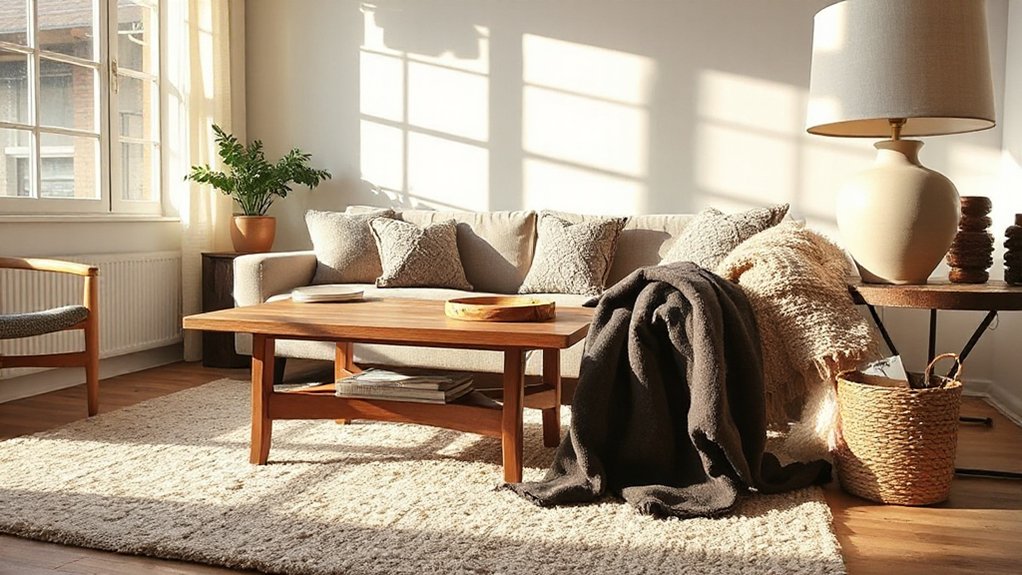
Layer textures quickly by mixing materials like woven fabrics, velvets, and wood accents to add subtle depth.
Start with one standout piece, then layer in complementary textures for contrast and warmth.
Keep the changes intentional and repeatable, focusing on quick wins that reinforce your unifying color story.
Layered Textures, Quick Wins
Layering textures is a quick, practical way to elevate a living room without a full overhaul. You’ll create depth fast by pairing soft, tactile elements with structured basics, then switch in seasonal updates and lighting enhancements to seal the effect.
- Add a knit throw and woven cushions to introduce warmth and texture.
- Layer a velvet or suede accent chair with a textured rug for contrast.
- Mix matte ceramics, glass, and wood for visual interest without clutter.
- Introduce subtle metallic accents and appropriate lighting to unify the look.
This approach respects your space and your taste, delivering belonging through cohesive textures. Focus on balance, not clutter, so every piece feels intentional and welcoming.
Mix Materials, Subtle Depth
To build subtle depth, mix materials in three quick moves: pair soft textiles with solid surfaces, introduce a contrasting metal or wood, and vary finishes across pieces.
You’ll create Textural contrast by pairing matte fabrics with glossy surfaces, then balance a warm wood with a cool metal for Material harmony. Layer a woven throw over a smooth leather ottoman, a ceramic lamp on a glass side table, or a linen pillow beside a lacquered box.
Keep proportions deliberate: don’t overwhelm one surface; repeat a finish or material in different scales to unify the room. Finish with a subtle sheen in accents to reflect light and life.
The result feels intentional, welcoming, and thoughtfully designed.
Anchor the Look With a Bold Statement Piece
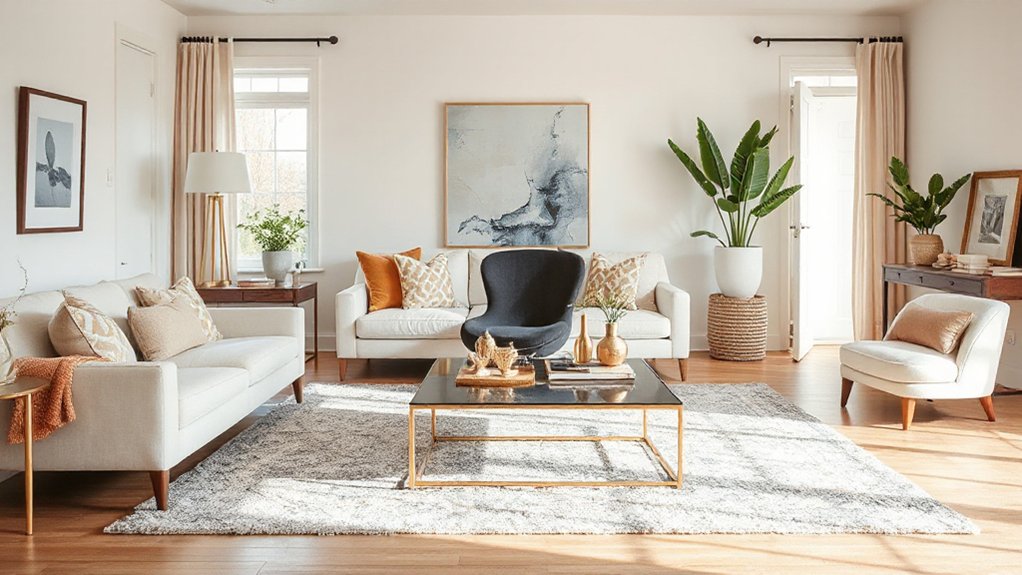
A bold statement piece instantly anchors the room, drawing the eye and establishing the theme. You choose something expressive, then let it set the tone for surrounding details. Prioritize quality and scale to fit your space, so the piece feels intentional, not overpowering.
Pair bold furniture with simpler textures to avoid visual overload, and let statement lighting illuminate the focal point without competing with other elements.
- Bold furniture as a centerpiece, balanced by calm neutrals
- Strategic lighting to highlight texture and shape
- Minimal surrounding décor for clarity and cohesion
- Personal story stitched into color, finish, and form
This approach makes you feel welcomed, confident, and part of a cohesive home narrative.
Arrange for Balance: Rhythm, Focal Points, and Flow
Arrange for balance by guiding rhythm, highlighting focal points, and smoothing flow throughout the room. You’ll anchor the space with deliberate decor placement, ensuring that each item reinforces the overall rhythm rather than competing for attention.
Start with a clear focal point—perhaps a sofa arrangement or a statement art piece—and build around it in multiples that feel natural. Use color harmony to tie groups together: repeat a dominant hue in cushions, lighting, and a single accessory across tables.
Vary scale thoughtfully to avoid monotony while preserving unity. Maintain eye level balance by positioning taller pieces away from seating.
Leave breathing room, so pathways stay open and conversations flow. With intent, your room gains belonging, coherence, and effortless charm.
Mix Metals and Finishes Without Clashing
Mixing metals and finishes can elevate a living room, but done poorly it feels chaotic. You’ll succeed by planning metal coordination and embracing finish contrast with intention, not luck.
- Mix a dominant metal with one or two accent metals to avoid overwhelm.
- Pair warm metals (bronze, brass) with cool finishes (chrome, brushed nickel) for balance.
- Vary textures (matte, shiny, hammered) to add depth without glare.
- Keep a unifying element, like a common metal tone or finish, across accessories.
Focus on where each piece lives, not just its look. Thoughtful placement creates cohesion and comfort, signaling belonging.
If you’re unsure, start small: one lighting fixture, one vase, and one tray, then expand gradually while watching for harmony. Finish contrast should feel deliberate, not random.
Personalize With Art, Memories, and Greenery
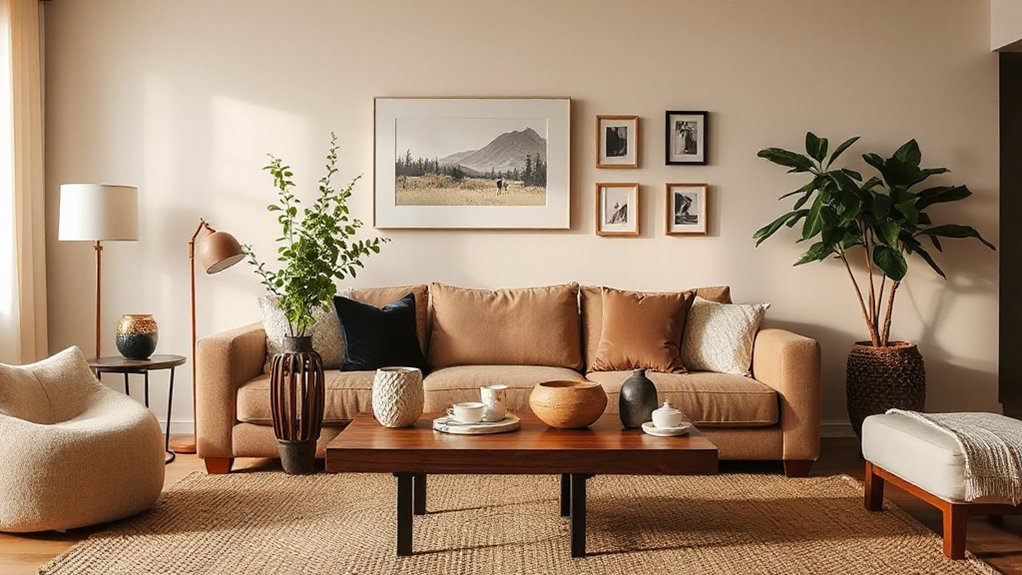
Personalize a living room with art, memories, and greenery to create a lived-in, inviting feel. You curate a thoughtful mix that reflects you without clutter.
Start with a focal piece you truly love, then layer smaller works nearby to reinforce style, not chaos. Art curation should feel intentional: vary scale, frame types, and placements to guide the eye naturally.
Memory display can be simple: a few framed photos or a cherished memento grouped with plants for warmth.
Choose greenery to soften walls and add life; rotate plants seasonally to keep the space fresh.
Keep surfaces clean and purposeful, so each item earns its place. Your room should communicate belonging, confidence, and ease through deliberate choices and restrained, meaningful accents.
Budget-Smart Shopping: Invest vs. Save for Impact
When you’re revitalizing a living room on a budget, choosing where to invest and where to save can make the biggest impact. You’ll balance a vintage finds approach with a minimalist approach to avoid clutter.
Invest in a few high-quality, timeless pieces—lighting, a sturdy sofa, or a standout rug—that set the tone. Save on trendy accents that fade fast by shopping smart and slow.
This practical mix creates a cohesive space that feels intentional and welcoming.
- Prioritize items that anchor the room (sofa, lighting, rug)
- Seek vintage finds for character at lower cost
- Cap clutter with a minimalist approach to accessories
- Compare prices, quality, and return options before buying
Frequently Asked Questions
How Do I Measure ROI on a Refresh?
You can measure ROI by tracking cost per room, resale value lift, and time saved enjoying the space. Do decor trend analysis, compare to baseline, and apply accessory placement tips to maximize perceived quality and living satisfaction.
Which Accessories Make the Biggest Visual Impact?
Yes: Decorative pillows and statement art make the biggest impact. You’ll refresh spaces quickly, choosing bold colors and textures, balancing scale, and placing art where it draws the eye. You belong when your selections feel cohesive and intentional.
Can Small Spaces Benefit From Bold Color Accents?
A spark in a dim room, you can. Yes, small spaces benefit from bold color accents. Use color contrast and accent pillows to create depth, scale thoughtfully, and feel warmly invited into a cohesive, confident living area.
How Often Should I Rotate Accessories?
You should rotate accessories every 4 to 6 weeks. This keeps spaces fresh while you refine Seasonal updates to reflect your Personal style, creating a sense of belonging and intentional living without overwhelming the room.
What Price Range Yields Noticeable Changes Quickly?
Expect to see quick changes within $50–$200, depending on items. You’ll refine with art placement and texture layering, swapping pieces as needed. Prioritize cohesive colors, affordable textures, and meaningful accents to feel instantly connected.
Conclusion
You’ve got the playbook to refresh your living room, and it’s all within reach. Stay focused on a clear goal, honor your textures, and weave a unifying color story. Layer in three quick moves, pick a bold anchor piece, and keep balance with rhythm and flow. Mix metals, personalize with art and greenery, and spend where it matters. Think like a captain—steady, intentional—and let your space tell a confident, lasting tale, like a familiar, well-loved harbor in a changing sea.