
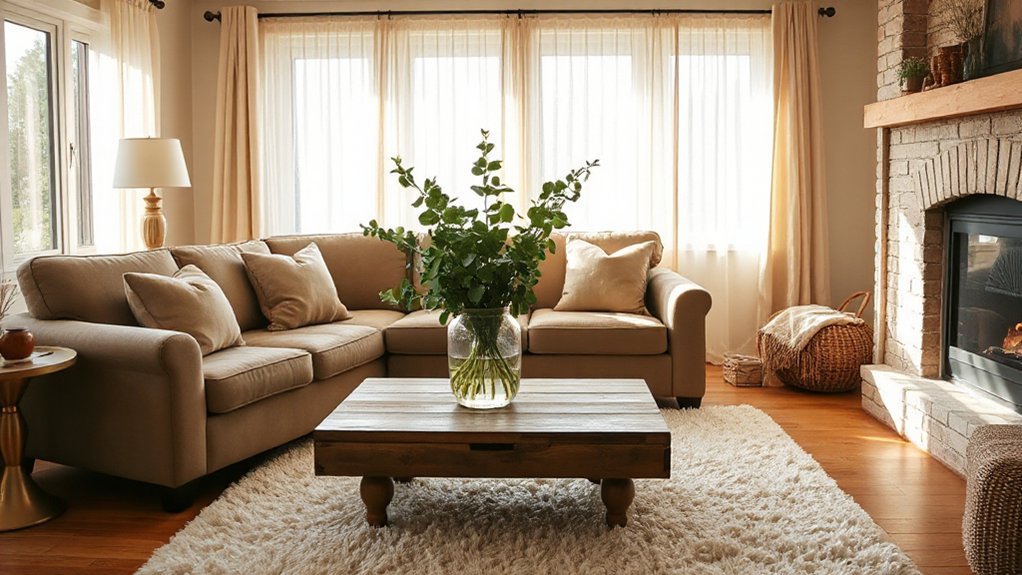
To create a warm, inviting living room, start with flow that guides movement and strong anchors for activities. Pick a comfort-first palette of warm neutrals and soft accents, and keep wall finishes matte to invite conversation. Layer lighting from overhead, ambient, and subtle glow behind art or furniture, with dimmers for mood. Add tactile textures—throws, rugs, and cushions—plus meaningful, easily rotate personal touches. Finish with durable fabrics, healthy plants, and strategic seating that fosters conversation; you’ll discover even more tips below.
Core Principles for a Warm, Inviting Living Room
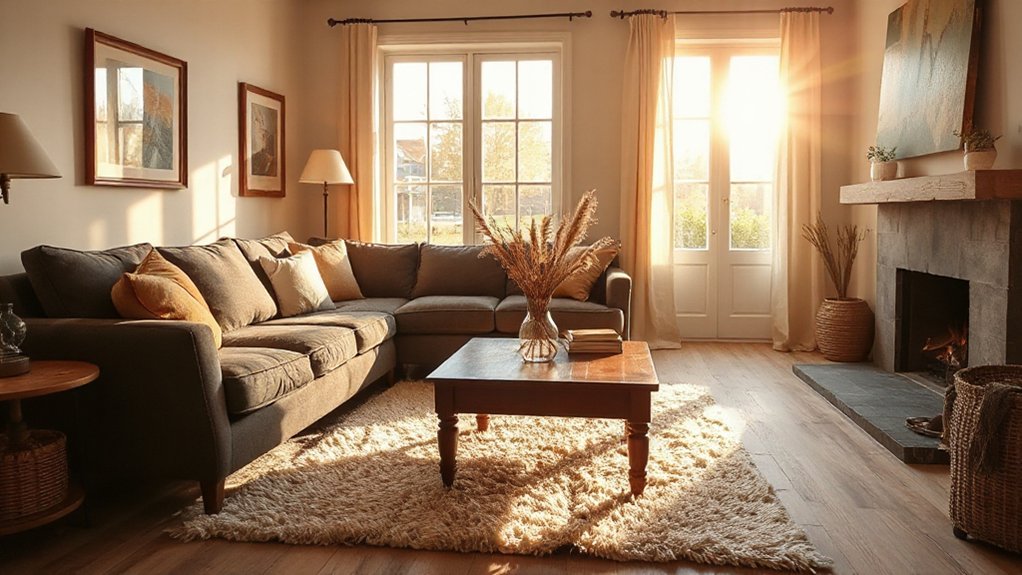
A warm, inviting living room starts with a clear sense of flow and a few well-chosen anchors. You align traffic patterns so movement feels natural, not forced, guiding conversations and activities without crowding spaces.
Establish a focal point—perhaps a thoughtful arrangement of seating around a single artifact or view—then build around it with proportional harmony.
Practice restraint: select a few enduring pieces that reflect your identity and keep clutter low. Artistic expression should surface through textures, framed memories, and subtle finishes, while Cultural influences inform your textiles, art, and lighting choices.
You’ll feel belonging when every element cues comfort and accessibility, from seating height to sightlines. Maintain consistency in scale and lighting, and rotate accents periodically to preserve resonance without disruption.
Choose a Comfort-First Color Palette
Color choices set the mood, so start with cozy pairings like warm neutrals paired with soft accent tones to invite lounging and conversation.
Consider warm tone combinations that emphasize comfort, such as creamy beiges with terracotta or mossy greens with amber accents.
Keep the palette simple and cohesive, and let texture and lighting do the talking to finish the look.
Cozy Color Pairings
Creating a cozy color palette starts with choosing warm, inviting tones that feel effortless together. You pair neutrals with gentle hues to create depth without overpowering the room. Start with a reliable base—soft beige, warm gray, or oat—for walls, then layer in color via textiles, art, and seating to keep the space grounded.
Consider color psychology: calmer tones reduce visual noise, while richer accents invite conversation. Balance is key; use paint finishes to control mood—matte walls for a soothing backdrop, satin for subtle reflectivity, and a touch of gloss on trim for definition.
This approach helps you feel connected and anchored. Choose combinations that align with your daily rhythms, ensuring every element supports comfort, cohesion, and a welcoming sense of belonging.
Warm Tone Combinations
Warm tones invite comfort before polish, so start with a comforting base and layer in hues that feel natural together. You’ll balance warmth with clarity by choosing a primary color—think soft terracotta or warm greige—as your anchor.
Build depth with two secondary tones: a muted sunlit yellow and a rich amber or chestnut. Keep contrast gentle to maintain approachability.
Consider color psychology: reds and oranges energize, browns ground, yellows lift mood; use this insight to guide where each shade lands.
Pair with furniture ergonomics in mind—sofas, chairs, and tables should invite rest, align with sightlines, and support posture.
Finish with textures that absorb light and soften edges. The result is a cohesive, welcoming space that reinforces belonging.
Layer Lighting for Cozy Ambiance
To layer lighting for a cozy living room, start with a solid baseline: a well-placed ceiling or recessed light that provides even, overall illumination. Then add ambient fixtures to sculpt mood, using warm temperatures and dimmable controls for flexibility.
Layer lighting thoughtfully so you can switch from bright tasks to intimate evenings without harsh contrasts. You’ll create depth, highlight architecture, and invite conversation.
- Use dimmable ambient fixtures to adjust mood with ease.
- Place soft, indirect sources behind furniture or art for glow.
- Mix ceiling, wall, and floor lighting to avoid flatness.
- Aim for a 3:1 ratio between ambient and accent lighting for balance.
This approach keeps the room feeling welcoming, polished, and belonging-ready. Layer lighting, practical, intentional, and inviting.
Textures and Soft Furnishings That Hug a Space
Textures and soft furnishings truly shape how a room feels, so lean into cozy textures that you can actually touch and enjoy. You’ll notice that tactile fabrics and warm surfaces invite you to linger and relax, making the space feel intimate without crowding it.
Start with a few statement textures and playful touches to set the mood, then layer for comfort.
Cozy Textures Matter
Texture shapes mood in a living room, and cozy fabrics make the space feel inviting from the moment you step in. You’ll notice how textured textiles wrap the room in warmth, while warm wall finishes reflect light for a snug glow.
Choose tactful textures that layer without clutter, so your space breathes.
- Textured textiles: throws, rugs, and cushions that add depth
- Layered fabrics: velvet, boucle, and knit for tactile contrast
- Warm wall finishes: subtle, creamy tones that enhance coziness
- Practical placement: balance density with negative space for ease
This approach keeps you grounded, belonging, and confident in your space. By embracing these elements, you create a residence that feels intimate and polished, without sacrificing function or flow.
Soft Furnishings Playful Touch
Soft furnishings pull a room together with tactile charm, wrapping seating and nooks in inviting softness that invites lingering. You shape the space by layering textiles for warmth and nuance, balancing weight, texture, and color without overwhelming the senses.
Textile layering adds depth: a chunky throw over a sleek sofa, a velvet cushion paired with a linen one, and a soft rug that grounds the area. Introduce playful patterns sparingly to keep harmony while energizing as you move through the room.
Choose patterns that repeat subtly—stripes echoed in a pillow and a runner, or a geometric motif in a single accent piece. The goal is cohesion that feels intentional, comfortable, and welcoming, inviting guests to settle in and stay awhile.
Seating Arrangements That Encourage Conversation
There are a few simple rules for seating that boost conversation: place chairs and sofas in a circle or open U-shape so everyone faces the center, not just the person beside them. You’ll invite easy eye contact, smoother turn-taking, and warmer interactions by centering the group.
- Position seating to create equal access to conversation, not hierarchy
- Use varied heights and depths for depth without blocking views
- Leave a clear, inviting focal point for shared stories
- Add artisan ceramics and warm textiles nearby to cue comfort and belonging
Choose a sofa with a low back and a pair of chairs angled toward the center. Let lighting be soft and deliberate to highlight conversations, not glare.
Grounding the Room in Calming Neutrals
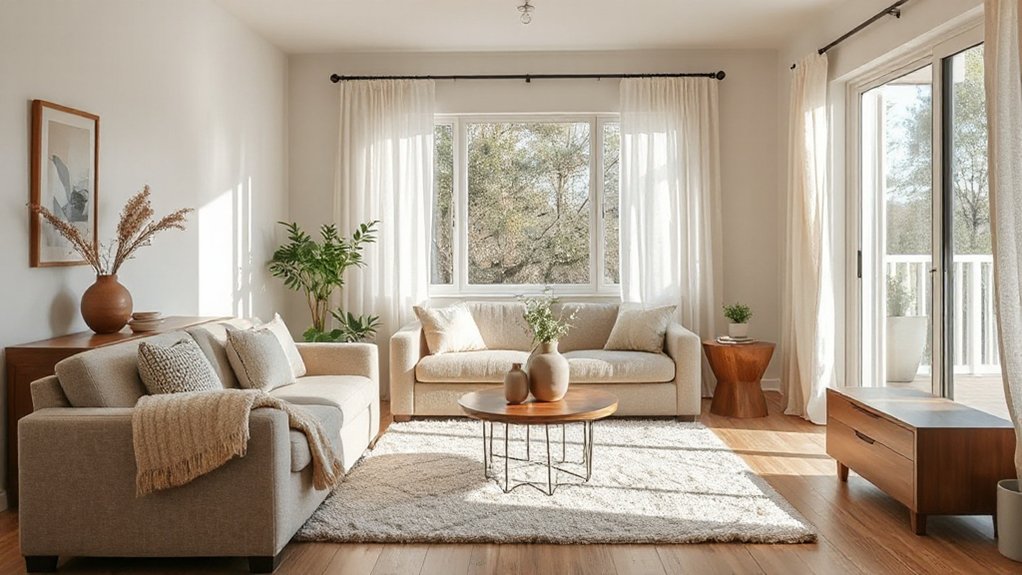
Start by choosing a calming neutral palette that unifies furniture, walls, and textiles without overpowering the space.
Layer soft textures—think plush throws, ribbed upholstery, and matte finishes—to add warmth and depth.
Keep the look precise and cohesive, letting subtle variations in tone guide the eye and create a soothing, polished room.
Calming Neutral Palette
A calming neutral palette grounds a living room by balancing warm, muted tones with clean, simple contrasts. You’ll create a serene anchor using soft beiges, taupes, and greiges, then introduce depth with charcoal accents and white crisp edges. This approach relies on minimalist decor principles and color psychology to foster belonging and ease.
- Choose a restrained base: warm neutrals with a single cool counterpoint
- Emphasize texture over pattern to keep the room calm
- Use natural materials to enhance warmth and tactility
- Maintain consistent lighting to preserve the palette’s clarity
Soft Texture Layering
Begin with a substantial sofa in a neutral, then add a sculptural throw and a couple of cushions in varying fabrics. Mix fabric textures—linen, velvet, wool, wool blends—so each touchpoint offers a distinct sensation while staying within the calm color family.
Use patterns sparingly, letting texture carry the visual interest. Ground the ensemble with a soft rug that echoes the neutrals and window treatments that add weight without glare.
Practicality matters: choose durable, easy-care options, rotate pieces seasonally, and maintain a consistent mood so guests instantly feel at home and included.
Adding Personal Touches Without Clutter
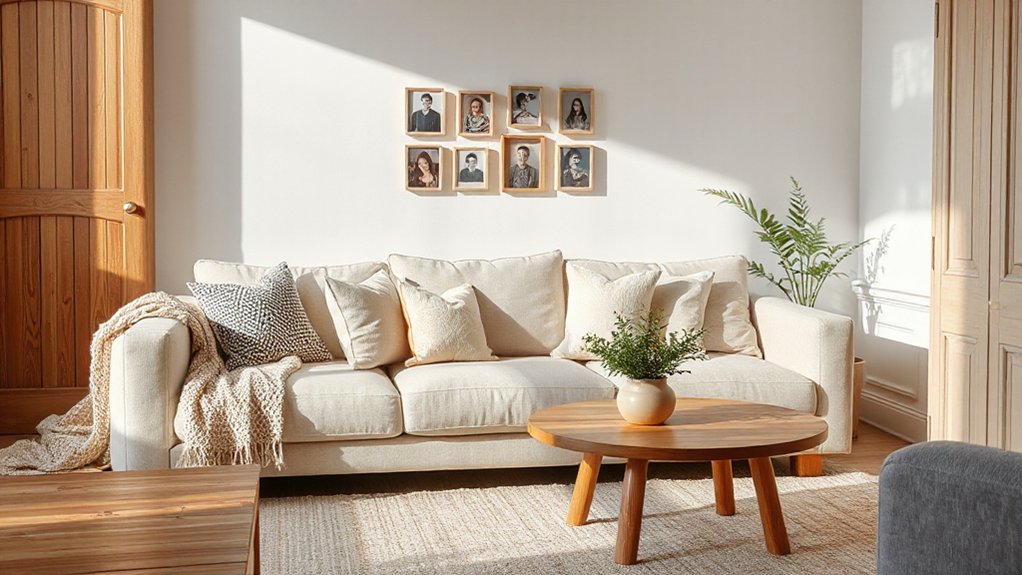
To add personal touches without creating clutter, focus on intentional, single-purpose accents that reflect your style. You’ll keep warmth without overwhelming space by selecting meaningful pieces and rotating them seasonally. Prioritize quality over quantity, and let each item earn its place through function or sentiment.
- Curated display tray with a few treasured mementos
- One statement art piece in a coordinating palette
- A small, personal collection showcased in a single vignette
- Functional decor that doubles as storage or seating comfort
This approach supports personal decor while achieving clutter control, so your living room feels intentional and welcoming.
The Role of Plants in Warmth and Air Quality
Plants do more than brighten a room—they can refresh the air and create a warmer, cozier feel. You’ll notice subtle improvements in scent and humidity as you choose greenery that suits your space and routine.
Start with a few hardy varieties for air freshness and easy vibes, then add greenery to enhance comfort without clutter.
Plant-Driven Air Freshness
Houseplants do more than brighten a room—they actively refresh the air and add subtle warmth. You’ll notice cleaner air and a softer vibe as you choose plants known for air purification and steady fragrance.
Keep it practical: select species that fit your light, water, and care routine, then position them where they’re visible but unobtrusive.
- Prioritize air-purifying varieties, like snake plants or pothos, that thrive on common indoor light
- Pair with low-fragrance botanicals to avoid overpowering notes
- Use a mix of sizes to create depth and balance
- Maintain a simple care ritual to sustain botanical decor and fresh air
This approach anchors belonging, making your living space honest, calm, and comfortably inviting.
Greenery For Cozy Vibes
Warmth isn’t just about a cozy color palette—it also comes from living greenery that softens light and quietly improves air quality.
You’ll find that greenery for cozy vibes isn’t decorative only—it anchors your space and signals belonging. Choose air purifying plants that fit your light, then pair them with decorative planters that echo your room’s texture.
Place a few in sightlines: a shelf cluster, a corner by the sofa, or a hanging trio near the window. Consistency matters, so rotate pots seasonally and maintain minimal clutter.
This isn’t about perfection; it’s about intention. Regular care, clean foliage, and thoughtful plant placement foster calm, warmth, and a shared sense of welcome for everyone who enters.
Sensory Details: Scent, Sound, and Visual Cues
In a living room, sensory details shape how you feel the space: scent, sound, and visual cues work together to create mood and clarity.
- Scent layering: mix gentle notes—citrus, vanilla, and soft florals—to greet guests without overpowering conversations.
- Soundscaping techniques: balance quiet ambient textures with subtle music or nature sounds for warmth.
- Visual cues: choose cohesive colors and textures that reflect your story, inviting calm and focus.
- Intentional focal points: place a single, meaningful element at eye level to anchor attention and belonging.
These details invite comfort and connection, helping you feel settled and seen. You’ll notice guests respond with easier conversations, longer stays, and a shared sense of home.
Welcoming Wall Treatments and Finishes
Welcoming wall treatments set the tone you want guests to feel as soon as they enter. You’ll create a grounded, cohesive backdrop by choosing wall texture and finish options that resonate with your space’s personality.
Begin with a durable paint finish, like matte or eggshell, to reduce glare and invite conversation. If you crave subtle warmth, consider a plaster or clay texture that adds depth without overpowering art and furniture.
For a more refined feel, introduce paneling or a textured wallpaper in a soft, neutral palette to preserve flow. Coordinate trim and ceilings to unify the room, avoiding busy contrasts.
Test samples at different lighting, and balance bold accents with calm surfaces to nurture belonging and comfort.
Subtle Tech: Projector-Ready Walls for Movie Nights
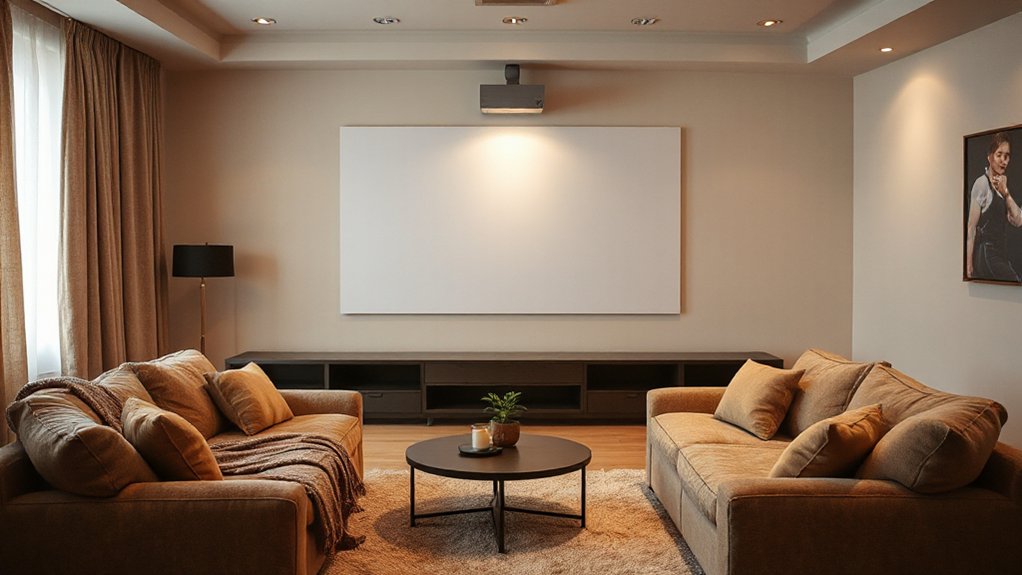
To keep movie nights seamless, design walls that glow softly when the projector hits them, not when ambient light fights back. You want projection walls that deliver a clean, true image while preserving warmth and comfort in the room. Achieve cinematic ambiance through a thoughtful finish, calibrated color, and quiet mood lighting that stays low when the show begins.
- Choose a neutral, low-sheen surface that resists glare
- Use a matte projector screen panel or paint with careful color matching
- Calibrate projector brightness to room lighting for consistent tone
- Integrate faux-wall textures that enhance depth without overpowering the screen
This approach keeps your space inviting, practical, and ready for shared viewing moments.
Rug Placement for Comfort and Flow
Rugs aren’t just décor; they shape flow and comfort in your living room. Start with a clear anchor: choose an area rug that fits under your key furniture group, not just an empty center.
For a cohesive look, extend the rug at least 6 to 12 inches beyond sofa legs; larger rooms benefit from proportionally bigger rugs. Use placement techniques that invite conversation—position front legs of couches on the rug, and center coffee tables to balance walking paths.
In tight spaces, let one rug unify adjacent seating areas to avoid visual fragmentation. Consider traffic patterns, avoiding rug edges in high-use walkways.
Layer textures for warmth, and select durable fibers for everyday living. Area rugs support comfort, while precise placement techniques reinforce belonging.
Decorative Storage That Feels Cozy
Decorative storage should feel as cozy as the rest of the room, not like an afterthought. You curate pieces that blend function with texture, so storage looks intentional and welcoming. Choose furniture with built‑in bins, soft lids, or woven baskets that tuck into corners without shouting for attention. Labeling stays subtle, using initials or icons to guide family members. Maintain a color story—creams, warm grays, and natural wood—to preserve cohesion.
When you add storage, assure it’s accessible for daily use and easy to clean. Balance open surfaces with concealed compartments, so clutter never dominates. Your goal is cozy organization that invites touch and care.
- Built‑in or basket storage with soft closures
- Textured materials to echo textiles
- Subtle labeling for quick identity
- Accessible, low‑maintenance options
Seasonal Adjustments for Year-Round Warmth
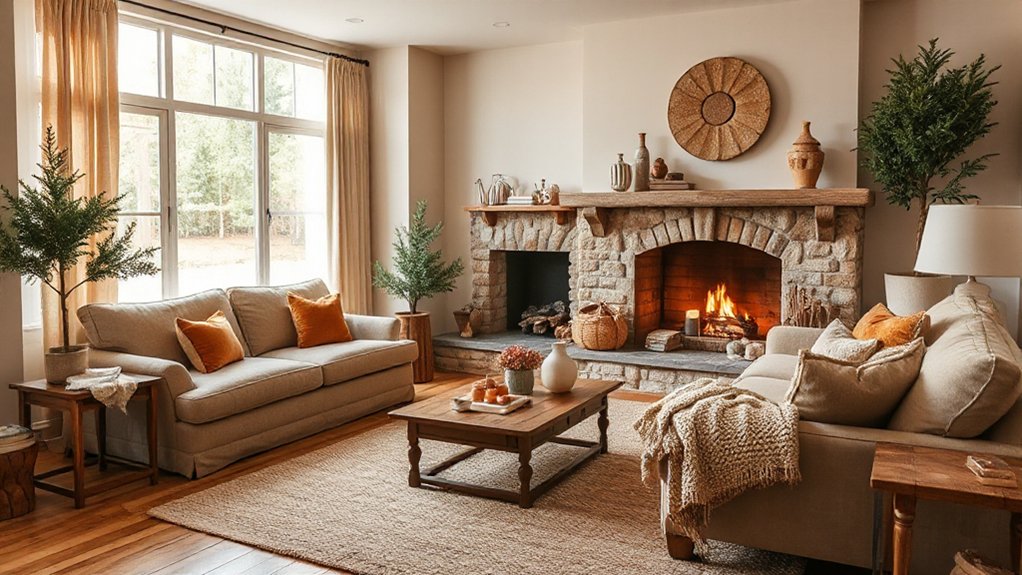
Seasonal adjustments create year‑round warmth by layering textures, adjusting lighting, and tuning temperature to keep the living room inviting without overdoing it.
You’ll balance softness and structure by rotating seasonal textiles, from wool throws to linen drapes, so textures feel deliberate rather than cluttered.
Use lighting thoughtfully: warm, dimmable sources in evenings, bright task light for chores, and subtle uplights to soften corners.
Temperature should stay comfortable without energy waste—set a steady baseline and layer heat sources as needed.
Incorporate Fireplace decor as a focal point during colder months, then highlight it with mirrors or art when it’s milder.
Maintain cohesion by preserving color harmony across accessories, cushions, and rugs.
With intention, your space remains welcoming, functional, and emotionally resonant year round.
Quick Weekend Transformations: Fast Wins for Any Room
If you’ve been layering texture and light for year‑round comfort, you’re already poised for quick, impactful upgrades. In this weekend sprint, you’ll make rooms feel new with minimal effort and maximum warmth.
Think bold accents, clean lines, and curated pieces that invite conversation. Use abstract art and minimalist sculptures to anchor focal walls without clutter. You’ll enjoy instant cohesion through color harmony and purposeful placement.
- Swap in a statement abstract art piece and one sleek minimalist sculpture
- Rearrange seating to improve flow and conversation zones
- Add texture with a lightweight throw, pillows, and a rug underfoot
- Tweak lighting with a dimmer and a warm, ambient lamp
These fast wins reinforce belonging, proving comfort can be strategic and elegant.
Frequently Asked Questions
How Can I Make a Small Living Room Feel Warmer Quickly?
Yes—add a plush throw blanket, warm lighting, and a gentle rug. Create fireplace ambiance with a softly crackling fire if possible, and position plush throw blankets where you can grab them; you’ll instantly feel cozier, more invited, more you.
What Fabrics Add Warmth Without Heaviness?
Irony says you don’t need heaviness—you do. Layered textiles and plush throws give warmth without bulk. You’ll feel cozy, collected, and confident, as you add practical texture that softly embraces you and everyone who visits.
Which Scents Create a Cozy Atmosphere Without Overpowering?
Scent layering creates a cozy, balanced atmosphere; keep notes of gentle notes and avoid overpowering aromas. Use aromatherapy blends sparingly, then reapply as needed. You’ll feel grounded, welcomed, and connected, as you curate a lasting, comforting ambiance in your space.
How Can I Balance Warmth With Practicality for Daily Use?
You can balance warmth with practicality by choosing seasonal decor and smart lighting strategies that adapt to daily use, avoiding clutter. You’ll feel belonging and comfort as rooms stay inviting, functional, and easy to maintain amid busy days.
Are Warm Tones Suitable for High-Traffic Homes?
Yes, warm tones work in high-traffic homes. Lean on color psychology to pick durable hues, and rotate Seasonal decor to refresh without overload, creating belonging while you maintain practicality and polish.
Conclusion
Ready to make your living room feel instantly warmer? Start with a comfort-first palette, layered lighting, soft textiles, and seating that invites conversation. Add cozy storage and a rug that anchors the space, then tweak for seasonal warmth. Quick wins don’t have to be flashy—think texture, scent, and gentle color pops. So, what small change will you make this weekend to transform your room into a welcoming retreat? You’ve got this.