
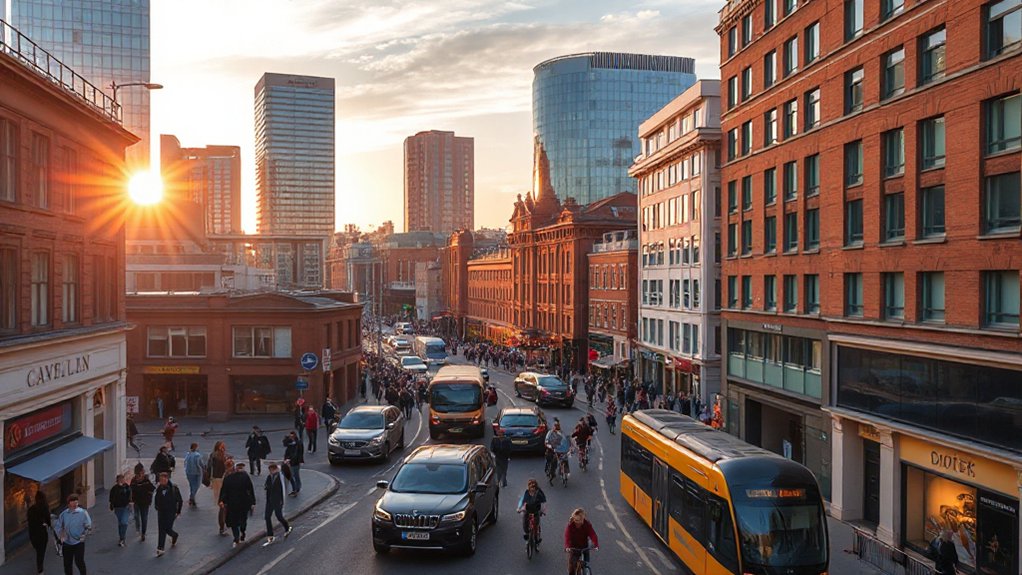
Glasgow’s mix of rapid growth in tech, finance, and creative sectors creates abundant early-career opportunities, backed by university-linked incubators, industry partnerships, and startup ecosystems. You’ll find applied learning, apprenticeships, and mentorship that translate ideas into impact, plus flexible, outcome-focused work cultures. Neighborhoods offer walkable cores, green spaces, and vibrant culture, balancing affordable living with quality amenities. Transport reliability and mixed-use development further shorten commutes. If you keep exploring, you’ll uncover how to access networks, capital, and roles that accelerate your career.
Why Glasgow Attracts Young Professionals
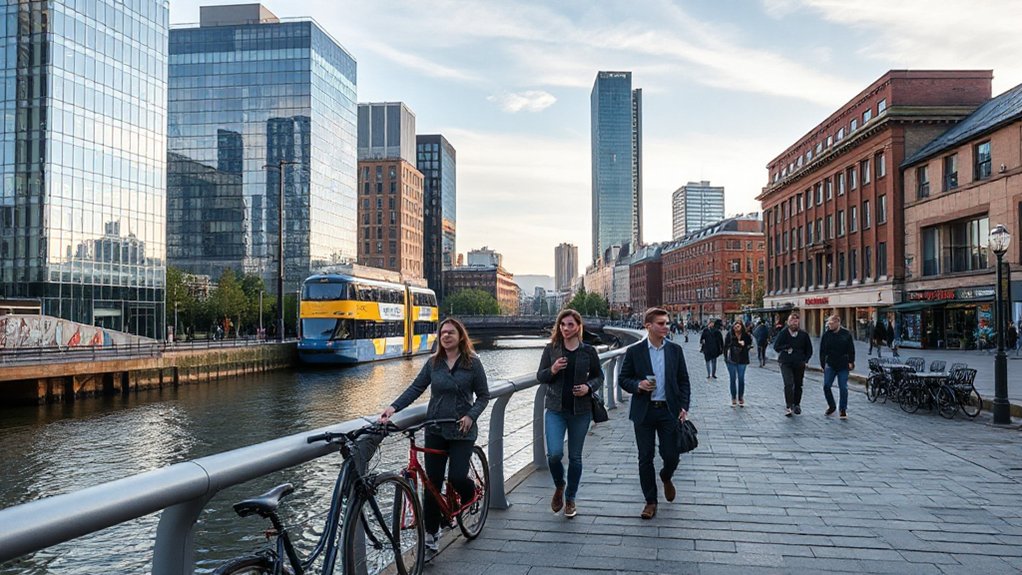
Glasgow attracts young professionals because its job market is expanding faster than the national average, with sectors like tech, finance, and creative industries driving the gains. You’ll notice a deliberate blend of opportunity and culture, where data shows higher employment growth in knowledge-based roles and supportive startup ecosystems.
Historical architecture frames your daily commute, offering tangible reminders of enduring investment in city planning and preservation. Green spaces punctuate urban density, delivering measurable benefits to well-being and collaboration, as park usage correlates with productivity metrics.
You’re not just chasing salary; you’re aligning with a city that values inclusion, mentorship, and cross-sector collaboration. Our analysis suggests sustained demand for talent will persist, reinforcing Glasgow as a cohesive, opportunity-rich hub for belonging.
Growing Industries Driving Opportunity in Glasgow
You’ll see how Growing Tech Hubs, Creative Industries Boom, and Healthcare Expansion Momentum are reshaping opportunity in Glasgow.
The data points suggest tech hubs driving startup activity, a surge in creative outputs, and sustained healthcare investments fueling hiring and skills growth.
Together, they form a stable platform for young professionals to build careers with measurable impact.
Growing Tech Hubs
Emerging tech hubs in Glasgow are accelerating job creation and skilling pipelines, as startups and scale-ups cluster around universities, accelerators, and public-private initiatives. You’ll see a connected ecosystem where data-driven Growth, venture funding, and talent pipelines translate into concrete opportunities in Tech startups and Urban sustainability. This alignment is helping to shape careers that contribute to city-wide resilience.
The pattern is measurable: higher startup density near research campuses, rising STEM enrollments, and funded pilots that translate to open roles. Your belonging grows as you navigate cross-sector collaboration, transparent metrics, and community-led tech adoption.
Expect steady momentum, not hype, with inclusive programs that place you at the center of Glasgow’s evolving digital economy. Growth is earned through collaboration, metrics, and steady skill-building.
- Concentrated tech clusters near universities
- Public-private programs funding pilots
- Data dashboards tracking job and skill growth
- Inclusive training pipelines for diverse talent
- Urban sustainability tech deployments and impact metrics
Creative Industries Boom
Creative Industries are amplifying Glasgow’s economic pulse, as arts, media, and design sectors converge with tech and education to create high-growth opportunities. You’ll see this in measurable outputs: cross-sector projects, projecting revenue gains, and rising employment in creative roles that attract young professionals.
Creative collaborations drive cluster effects, boosting productivity where studios, universities, and startups share spaces and talent pools. Data show rising output in film, gaming, and visual arts, paralleled by expanded freelancing networks and satellite studios in once-quiet districts.
Artistic innovation fuels export-ready products and services, reinforcing Glasgow’s appeal as a place to belong and grow. You’re invited to participate in this momentum, aligning your skills with dynamic projects, mentorship cycles, and inclusive networks that sustain long-term advancement.
Healthcare Expansion Momentum
- Public‑private partnerships accelerating project pipelines and grant availability
- Growth in translational research hubs tying academia to industry
- Digital health platforms scaling patient access and outcomes
- Primary care services expanding community‑level support
- Skilled workforce pipelines aligning training with industry demand
Salary and Cost of Living in Glasgow Relative to Peers
Glasgow offers a favorable salary landscape for young professionals relative to peers in other UK cities, with median tech and finance wages trending above regional norms while maintaining a lower cost of living than London and several Southern hubs.
You’ll see a clear cost comparison across sectors, where salaries progress alongside productivity without inflating living expenses. In practice, salary trends show steadier growth in tech, education, and healthcare-adjacent roles, keeping disposable income robust.
Relative to peers, lower housing and transport costs bolster budget flexibility, enabling you to invest in community, networks, and ongoing training. This combination supports a sense of belonging, as you’re not priced out of regional opportunities.
Data-driven insights reinforce Glasgow as a competitive, welcoming career environment.
Housing Trends for Newcomers to Glasgow
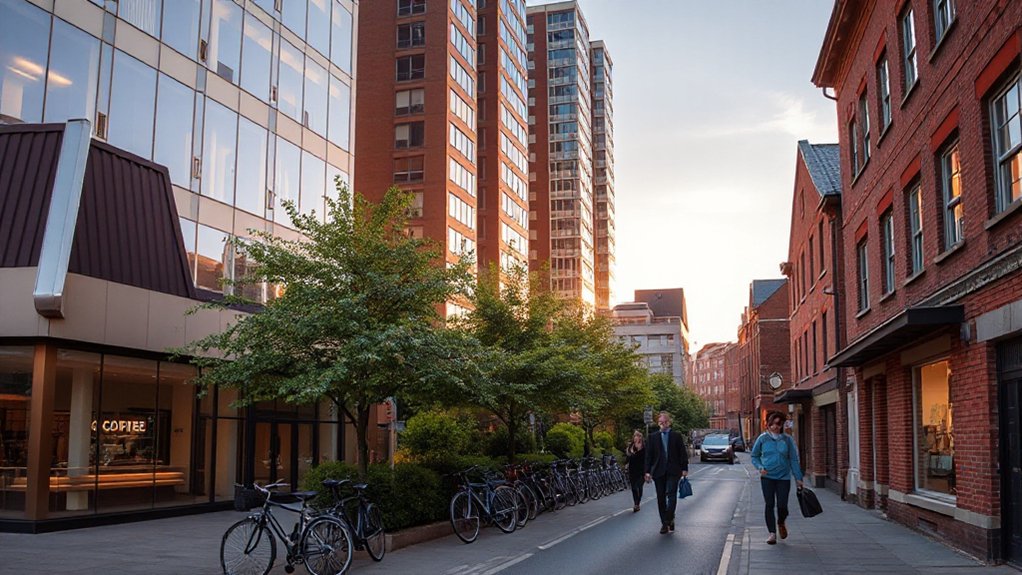
For newcomers, housing in Glasgow aligns with the already favorable salary and cost outlook, offering a practical path from earning to living. You’ll notice steady demand concentrated in central districts and up-and-coming areas, driven by urban renewal and targeted development.
Rental affordability remains a focal point, with some concessions for longer tenancies and new-build schemes that balance upfront costs with long-term stability.
- City-center clusters show improving value through mixed-use regeneration.
- Suburban pockets offer affordable entry points without sacrificing access.
- Longer leases increasingly cushion monthly costs and stability.
- New-builds emphasize energy efficiency and predictable bills.
- Community-focused developments boost belonging through shared spaces.
These trends indicate a pragmatic, data-driven path to secure housing that supports your professional ambitions and social integration.
Work-Life Balance in Glasgow: Commute, Flexibility, and Culture
You’ll notice that Glasgow’s commute times offer a clear advantage for early-career professionals seeking efficiency.
With a flexible work culture expanding across sectors, you gain potential for balanced hours and reduced peak-time stress.
This setup also shapes the city’s cultural expectations, where productivity and well-being increasingly go hand in hand.
Commute Times Advantage
Despite modest averages nationwide, Glasgow benefits from particularly shorter commutes compared with many UK metros, translating into measurable work‑life gains for young professionals. You feel the impact in predictability, lower stress, and already built-in time for personal growth.
Data show commuting efficiency is highest around key hubs, with public transport usage correlated to reliability and uptime. The result is more dependable arrival times and fewer disruption-driven days, enabling smarter scheduling and clearer boundaries between work and life.
You also gain opportunities to reuse time for productivity or wellness, reinforcing belonging in a city that values efficiency as a shared asset.
- Public transport reliability drives consistent daily routines
- Shorter average door-to-door times improve after-hours access
- High transit-mode share supports social and professional networking
- Reduced peak-time congestion lowers stress across routes
- Data-driven planning aligns work trips with personal priorities
Flexible Work Culture
Glasgow’s evolving work culture supports stronger work‑life balance by pairing shorter, more reliable commutes with flexible scheduling and outcome‑focused environments. You’ll notice firms increasingly prioritize results over hours, backed by data showing higher productivity on flexible timetables and transparent performance metrics.
Remote work options expand your options beyond the office, enabling you to tailor peak performance to personal rhythms while maintaining collaboration through targeted check-ins and shared dashboards. Local employers also invest in coworking spaces that foster community, networking, and accountability without sacrificing autonomy.
The city’s mix of hybrid policies, strong internet infrastructure, and diverse neighborhood flexibility supports belonging for professionals seeking balance. As you evaluate opportunities, prioritize roles that demonstrate clear results, accessible remote work practices, and supportive coworking ecosystems.
Education and Career Pathways in Glasgow
What pathways exist for young professionals in Glasgow today, and how effectively do they convert ambition into outcomes? You assess the ecosystem where educational innovations and career mentoring intersect, shaping practical routes from classroom to boardroom.
Data show strong demand for applied learning, apprenticeship routes, and industry-linked programs that shorten time-to-role. You’ll find targeted support hubs—universities, urban accelerators, and employer partnerships—that translate skills into salary growth, with measurable retention in local sectors.
You observe growing access to career mentoring that pairs peers with leaders, translating ambition into tangible milestones. You notice gaps in parity for certain demographics, inviting policy and program refinements to broaden impact.
Your analysis champions evidence-based, inclusive design that keeps you connected to Glasgow’s evolving opportunity map.
- Educational innovations driving curriculum alignment with industry needs
- Career mentoring networks expanding practical guidance and sponsorship
- Apprenticeship and placement programs shortening time-to-role
- Partnerships between universities, startups, and employers
- Data-driven evaluation guiding equitable program expansion
Networking Opportunities for Early-Career Professionals
You’ll find evidence-based pathways that connect you to industry collaborations and mentorship programs, accelerating skill translation into impact. By prioritizing sector-aligned events and curated introductions, you’re more likely to access insider information on market needs, enabling precise career planning.
The data suggests higher retention of talent when belonging cues are strong, such as sustained peer groups and cross-company forums. You’ll notice that communities emphasizing accountability, clear milestones, and diverse networks foster faster progression.
In short, strategic networking isn’t optional—it’s a measurable driver of your Glasgow career trajectory.
Glasgow’s Startup Scene and Entrepreneurial Support

The city’s startup ecosystem is expanding on the foundation of structured networks, with data showing higher startup survival and faster funding rounds when founders tap into sector-focused incubators and mentorship programs.
You leverage these ecosystems to validate ideas, attract mentors, and access capital, creating a measurable edge in Glasgow’s market. By pairing quantitative outcomes with targeted support, you’re positioned to scale efficiently and attract collaborators who share your pace and values.
In this environment, startup funding grows from strategic legitimacy, not just capital infusion, while mentorship programs accelerate product-market fit and customer discovery.
Your trajectory benefits from transparent metrics, responsive peers, and a culture of shared success.
- Sector-specific incubators amplify early traction
- Mentorship programs shorten time-to-validation
- Data dashboards track capital efficiency
- Collaborative coworking spaces boost deal flow
- Community-led events build trust and belonging
Glasgow Tech Scene: Demand, Roles, and Pathways
How is Glasgow’s tech demand shaping the jobs landscape, and what roles will define the next wave of growth? You’re entering a market where Digital innovation drives hiring intensity, with data engineers, product managers, and cyber specialists leading the wave.
Demand indicators show steady growth in software development and AI-adjacent roles, underpinned by cross-sector collaboration and rapid deployment cycles. Pathways emerge through targeted upskilling, industry partnerships, and clear career ladders that connect academia, startups, and established firms.
You’ll find momentum in startup incubators fueling pilot programs, talent pipelines, and mentorship, translating ideas into scalable jobs. The result is a cohesive ecosystem: measurable opportunities, inclusive belonging, and a tangible route from learning to impact in Glasgow’s tech scene.
Finance and Professional Services Growth in Glasgow
Glasgow’s finance and professional services sector is expanding rapidly, underpinned by a surge in fintech adoption, risk management needs, and cross-border operations. You gain access to a dense network of firms embracing innovation, supported by clear regulatory guidance and a talent pipeline that aligns with market demand.
Data shows steady hiring in risk, compliance, and advisory services, while financial innovation accelerates product development and client solutions. You’ll notice stronger collaboration between universities, fintechs, and traditional banks, creating a resilient ecosystem.
Professional mentorship becomes a differentiator, translating experience into faster skill acquisition and career progression. Your belonging grows as you engage with peers who value precision, performance, and continuous learning.
- Fintech adoption fueling product diversification
- Cross-border compliance and tax efficiency
- Mentorship programs accelerating early-career development
- Data-driven risk and regulatory analytics
- Talent pipelines from local universities and accelerators
Healthcare and Creative Sectors: Early-Career Opportunities
Healthcare and creative sectors in Glasgow are poised for rapid early-career growth, driven by a growing demand for user-centered design, clinical innovations, and culturally vibrant content that resonates across regions.
You’ll find that healthcare innovation is accelerating through regional partnerships, talent pipelines, and investment in digital health tools that shorten patient pathways and improve outcomes.
In parallel, creative collaboration fuels cross-disciplinary teams, translating research into market-ready solutions faster.
With data supporting rising youth employment in biosciences, design, and media, you’re stepping into an ecosystem that values interdisciplinary fluency, mentorship, and tangible impact.
Your belonging grows as you contribute to measurable improvements, build portfolios that prove real-world value, and leverage networks that connect startups, hospitals, and cultural organizations across Glasgow.
Quality of Life in Glasgow: Neighborhoods, Culture, and Food
You’ll find a city where neighborhood charms, culture, and a vibrant culinary scene shape everyday life, with data showing differing quality-of-life metrics by area.
As you weigh markets, festivals, and nightlife against housing costs and transit access, patterns emerge about where young professionals cluster and why.
This sets the stage to analyze how arts, markets, and eateries drive engagement, shape reputational capital, and influence relocation decisions.
Neighborhood Charms And Culture
Neighborhood charms in Glasgow blend historic character with modern vibrancy, and data show that walkability, café density, and green space correlate with higher resident satisfaction and retention among young professionals.
You feel the pull of historical architecture shaping daily life, while local festivals inject timely energy into quiet streets. The culture here supports belonging through inclusive, data-informed planning and intentional public spaces that invite interaction.
You’ll notice that neighborhoods with mixed-use density sustain social networks, reduce commute stress, and boost informal mentorship opportunities. With consistently measured indicators, you can see how culture and environment combine to attract talent and foster longevity in place.
- Proximity to transit and parks drives daily activity
- Historic architecture as a living backdrop
- Frequent, accessible local festivals
- Walkable street layouts encourage spontaneous meetings
- Diverse cafés as community hubs
Culinary Scene And Markets
Culinary life in Glasgow ties neighborhood character to everyday choices, with food markets and local eateries serving as barometers of significance and diversity. You’ll notice how local food networks map to neighborhood vitality: consistent supplier presence, transparent pricing, and seasonal variety signal stability and opportunity.
Data show rising footfall at farmers markets and specialty stalls, correlating with nearby housing demand and newer professional cohorts choosing walkable cores. You benefit from a diverse dining landscape that blends value-driven, affordable options with premium experiences, reinforcing a sense of belonging rather than bypassing it.
This ecosystem supports entrepreneurial mindsets, with resident-supported venues allowed to experiment, scale, and sustain. If you seek connected living, Glasgow’s culinary scene offers measurable, people-centered momentum.
Arts, Festivals, And Nightlife
Glasgow’s arts, festivals, and nightlife aren’t just cultural attractions—they’re measurable drivers of neighborhood vibrancy and economic activity. You’ll see how public art and street festivals correlate with footfall, longer dwell times, and higher local spending, signaling strong community cohesion and opportunity.
Data show concentrated clusters around creative venues boost nearby property activity and small-business resilience, inviting you to belong in a city that rewards participation. Nightlife density aligns with weekday–weekend activity, sustaining safe, inclusive streets.
You’ll notice diverse programming that strengthens social ties, from galleries to outdoor performances. This ecosystem encourages investment in talent, apprenticeships, and collaborative startups, making Glasgow feel both ambitious and accessible for you.
- Public art as a social catalyst and economic magnet
- Street festivals driving cross-neighborhood engagement
- Creative venues boosting daytime and evening footfall
- Local businesses leveraging festival spillover effects
- Inclusive programming shaping newcomer belonging
Diversity and Inclusion in Glasgow’s Social Scene
What does diversity mean for Glasgow’s social scene, and how well is it reflected in who shows up, speaks up, and participates? You’ll notice measurable shifts: rising attendance from underrepresented groups at cultural venues, and more multilingual programming that signals cultural diversity.
Yet participation gaps persist in informal networks, indicating social inclusion isn’t yet universal. Data shows incomes, education, and neighborhood concentration influence access to nightlife and community events, suggesting barriers remain even as offerings widen.
You can push for representative leadership on boards, panels, and volunteer roles to translate attendance into influence. In practice, venues with mixed programming and inclusive outreach see higher belonging scores among young professionals.
The evidence supports a direction: cultivate inclusive environments that normalize diverse voices within Glasgow’s social fabric.
Practical Steps to Break Into Glasgow Markets

To break into Glasgow’s markets, you must build a local network, prioritizing connections in decision-making circles and venture-backed groups. Data shows that targeted engagement in key sectors correlates with faster job placement and startup funding, so map those sectors and tailor your outreach accordingly.
Leverage city platforms—events, incubators, and public-facing dashboards—to amplify your presence and track measurable progress.
Build Local Network
Building a local network in Glasgow starts with targeted outreach and purposeful participation in industry events, meetups, and coworking spaces where decision-makers and peers converge. You’ll map key networks, quantify access points, and prioritize relationships with mentors and peers who signal value through action, not words.
Data show that early engagement in community events correlates with faster job placement and project wins; mentorship programs further amplify retention and progression. Your approach should convert conversations into referrals, pilot collaborations, and ongoing feedback loops.
Focus on meaningful, reciprocal connections rather than superficial contacts, leveraging Glasgow’s dense professional fabric to accelerate trust and visibility.
- Identify recurring venues and timing for high-value engagements
- Track introductions, outcomes, and next-step commitments
- Join or form cohort-based initiatives within coworking spaces
- Seek mentors aligned with your industry metrics and goals
- Measure impact through tangible projects and referrals
Target Key Sectors
Entering Glasgow’s markets requires a disciplined focus on the sectors most likely to yield rapid traction: tech, advanced manufacturing, health sciences, and creative industries.
You’ll map opportunities by aligning your skills with regional strengths, audience demand, and immediate hiring signals. Tech and health sciences show sustained growth, while advanced manufacturing benefits from Glasgow’s supply chains and skilled trades.
Creative industries thrive on Cultural heritage storytelling and digital production, inviting collaboration across sectors.
Environmental initiatives are a shared driver, shaping grant access, partnerships, and measurable impact.
Use data—patent activity, council procurement, startup density, and graduate placement—to calibrate your approach, then prove impact quickly with concrete pilots.
This disciplined targeting builds belonging by signaling fit, contribution, and long-term value to local teams.
Leverage City Platforms
Leveraging city platforms is about turning public data, networks, and procurement channels into rapid entry points. You analyze municipal dashboards, procurement portals, and local business networks to identify high-trust opportunities.
By aligning your profile with city branding, you signal belonging while maximizing visibility on digital platforms. Data-driven mapping shows where youth talent meets demand, guiding targeted outreach and partnerships.
You build credibility through transparent metrics, responsive communication, and demonstrated local impact. This approach transforms access into preference, not luck, by translating city signals into a clear value proposition for employers and collaborators.
- Map procurement cycles to your core capabilities and timeline
- Align your narrative with city branding to reinforce belonging
- Prioritize platforms with high engagement among young professionals
- Leverage local data to tailor pitches and case studies
- Track metrics to prove impact and iterate quickly
Future Outlook: What’s Next for Young Professionals in Glasgow
While Glasgow continues to attract young talent, the medium- and long-term outlook hinges on affordability, job diversification, and infrastructure investment that supports hybrid work.
You’ll see continued growth driven by sectors like tech, life sciences, and creative industries, paired with targeted plays on exportable skills.
Data indicate steady wage growth, but housing costs and commute times remain pivotal in retention.
Urban sustainability and green spaces emerge as differentiators that reinforce wellbeing and productivity, not just aesthetics.
By prioritizing affordable housing, scalable transport, and climate-smart offices, the city can reduce leakage to rival regions.
Balancing density with access to parks and walkable cores creates a belonging-enabled culture, encouraging mentorship and cross-sector mobility.
The result: a resilient ladder for your professional ascent in Glasgow.
Frequently Asked Questions
What Hidden Sectors Are Emerging in Glasgow’s Economy?
Emerging industries include biotech, clean tech, and cybersecurity, while niche markets center on digital health, creative tech, and urban analytics. You’ll notice Glasgow’s growth signals data-driven opportunities, inviting you to belong in collaborative, evidence-based communities shaping a resilient, innovative economy.
How Do Visa Policies Affect Newcomers to Glasgow?
Work visa policies shape your arrival, and immigration regulations determine your length of stay. You’ll find data-driven insights show tighter rules slow hires, while clearer paths boost talent retention, signaling belonging through predictable timelines and inclusive onboarding in Glasgow.
Which Neighborhoods Offer the Best Return-To-Work Vibes?
You’ll find the best return-to-work vibes in West End and Merchant City, where commuting options are efficient and neighborhood amenities abound; data shows shorter commutes, robust transit, and active work-life nodes foster belonging and productivity.
How Can Newcomers Access Mentorship in Glasgow Industries?
You can access mentorship in Glasgow industries by attending regular networking events and industry meetups, where peers and mentors share data-driven insights, track career trajectories, and offer structured guidance, creating belonging through collaborative, analytical, growth-focused connections.
What Startup Funding Options Exist for International Grads?
“Where there’s a will, there’s a way.” You can tap startup incubators and angel investors; international grads fuel innovative ventures, with data showing higher success rates when you leverage mentor networks and structured funding milestones. You belong, you accelerate.
Conclusion
Glasgow is a compass for your career, pointing where growth metros often hide in plain sight. The data—salary cliffs, startup counts, and sector momentum—maps a city that rewards mobility and initiative. Think of its neighborhoods as palettes: each district adds color, culture, and cost signals you’ll weigh. In this market, opportunity rises like steam from a thriving port—visible, persistent, and inviting. Position yourself, and let Glasgow’s currents carry your professional trajectory forward.