
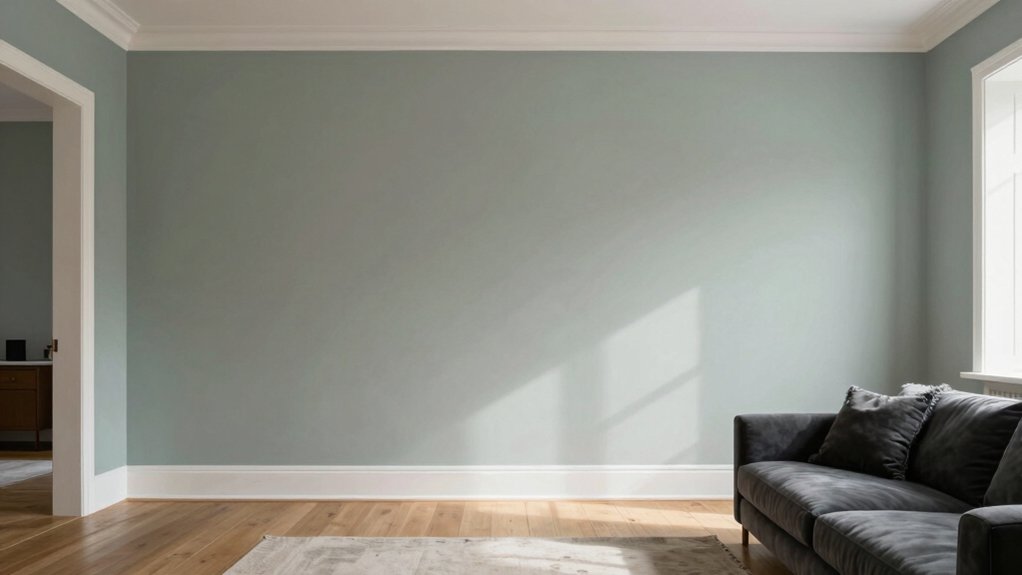
North-facing rooms benefit from warm, light-reflective whites and soft beiges that counter dim daylight and keep interiors feeling bright. Start with soft whites like off-white neutrals or warm-tinted creams, then test swatches on similar textures at wall height for 24 hours. Observe under daylight and typical indoor lighting to confirm stability and undertone. Avoid high-gloss finishes and document coordinates, lighting, and surface finish. If you keep testing, you’ll uncover deeper guidance for consistent color behavior.
Choosing Warm Undertones for North-Facing Spaces
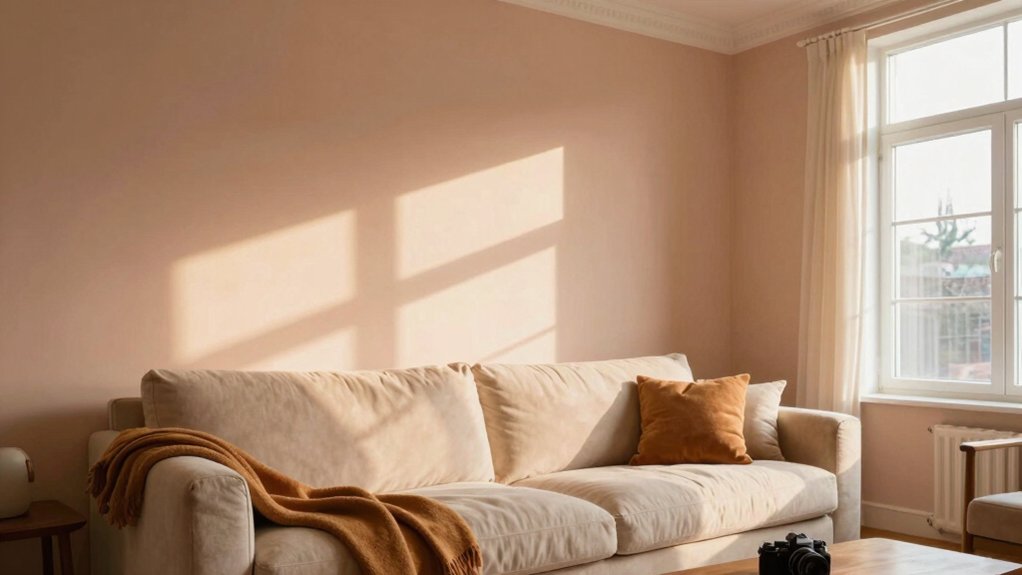
Choosing warm undertones for north-facing spaces starts with understanding how cool daylight makes colors feel; warm undertones counterbalance this and prevent the room from reading flat. You’ll select hues with yellow or peach biases to offset a cool tint that north light imposes.
In practice, aim for undertones that read warm under the room’s lighting mix, not just daylight. Apply color psychology to predict mood: warmer bases evoke coziness, while still maintaining clarity and legibility.
Use decorative accessories to reinforce warmth without overpowering architectural lines, such as walnut frames, brass hardware, and textiles in amber or terracotta. Test swatches under afternoon and evening light to confirm balance, ensuring the color remains vibrant as ambient conditions shift.
Keep surfaces crisp and avoid muddy mixtures by resisting excessive gray or blue tints.
Soft Whites to Brighten Dim Light
Soft whites can brighten dim, north-facing light without washing out warmth from warm undertones. In this setting, you’ll balance contrast between light and texture, choosing shades that reflect rather than absorb available light. Opt for whites with subtle undertones that avoid stark, clinical brightness, preserving coziness while enhancing clarity.
Pair these soft whites with controlled artificial lighting strategies—cool-leaning bulbs for task areas and warmer accents for ambience—to maintain depth. Consider paint sheen as a design tool: a satin or eggshell finish oils up reflections just enough to prevent flatness without introducing glare.
Test swatches on multiple wall moments, especially near windows, to observe how light shifts throughout the day. Keep transitions deliberate, ensuring the space feels expansive yet intimate.
Beige and Cream Taves That Read Warm
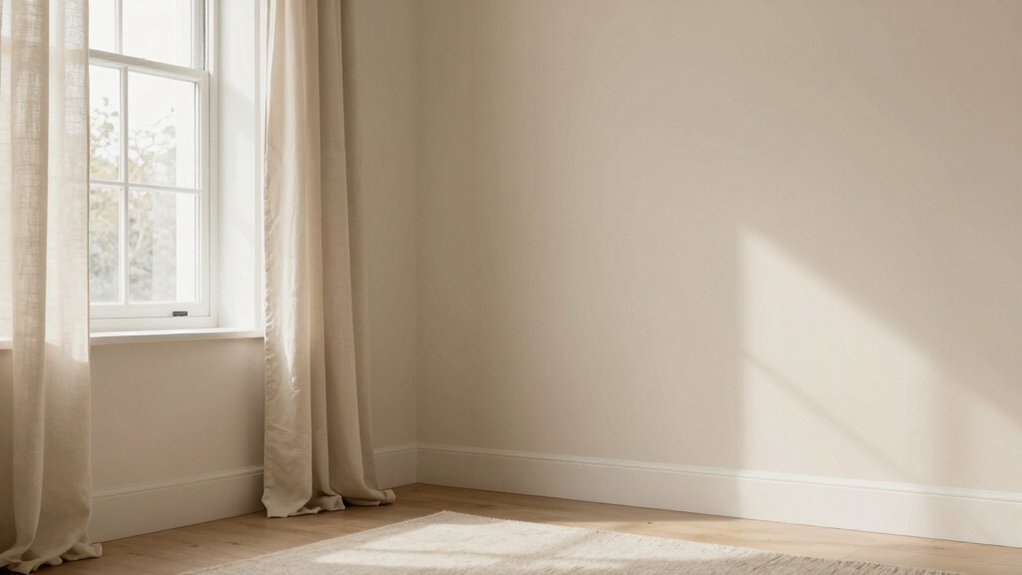
Warm beige tones pair with creamy beige balance to counteract north-facing light without washing out warmth. You’ll want colors that read substantial yet soft, keeping depth in midtones and avoiding gray-leaning hues.
Consider testing warm beige swatches under natural and artificial light to confirm that the tones read cozy rather than flat.
Warm Beige Tones
Beige and cream tones that read warm bring cozy depth to north-facing rooms by offsetting cooler daylight. You’ll find that warm beige tones read as inviting without overpowering the space, preserving architectural detail and natural light balance.
In practice, choose mid-range values with LRV around 60–70 to maintain brightness while adding warmth. Consider subtle undertones—greige, linen, or honey—matched to your flooring and furnishings for a cohesive palette.
When lighting, artificial lighting should elevate warmth without shifting hue; use lamps or sconces with 2700–3000K color temperatures to reinforce coziness.
Paint sheen matters: opt matte or eggshell for walls to minimize glare and emphasize texture, while semigloss trims add crisp definition.
Test samples on multiple walls at different times of day to confirm true warmth.
Creamy Beige Balance
Creamy beige balances blend warmth with neutrality, creating a canvas that feels inviting without competing with architectural features. You’ll find this balance works well in north-facing rooms where light is cooler and softer.
Choose creamy beige tones with slight yellow or peach undertones to enhance perceived warmth without leaning toward yellow overexposure. In practice, apply this color in main living zones and keep trim pure to preserve contrast.
Consider paint color psychology: these hues reduce starkness, promoting comfort and focus. When decorating with neutrals, layer texture through fabrics, wood, and metals to avoid flatness.
Use a single accent color sparingly to maintain cohesion. Maintain consistency across walls, ceilings, and cabinetry for a unified, luminous atmosphere.
Balancing Depth and Light in Cool Echos
You’ll balance depth with light by pairing cool echoes with midtone hues that avoid flatness. North-facing rooms benefit from color warmth that still reads crisp, letting light bounce without looking washed out.
Consider how depth and brightness interact to shape a calm, precise ambience.
Depth With Light
Depth with light in cool echoes hinges on the interplay between tonal depth and luminance: deepen walls with cool undertones while preserving sufficient brightness to prevent a cave-like feel. You balance color intensity with reflective surfaces, ensuring the room reads as open yet sculpted.
Choose wall texture and paint sheen deliberately: a matte or satin finish can absorb glare while still presenting true color depth, whereas a semi-gloss reveals highlights that emphasize architectural lines without overpowering the space.
In north-facing rooms, lean toward mid-tones that read cool yet warm enough under daylight. Pair deeper walls with lighter ceilings to modulate vertical scale.
Test swatches under explanation lighting to gauge how luminance shifts with diffuse versus direct light, and adjust the paint sheen to maintain legibility, texture, and spatial rhythm.
Cool Echoes Balance
Cool echoes in north-facing rooms require a precise balance of depth and luminance: deepen the walls with cool undertones while keeping daylight reflection high enough to avoid a cave-like feel. You achieve this by selecting mid-value cools with subtle gray or blue undertones, not saturated hues that drape the space.
Implement a layered approach: base color for field walls, lighter ceilings, and strategically placed highlights to expand perceived volume. Color psychology informs mood: cooler tones soothe and sharpen contrast, while adequate reflectivity preserves clarity.
Prioritize paint durability with a high-quality acrylic or latex finish, ensuring washability and resistance to wear in high-traffic zones. Test swatches under natural and artificial light, and verify color stability across seasons to maintain balanced depth.
North-Facing Ambience
North-facing rooms demand a disciplined handling of depth and light, balancing cooler reflections with enough brightness to prevent a muted, cave-like feel.
In this ambience, you guide perception by choosing ceiling colors that lift the ceiling plane without dominating the wall mass. Light-reflective whites or soft alabaster hues help bounce diffuse daylight deeper into the space, while cool grays can ground the room without washing out contrast.
Use accent walls sparingly to create focal depth, not distraction, ensuring the tone remains cohesive with surrounding surfaces. Consider matte vs satin finishes to control glare; satin often helps brightness without harsh shine.
Pair neutrals with strategic pops in textiles or art, and align ceiling colors with your overall color hierarchy to preserve balance.
How Lighting Affects Color Perception
Lighting shapes how colors read in a room, so the same paint can look dramatically different under varying conditions. In a north-facing space, you’ll notice cooler undertones in daylight and warmer shifts as the sun fades.
Lighting alters color perception by spectral content, brightness, and object contrast. You’ll rely on neutral test swatches under natural light to gauge true tone, then confirm under artificial lighting with a daylight-equivalent bulb.
The same hue may appear flatter with dim, blue-tinted light or more saturated near a strong warm source. Consider color temperature and CRI when selecting finishes, since sheen amplifies or softens the effect.
Plan a staged evaluation across morning, noon, and evening to understand how natural light interacts with your chosen palette.
Practical Tips for Testing Paint in North Rooms
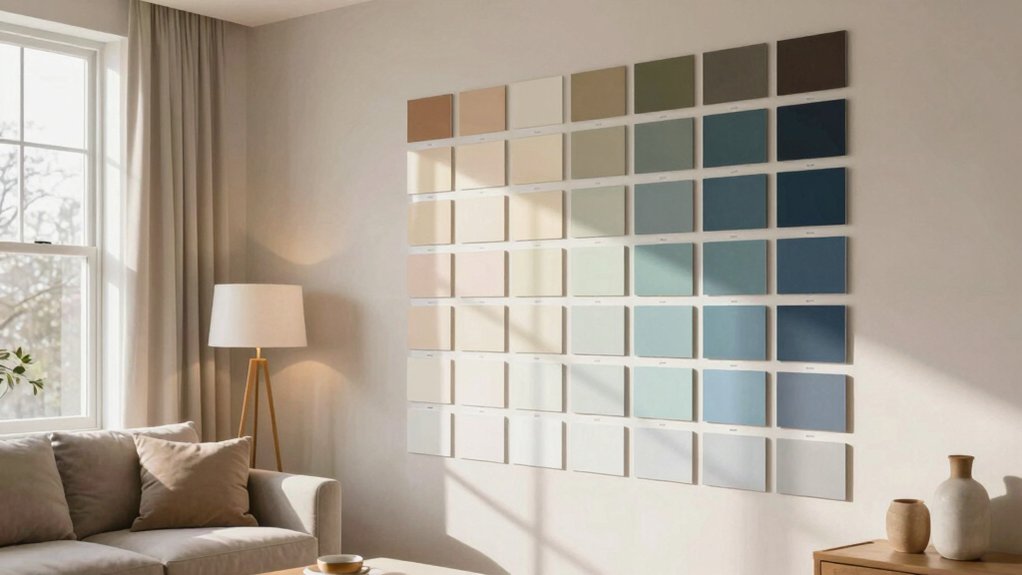
To test paint effectively in north rooms, start with neutral swatches at actual wall height and observe under the room’s daylight window light. Then verify under common artificial conditions. You’ll compare tones by performing a paint swatch comparison across multiple adjacent wall areas to capture depth, temperature, and undertone shifts.
Maintain consistent measuring methods: park swatches on the wall for at least 24 hours, flip them to check color aging, and note how surfaces reflect light from windows and lamps. For accuracy, document coordinates, lighting hours, and surface finish.
Guarantee paint sample placement in similar textures to final walls, avoiding high-gloss interference. This disciplined approach reveals true color behavior, guiding you toward a north-friendly selection that remains stable under varying indoor lighting.
Frequently Asked Questions
Do North-Facing Rooms Benefit From Color Psychology Contrasts?
“Strike while the iron’s hot.” Yes, north-facing rooms benefit from color psychology and contrast strategies, you’ll energize walls with warm tones, maximize light, and sharpen perception using deliberate contrast while keeping technical, aesthetic balance.
Can Paint Color Impact Perceived Room Size in North Light?
Yes, you can. Light reflection and color temperature influence perceived room size in north light: brighter surfaces with warm-to-neutral tones reflect more, while cooler hues minimize shadows, enhancing depth and openness without sacrificing architectural detail.
Which Finishes Best Mitigate Color Shift in Northern Sun?
You’ll want a matte or eggshell paint finish to minimize color shift in northern sun, maximizing even light reflection. This reduces glare, preserves true hue, and keeps your space feeling accurate, calm, and technically precise despite changing daylight.
Are There Seasonal Tone Changes for North-Facing Spaces?
Seasonal lighting changes affect your north-facing space: you’ll notice cooler, bluer tones in winter and softer, warmer hues in summer, while temperature effects subtly shift saturation. You adapt by selecting finishes that stay true despite these fluctuations.
How Do Indoor Plants Affect Wall Color Perception?
Indoor plants subtly shift wall color perception by reflecting and diffusing light, so plant placement matters; choose hues that read true. Maintain color palette harmony with leaf tones, avoiding clashing greens or excessive contrast in dim north light.