
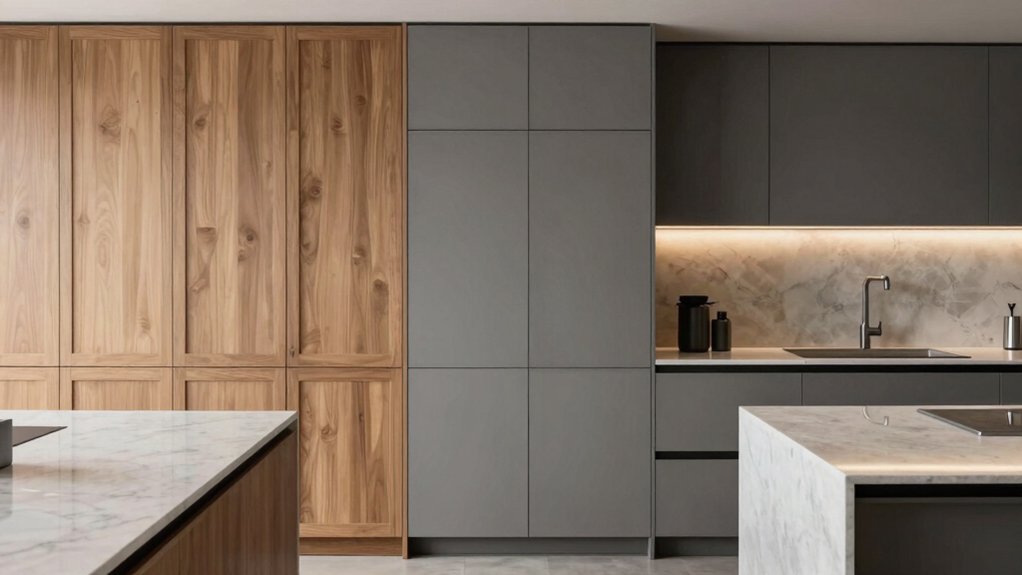
When I swapped a floor vent for a shaker cabinet and it transformed the room’s feel, you felt the same pull between warmth and utility. You’ll weigh style impact against cost, durability, and resale—shaker for timeless charm, handleless for sleek modernity—then consider how each choice aligns with your space and market. The tradeoffs aren’t merely color choices; they affect installation time, maintenance, and value. Ready to quantify these factors and decide which path fits you best?
The Core Differences Between Shaker and Handleless Styles
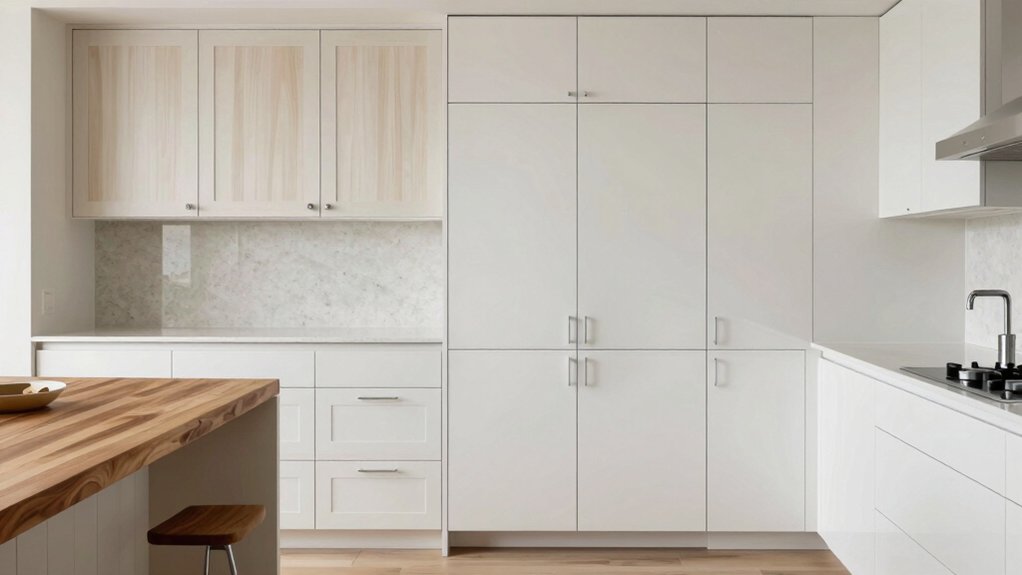
Both Shaker and handleless kitchens prioritize clean lines, but they diverge in form, function, and user experience.
Shaker cabinets emphasize a framed silhouette with a four-piece door. You’ll notice subtle bevels, a flexible palette, and hardware-driven tactile cues.
In contrast, handleless designs rely on edge, groove, or push-to-open mechanisms for a seamless facade. You remain in control of siting, alignment, and interaction, but the cadence changes: tactile openers in Shaker vs. touch or pull systems in handleless layouts.
Color options matter: Shaker accepts warm stains and muted paints; handleless leans toward high-gloss, matte, or textured finishes that enhance continuity.
Cabinet hardware, though optional in handleless schemes, still defines density, grip, and function in Shaker, where pulls and knobs reflect traditional detailing.
Cost Implications: Initial Installation and Long-Term Maintenance
Initial costs for shaker and handleless kitchens diverge mainly in cabinet hardware, manufacturing complexity, and door construction. While starting with a shaker setup, you’ll pay more upfront for framed cabinets and traditional hardware. Conversely, handleless systems often incur higher costs from precision mechanisms and seamless façades.
In installation, expect longer timelines for alignment and soft-close integrations with shuttered edges in shaker designs. Handleless layouts typically allow for quicker fitment with integrated rails.
Long-term maintenance centers on hardware wear, door alignment, and gasket performance. Shaker units typically require periodic hinge or catch adjustments. Handleless panels demand ongoing seal and track reconditioning.
Consider appliance integration and space optimization needs to forecast future service intervals and resale value.
Design Aesthetics and How They Influence Space Perception
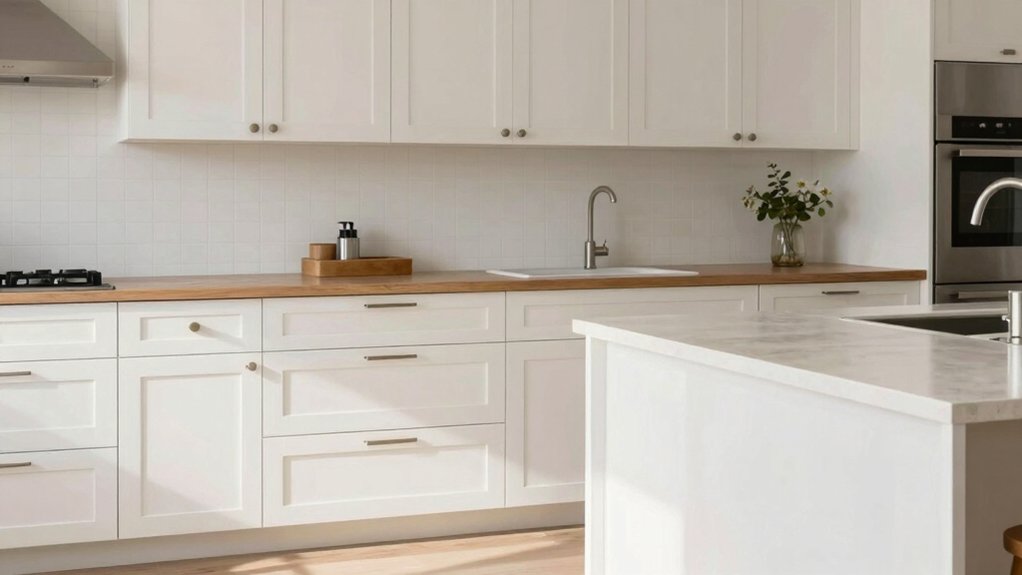
Design aesthetics shape how you perceive space by translating materials, profiles, and finishes into perceived scale and mood. You’ll notice that surface reflectivity, edge profiles, and cabinet proportions alter perceived room height, depth, and openness.
In shaker designs, medium-scale details and tactile woods tend to create warmth and recognizable rhythm, while handleless layouts emphasize horizontal flow, reducing interruptions to sightlines.
Color psychology matters: cool neutrals expand and calm, whereas warm hues invite coziness, but contrast and saturation shift perceived size.
Visual balance emerges from proportional shelving, drawer lines, and appliance placement, guiding the eye and preventing overcrowding.
Material diversity should align with lighting strategy to maintain cohesion. Overall, design choices shape how spacious or intimate the kitchen feels, influencing daily use and perceived quality.
Resale Value: What Buyers Are Looking For in 2025
Resale value in 2025 hinges on a mix of timeless fundamentals and practical upgrades that buyers prize. You’ll prioritize layouts, finish consistency, and cabinetry that signals lasting quality over quick fads.
In a trends analysis, buyers weigh adaptability: neutral palettes, clean lines, and integrated components that render spaces versatile for evolving needs. Energy-efficient upgrades, durable hardware, and minimal maintenance requirements drive appeal, while hidden storage and streamlined workflows boost perceived value.
Market demand concentrates on kitchens that promise durability and return on investment, not just appearance. You’ll also notice emphasis on standardization across rooms to minimize renovation hassles for future owners.
Practical Considerations: Materials, Durability, and Personal Fit
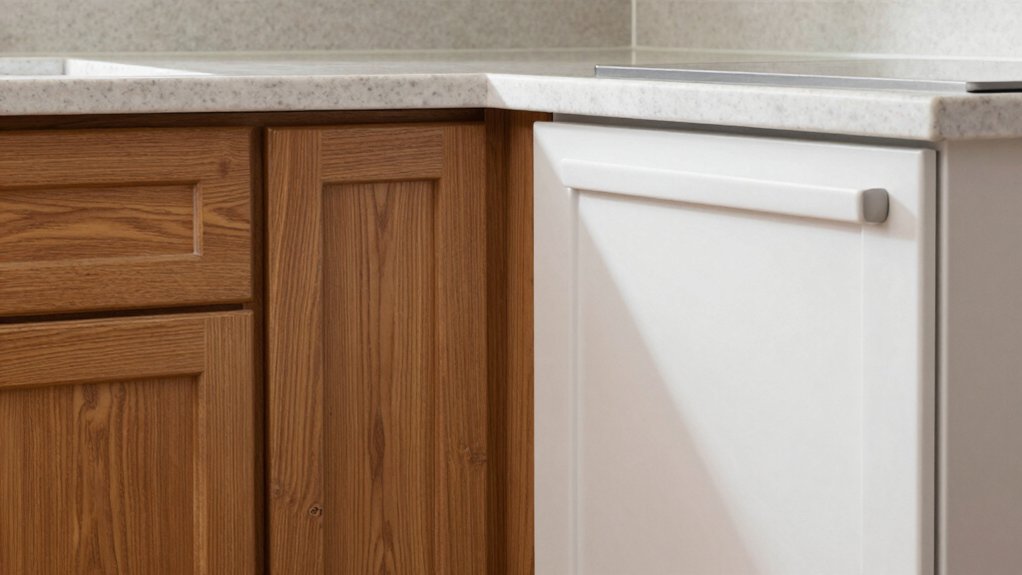
Materials, durability, and personal fit are the practical lenses through which you choose between Shaker and handleless kitchens. You assess materials for moisture resistance, heat tolerance, and long‑term wear. Shaker doors typically use solid wood or veneered laminates, offering tactile certainty but requiring periodic maintenance.
Handleless panels favor engineered woods and high‑pressure laminates with uniform finishes and enhanced wipeability. Durability hinges on joinery, edge treatment, and hardware selection. You compare hinge types, drawer slides, and soft‑close mechanisms for both styles, noting that robust hardware options extend life with smoother operation and less sag over time.
Personal fit matters: consider color schemes and surface textures that align with lighting, traffic patterns, and user behavior. Balance aesthetics with maintenance needs, ensuring you can confidently sustain the chosen configuration.