

A retrofit in a mid-century home shows how underfloor heating can even out heat across open-plan spaces, but you’ll face higher upfront costs and possible floor rebuilds. You weigh long-term comfort and efficiency against quick fixes with radiators that fit your existing walls and budget. With 2026 tech, you’ll need to evaluate installation, running costs, zoning, and finishes to decide which system aligns with your renovation goals—and there’s more to consider than initial price.
Cost Considerations for Installation and Running
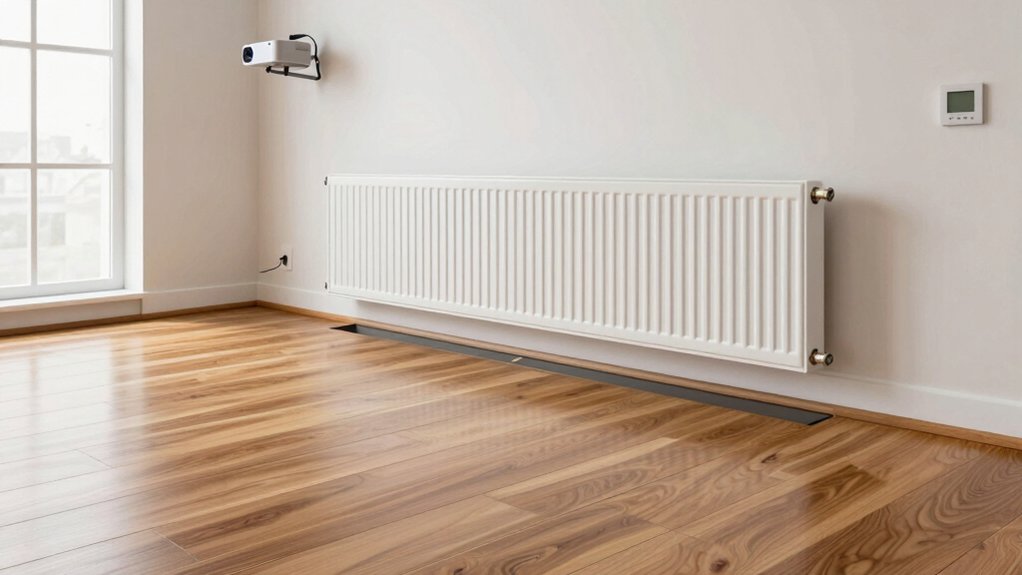
While upfront costs for underfloor heating can be higher than traditional radiators, the long-term operating expenses often favor UFH, especially with modern, energy-efficient systems.
You assess cost components by focusing on installation expenses and ongoing energy use. Installation expenses include system design, subfloor preparation, mat or coil layout, manifolding, and thermostat integration. Expect higher initial labor and material costs compared with radiator retrofits, particularly in retrofit scenarios or complex floor constructions.
Running costs hinge on heat source efficiency, zoning, and control strategies; UFH typically offers lower watts per degree with uniform distribution, reducing peak demand.
Conduct a cost comparison over the expected life of the system, accounting for energy prices, maintenance, and potential subsidies or rebates. Choose a solution that aligns with renovation scope, reliability, and long-term value.
Comfort and Heat Distribution in Different Spaces
You’ll notice heat spreads differently by room layout, occupancy, and fixture placement.
With underfloor systems, heat rises from the floor and can even out slowly.
Meanwhile, radiators tend to heat the air near the ceiling more quickly.
This sets up distinct comfort profiles across spaces, making room geometry and usage critical to performance.
Heat Spread in Rooms
Warm air rises and heat moves from sources to cooler zones, so distribution depends on system type and room layout. You evaluate heat spread by considering emitter placement, ceiling height, and furniture layout, which shape room airflow.
With radiators, heat concentrates near walls and rises, creating stratification that can leave cold pockets opposite units unless convection is enhanced.
Underfloor heating delivers low-temperature, evenly distributed warmth, reducing strong drafts and improving uniform heat spread across the floor plane. In open-plan spaces, radiant floor mats or loops minimize vertical gradients, while radiators demand strategic placement to balance comfort zones.
Heat distribution also hinges on insulation quality, glazing, and air leakage. You should model expected room airflow patterns to compare perceived comfort and energy performance between systems.
Comfort Varied by Space
Different spaces respond to heating systems in distinct ways, so comfort and distribution depend on room function, occupancy patterns, and layout. Space type drives how evenly heat is perceived: living areas benefit from radiant warmth and a stable floor temperature, while kitchens and bathrooms cope better with rapid heat changes and higher surface heat exchange.
Underfloor heating tends toward uniform warmth, reducing room temperature variability across floors but may lag during sudden temperature shifts.
Radiators offer quick spot heating, improving perceived comfort in high-activity zones yet can create vertical drafts and uneven warmth between near-field and distant corners. Consider furniture placement and heat sources to minimize dead zones.
Achieving space-specific comfort requires tailoring controls, zoning, and setpoints to match usage patterns and occupancy schedules.
Installation Challenges: Retrofit and Renovation Scenarios
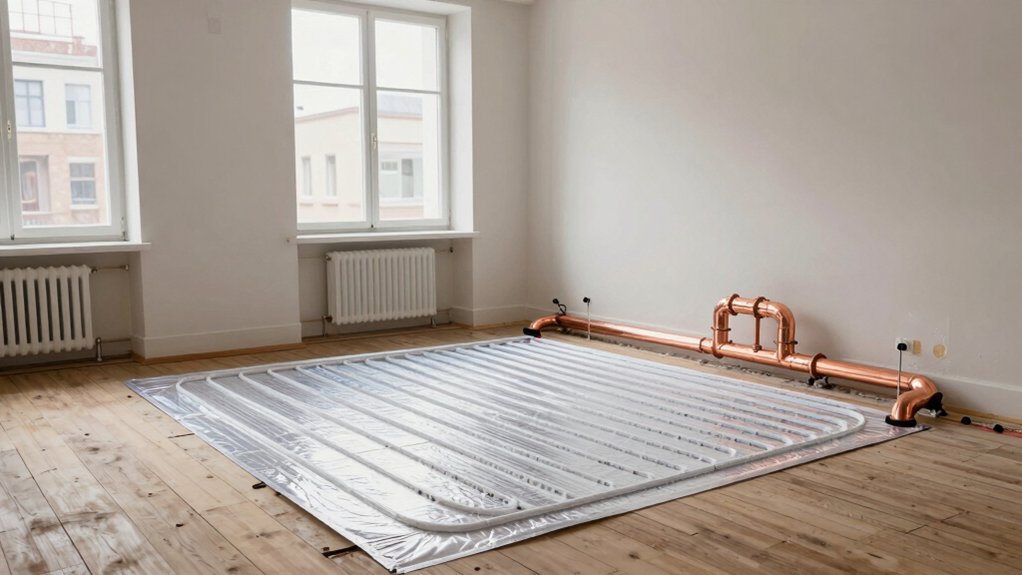
Retrofit hurdles and renovation compatibility shape your implementation path, as existing structures constrain routing, floor thickness, and heat source placement. You’ll assess substrate conditions, underlayment, and joist spacing to determine feasible layouts and the need for alternative systems.
This discussion starts with identifying trade-offs between retrofitting existing builds and pursuing new-build optimizations.
Retrofit Hurdles
Undertaking retrofit and renovation scenarios for underfloor heating and radiators introduces several installation challenges you must address upfront. Retrofit hurdles begin with planning around existing structures, where space, joists, and ceilings constrain routing and placement.
You must assess construction tolerance, water or electrical supply upgrades, and load calculations that affect system performance. Historical building constraints influence where you can embed pipes or mats without compromising walls or finishes, often dictating retrofit sequencing and access.
Aesthetic considerations drive decisions on visible elements, floor coverings, and surface finishes that impact heat transfer efficiency. You’ll also face uneven substrate, thermal bridging risks, and insulation compatibility that require precise integration with existing HVAC controls.
Prioritize minimal disruption, code compliance, and scalable options to balance comfort, cost, and retrofitting feasibility.
Renovation Compatibility
Renovation compatibility hinges on aligning retrofit options with existing structures, systems, and finishes. You’ll assess floor types, ceiling heights, and wall build-outs to determine feasible installation pathways for underfloor heating or radiators.
Consider thermal mass, insulation, and subfloor conditions to predict performance shifts during renovation. Aesthetic appeal matters: you’ll weigh invisibility of radiant mats versus visible radiator placement and floor transitions.
Installation complexity varies by system: hydronic underfloor layouts demand detailed zoning and skilled trades, while radiator retrofits often require boiler or pump adjustments and venting updates.
Ensure existing plumbing, electrical routes, and control systems accommodate new controls, sensors, and zoning. Plan for daylighting, furniture layouts, and door clearances to avoid conflicts.
Finally, factor retrofit timelines, disruption, and budget realism into your renovation roadmap.
Energy Efficiency and Operating Costs
When evaluating energy efficiency and operating costs, underfloor heating typically uses less heat energy over time due to reduced heat losses from furniture obstruction and lower water temperatures compared with radiators.
You’ll see steadier surface temperatures and fewer hotspots, which minimizes cycling losses and improves overall energy utilization. Energy consumption trends favor radiant floor systems in well-insulated spaces, particularly when paired with efficient heat pumps or condensing boilers.
Compared with radiators, underfloor networks can deliver warmth at lower supply temperatures, reducing boiler runtime and the associated fuel or electricity use. Operating expenses tend to align with longer-term savings, though initial installation costs are higher.
Consider system efficiency, insulation quality, and heat source reliability to accurately compare total ownership costs.
Temperature Zoning and Control for Modern Homes
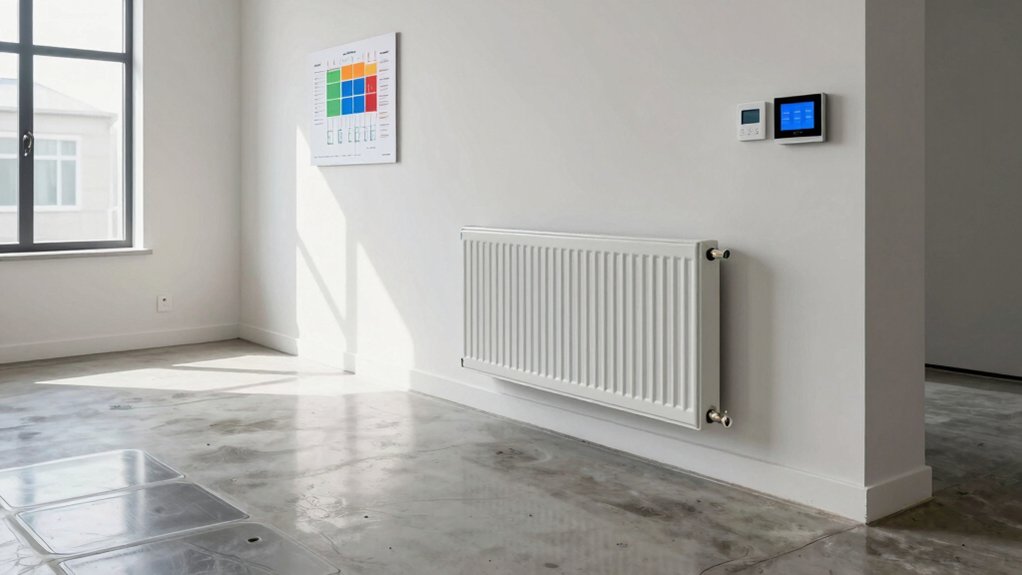
Temperature zoning and precise control are essential in modern homes, enabling separate comfort profiles and improved energy efficiency through targeted heating. You’ll implement zoning zones to divide spaces by use, occupancy, and sun exposure, reducing waste heat in unoccupied areas.
Each zone relies on dedicated control points, driven by temperature sensors that feed real-time data to the thermostat or hub. With underfloor systems, floor-sensing is common, while radiators often pair with wall-mounted sensors or smart thermostats.
Choose a controller that supports adaptive scheduling, open windows, and setback recovery to maintain stability without overshoot. Independent setpoints allow simultaneous cooling and heating needs, if applicable.
Confirm communication protocols are secure and scalable for future refinements, avoiding cross-talk between zones and preserving comfort consistency throughout the home.
Compatibility With Tiles, Plaster, and Finishes
Tiles, plaster, and finishes must be compatible with your chosen heating method to guarantee performance and longevity. You’ll assess substrate temperature limits, tile thinset compatibility, and moisture management to prevent debonding and cracking.
For underfloor heating, verify tile compatibility with required mortar types, curing times, and overall output temperature to avoid thermal stress. For radiators, ensure surface heat won’t exceed adhesive and plaster specs.
Check plaster adhesion by confirming base coat strength, skim coat integrity, and movement joints to tolerate expansion. Consider heat-induced drying and drying shrinkage, selecting finishes rated for elevated surface temperatures.
Use compatible barrier membranes where needed to prevent moisture migration. Document manufacturer guidelines for tile and plaster adhesion, and confirm that installation tolerances align with system design.
Smart Home Integration and Controls
Smart home integration centers on how heating systems respond to automated control, occupancy, and energy targets. You’ll interact with centralized ecosystems that coordinate underfloor heating or radiators through control systems, apps, and hubs.
With a well-designed setup, schedules, geofencing, and occupancy sensing adjust temperature profiles without manual input, reducing waste and improving comfort.
For both systems, compatibility hinges on relay interfaces, sensor fidelity, and communication protocols (Zigbee, Z-Wave, or Wi-Fi). Choose devices that support open standards to avoid vendor lock-in and ensure future scalability.
In practice, you’ll want clear scene definitions, override options, and robust device discovery to prevent lag.
For renovation projects, prioritize grid-wide energy management, real-time feedback, and secure remote access to maintain reliability and user trust.
Smart home control systems enable precise, energy-aware regulation.
Practical Tips to Maximize Efficiency and Comfort
To maximize efficiency and comfort, set clear temperature targets for each zone and keep them consistent with occupancy patterns. This helps the system respond predictively and minimize overshoot. Use a smart controller to pair timing with weather-compensation curves, reducing standby losses.
Prioritize thermal insulation in key areas, especially floors and external walls, to lower heat demand and stabilize comfort. Seal duct and pipe runs to prevent heat leakage and noise transmission; address joints and penetrations with proper weatherstripping.
Balance radiators or underfloor manifolds to avoid cold spots and ensure even distribution. Schedule setback periods sparingly to avoid large reheating loads.
Consider noise reduction measures around pumps and manifolds, selecting low-noise circulators and vibration isolation where possible. Monitor performance and adjust targets as occupancy evolves and insulation improves.
Long-Term Maintenance and Durability Factors
Long-term maintenance hinges on durable components, accessible service points, and proactive inspections that prevent small issues from becoming costly failures. You’ll benefit from monitoring for impedance changes, insulation integrity, and pump wear, which collectively influence reliability.
For underfloor systems, expect seal integrity in manifolds and circulation loops to stay solid with periodic checks. For radiators, confirm valve stiffness and air vent operation. Schedule maintenance frequency that aligns with manufacturer guidance and your usage patterns, not just calendar prompts.
Record-keeping of temperatures, flow rates, and energy logs aids fault isolation and extends system lifespan. Prioritize durable materials and corrosion-resistant fittings to reduce failure likelihood. Regular testing of controls, sensors, and thermostats ensures consistent performance.
When maintenance is consistent, system lifespan improves and downtime decreases.