
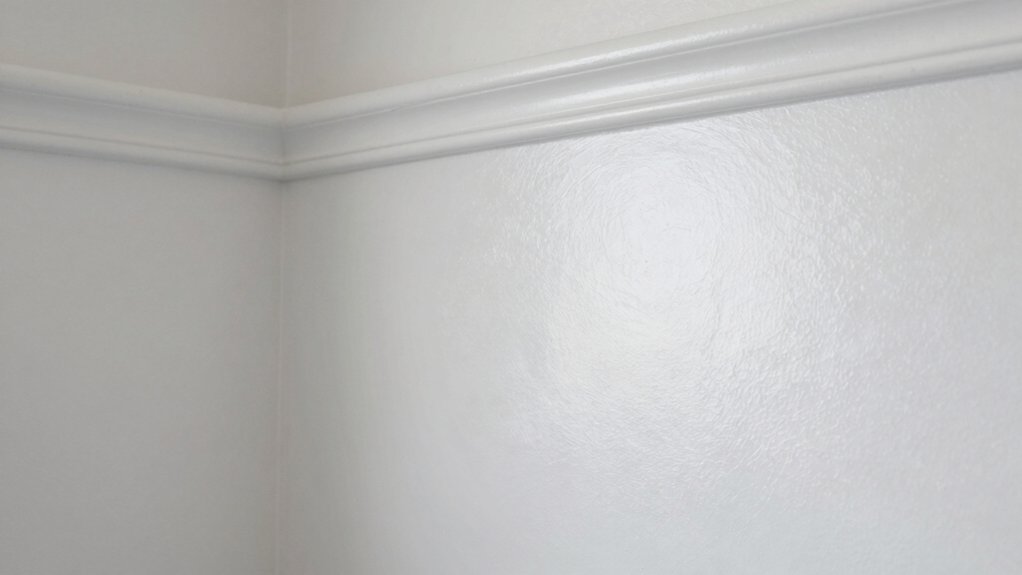
When you want bathroom walls that last, start with the right sheen: satin for a balanced look that hides minor flaws and handles humidity, or semi-gloss where moisture is constant, like behind a shower. You’ll get easier wipe-downs and fewer soap spots with higher-gloss options, while eggshell moisture-blocking formulas offer a middle ground. Prep well, choose a compatible primer, and guarantee good ventilation—the next step could be deciding how much you want to refresh the space soon.
Understanding How Moisture Affects Bathroom Paint Finishes
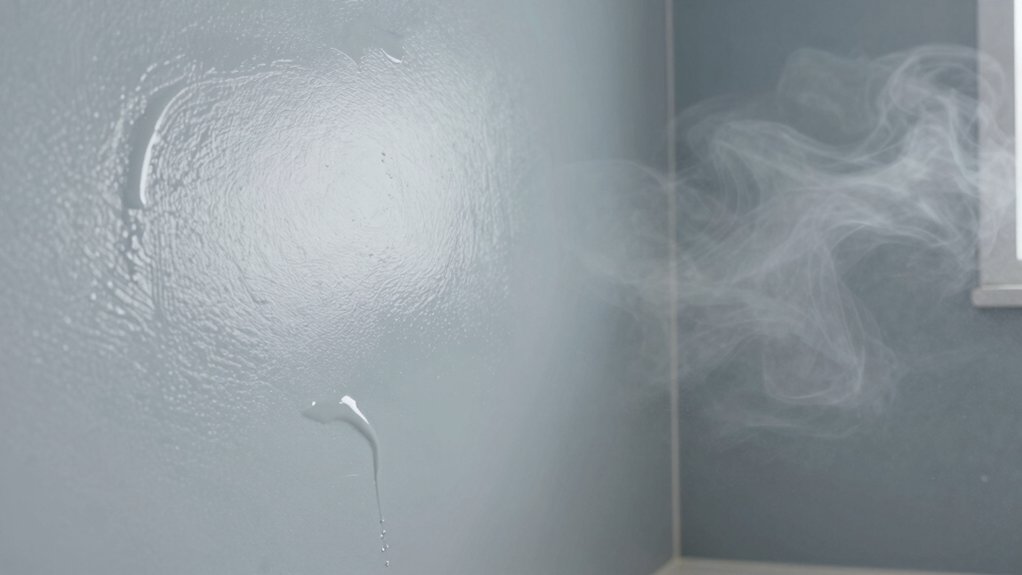
Moisture is the biggest enemy of bathroom paint finishes. You’ll see how damp air affects adhesion, color, and durability, so you act now rather than repaint later.
Start with ventilation improvements: ensure exhaust fans run during showers and for at least 15 minutes after, and keep windows cracked or use a dehumidifier in humid months. Higher air exchange reduces condensation on walls and slows peeling and mildew growth.
Choose moisture-resilient coatings with mold prevention additives and mildew resistance ratings; apply primer designed for high humidity if walls are previously damp.
Regular maintenance matters: wipe condensation spots, inspect for bubbles, and patch promptly. By prioritizing proper airflow and mold prevention, you extend finish life and minimize repair costs.
Satin Finish: Balance of Sheen and Durability for Bathrooms
Satin finishes balance a soft, reflective sheen with solid moisture resistance, making them a practical pick for bathrooms. You’ll want to contemplate how sheen relates to cleaning resistance, and how that level holds up under moisture and daily wipe-downs.
I’ll cover cleaning resistance levels, how sheen affects maintenance, and quick application tips to get durable, bathroom-ready results.
Sheen vs. Moisture
Choosing the right sheen for bathroom walls means balancing look with durability; satin finishes offer that sweet spot.
In terms of moisture, satin is more resistant than flat paints but less glossy than semi-gloss, so it tolerates humidity without showing every wipe or splash.
You’ll want a durable film that resists mildew resistance and helps keep walls clean, especially in showers and sinks.
Satin also supports even paint adhesion on primed drywall or existing coatings when you prepare properly.
To optimize performance, use a premium bathroom primer, and apply in a well-ventilated space with steady coats.
Avoid over-washing; instead, wipe with a damp cloth and mild cleaner.
Select a product labeled for bathrooms to maximize longevity and ease of maintenance.
Cleaning Resistance Levels
Because satin hits that sweet spot, it resists cleaning abuse without looking flashy, making it ideal for bathroom walls. Cleaning resistance levels matter because you want a finish that wipes clean without dulling or staining with daily use.
Satin balances mopability with subtle reflectivity, so soap, water, and typical cleaners don’t degrade gloss or color over time. You’ll notice better durability against fingerprints and moisture compared to flat paints, while avoiding the high sheen that shows every smear.
When selecting, consider paint texture and how it hides wall imperfections, plus how the finish pairs with color coordination in your bathroom palette. For best results, test the sheen against the room lighting and choose a hue that maintains a calm, clean ambiance.
Application Tips for Baths
If you’re aiming for a bathroom finish that’s durable yet not glossy, start with proper surface prep and a quality satin paint. Before you coat, fix any peeling areas, sand glossy spots, and vacuum dust.
Use a stain-blocking primer on repaired substrates to prevent bleed-through. Choose low-odor, mildew-resistant satin for better longevity in damp zones.
Apply in thin, even coats; avoid heavy drips that can show on walls. Maintain steady temperature and minimal humidity during curing to prevent reveals.
Make certain good bathroom ventilation during painting and as the coating cures. Finish with a light final pass to reduce texture.
For mold prevention, keep the room well ventilated afterward and clean regularly to limit soap scum buildup. This balance yields durable, refined walls.
Semi-Gloss Finish: Maximum Wipeability and Moisture Resistance
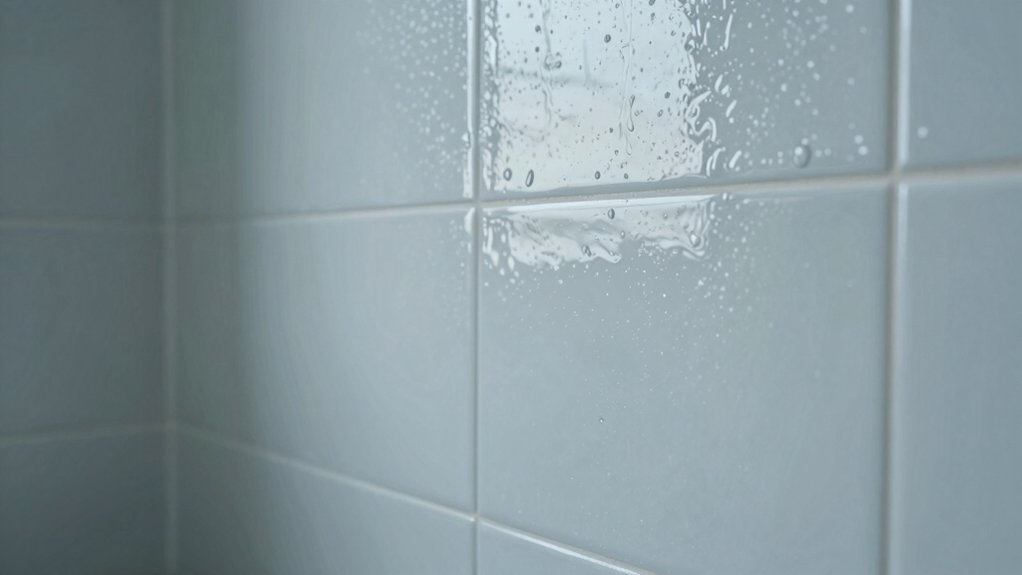
Semi-gloss finishes are the go-to for bathroom walls when you need maximum wipeability and moisture resistance. You’ll get a slick surface that resists steam and splashes, making it easier to clean soap scum and toothpaste trails without dulling.
Choose a premium enamel or a high-sheen latex for durable performance and minimal staining. Prep matters: clean, repair any chips, and sand lightly to ensure adhesion. Apply with a steady hand, using thin coats and full coverage, avoiding runs.
For upkeep, wipe daily to prevent moisture buildup and mildew risk. Consider ventilation considerations, since good airflow reduces lingering humidity that can degrade finishes.
If you’re pairing with bathroom wallpaper, seal edges carefully or prefer solid panels to prevent peeling over time.
Eggshell With Moisture-Blocking Formulas: a Newer Option for Bathrooms
Eggshell finishes with moisture-blocking formulas give you better protection against humidity while maintaining a softer look. You’ll appreciate the moisture-blocking benefit without sacrificing the easy cleaning and mid-sheen durability that eggshell offers.
This combo adds practical durability, especially in bathrooms with frequent dampness, making it a solid option to contemplate alongside traditional sheens.
Moisture-Blocking Benefit
Moisture-blocking formulas in eggshell finishes offer a practical upgrade for bathrooms, sealing against humidity while maintaining a softer sheen. You get fewer moisture-driven problems without sacrificing washability.
When you choose an eggshell with moisture-blocking tech, you create a more forgiving surface for regular cleaning, which helps ventilation issues stay manageable. This finish resists water vapor better than standard eggshell, so walls dry faster after showers and steamy mornings.
For best results, pair with proper ventilation and a breathable primer to maximize performance. Keep routine maintenance simple: wipe down splashes, recoat as needed, and monitor any early signs of staining.
This approach supports mold prevention by reducing persistent damp spots and maintaining a stable, clean bathroom environment.
Eggshell Durability Pros
If you’re weighing options for bathroom walls, eggshell finishes with moisture-blocking formulas offer durable protection without the high gloss. The key strength is balanced sheen that hides minor imperfections while resisting moisture-induced damage. You’ll find the finish durable enough for humid environments, with fewer touch-ups than flat options and less glare than semigloss.
Practical durability comes from improved resins and sealants that prevent water penetration without sacrificing ease of cleaning. When selecting, consider how the paint texture aligns with your space; eggshell’s subtle texture can mask splash marks while remaining easy to wipe.
For color matching, choose formulas engineered to stay true over time, so your bathroom maintains a cohesive look. In short, this option blends resilience with a refined appearance.
Flat and Matte Finishes in Damp Spaces: When They Work or Don’T
Flat and matte paints can work in damp bathroom spaces, but their performance hinges on proper prep and ventilation. In damp areas, you’ll notice higher moisture absorption, which can lead to quicker degradation if the surface isn’t sealed and primed correctly.
These finishes resist shine, not moisture, so expect more subtle texture and a higher sensitivity to water exposure. Use a mildew-resistant primer and a high-quality matte or flat finish rated for bathrooms, then ensure consistent airflow with exhaust or windows during and after showers.
Avoid bare concrete or plaster; seal with appropriate drywall compound if needed. If you notice paint peeling around seams or fixtures, reassess ventilation and recoat after addressing the source of moisture.
How to Prep Walls for a Long-Lasting Bathroom Paint Job
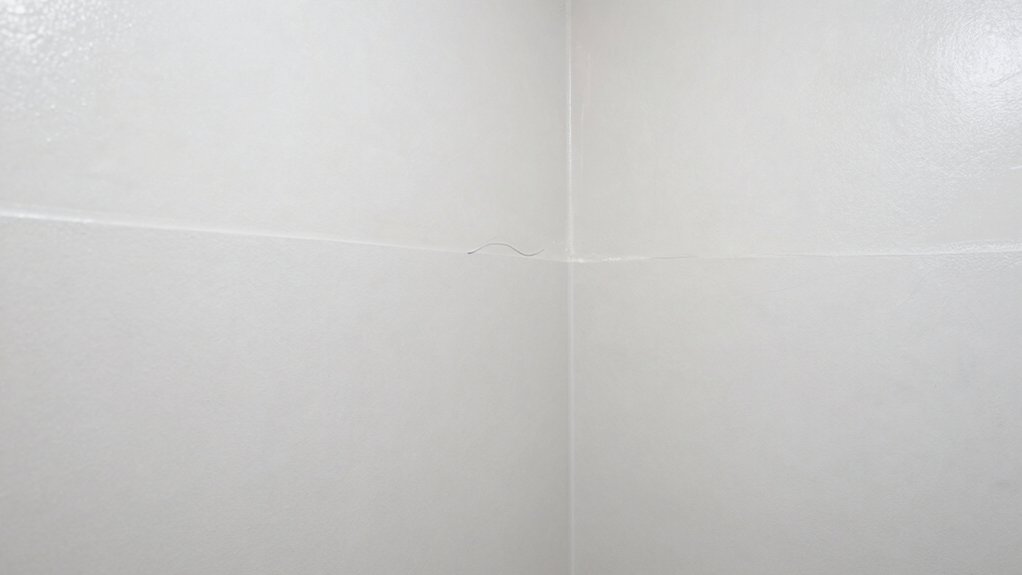
To prep walls for a long-lasting bathroom paint job, start with a thorough clean to remove soap scum, mildew, and dust, which can sabotage adhesion.
Next, inspect for damage: repair cracks, peeled paint, and loose grout, then sand rough spots until smooth.
Choose a wall texture-appropriate approach; lightly scuff glossy surfaces to improve grip.
Clean again, rinse, and let dry completely.
Apply a high-quality paint primer on bare plaster or repaired areas to lock in moisture and create an even base.
If you’re dealing with high humidity, use a marine-grade or mold-resistant variant.
Prime edges and corners, then feather into surrounding areas.
Finally, dust lightly before painting; this minimizes specks and improves topcoat adhesion for a durable finish.
Color and Sheen Tips to Keep Bathroom Walls Looking Fresh
Choosing the right color and sheens can make bathroom walls look fresh longer and resist moisture better. Start with color schemes that feel calm and practical: cool neutrals for a spa vibe or pale blues to brighten small spaces. Avoid highly saturated tones that show soap scum and water spots quickly.
For sheen, pick eggshell or satin on walls and semi-gloss on trim for easier cleaning. Flat finishes hide flaws but soak up moisture. Test swatches on different wall textures to see how color shifts with lighting and texture.
Consider wall textures when selecting hues; smoother surfaces reflect more light, while textured finishes accentuate shadows. Keep consistency across adjacent rooms to reduce visual clutter and maintenance time.
Use durable, washable paints for long-lasting freshness.
Frequently Asked Questions
How Often Should Bathroom Paint Be Repainted for Durability?
Repaint every 5–7 years for ideal paint longevity, unless high humidity or wear demands sooner. You should inspect for peeling and mildew, touching up as needed, and plan full repaint every 7–10 years to maintain durable results.
Can Texture Impact Moisture Performance in Bathroom Paint?
Texture effects shape moisture resistance, you’ll notice. You breathe, you decide, you apply, you monitor—texture helps, texture hurts. You’ll want proper primers and seals to maximize moisture resistance, keep surfaces smooth, and choose moisture-rated finishes accordingly.
Do Seniors or Children Affect Preferred Bathroom Finish?
Yes, age considerations and safety preferences influence your finish choice; you’ll prioritize smoother, low-slip, washable options for seniors and kids, avoiding VOC-heavy coatings and rough textures to reduce slips and irritation while maintaining easy cleaning.
Are There Eco-Friendly Bathroom Paints With High Durability?
Eco-friendly coatings exist; you’ll find durable paint formulations that withstand moisture. Like a steadfast lighthouse, you navigate choices, choosing low-VOC, mildew-resistant options. You’ll maintain durability while protecting health, ensuring lasting beauty in your bathroom journey.
Which Finishes Resist Mildew Without Baking on Fumes?
You should choose mildew resistant coatings, preferably low VOC paints, for bathroom walls. They resist mildew without baking on fumes. These options balance durability and indoor air quality while offering easy cleaning and practical, long‑lasting results.
Conclusion
When choosing a bathroom finish, you’ll want satin for everyday walls or semi-gloss where splash risks are higher. Prep properly, prime, and guarantee good ventilation to extend life. An eggshell with moisture-blocking properties is a modern, quieter option, while flat or matte is rarely ideal in damp zones. Remember to test color and sheen in small patches. In a pinch, imagine Leonardo’s studio—precise, clean, and resilient—your walls should endure humidity with calm, easy maintenance.