
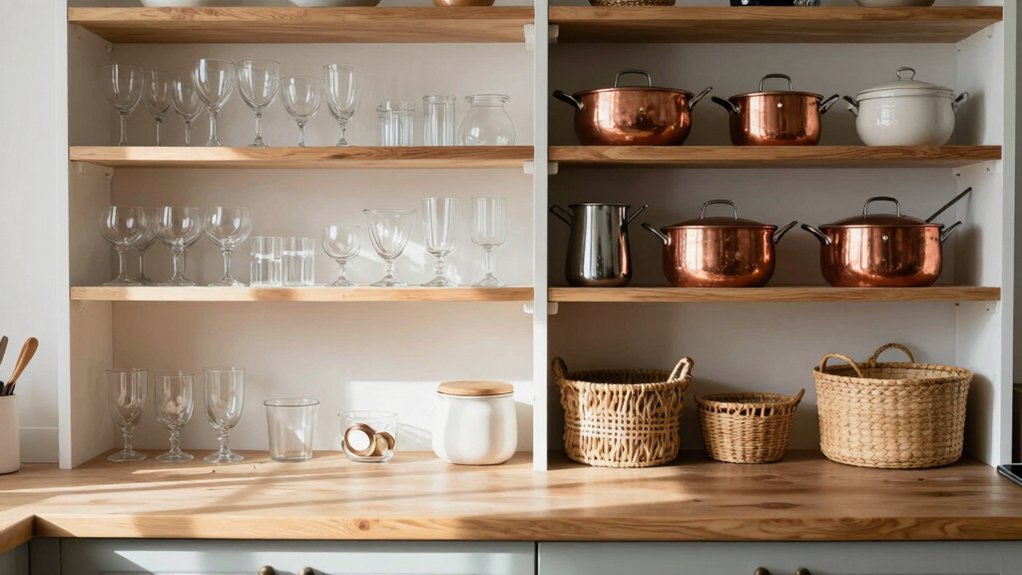
Open shelving in a kitchen can speed up access to your most-used items and help your space feel brighter and more open, but it also needs ongoing upkeep to avoid dust and clutter. You’ll weigh the ease of reach against the risk of constant styling and potential mishaps, all while deciding what to showcase and what to tuck away. The balance isn’t just about looks—it’s about workflow, maintenance, and how you live in the space, and that trade-off deserves careful consideration.
Practical Benefits of Open Shelving
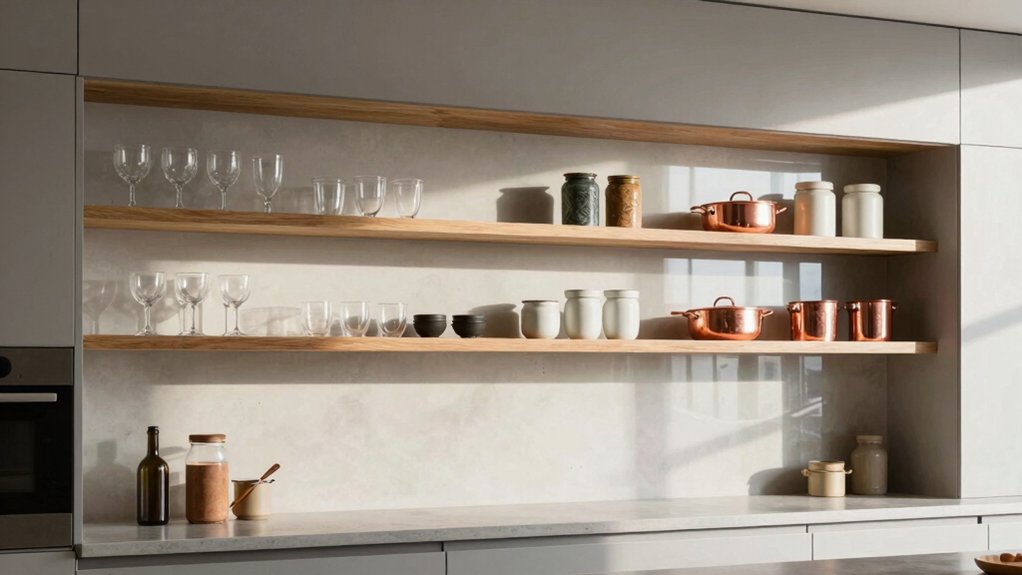
Open shelving in a kitchen offers clear practical benefits that many cooks value daily. When you store frequently used tools and ingredients within arm’s reach, you shave minutes off prep time and reduce counter clutter.
You’ll notice improved workflow as you design zones for prep, cooking, and cleanup, ensuring essentials stay visible and accessible. Decor organization becomes intentional; you can group items by function and visual weight, keeping everything you rely on in front of you.
Seasonal rotations help you swap items to reflect changing meals, so you’re not rummaging through a crowded cabinet. You gain quick inventory awareness, reducing overbuying and waste.
The result is a kitchen that stays tidy, efficient, and behaviorally responsive to daily cooking rhythms.
Visual Impact and Style Considerations
The visual impact of open shelving hinges on material, finish, and spacing, so start by selecting shelves that echo your kitchen’s overall design language—warm wood for rustic charm, sleek metal for industrial flair, or a neutral composite for a timeless backdrop.
You’ll shape the look with color coordination and consistent proportions across shelves, avoiding clutter that blocks flow. Prioritize a curated display: group items by function, balance heights, and leave negative space to let pieces breathe.
Integrate decorative accessories sparingly—vases, bowls, and a few statement pieces—so they read as intentional accents rather than filler. Consider shelf depth and edge profiles to reinforce the style, whether it’s warm and inviting or crisp and modern, ensuring the arrangement supports daily use.
Maintenance and Cleaning Realities
Open shelving keeps things accessible, but you’ll want a practical plan for maintenance and cleaning realities. You’ll deal with dusty dust, spills, and stains promptly so surfaces stay cohesive with your design.
Establish a simple routine that fits your workflow, and your shelves won’t undermine the room’s visual impact.
Dusty Dust Management
Dust accumulates quickly on open shelving, so you’ll want a practical plan for regular dust management that fits real kitchen use. You’ll prioritize a consistent routine: wipe weekly with a microfiber cloth, and do a deeper monthly pass with a damp microfiber followed by dry polishing.
Keep items in closed containers to limit dust exposure and reduce surface clutter, which speeds cleaning. Implement airflow awareness—avoid placing fragile, dust-catching pieces near vents, and consider a ceiling fan or range hood that doesn’t swirl dust onto shelves.
Track dust accumulation patterns across seasons, adjusting wipe frequency as needed. For pest control, seal gaps, store dry goods in airtight canisters, and inspect shelves regularly for signs of activity.
A deliberate system keeps shelving pristine and design-forward.
Spills and Stains Control
Spills happen fast on open shelves, so you’ll want a clear, practical plan for containment and quick recovery. To minimize disruption, position high-risk items in stable vessels and use wide-mouthed jars for loose dry goods.
Keep a designated microfiber cloth and a damp wipe nearby for rapid response, and choose a blotting approach over rubbing to prevent spreading.
For spill control, implement a color-coded mat system under liquids and place lids or caps on containers when not in use. Regularly check seals and discard compromised packaging.
For stain prevention, avoid acidic sauces near porous boards and wipe splashes instantly to prevent set-in marks.
Maintain airflow by spacing items and rotating stock to reduce moisture buildup and soil transfer.
Routine Cleaning Schedule
Establishing a routine cleaning schedule for open shelving keeps your kitchen looking sharp and performing reliably. You’ll set a weekly quick-wipe cadence to remove dust and fingerprints from exposed surfaces, then a deeper monthly wipe of shelves and hardware to prevent grime buildup. Use a microfiber cloth, mild detergent, and a quick dry pass to avoid streaks on glass or metal.
File away routine tasks like reorganizing items after groceries, ensuring you keep functional zones intact for kitchen organization. Rotate decorative accessories seasonally to avoid clutter and promote visual balance. Address spills immediately to preserve finishes and prevent staining.
Schedule a quarterly dusting of corners and joints, plus a review of containers and lids. This practical rhythm sustains both style and function.
Storage Management: What to Display Vs What to Hide
When you plan open shelving, decide what to display versus hide by prioritizing items you use daily and that contribute to your design story. Keep visible items curated—plates, glassware, and a few decorative pieces—while tucking away rarely used or unsightly odds and ends.
This balance clarifies workflow and elevates the overall look, guiding what your shelves say about your space.
Display Vs Hide Priority
Deciding what to display versus what to hide in a kitchen storage system hinges on frequency of use and visual impact: keep daily essentials within arm’s reach and showcase items that inspire or reflect your design story, while tucking away rarely used tools behind doors or in drawers.
You’ll optimize workflow by prioritizing items you use daily, arranging them for quick access and logical grouping. Decorative accessories should punctuate shelves without creating visual clutter, and matched containers help maintain a cohesive look.
Balance is key: mix practical pieces with a few statement objects that reinforce your style. Safety considerations mean securing heavy, breakable items and avoiding overcrowding.
Aim for clean sightlines, functional depth, and intentional display that elevates the kitchen’s design narrative.
Visible Vs Hidden Items
To optimize your kitchen’s look and flow, separate visible essentials from hidden ones based on how often you use them and how they contribute to the room’s style. You’ll want daily items within easy reach on open shelves, while duplicates, infrequently used tools, and bulky gadgets hide away.
Prioritize decorative accents on display to reinforce your design narrative, keeping color, texture, and form cohesive. Reserve cabinets for overflow and cookware you rarely touch, so the shelves feel curated, not cluttered.
Consider safety considerations, ensuring heavy or sharp items aren’t perched where you cook. Use uniform storage containers to minimize visual noise, and group related items to simplify access.
Done thoughtfully, the balance between display and concealment enhances both function and aesthetics.
Budgeting and Material Choices
Budgeting for open shelving starts with a clear plan: set a realistic budget, then prioritize materials that deliver the most value and durability. You’ll balance initial costs with long‑term performance, choosing options that minimize replacement needs.
For material durability, solid wood shelves offer warmth and longevity, but consider certified plywood or medium-density fiberboard with strong veneers for cost efficiency.
Metal brackets and rails should be heavy‑duty, corrosion‑resistant, and properly anchored to studs.
Factor finishes and sealing into your budget to prevent wear from steam and splashes.
Budget constraints don’t force poor choices; they guide you toward sustainable selections, smart sizes, and scalable systems.
Opt for modular components you can expand as needs evolve, ensuring a cohesive, resilient display that remains easy to update.
Space Planning for Small Kitchens
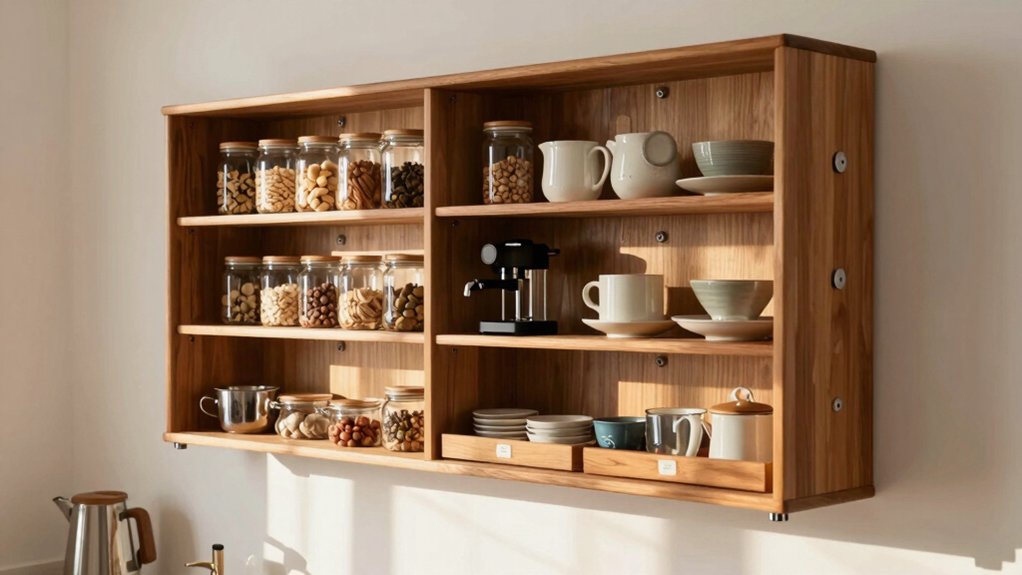
Ever wondered how to maximize every square inch when counter space is tight? Space planning for small kitchens hinges on smart vertical use and flexible layouts. Begin with a compact work triangle and wall-mounted storage to free counter real estate, then choose open shelving that benefits from strategic spacing rather than volume.
Group items by frequency to minimize reach time, and keep precious surfaces clear for prep. Incorporate decor ideas that feel airy—light colors, glass-front doors, and slim profile hardware—to visually expand the room.
Lighting solutions matter: under-shelf LEDs brighten tasks without clutter, while layered ambient lighting prevents shadowy corners. Finally, favor modular, stackable containers and adaptable racks to evolve with your cooking needs.
Real-Life Tips for Functional Open Shelving
When open shelving is thoughtfully organized, it trades clutter for clarity and keeps your kitchen feeling open and efficient. Start by grouping items by function: everyday dishes together, glassware near the prep zone, and cookware near the stove.
To reduce visual noise, limit each shelf to a short, curated set—avoid stuffing. Prioritize decor organization that reflects how you actually cook, not just what looks good. Use uniform props, like matching jars and labels, to create cohesion and ease.
Incorporate lighting solutions that highlight displays while improving task light: under-shelf LED strips or discreet recessed fixtures make access safer and faster. Rotate seasonal items, and swap out mismatched pieces as needed.
Regular audits prevent clutter buildup and preserve a calm, practical kitchen vibe.
Frequently Asked Questions
How Does Open Shelving Affect Resale Value of a Home?
Open shelving can boost resale value if you maintain clean storage organization and emphasize aesthetic appeal; it signals modern, organized spaces, but only when clutter-free and well-styled, otherwise buyers may view it as higher maintenance rather than practical design.
Which Materials Resist Kitchen Grease Over Time?
Which materials resist kitchen grease over time? Ceramic tiles, stainless steel, glass, quartz, and epoxy-coated surfaces excel. You’ll enjoy easy cleaning tips and proven material durability, staying pristine with regular maintenance, right?
Can Open Shelves Improve Kitchen Air Circulation Effectively?
Yes, open shelves improve air circulation. You’ll notice air circulation benefits as warm, humid kitchen air moves more freely. With open shelf ventilation, design-minded layouts enhance cross-ventilation and reduce stagnation around heat and moisture.
How Often Should I Rotate Items on Open Shelves?
You should rotate items every few weeks to keep décor organization fresh and shelf maintenance simple. You’ll notice better accessibility and longer-lasting pieces when you routinely swap, dust, and reorder with intention, staying design-minded and practical.
What Are Common Safety Concerns With Open Shelving?
Open shelving safety centers on securing items, avoiding top-heavy loads, and anchoring shelves properly; dust accumulation and decor organization risks require regular cleaning and thoughtful spacing, so you reduce hazards while keeping your design-minded kitchen functional and visually balanced.
Conclusion
Open shelving can be your kitchen’s best ally when you curate thoughtfully and clean regularly. You’ll gain instant access, a brighter feel, and a design-forward display that grows with you, like a tailored playlist that adapts to every mood. Stay disciplined: limit items, group by function, and dust weekly. If you treat shelving as a living part of the room, it will elevate your workflow as reliably as a dependable workbench—without losing style or soul.