
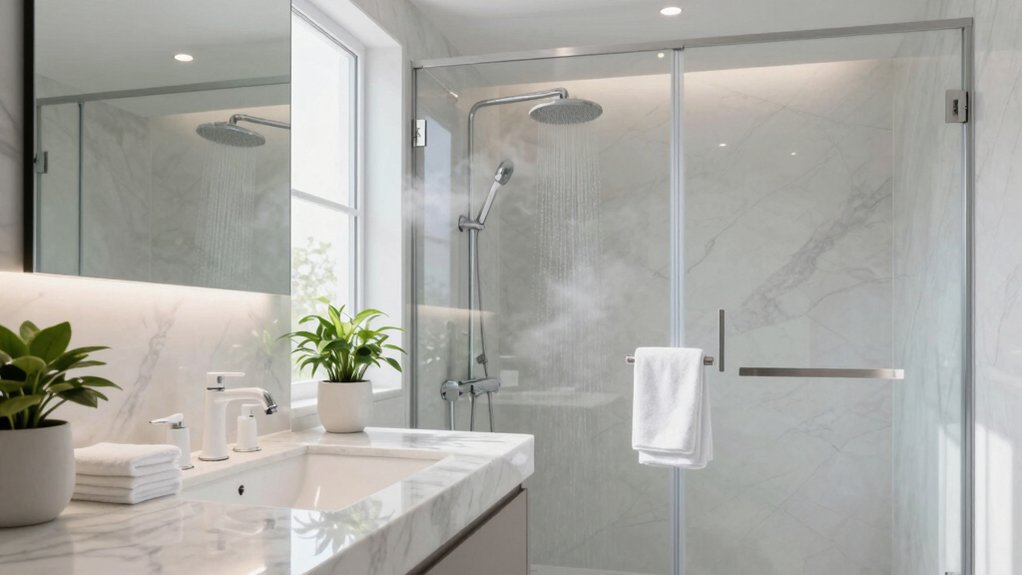
What you probably don’t realize is how much lighting quality can transform a bathroom mood before you touch a tile or faucet. Layered, dimmable LEDs combined with moisture-safe finishes and smart storage trim clutter and elevate daily routines without big remodels. You’ll feel how a thoughtful layout, ventilation, and efficient fixtures save time, water, and hassle, while durable materials keep the look fresh. If you’re ready to see what makes the biggest difference, keep going.
Prioritize Lighting Upgrades for Immediate Impact
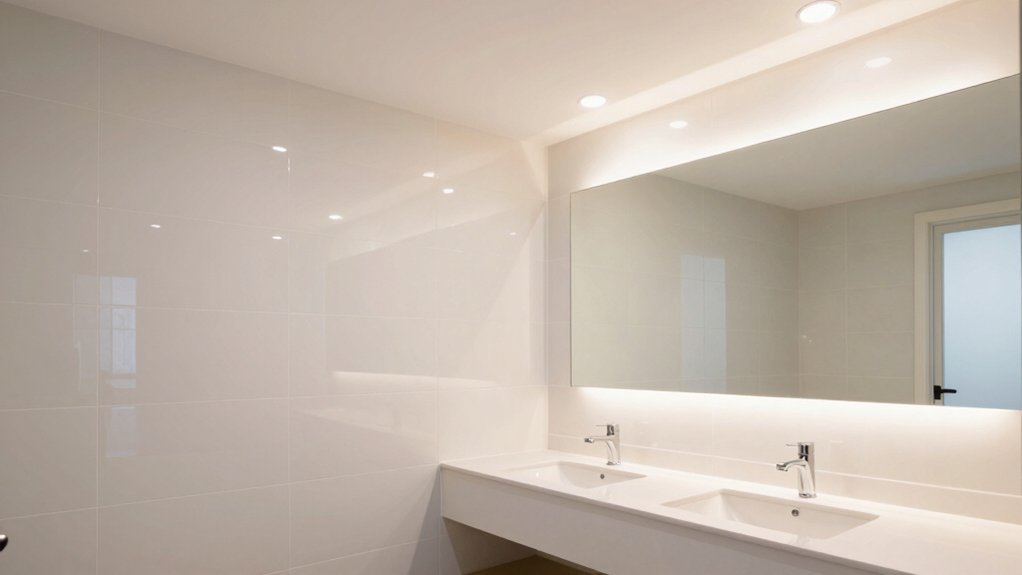
Lighting is the quickest way to transform a bathroom. You can start with a layered approach, focusing on ambient glow and task illumination to balance mood with function.
Choose a central ceiling fixture that delivers even, soft light without glare, then add layered sources at mirrors and vanities for precise, shadow-free visibility.
For ambient glow, select dimmable LEDs in clean profiles that harmonize with your color palette, avoiding harsh white tones.
In task illumination, install brighter, directional fixtures above or beside mirrors to flatten shadows on your face.
Keep finishes, mounting heights, and color temperatures cohesive for a unified look.
Test lighting at, say, evening and morning hours to confirm comfort, practicality, and a visually serene space.
This foundation accelerates upgrades without overhauling plumbing or decor.
Upgrading Fixtures: Faucets, Showerheads, and Toilets
Upgrading fixtures—faucets, showerheads, and toilets—focuses on efficiency, reliability, and a cohesive look. You’ll choose designs that reduce water use without sacrificing performance, benefiting both your bill and daily routine.
Start with faucets that blend smooth operation, durable finishes, and easy-clean surfaces; a well-matched set creates a unified bathroom image. Move to showerheads offering adjustable spray patterns and low-flow technology to conserve water while maintaining comfort.
When selecting toilets, prioritize dual-flush or compact models that minimize waste and fit your space. Seek luxury fixtures for a premium feel without overdoing it; eco-friendly options further enhance value and sustainability.
Installations should balance form and function, ensuring accessible handles and consistent heights. Finish with a cohesive hardware palette to elevate the room’s overall aesthetic.
Smart Storage Solutions to Clear Clutter
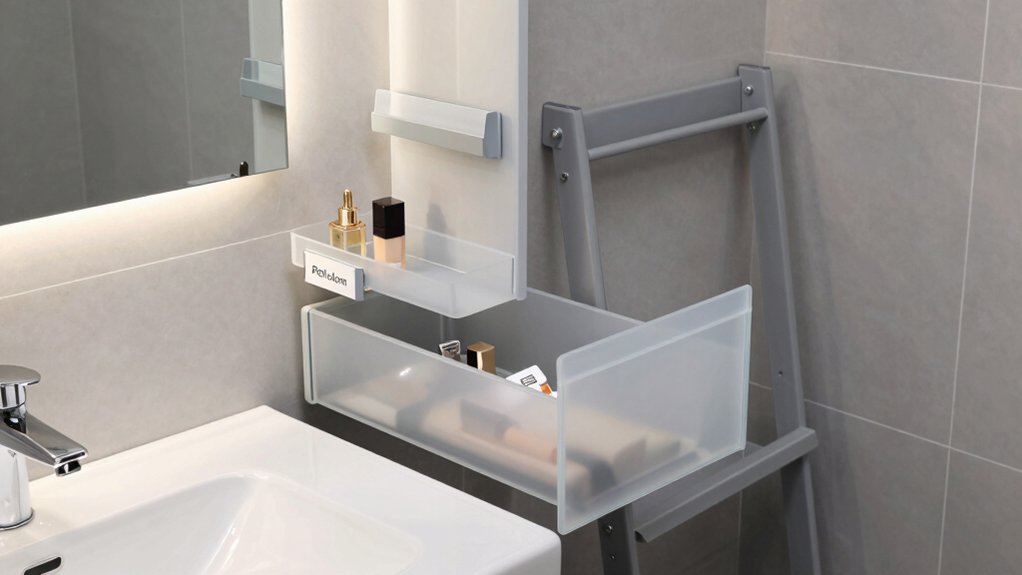
You’ll optimize your space with smart storage that hides clutter behind closed doors and inside slim cabinets. Use hidden cabinet tricks to keep daily essentials within reach while maintaining a clean, streamlined look.
Vertical storage wins add capacity without expanding the footprint, elevating both function and style.
Hidden Cabinet Tricks
Hidden cabinet tricks maximize space without sacrificing style. You’ll leverage shallow pull-outs inside medicine cabinets, turning unused gaps into organized niches for daily essentials. Consider hinged mirrors that conceal slim compartments for nighttime needs, keeping counters clear.
Install vanity drawers with removable organizers to separate toiletries, cotton, and tools, so everything has a designated spot. Recessed doors in linen closets create concealed storage ideas, reducing visual clutter while preserving a streamlined facade.
Use magnetic strips for small metal items, and a cork or corkboard panel behind doors to pin receipts or labels. Choose soft-close mechanisms to prevent slams and preserve a calm bathroom rhythm.
Materials should match fixtures for cohesion, and ventilation prevents odor buildup, ensuring longevity of hidden cabinet tricks.
Vertical Storage Wins
Vertical storage isn’t just a trend; it’s a design function that frees counter space and sharpens organization. You claim wall real estate by stacking essentials from floor to ceiling, keeping daily items within arm’s reach while reducing clutter.
Start with tall, narrow cabinets, replacing shallow ones that trap items. Use adjustable shelves to tailor vertical organization, letting you swap heights as needs shift.
Install hooks, rails, or magnetic strips along doors for brushes, razors, and tools, freeing drawer space. Prioritize shelf optimization by grouping items by use and accessibility, not by size alone.
Integrate labeled bins for small essentials, and consider transparent containers to speed recognition. Finish with a cohesive hardware style so every vertical element feels intentional and calm.
Water Efficiency That Saves Money and Resources
Water efficiency saves both money and resources by reducing water use without sacrificing performance. You’ll notice better fixtures, and you’ll feel the impact in monthly bills and long-term durability.
Choose low-flow faucets and showerheads that maintain pressure while cutting consumption. Dual-flush or adjustable toilets further minimize waste without sacrificing comfort.
In sinks and baths, install aerators and efficient traps to limit runoff and improve wastewater management.
For outdoor efficiency, consider drip irrigation and rainwater harvesting as integrated systems that support seasonal needs without stressing municipal supply.
Select appliances with high water-efficiency ratings and schedule regular maintenance to prevent leaks.
Design choices balance aesthetics and practicality, delivering a compact footprint with maximum, measurable returns.
Vanity and Countertop Improvements for Daily Use
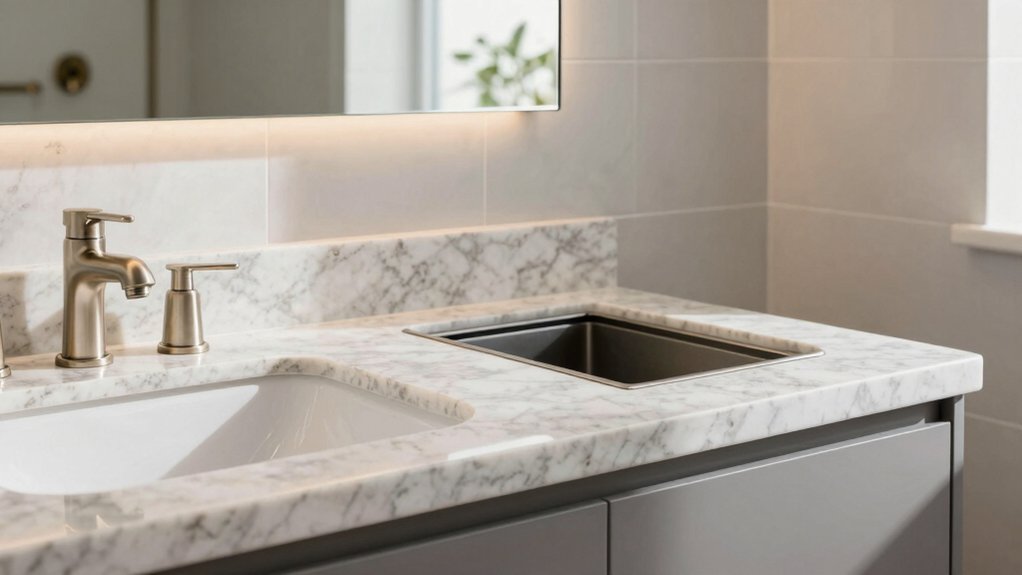
Vanity and countertop improvements keep daily routines efficient and comfortable while maintaining a clean, cohesive look. You’ll want vanity styles that suit your space and workflow, with ample surface for daily tasks and compartments for essentials.
Choose countertop materials that balance durability with maintenance ease—quartz resists stains, while solid-surface options minimize seams and grime. Prioritize under-mount sinks to simplify cleaning and create a streamlined edge.
Drawer depths should accommodate grooming tools, cords, and chargers without crowding. Consider a recessed medicine cabinet or side shelves to keep counters clear.
Floating vanities can make small baths feel larger, but ensure stability and plumbing access. Finish hardware consistently for a calm, unified aesthetic, and seal edges where moisture travels.
Durable and Timeless Tile Choices
When you choose tile for longevity, focus on porcelain or ceramic options with high abrasion resistance and low water absorption.
Pair timeless looks like subway or large-format formats with coordinating edge details to keep the space cohesive.
For lasting appeal, balance classic patterns with neutral tones to cover both Long-Lasting Tile Options and Classic Tile Pairings.
Long-Lasting Tile Options
Choosing tile that lasts means balancing durability with timeless appeal: porcelain, ceramic, and natural stone each offer distinct strengths, so you can pick a surface that resists wear, stains, and moisture while still looking refined.
You’ll evaluate grit, size, and finish to minimize maintenance while maximizing impact. Porcelain excels in dense, low-porosity formats, delivering durable materials that resist chipping and fading. Ceramic offers versatile color and texture options with straightforward cleaning.
Natural stone delivers enduring elegance, though it requires sealing and periodic care. Prioritize slip resistance for bathrooms and consider rectified edges for a cleaner grout line.
Pair with complementary grout hues to enhance aesthetic appeal, ensuring cohesive visuals. Choose proven materials, installed correctly, for lasting performance and a timeless bathroom core.
Classic Tile Pairings
Classic tile pairings combine durability with timeless appeal, pairing sturdy bases like porcelain or high-density ceramic with complementary finishes to suit any bathroom mood. You’ll want color coordination that keeps walls calm while tiles introduce subtle contrast, avoiding loud clashes that tire quickly.
Pair solid bases with accent tiles in a restrained palette, then repeat a key hue for cohesion. Consider pattern mixing at a controlled scale: a simple field tile plus a small mosaic or a geometric motif in a single shade.
Matte textures resist fingerprinting and glare, while polished trims add a refined edge. Practicality meets aesthetics when grout choices align with the color story, enhancing depth without breaking flow.
These pairings create lasting, versatile surfaces that adapt with your evolving style.
Paint and Color Schemes That Transform the Mood
Visual impact starts with color choices that align with mood. You’ll shape the bathroom’s feel by pairing hues with purpose, not guesswork. Start with a restrained base: light, moisture-resistant walls to reflect space and keep moisture at bay.
Leverage color psychology to set tone—cool blues calm, warm beiges cozy, muted greens revive. Contrast can sharpen focus: a dark vanity against pale walls draws the eye without overpowering.
Choose paint finish options for durability and washability; satin or semi-gloss surfaces resist humidity and clean easily, while matte reduces glare in low-light areas.
Use accents sparingly—textiles, towels, and accessories—that echo your primary palette. Ensure consistency across adjacent rooms to maintain harmony, avoiding jarring shifts that disrupt the mood you’re cultivating.
Layout Tweaks and Ventilation for Comfort
If you want a bathroom that feels effortless to use, start with layout tweaks that minimize steps and maximize flow, and pair them with ventilation that keeps air fresh and moisture controlled.
Prioritize a clear path: place fixtures to reduce crossing traffic, and keep the shower and toilet out of the line of sight to lower humidity pockets.
Use recess storage to maintain surface uncluttered surfaces and easier cleaning.
For airflow optimization, integrate an appropriately sized exhaust fan with a simple, direct duct run and consider a humidity-sensing model in lasting moisture zones.
Window placement matters: if possible, add a high, operable window or transom to boost cross-ventilation.
Pair natural draft with mechanical airflow for steady comfort and reduced condensation.