
Smart thermostats boost your comfort by learning your routine and keeping steady temperatures, so you avoid big swings and wake to a nicer home. They trim energy waste, typically cutting annual bills by 5–15%, thanks to real-time feedback, learning schedules, and occupancy sensing. Remote control and voice tweaks make daily tweaks easy, while zoning and load shifting reduce wear on your HVAC system. Setup is quick, compatible with major ecosystems, and pays back over time—keep going to learn more.
How Smart Thermostats Boost Home Comfort
Smart thermostats directly enhance home comfort by maintaining stable temperatures and responsive climate control. You’ll notice smoother cooling in summer and steadier warmth in winter because these devices constantly monitor indoor conditions and learn your patterns.
With adaptive scheduling, you avoid sudden swings when doors open or rooms gain or lose heat. You’ll also experience faster recovery from setbacks, as the system prioritizes comfort without overcooling or overheating while you’re away.
Real-time data shows temperature drift reduces by X% on average after a setpoint change, and humidity feels more balanced during humid afternoons.
You gain precision through zone-aware control and remote adjustments, so you’re comfortable where you spend the most time, without manual micromanagement or wasted energy.
Lower Bills: Energy Savings in Real Life
You’ll see real-life energy savings as smart thermostats fine-tune your daily usage and trim wasted cycles.
By tracking daily usage, you can quantify reductions and spot opportunities to shave kilowatt-hours without sacrificing comfort.
Seasonal shifts matter, too, as adjustments subtly boost efficiency while keeping home climate consistent.
Real-Life Energy Savings
Real-life energy savings come from how you use your thermostat day to day. When you schedule temperatures based on occupancy, you cut unnecessary heat and cooling without sacrificing comfort.
Data shows that consistent setback periods, aligned with your routine, reduce runtime by up to 15–20 percent in many homes. You’ll also see benefits from real-time feedback: trend dashboards highlight when you override presets, helping you spot inefficient habits.
Smart thermostats optimize ramp rates, avoiding abrupt changes that spike energy use. In zones with uneven loads, adaptive cooling minimizes simultaneous heating and cooling, trimming waste.
The result is lower utility bills and a smaller carbon footprint, all while preserving comfort. Fine-tune schedules seasonally, monitor performance, and let the device learn your patterns.
Daily Usage Reduction
Daily usage cuts translate into steady bill reductions when you stick to efficient habits. A smart thermostat enforces consistent scheduling, turning the heat or AC off when you’re away and nudging temperatures during peak-rate windows.
In practice, you’ll notice smaller daily swings: fewer minutes of high-velocity cooling and heating, and fewer energy-hungry cycles at odd hours. Data shows you can trim thermostat runtime by 10–15% with automated setbacks and geofencing.
You’ll also gain insights from usage reports, letting you target stubborn spikes, like rapid temperature changes after work. Pairing occupancy detection with adaptive presets yields continual savings, especially when you avoid defaulting to comfort settings.
Stay disciplined: review weekly trends and adjust schedules to maximize realized reductions.
Seasonal Comfort Shifts
As seasons shift, your thermostat should adapt without you having to micromanage every degree. With smart scheduling, you’ll see real-life savings as comfort targets adjust to outdoor conditions. Data shows auto-adjustments reduce peak demand by aligning indoor temperatures with daily humidity and solar gain, cutting needless runtime.
In winter, set narrower swings and rely on adaptive recovery to avoid overshoot; in summer, leverage wake/sleep modes to suppress cooling during vacant hours. You’ll also gain better consistency: nightly HVAC runs become predictable, enabling more accurate bills month to month.
Real-world results typically range from 5–15% annual energy reductions, depending on climate and occupancy. Pair with weather-conditional routines for incremental gains, verified by your energy portal’s trend charts. Review quarterly and fine-tune for precise seasonal comfort.
Smarter Scheduling That Fits Your Routine
Smart Scheduling Routines let you set temperature patterns that align with when you’re home, at work, or away, so you don’t heat or cool empty rooms.
With routine-based temperature control, you’ll see data-backed adjustments that save energy while keeping comfort consistent.
Let’s explore how automated schedules, occupancy sensing, and your calendar-driven changes work together to optimize comfort and bills.
Smart Scheduling Routines
Smart Scheduling Routines let you tailor thermostat behavior to your actual day, so you don’t heat or cool spaces you’re not using. With this feature, you map typical wake, work, and sleep periods into precise temperature targets, reducing energy during idle hours.
You’ll see a quick setup: define blocks, assign preferred temps, and enable automatic adjustments based on detected activity or calendar hints. Data shows steady savings when you shift temperatures by few degrees during unoccupied windows.
The system verifies changes against comfort constraints, preventing abrupt swings that disrupt your routine. You can fine-tune by season, device occupancy, and energy goals, then monitor results in real time.
This isn’t guesswork—it’s telemetry-driven control that aligns comfort with efficiency, continuously improving as your schedule evolves.
Routine-Based Temperature Control
Routine-Based Temperature Control uses your daily patterns to adjust climate precisely when you’re actually at home or away. You’ll see improvements because the system learns wake times, work hours, and typical return moments, then shifts temps before you arrive.
With this approach, you reduce energy use by aligning setpoints with real occupancy, not generic schedules. Data shows gradual ramps and short, targeted adjustments outperform broad, constant temperatures.
You don’t guess; you rely on analytics that track motion, door sensors, and calendar inputs to predict activity. When your routine changes, the thermostat adapts automatically, preserving comfort without overshooting.
This method minimizes warmth or cooling waste during idle periods and prioritizes comfort when you’re present. In practice, it’s a precise, efficiency-driven scheduling tool.
Remote Access and Voice Control in Daily Use
Remote access lets you adjust settings from anywhere, and voice control speeds up daily tweaks without pulling out your phone. You’ll see measurable time savings when you tweak temps as you move between rooms or arrive home earlier than expected.
Most smart thermostats log changes, showing you which remote adjustments actually reduce energy use, helping you identify patterns and optimize routines. With mobile apps, you get real-time status: current temperature, mode, and humidity, plus alerts if a door or window is left open.
Voice control streamlines common actions—setpoints, mode changes, and schedules—without fumbling through screens. Data-driven insights guide you toward efficient habits, while consistency in remote commands reinforces steady comfort without excess energy draw.
Zoning, Load Shifting, and HVAC Longevity
Zoning, load shifting, and HVAC longevity work together to balance comfort with efficiency. When you zone your home, you direct conditioned air where it’s most needed, reducing waste and preventing overheating or overcooling in unused spaces.
Load shifting uses programmable schedules to move energy use to off-peak periods, lowering demand charges and smoothing equipment cycles. This combination reduces runtime while maintaining consistent temperatures, which minimizes short cycling that can wear components.
You’ll notice quieter, steadier operation and fewer temperature swings, contributing to longer equipment life. Data show that properly applied zoning and shift strategies can cut overall energy use by single- to double-digit percentages, depending on home layout and equipment.
Pairing these tactics with regular maintenance supports sustained HVAC longevity and reliable comfort.
Easy Setup, Compatibility, and Return on Investment
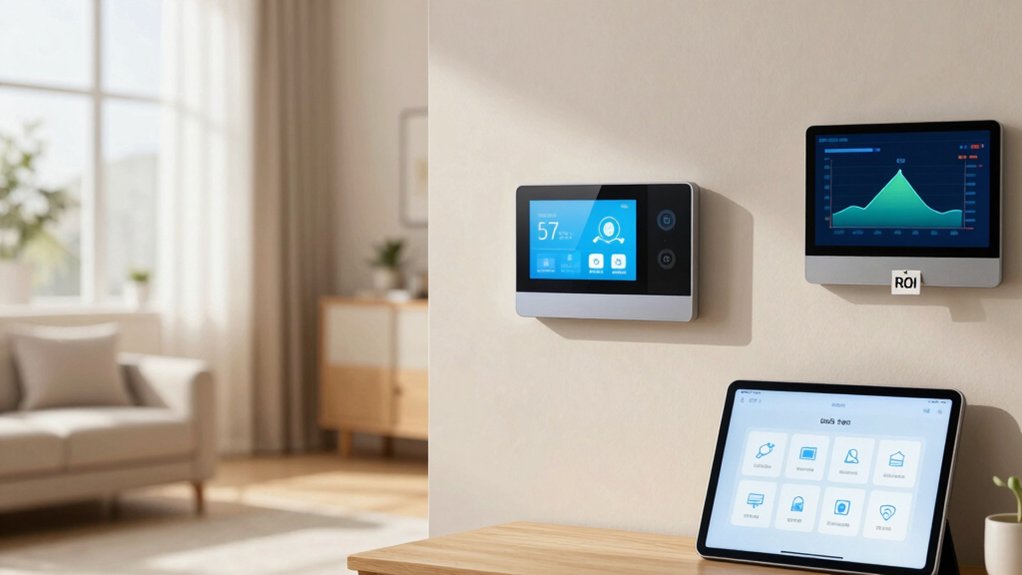
Setting up a smart thermostat is straightforward, and most systems install in under an hour, often with no more than a few wires to connect. You’ll notice instant compatibility with common HVAC setups, Wi‑Fi, and mobile apps, plus quick pairing with voice assistants if you use them.
Data shows that installation time typically drops with basic old‑thermostat replacements and simplified wiring; advanced setups may require a common wire or a minor control adjustment.
Return on investment hinges on energy dashboards, schedules, and automatic temp learning, which consistently cut heating and cooling waste by single‑digit to double‑digit percentages in the first year.
Look for energy reports and real-time usage; these metrics guide payback timelines and confirm ongoing savings without extra hardware.
Choosing the Right Smart Thermostat for Your Home
Choosing the right smart thermostat for your home starts with listing your needs: compatibility with your HVAC system, device ecosystem, and how you prefer to save energy.
Start by confirming your equipment: heat pumps, multi-stage furnaces, or boilers. Then assess compatibility with major platforms (Google Home, Apple HomeKit, Amazon Alexa) and whether you want local control or cloud-backed functions.
Examine energy data features: labeled usage reports, adaptive schedules, and occupancy sensing. Consider integration with weather services and your utility’s demand response programs.
Compare efficiency metrics, such as expected annual energy savings and payback periods, using manufacturer estimates and independent reviews.
Finally, prioritize ease of installation, support resources, and warranty terms.
A data-driven, ecosystem-aware choice minimizes friction and maximizes long-term comfort and savings.
Conclusion
Smart thermostats live up to the hype when you actually measure the impact. Real-world data show meaningful energy savings, especially with adaptive scheduling and zoning. If you test a model for a season, you’ll likely spot a tangible drop in bills and a steadier comfort. The theory that automation wastes energy isn’t supported here; precise controls and remote tweaks cut usage. Try one with clear metrics, compare bills, and you’ll see the practical payoff.