
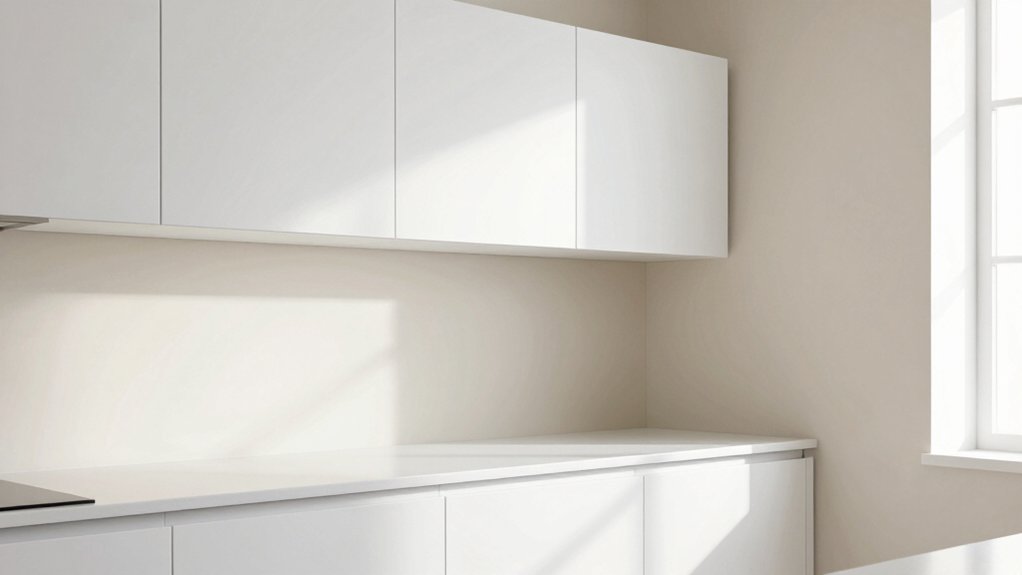
For white kitchen cabinets, start with warm neutrals like soft beiges or taupes to create a timeless backdrop that adds warmth without overpowering clarity. If you prefer a modern feel, soft grays brighten the space while maintaining depth, and cool undertones prevent sterility. Calm blues or gentle greens can refresh the room without sacrificing harmony. Add subtle textures or an accent wall in the same cream family for cohesion. If you continue, you’ll learn how to refine swatches in your space.
Warm Neutrals That Complement White Cabinets
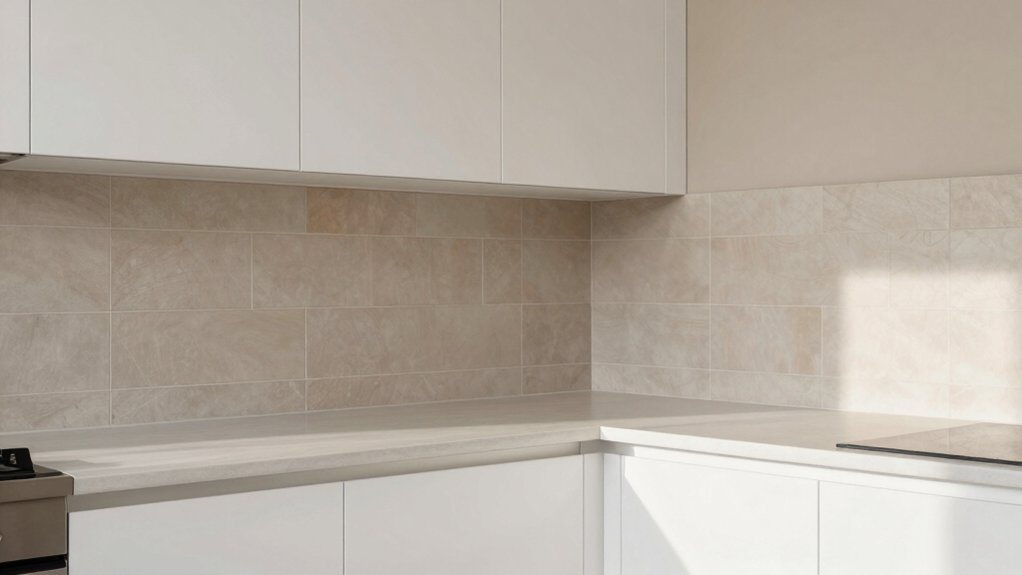
Warm neutrals create a timeless backdrop for white cabinets, balancing brightness with soft depth. You select warm neutrals to harmonize contrast without overpowering cabinets, guaranteeing the space reads cohesive. Consider gentle beige or taupe undertones that echo natural materials, then test samples in both morning and evening light.
Decorating with textured wall finishes adds tactile interest while preserving clarity; choose subtle options like plaster or linen textures that diffuse reflected light. Incorporating decorative wall moldings can frame walls without creating visual clutter, reinforcing architectural refinement.
Guarantee the palette remains consistent across adjacent rooms to maintain flow. Implement wall color as a foundation, then introduce accessories with restrained color and pattern. This approach yields a composed, elegant backdrop for white cabinetry.
Soft Grays for a Modern, Airy Kitchen
Soft grays create a contemporary, breezy kitchen without overwhelming white cabinetry. You’ll find this palette elevates brightness while adding depth, keeping surfaces calm and cohesive.
In terms of color psychology, soft grays reduce visual noise, promoting a streamlined, focused environment ideal for cooking and entertaining.
When selecting paint finish options, opt for flat or eggshell on walls to minimize glare, while cabinets and trim can carry a satin or semi-gloss sheen for subtle contrast.
Balance is key: pair cool neutrals with warm accents—wood tones, textiles, or metal hardware—to avoid sterile results.
Test swatches under both daylight and artificial lighting to confirm true undertones.
Calm Beiges for Timeless Warmth
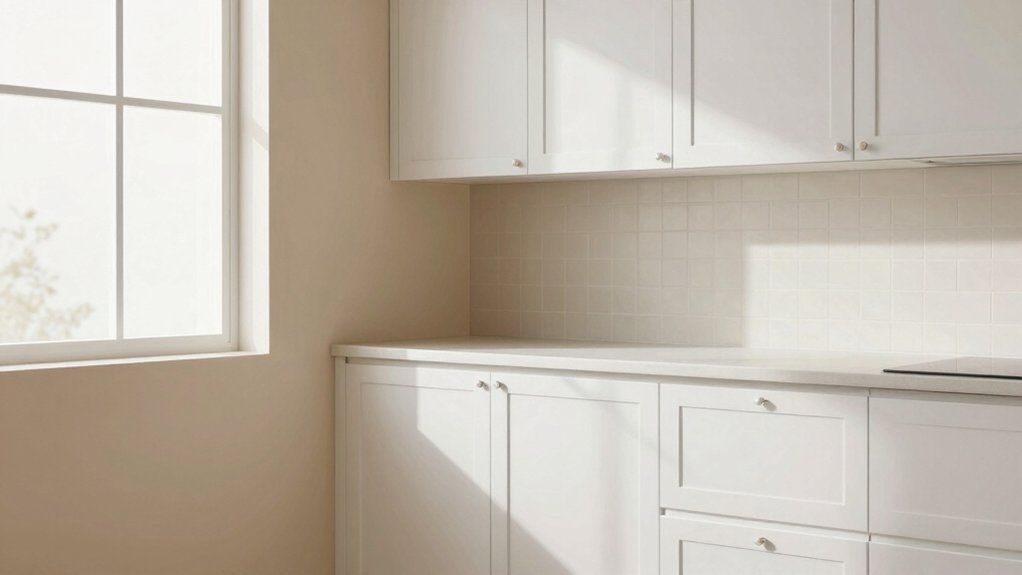
Calm beiges offer Subtle Beige Tones that complement white kitchen cabinets without overpowering them. You’ll see Timeless Warmth Hues provide a soft, inviting backdrop for both natural and artificial light.
This discussion begins with how these tones balance neutrality and warmth to enhance everyday kitchen activities.
Subtle Beige Tones
Subtle beige tones offer a timeless warmth that complements white kitchen cabinets without competing with them. You achieve a cohesive look by selecting light, neutral beiges with cool or warm undertones that harmonize with your cabinet finish.
Opt for soft satin or eggshell sheens to balance glare and reflectivity, enhancing perceived room height without dominance. In practice, choose tones that read as calm rather than dramatic, ensuring space remains inviting yet orderly.
Consider sample testing on multiple walls under both daylight and artificial lighting to verify color behavior. Prioritize wall paint durability to sustain finish, especially in high-traffic areas.
Maintain the color’s clarity with routine cleaning and preventive maintenance tips, avoiding harsh abrasives. This approach preserves timeless warmth while keeping composition crisp and elegant.
Timeless Warmth Hues
Timeless warmth comes from calm beige tones that never overwhelm white kitchen cabinets. You’ll find these hues create a gentle canvas, allowing natural light to breathe while preserving a crisp backdrop.
Choose warm, neutral beiges with subtle undertones to avoid muddy results that can mute architectural details. In practice, you’ll pair these shades with clean lines and restrained decorative accents to maintain elegance.
Lighting considerations matter: opt for balanced fixtures that highlight the cabinets’ brightness without casting harsh shadows, and layer ambient with task lighting to enhance depth.
Avoid cool whites or high-contrast colors that disrupt harmony. The goal is a cohesive, inviting space where textures—wood, stone, or fabric—register clearly.
With this approach, your white kitchen cabinets remain timeless, refined, and versatile.
Subtle Blues to Echo Brightness
Soft blue echoes can subtly brighten your white kitchen cabinets, creating a gentle sense of space. Consider how brightness reflection hues play with light—from windows or under-cabinet LEDs—to enhance clarity without overpowering the room.
Subtle blue tones offer a restrained contrast that maintains a clean, cohesive feel.
Soft Blue Echoes
Soft blue tones can brighten white kitchen cabinets without overpowering them, creating a balanced backdrop that enhances natural light. You’ll notice soft blue echoes temper brightness with understated depth, supporting a clean, modern feel.
In color psychology, these hues signal calm efficiency and open dialogue with space, aiding focus during meal prep. You likely prefer minimal contrast, so choose blue-tinted whites or very pale blues to maintain harmony.
Consider undertones—gray or green bases shift mood subtly without loud saturation. Historical trends show soft blues cycle in and out of favor, yet remain versatile across cabinetry styles.
Pair these tones with warm woods or quartz, allowing reflective surfaces to bounce daylight. This approach sustains clarity, avoids visual fatigue, and preserves the room’s luminous, orderly character.
Brightness Reflection Hues
Brightness reflections through subtle blues can brighten white kitchen cabinets without competing with the room’s logic. You’ll discover that brightness reflection hues rely on light handling more than color demand. Choose hues with soft saturation so they reflect ambient light without dominating edges or textures.
Matte finishes on walls diffuse glare, supporting a calm backdrop that enhances cabinet clarity. Pair these with textured walls to add depth without visual noise, letting subtle blue undertones surface as light shifts. This approach preserves a clean, cohesive palette while keeping the space energetic.
Avoid high-contrast or overly cool tones that disrupt balance. Implementing restrained blues preserves brightness, supports readability, and respects architectural lines.
Subtle Blue Tones
Subtle blue tones can echo brightness in white kitchen cabinets without overpowering the room. You’ll find pale, misty blues refresh walls while preserving clarity and airiness. These hues work well with bright verticals and ensure reflected light remains soft, not sterile.
Use subtle blues to create a calm backdrop that complements natural or recessed lighting. To maintain balance, pair subtle blues with complementary wall textures—think matte plaster, a soft faux linen, or a barely textured paint finish.
Consider contrasting cabinet finishes to add depth: glossy uppers against satin lower panels, or wood-grain accents that pick up blue undertones. This approach preserves visual harmony, guiding attention to highlights and architectural details without competing with the cabinets.
Gentle Greens for Fresh Facades
Gentle greens offer an invigorating counterpoint to white kitchen cabinets, providing a calm yet vibrant backdrop for everyday meals and entertaining. You’ll experience a balanced mood when choosing garden inspired palettes, which pair naturally with clean whites without overpowering them.
Opt for muted sage or olive tones to preserve brightness while adding depth, avoiding loud contrasts. Coastal inspired shades bring a breezy, timeless appeal, especially in rooms with natural light.
Use these greens strategically: apply them on feature walls, cabinets with glass inserts, or as accent trim to create visual interest without clutter. Maintain harmony by limiting saturated hues and incorporating complementary textures—wood, stone, and linen.
This approach yields a fresh, cohesive kitchen that remains versatile and enduring.
Creamy Whites for Seamless Cohesion
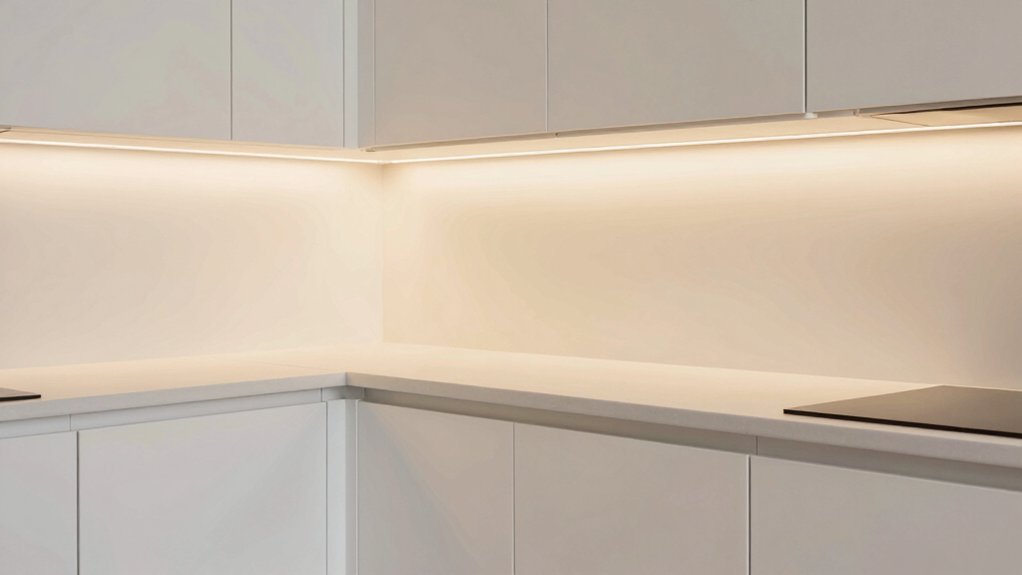
Creamy whites create seamless cohesion in a white kitchen by softening contrasts while preserving brightness. You achieve this by selecting creamy, unsaturated whites that still read clean under natural light, avoiding stark ivory or pure white extremes. These tones harmonize cabinetry and countertops, reducing visual noise and supporting a unified, airy feel.
To add subtle interest without disruption, consider decorative wall textures that reflect light differently and create depth without distracting from the cabinets. If you want a focal point, explore accent wall options that stay within the same family of cream, ensuring coherence.
Pairing finishes thoughtfully—matte walls with lightly glossy trim—enhances refinement while maintaining simplicity. In practice, test samples on multiple days to confirm consistent coloration under varying lighting conditions.
Taupe and Greige for Versatile Backdrops
Taupe and greige offer versatile backdrops that pair well with white cabinetry by balancing warmth and neutrality. You’ll find these tones create a calm canvas that highlights both decorative accents and architectural details without overwhelming the room.
Opt for a mid-range taupe or greige to preserve contrast against bright white cabinetry while maintaining a cohesive look. In spaces with strong natural light, lean toward cooler greige to prevent yellow undertones; in darker environments, warmer taupe can add inviting depth.
Consider wall textures—smooth finishes emphasize clean lines, while subtle textures add tactile interest without competing with white features. Use decorative accents sparingly to avoid visual clutter, allowing the color foundation to remain the focal point of your kitchen.
How to Test Swatches in Your Space
How can you guarantee wall color swatches truly reflect your space before committing to a finish? Begin by testing swatches on multiple walls and at different times of day to capture lighting shifts. Apply large sample patches, not tiny chips, and observe under ambient and task lighting.
Note how the paint finish options interact with your wall texture considerations—matte, eggshell, satin—since sheen alters perceived color depth. Mark edges with painter’s tape for clean boundaries, and photograph the swatches under natural light for later comparison.
Leave swatches in place 24 to 48 hours, then reassess after a meal or a nap to reflect true color fatigue. Finally, compare results against your cabinet white to ensure cohesive harmony.