
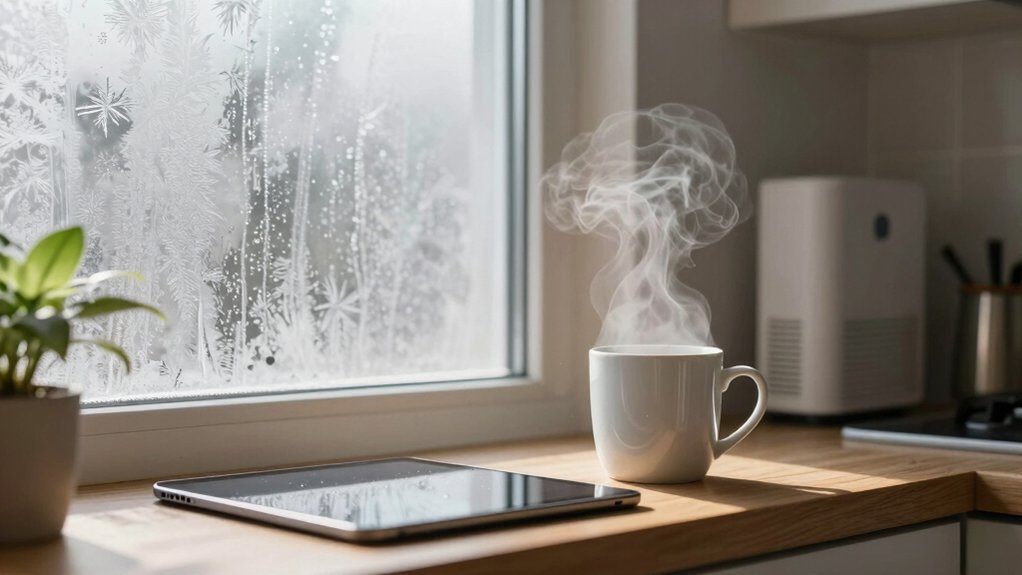
Condensation on windows happens when warm, moist air meets cold surfaces, so you’ll want to balance humidity, airflow, and temperature. Start by lowering indoor humidity to about 30-50% and improving ventilation during cooking or showers, then seal drafts around frames and boost insulation. Keep a steady indoor temperature and wipe away moisture as it forms. If you’re curious about precise steps for different seasons, there’s a practical path forward you won’t want to miss.
Understanding Why Window Condensation Occurs

When warm, moist air hits a cold surface, it loses energy and cools down, causing the water vapor to condense on the window. Condensation happens when indoor humidity meets a cooler window pane, creating tiny droplets. It’s driven by temperature differences, surface area, and air movement.
If you breathe, cook, or shower without adequate venting, you boost moisture levels near glass. A single pane or uninsulated frame makes it easier for spots to form.
To minimize this, you’ll want to reduce moisture at the source and improve air exchange. Use exhaust fans, open a window briefly, or run a dehumidifier on damp days. Keep interior surfaces warmer by improving insulation.
These steps cut the contrast that fuels condensation.
Assessing Your Indoor Humidity Levels
To assess your indoor humidity levels, start with a simple pass/fail check using a hygrometer. Place it in a central living area away from humidity hotspots like kitchens and bathrooms. Read the display after a few minutes; aim for 30–50 percent relative humidity, adjusting for comfort.
If you consistently read above 60 percent, you’re likely operating in a damp range that promotes condensation. If you stay below 30 percent, you might feel dry air and static electricity, but it’s still manageable with occasional adjustments.
Track daily fluctuations across different rooms and times of day to spot patterns. Use the data to inform practical steps, such as venting, dehumidification, or air exchange, before tackling bigger fixes.
Keep notes for future reference.
Quick Fixes to Reduce Moisture Immediately
If you’ve been tracking moisture from the previous check, you’ve got a practical read on where the humidity sits.
To cut damp fast, open a window briefly when possible, or switch on a fan to pull moist air out.
Wipe down windows and sills with a dry cloth after cooking or showering, and double-check lids on pots to trap steam.
Use absorbent mats in front of sinks and places that stay damp, and place moisture absorbers in corners that collect condensation.
Keep indoor air from stagnating by lowering humidity sources, like drying clothes outside or using a clothesline fan if needed.
Close doors to steamy rooms after use to prevent spreading humidity elsewhere.
Improving Ventilation Without Drafts
To improve ventilation without drafts, you should aim for balanced air exchange that freshens rooms without creating cold gusts. Use ceiling or whole-house fans, trickle vents, or timed exhausts to move air smoothly while keeping indoor temperatures even.
Pair these with sealing gaps and maintaining consistent humidity to prevent condensation on windows.
Balanced Air Exchange
Balanced air exchange is about venting just enough to refresh indoor air without creating chilly drafts or uneven pressure. You’ll aim for a steady flow, not a blast.
Use intermittent ventilation: open windows briefly to renew air, then close to seal in warmth. Pair this with a controlled supply, such as a bathroom or kitchen exhaust that pulls stale air out while a small amount of outdoor air leaks in through vents.
Keep balanced pressure by matching intake and exhaust paths so rooms don’t feel drafty. In colder months, run a heat-safe exhaust on a timer and allow gentle, continuous inflow from the remaining cracks.
Monitor humidity; if it rises, adjust window opening times or vent settings—just enough to refresh, not chill.
Reduce Cold Drafts
Reducing cold drafts with smart ventilation starts by sealing and guiding airflow, not blasting it in. Start by locating gaps around windows, doors, and joints, then weather-strip or caulk to block unintended gaps. Fit draft stoppers at the base of doors and use insulated curtains to reduce heat loss without trapping stale air.
Next, optimize ventilation with a balanced approach: exhaust fans help remove moisture, but pair them with equal intake to prevent pressure changes that pull cold air inside. Use a programmable or humidity-sensing vent fan to run when humidity rises, not constantly.
Circulate indoor air with a small, quiet fan set to a low speed, pulling air through heated spaces.
Finally, maintain your system: clean filters, check seals, and replace worn weatherstripping as needed.
Temperature Management to Minimize Condensation
Balancing temperature helps you curb condensation by keeping air steady and surfaces less likely to fog up.
You’ll compare humidity and temperature changes, then adjust settings to avoid excess moisture on windows.
Use targeted ventilation for drying when needed, but keep a comfortable overall temperature to prevent recondensation.
Temperature Balancing Tactics
To minimize condensation, you should manage indoor and outdoor temperatures so they’re closer to each other, especially during cool mornings and warm, humid days. Start by keeping your thermostat steady, avoiding large swings that force moisture to condense on cool surfaces.
Use a programmable schedule to align indoor temps with outdoor trends, but don’t let rooms overheat. At night, lower temperatures gradually to reduce humidity-driven buildup.
If drafts exist, seal them so warm air isn’t escaping and cold air isn’t leaking in, which helps stabilize surface temperatures.
Consider using ceiling fans to circulate air, pushing warm air downward in colder months and mixing air in warmer periods.
Maintain proper ventilation to balance airflow without creating cool pockets near windows.
Humidity Vs Temperature
When humidity and temperature interact, small changes in one can dramatically affect condensation on windows. You control this through practical tweaks: keep indoor humidity around 40–60% if possible, using dehumidifiers in damp rooms. Pair that with stable temperatures; abrupt swings invite moisture to cling to cold glass.
If mornings feel misty, raise the indoor temperature slightly or use a fan to improve air circulation, reducing surface cooling on windows. Drafts and cold spots worsen condensation, so seal leaks and keep curtains open during dry parts of the day to equalize surface temps.
Conduct quick checks: mirror a comfortable indoor range, avoid boiling water near windows, and monitor humidity with a simple hygrometer. Consistent conditions minimize condensation risk.
Ventilation for Drying
Ventilation for drying matters, especially when you’re trying to keep surfaces from staying damp. You’ll speed evaporation by moving air across wet areas, not just circulating random breeze. Open windows or use exhaust fans during and after activities that add moisture, like showers or cooking.
If you lack ventilation, use a dehumidifier or portable fan pointed at damp spots to create a directional airflow. Keep doors between rooms slightly ajar to promote cross-ventilation without chilling the entire house.
Elevate textiles and towels so air reaches both sides for faster drying. Avoid over-drying, which can warp materials; target balanced humidity and temperature. Monitor with a hygrometer, aiming for roughly 40–60% humidity during drying periods.
Reassess after weather changes to maintain steady drying conditions.
Sealant and Insulation Upgrades That Help
Sealant and insulation upgrades are a practical first line of defense against window condensation. You’ll seal gaps around frames with compatible caulk or foam, then scrub and dry surfaces before application. Use backer rod where joints are wide, then fill evenly to create a continuous barrier.
Choose low-expansion foam for exterior gaps and acrylic latex caulk for interior seams, avoiding paint-silicone mixes that resist paint. Install weatherstripping on operable sashes to reduce drafts and heat loss.
Upgrade glazing when feasible: add insulated drapery or lightweight secondary glazing panels to improve overall thermal resistance. Insulate around edges with foam tapes and sealants, ensuring no compression interferes with operation.
Finally, check for settled trim and reapply sealant annually to maintain effectiveness.
Humidity Control Devices Worth Considering
If you’re tackling window condensation, consider humidity control devices that fit your space and budget. Look at options like dehumidifiers, hygrometers, and smart humidistats to monitor and adjust moisture levels in real time.
Start by identifying your target humidity and room size, then pick a device that can reliably maintain it without overdoing it.
Humidity Control Devices
Humidity control devices are a practical, low-effort way to curb condensation. You’ll choose a unit sized for your space and climate, with a simple humidity readout. Set a target range around 40–60% to prevent excess moisture without overdrying air.
Install near problem zones, like windows or bathrooms, where humidity peaks. Use a dehumidifier with continuous drainage if you want hands-off operation, or empty a small tank routinely if it’s compact.
For desiccant options, consider rechargeable silica in tight spots; they require less power but need replacement or regeneration. Regularly inspect filters and coils; clean debris weekly to maintain efficiency.
Track humidity levels over a few days after setup, and adjust settings as seasons shift. Avoid overreliance on devices alone; improve ventilation where possible.
Worth Considering Options
Here are some humidity control devices worth considering, based on practicality and ease of use. A dehumidifier is straightforward: set it to target RH, empty the tank regularly, and choose energy-efficient ratings.
For smaller spaces, a desiccant pack or silica gel can reduce moisture without electricity, though you’ll need periodic replacement.
An inline ventilator helps exchange humid indoor air with drier outdoor air, especially in bathrooms or kitchens; connect it to a timer to avoid wasting energy.
Hygrometers keep you informed, guiding when to act.
Moisture absorbers placed near windows curb condensation pockets, but monitor for mold-ready zones behind furniture.
If you run a humid home, consider a whole‑house system with smart control.
Prioritize devices you’ll use consistently and maintain routinely.
Seasonal Strategies for Cold Weather
Seasonal strategies for cold weather focus on reducing indoor humidity and warming surfaces before condensation forms. You’ll keep humidity lower by adjusting cooking and shower habits, venting exhaust fans, and using range hoods consistently. Don’t dry clothes indoors; if you must, use a vented dryer or outdoor line.
Maintain a steady indoor temperature, especially during evenings, to minimize surface cold spots. Use programmable thermostats to prevent sudden drops; aim for a consistent 68–72°F (20–22°C) where you live.
Improve airflow by opening interior doors or using a small fan to circulate air, which helps evaporate moisture. Insulate particularly cold walls and windows with affordable weatherstripping or window insulation film.
In damp moments, wipe surfaces promptly and rehearse these steps.
Long-Term Home Improvements for Moisture Prevention
After tightening short-term habits, you can tackle long-term home improvements that curb moisture at its source. Begin with ventilation upgrades: install intermittent exhaust fans in kitchens and bathrooms, and ensure they vent outdoors. Add whole-house ventilation or a heat recovery system if your climate justifies it.
Seal attic air leaks with continuous insulation and weatherstripping, but keep vents clear for moisture movement. Improve insulation in exterior walls and crawl spaces to reduce condensation on colder surfaces. Use vapor barriers under slabs and above-ground flooring where appropriate.
Address drainage around the foundation; slope soil away and install gutters with downspouts directed away from the house. Consider a dehumidification plan for humid seasons, but avoid over-drying indoor air. Monitor humidity levels to maintain comfort and structural health.
Maintenance Tips to Keep Windows Dry
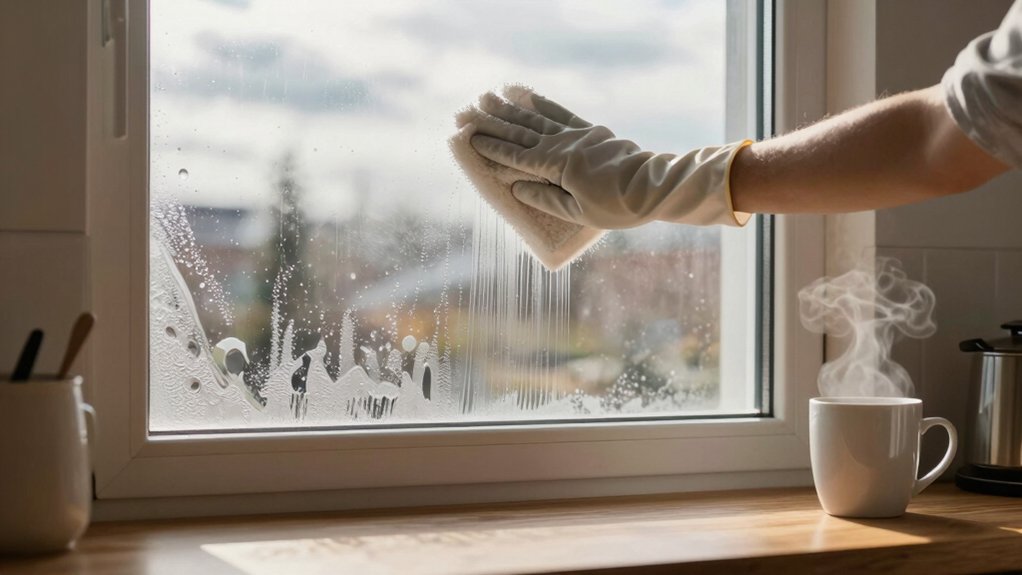
To keep windows dry, start with simple daily habits that reduce moisture buildup: wipe down condensation as soon as you see it, run exhaust fans during and after cooking or showering, and open a nearby window briefly to exchange humid air with drier outdoor air.
Establish a routine: dry surfaces after laundry, use a dehumidifier in damp rooms, and avoid drying clothes indoors whenever possible.
Improve airflow by keeping doors open between rooms and arranging furniture to prevent blocked vents.
Seal leaks around windows to reduce cold spots that attract moisture, and trim plants away from windows to prevent moisture transfer from soil.
Maintain consistent indoor humidity between 30% and 50%.
Regularly inspect caulking and glazing for cracks, repairing promptly.
Clean windows with a microfiber cloth to prevent residue that attracts moisture.
Frequently Asked Questions
Can Houseplants Contribute to Window Condensation?
Yes, houseplants can contribute to window condensation. You’ll notice humidity rises where you keep them; place plants away from windows, vent rooms, or run a dehumidifier. Monitor moisture, open curtains, and reduce watering near panes.
Do Window Types Affect Condensation Differently?
Yes, window types affect condensation differently; double-pane and low-emissivity panes resist moisture better than single-pane or metal-framed windows, while larger gaps and poor seals worsen buildup. Choose energy-efficient models and seal drafts to reduce condensation. Use exhaust fans.
How Does the Angle of Sunlight Influence Condensation?
Sunlight angle warms the glass and dries surfaces, reducing condensation. As the sun lowers, gradual cooling invites mist; you’ll see more fog. Increase airflow, ventilate briefly, and use insulating drapes to keep interior warm and dry.
Are Temporary Humidity Spikes Harmful to Windows?
Temporary humidity spikes aren’t usually harmful to windows, but they can cause condensation and mold if frequent. You should ventilate briefly, use dehumidifiers if needed, and monitor indoor humidity to stay under 60 percent to protect upgrades.
Should I Remove Condensation With Towels or Towels?
Yes, use towels to remove condensation. Wipe gently, then dry the area thoroughly. Keep towels handy, don’t rub hard, and address humidity and ventilation to prevent refogging. Consider a dehumidifier or extractor fan for ongoing control.