
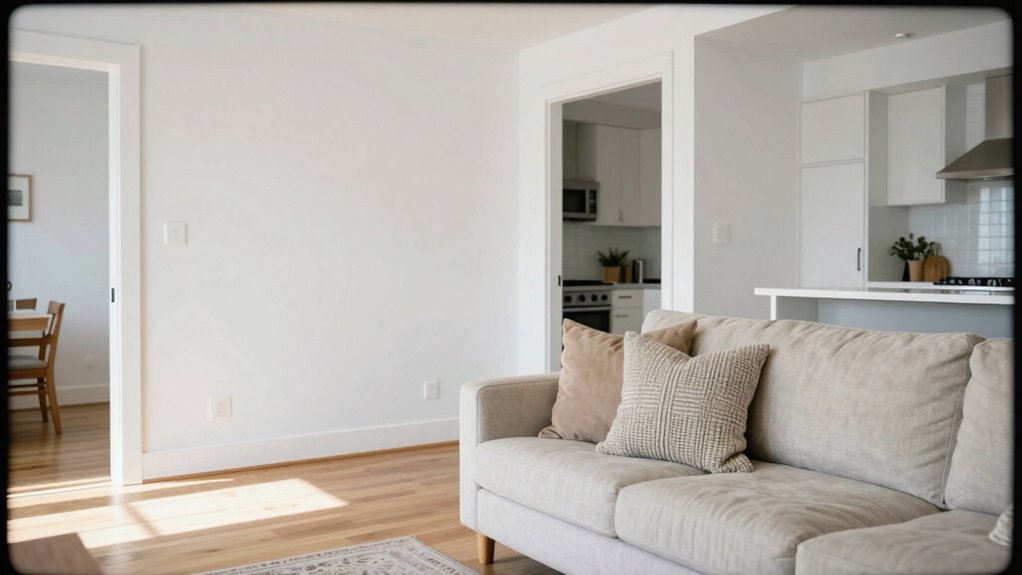
You’ll gain more value by prioritizing tangible updates, even if you’re prioritizing budget over bold renovations, because buyers notice durability and finish quality first. You’ll tighten gaps, refresh neutrals, and boost curb appeal with targeted exterior work, all while documenting repairs to build trust. If you approach space with an objective eye—lighting, flow, and efficiency—you’ll uncover cost-effective moves that compound value, and there’s more to contemplate beyond cosmetic tweaks that could influence offers.
Quick Cosmetic Fixes That Make a Big Impact
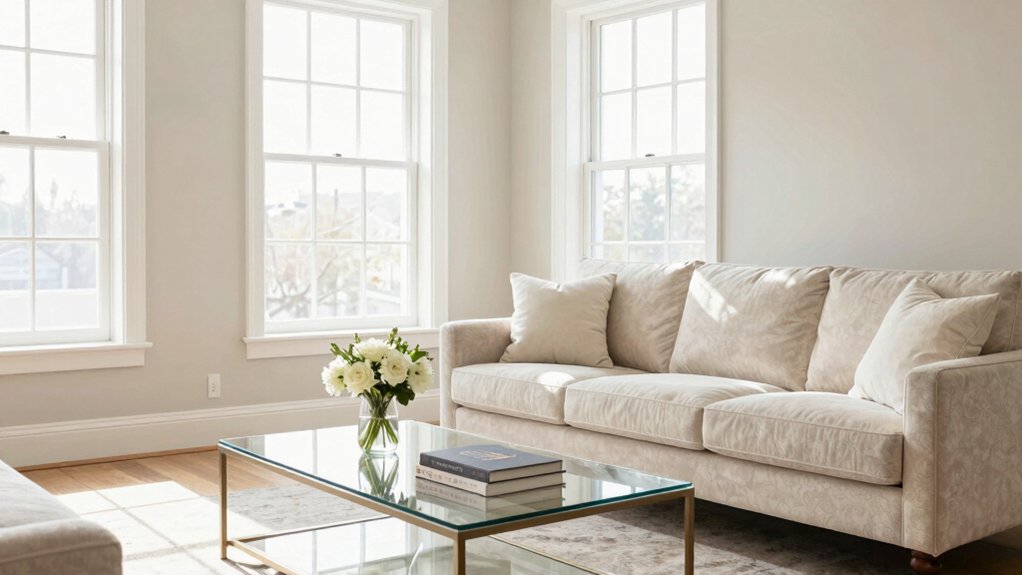
Small cosmetic fixes can yield outsized returns when selling a home. You’ll focus on low-cost, high-impact tasks backed by data: decorative accents that refresh rooms without full renovations, and minor repairs that prevent buyer concerns.
Start with entryways and kitchens, where first impressions count; tighten loose handles, caulk gaps, and replace a worn doormat. Update outlets and switch plates for a cohesive, modern look, then add subtle decorative accents—new throw pillows, framed art, or a mirror to brighten spaces without overhauling decor.
Address plumbing drips, squeaky doors, and chipped paint promptly to avoid negotiation derails. Track costs and expected value lift, aiming for a favorable cost-to-value ratio.
Your disciplined approach minimizes risk while delivering measurable appeal to buyers.
Refreshing Paint: Colors That Appeal to Buyers
Are you choosing paint colors that move buyers? Neutral palettes perform best, with warm beiges, greys, and off-whites leading to higher perceived space and easier emotional connection.
Opt for low-sheen finishes to reduce glare and maintenance, supporting a clean, modern look.
Data shows buyers prefer consistent color flow from room to room, minimizing contrast between adjacent spaces.
Use wall textures sparingly to add subtle depth without overpowering rooms; a single textured accent wall can create focal interest without dating the decor.
Accent walls should be restrained, ideally up to 20 percent of total wall area in a room.
Test color samples in multiple lighting conditions and document responses, then finalize with one cohesive, universally appealing palette that enhances perceived size and brightness.
Kitchen Upgrades on a Budget
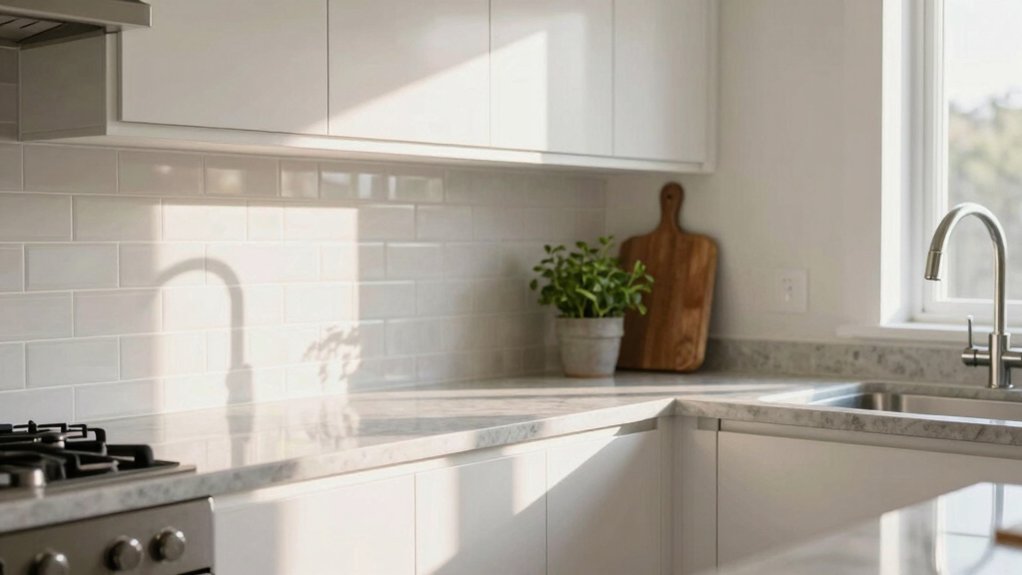
To maximize return, start with a budget-friendly cabinet refresh, focusing on fresh paint, new hardware, and clean, even finishes that look like a full upgrade.
Pair this with fresh countertop upgrades that balance cost and durability, such as laminate or quartz composites, to gain visual impact without overspending.
Finally, target efficient appliance updates—compact, energy-star models or replacements for high-use items—to improve performance while keeping total costs under control.
Budget-Friendly Cabinet Refresh
If you’re updating your kitchen on a budget, start with the cabinets, since they account for a large portion of a home’s perceived value. A cabinet-refresh can yield noticeable impact without a full remodel.
Focus on durable, mid-range materials and consistent finishes to maximize resale appeal, targeting a 3–5% uplift in perceived quality per study benchmarks.
Prioritize hardware updates, selecting hardware styles that complement your cabinet doors and existing fixtures; this is the most cost-effective upgrade with high visibility.
Improve cabinet organization by adding adjustable shelves, pull-out organizers, and labeled bins to reduce clutter and improve perceived usability.
Track costs and expected ROI, aiming for a total sub-$1,000 refresh that convincingly signals modernity and care without overspending.
Fresh Countertop Upgrades
With cabinet updates underway, upgrading countertops on a budget can substantially lift perceived quality without a full remodel. You’ll evaluate cost-per-use and return on investment by comparing materials in the same price tier, not just the cheapest option.
Countertop materials such as laminate and solid surface deliver immediate visual impact with lower installation costs, while quartz-inspired composites offer durability at a mid-range price. Assess installation complexity, as DIY or pro installation shifts total cost by up to 30 percent.
Countless tests show countertop durability varies by material, impact resistance, and heat tolerance, impacting long-term maintenance. Choose seams, edge profiles, and backsplash integration that reduce grime buildup and cleaning time.
Finally, request product specifications and warranty terms to quantify risk and ensure value aligns with resale timelines.
Efficient Appliance Updates
Efficient appliance updates can dramatically improve kitchen value without a full remodel, especially when you target energy use, reliability, and installation costs. You should prioritize models with proven appliance lifespan and favorable energy ratings, then compare upfront price versus long-term savings.
Look for energy saving features like efficient motors, smart thermostats, and inverter compressors, which reduce operating costs and appeal to buyers. Choose standard sizes to reduce installation hassles and avoid bulky retrofits.
Reliability matters: opt for widely supported brands with easy service networks and longer warranties. When budgeting, account for delivery and removal of old units, as these costs can bite your efficiency gains.
Document energy labels and maintenance history to demonstrate real-world performance, boosting buyer confidence without overinvesting in nonessential upgrades.
Bathroom Tweaks for Higher Perceived Value
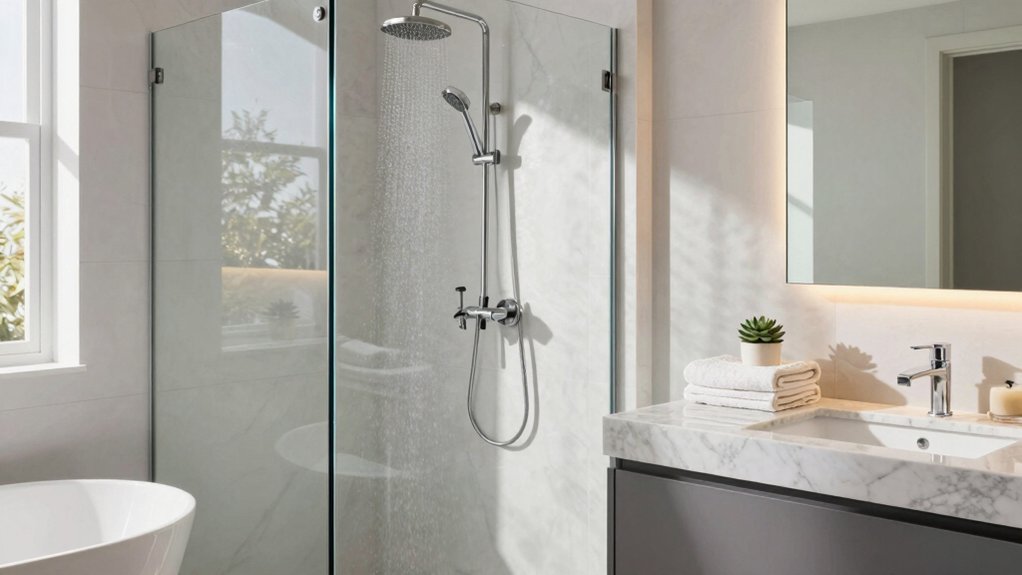
Upgrading a bathroom can yield noticeable returns, especially when you focus on elements buyers consistently rank as important. You should prioritize durable finishes, efficient fixtures, and precise fit between components because consistency across a full remodel reduces perceived risk.
Data shows that midrange updates with modern vanities, calibrated lighting, and water-saving toilets attract offers closer to asking price. Targeted improvements, such as resealing showers and replacing grout with stain-resistant options, prevent recurring maintenance concerns that buyers flag as deal breakers.
Incorporate luxury bathroom fixtures and spa-like bathroom features where feasible, since perceived luxury often correlates with higher price anchors without overinvesting. Keep color schemes neutral, textures subtle, and hardware cohesive to convey a polished, low-effort upgrade that reads premium.
Curb Appeal Improvements That Attract Purchasers
You’ll see measurable impact when you combine an exterior makeover with clean landscapes that frame sightlines and boost curb recognition. Focus on Landscape Curb Appeal to create immediate first impressions, alongside Entrance Perception Boost to improve perceived value.
While Exterior Makeover Ideas provide a cohesive, data-backed upgrade plan. Together, these elements target buyer attention early, support faster interest, and align with common pricing benchmarks for refreshed street-view appeal.
Exterior Makeover Ideas
Exterior makeover ideas start with a clear assessment of your home’s current curb appeal and the buyer profile you’re targeting. Focusing on high-ROI improvements like landscaping, entryway updates, and exterior lighting can considerably impact first impressions.
You’ll prioritize data-backed upgrades that show measurable value, such as proportionate front doors, refreshed siding color, and durable fascia fixes. In practice, implement garden design choices that enhance curb visibility without overhauling the structure, and align plantings with local climate data to ensure low maintenance.
Budget allocations should favor high-traffic zones first, including the entry path and porch lighting, to boost safety and attractiveness after dusk. Document pre/post photos and track buyer feedback to quantify impact, then refine based on observed trends in comparable home sales and time-on-market reductions.
Landscape Curb Appeal
Landscape curb appeal directly influences buyer perception before they step inside, so small, well-planned plantings and hardscape tweaks can yield outsized returns. You should evaluate sightlines from curb to entry, prioritizing low-maintenance, drought-tolerant plantings that maintain year-round structure.
Use data-backed spacing: plant groups at intervals that support mature sizes, reducing future replacement costs. Integrate garden lighting to extend usability and highlight focal points without glare, improving safety and perceived quality. Implement flower planting in cohesive color schemes that complement your home’s exterior tones, avoiding overly busy combinations.
Consider contrasting textures—evergreens for winter interest, deciduous shrubs for seasonal change. Schedule maintenance checks for irrigation efficiency, mulching depth, and weed control, as these factors drive perceived value and buyer confidence during early viewing moments.
Entrance Perception Boost
A strong entrance sets buyer expectations before they step inside, and small, strategic changes can yield outsized impact on perceived value. You can quantify first impressions by tracking a simple metric: time-on-porch and bounce rate from exterior to foyer.
Prioritize durable, low-maintenance materials that resist weathering and maintain curb appeal across seasons. Entrance lighting should balance security and aesthetics, using warm peak-lumen levels to highlight architectural features without glare.
Door hardware matters: choose corrosion-resistant finishes that complement the home’s style and require minimal upkeep. Clear sightlines, unobstructed paths, and seasonal greenery boost perceived value without major renovation.
Install energy-efficient bulbs and ensure sockets are weatherproof. Consistency in hardware and lighting reinforces a cohesive, inviting entry.
Flooring and Lighting Choices to Modernize Spaces
Flooring and lighting are among the most cost-effective updates for increasing a home’s appeal and perceived value. You should select durable, low-maintenance materials with broad appeal.
Luxury vinyl performs well under varied traffic and moisture exposure, offering realistic visuals at a lower cost than hardwood, plus easy cleaning and resale-friendly warranties. If you prefer premium aesthetics, opt for luxury vinyl planks that mimic wood grain without susceptibility to warping.
For lighting, prioritize energy-efficient options and layered setups. Pendant lighting above dining and task areas provides focal points and visual scale, while recessed LEDs deliver ambient accuracy across rooms.
Aim for a cohesive color story and daylight-balanced color temperatures (2700–3500K). Guarantee fixtures are properly rated for rooms’ function, wire, and voltage, then document energy savings to support value.
Open Floor Plans and Space Optimization
Open floor plans deliver a sense of breadth and adaptability that buyers often equate with added usable square footage, but they require deliberate space optimization to avoid clutter and lost function. You’ll maximize value by defining zones without sacrificing openness.
Use wall partitioning to create distinct areas—living, dining, and work—while preserving sight lines and natural light. Choose room dividers that don’t trap shadows or walls; prefer low, transparent options like partial walls, glass panels, or modular screens.
Integrate built-in storage within partitions to reduce surface clutter. Measure traffic flow to prevent bottlenecks; ensure 36-inch clearances for primary pathways.
Prioritize flexible layouts that accommodate furniture reconfiguration for future buyers. Base decisions on data: occupant needs, square footage efficiency, and potential resale impact of each partitioning choice.
Staging Tips to Showcase Your Home’s Potential
Staging your home effectively hinges on clarity and intention: highlight flow, minimize distractions, and present each room’s purpose with precise, data-informed choices.
You’ll optimize sightlines by arranging furniture to emphasize natural pathways, avoiding blockages that impede movement or misdirect attention. Base furniture arrangements on room dimensions and focal points, such as windows or architectural features, to maximize perceived space and function.
Select decorative accessories that echo a neutral palette while adding subtle texture and contrast, ensuring items are proportionate and uncluttered. Use lighting strategically: layered options, avoid harsh glare, and highlight key features without creating shadows.
Declutter surfaces, curate a consistent style, and maintain clean, fresh scents to reduce distractions. Document how each space serves daily activities to support buyer interpretation and offers.
Energy Efficiency Upgrades That Sell
Upgrading insulation reduces heat loss and can lower annual energy bills by measurable amounts, especially in poorly insulated walls and attics.
Pair this with high-efficiency heating options to improve comfort while controlling operating costs, then track performance through utility data and local efficiency benchmarks.
Add a smart thermostat to optimize scheduling and provide data-backed trends for prospective buyers, as these combined upgrades often yield stronger market appeal and resale value.
Efficient Insulation Upgrades
If you’re aiming to boost resale value and reduce operating costs, efficient insulation upgrades are a fundamental, data-driven way to buyers’ minds. You’ll enhance thermal performance by targeting attic, wall, and crawlspace assemblies, where studies show most heat loss occurs.
Choose high-R-value batt or blown-in insulation paired with air sealing to reduce drafts by measurable percentages, improving year-round comfort and down-stream energy bills.
Pairing insulation with proper attic ventilation helps prevent moisture buildup and maintains insulation effectiveness, a factor buyers assess during inspections.
Consider continuous exterior insulation or upgraded sheathing to minimize thermal bridging, supported by energy-modeling estimates.
Document material grades, installation standards, and post-install testing results.
Use window treatments as a complementary, low-cost add-on to improve perceived value without compromising long-term performance.
High-Efficiency Heating Options
High-efficiency heating options can substantially cut operating costs and appeal to buyers focused on long-term savings. You can quantify impact by local utility rates, system efficiency ratings, and installation costs.
Solar heating, when paired with existing structures, reduces daytime demand and can lower annual bills by a measurable percentage, depending on climate and roof exposure.
Geothermal systems leverage ground temperature stability to deliver consistent heat, often achieving seasonal efficiency markedly above conventional furnaces, with payback periods commonly between 5 and 12 years in many markets.
For resale, present the system’s HSPF, SEER, and COP values, along with warranty terms and maintenance schedules.
Compare option lifespans, energy credits, and anticipated replacement costs to help buyers assess total ownership.
Document performance data from reputable sources and local incentives to support your claim.
Smart Thermostat Adoption
Smart thermostats are a practical, data-backed upgrade that buyers often value for measurable energy savings and convenience. When you install a modern thermostat, you’ll enable scheduling, remote control, and adaptive learning that personalize comfort without wasting heat or cooling.
Studies show programmable models can cut HVAC energy use by 8–15% annually, translating to measurable energy savings on utility bills. As you present the home, highlight compatibility with existing systems, quick installation, and remote monitoring features that appeal to tech-forward buyers.
Emphasize data sources and reporting options, such as usage history and peak-demand alerts, to illustrate efficiency gains. This smart technology modernizes the home’s energy profile, supporting a compelling narrative of lower operating costs and enhanced comfort for future occupants.
Maintenance and Repairs: What to Prioritize Before Listing
When prepping a home for sale, prioritizing maintenance and repairs that impact buyer confidence and perceived value pays off most. Start with structural and safety items: roof leaks, foundation cracks, and electrical panel updates; resolve these within 2–4 weeks to minimize buyer renegotiation risk.
Next, address cosmetic essentials that influence impressions and inspections: repaints in neutral tones, squeaky doors, and updated cabinet hardware.
Focus on functional systems: HVAC service, water heater reliability, and adequate insulation; document recent servicing to support value claims.
Prioritize pest control and moisture management to prevent defect disclosures.
Leverage data: warranty records, inspection reports, and energy-performance data to justify pricing.
Consider smart upgrades with tangible ROI, like home automation features that demonstrate reliability.
Conclude with a concise pre-listing checklist for agents and sellers.