
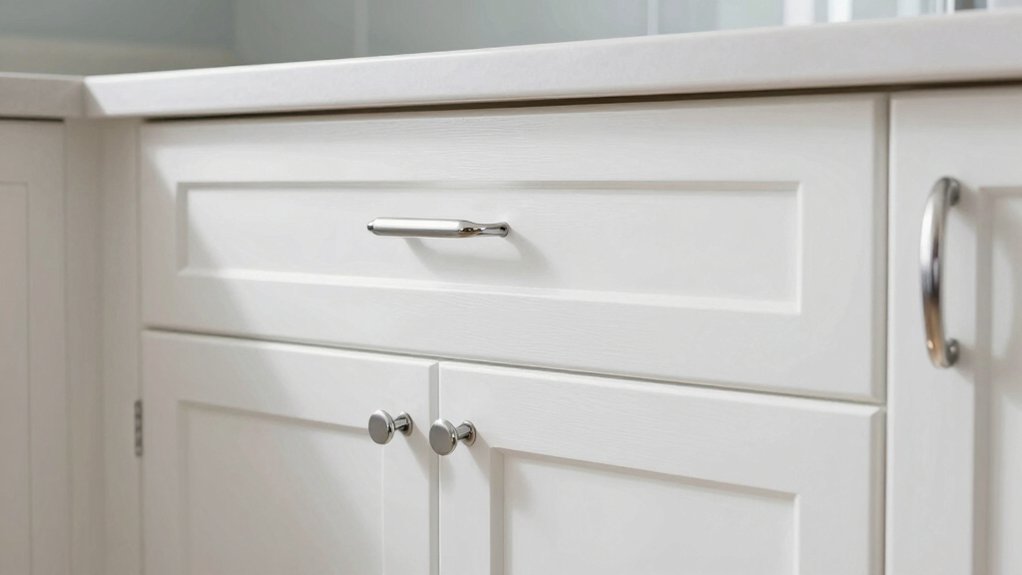
For kitchen cabinets, choose a durable satin or semi-gloss white paint with neutral undertones that match your lighting. Pure white offers a crisp, clean look, while off-white or creamy whites soften the space and reflect daylight more warmly. Consider cool-toned whites for a modern vibe or vintage white washes for character. Prepare thoroughly with degreasing, sanding, and priming, then seal high-traffic areas. With the right finish and care, you’ll achieve lasting color, sheen, and wipeability—and there’s more to explore.
Pure White: Crisp, Clean Cabinets
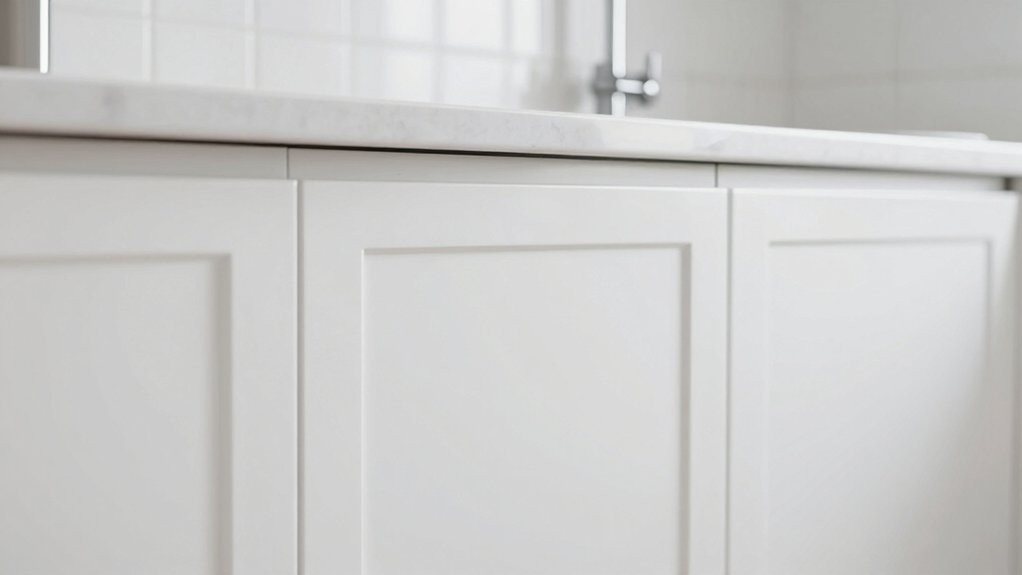
Pure white cabinets offer a pristine, timeless look that brightens kitchens and makes spaces feel larger. You’ll appreciate how this shade pairs with neutral tones and bold accents, creating a versatile foundation for design.
In practice, you evaluate paints with undertones, sheen, and durability to guarantee lasting cleanliness. A satin or semi-gloss finish resists splashes and wipe-downs, while staying reflective enough to enhance light.
Consider the cabinet hardware and how it complements the overall tone; metal pulls or glass knobs change perceived temperature and texture.
For the Kitchen backsplash, choose materials that echo the crispness without crowding the view. Consistent color across panels prevents visual breaks, and trim alignment maintains a seamless field.
This approach yields a cohesive, modern, low-maintenance kitchen aesthetic.
Off-White With Subtle Warmth
Off-white with subtle warmth softens the crispness of pure white while preserving a bright, airy feel. You’ll notice a gentle undertone that reads as approachable rather than harsh, improving daylight reflections without washing out contrast.
This hue works with cooler and warmer cabinetry shades, creating a versatile backdrop for hardware and profiles. In practice, you’ll choose paints labeled as off-white with warm undertones and test in natural light to confirm consistency across surfaces.
For performance, prioritize low-VOC formulations and durable finishes that resist scuffing in high-traffic kitchens. When paired with luxury finishes, the result is a refined, gallery-like quality that remains practical for daily use.
Consider eco-friendly options that maintain color integrity while minimizing environmental impact.
Creamy Whites for Timeless Kitchens
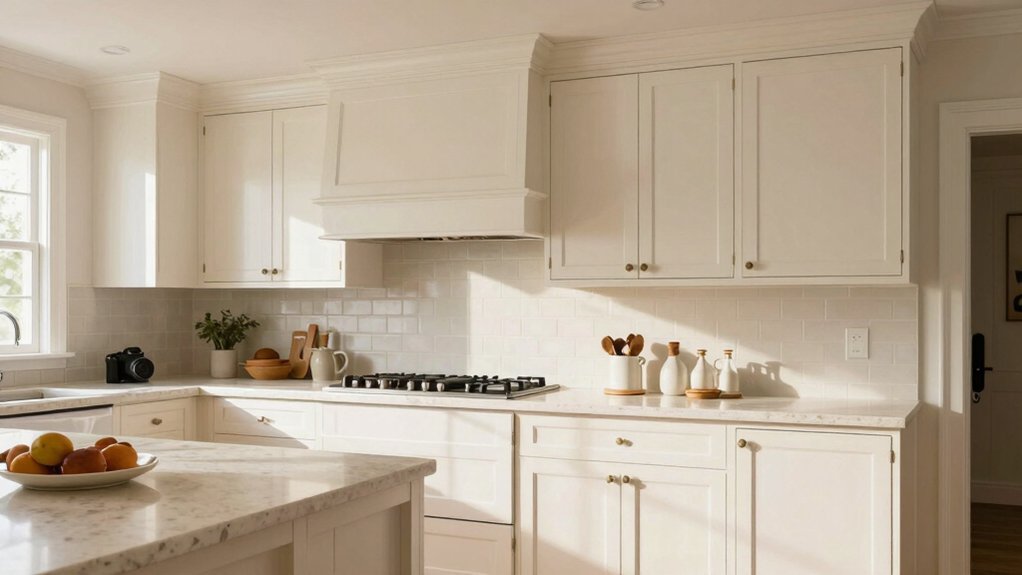
Creamy undertones subtly shift the perception of shade, so you’ll want undertone tests to verify it reads warm without leaning yellow.
Choose a timeless sheen—matte for a muted backdrop, satin or eggshell for durability and easy maintenance—while keeping the finish consistent across cabinets and trim.
Creamy Undertones Matter
If you want a kitchen that feels warm yet versatile, creamy undertones matter because they harmonize cabinets with varied lighting and décor. Creamy whites don’t read as pure white in all environments; instead, they shift subtly with the room’s color balance and light spectrum.
You’ll notice deeper warmth under incandescent kitchen lighting, and cooler notes beneath daylight or LED sources. This color psychology matters because undertones influence perceived cleanliness, size, and mood, guiding accessory and counter choices without overpowering space.
Choose finishes with neutral bases to minimize undertone clashes; test samples at different times of day. Practically, expect better cohesion between cabinetry, backsplash, and fixtures when you align undertones with your lighting plan, ensuring timeless appeal without sacrificing modern versatility.
Color psychology informs decisions, and kitchen lighting confirms them.
Timeless Sheen Choices
Timeless kitchens benefit from creamy whites that read warm yet stay adaptable, so select sheens that balance gloss with durability. In this context, you’ll prioritize subtle reflection and washability, choosing finishes that resist fingerprints and cleaning wear. Satin and soft-gloss options offer a practical middle ground, delivering enough depth without appearing flat.
If your space demands higher contrast or brighter ambiance, consider a low-luster pearl with easy touch-up properties. For cabinetry, a durable enamel provides chemical resistance and a smooth, even film that highlights details.
Evaluate decor trends as a guide, not a dictate, aligning sheen with cabinet profiles and lighting. Budget considerations matter: weigh upfront coating costs against maintenance and recoat intervals to preserve timeless appeal.
Bright White Semi-Gloss Finishes
Bright white semi-gloss finishes offer a clean, modern look with a durable, wipeable surface that resists smudges and moisture. You’ll appreciate the crisp reflectivity, which helps define tight cabinet lines and enhances perceived cabinet depth.
In practice, semi-gloss provides better moisture resistance than flat or satin, making it suitable for kitchens with steam, splashes, or high humidity. Application consistency hinges on surface preparation: stain- or wax-spot removal, light sanding, and a uniform primer layer for even sheen.
For color stability, choose high-quality alkyd or waterborne enamel with proper flexibilizers to reduce brush marks. Plan lighting to maximize sheen without glare, and select cabinet hardware options that complement the finish and accentuate clean lines.
Consider test panels to confirm glare, washability, and touch-up ease under your Kitchen lighting.
Durable Matte White Options
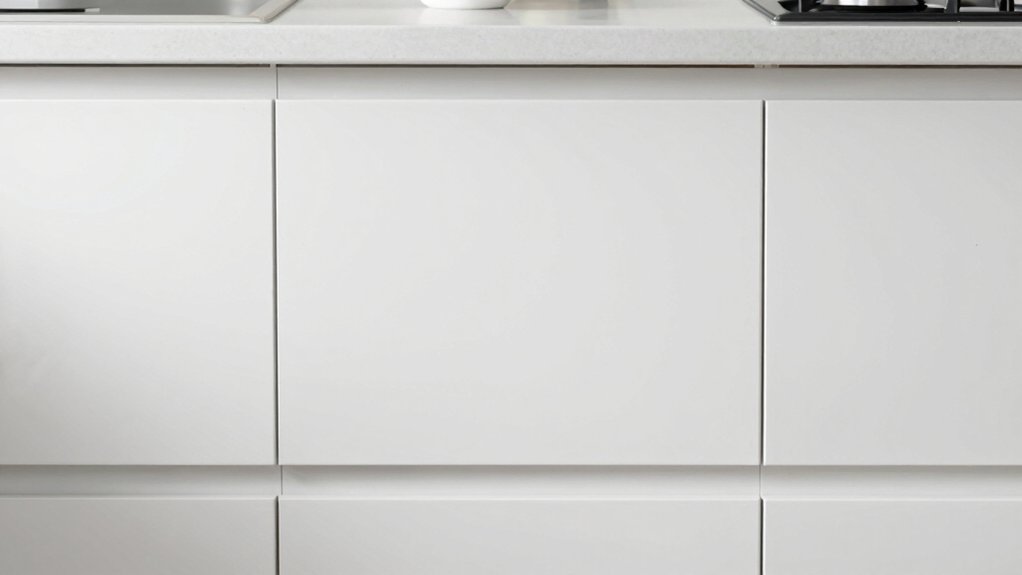
Durable matte white finishes balance a soft, modern aesthetic with practical performance for kitchens. You’ll notice resilient surfaces that resist fingerprints and wipe clean easily, while maintaining a subdued sheen that hides minor imperfections.
When evaluating options, prioritize paint durability under high-traffic use and humidity, as matte sheens can be more susceptible to wear than glossier finishes. Look for formulations with enhanced leveling and stain resistance, plus low odor and quick cure times for minimal disruption.
Color matching matters, too: choose base tones that align with existing cabinetry and lighting to prevent chalky or washed-out results. Consider primers designed for bare woods or authentic MDF, and select compatible topcoats for a seamless, durable, matte white that stays fresh year after year.
Eggshell Whites for Subtle Sheen
Eggshell finishes offer a subtle sheen that balances polish with practicality. You’ll compare subtle sheen varieties, weigh the pros of an eggshell finish, and consider how it pairs with your cabinet materials.
Easy to clean and maintain, these options fit a kitchen’s daily routine while preserving a refined look.
Subtle Sheen Varieties
Subtle sheen varieties offer a refined alternative to flat whites, balancing modest luster with easy maintenance. You’ll explore eggshell whites that temper glare while still showing depth. Color saturation remains understated, so cabinetry reads clean without shouting color.
In practice, the finish provides a whisper of texture that resists fingerprints and minor abrasions, aiding long-term upkeep. You’ll notice this sheen’s reflective quality softens shadows, enhancing perceived depth without increasing glare.
Finish durability matters: eggshell resists daily wear better than flat but isn’t as hard as semigloss, making it a pragmatic compromise for busy kitchens. Application consistency is key; even coating prevents patchiness and ensures uniform tone across panels.
Choose hues with balanced undertones to preserve overall coordination with cabinetry hardware and countertops.
Eggshell Finish Pros
If you’re aiming for a refined, easy-to-sustain kitchen look, eggshell whites give you a practical balance of gloss and grip: they soften reflections while resisting fingerprints and minor wear.
In practice, Eggshell finish pros include a perceptible, velvety sheen that reads as polished without being flashy. You gain a forgiving washability, moderate wash durability, and fewer swirl marks than higher-gloss options. This level supports a cohesive cabinet palette, pairing well with hardware and natural light.
The finish shields against fingerprints while preserving depth, making touch-ups straightforward. Durability benefits arise from its robust film that tolerates routine cleaning and daily use.
For longevity, select high-quality primers and coats, applying with even, cross-coated passes to maintain uniform luster.
Cleanability and Care
Cleanability with an eggshell white finish strikes a balance between ease of maintenance and a refined look. You’ll find this sheen tolerates routine wiping without showing fingerprints or smudges as quickly as glossier options.
For daily upkeep, use a soft microfiber cloth and warm water with a mild, non-ammoniated cleaner. Avoid abrasive pads that can dull the texture. Cleaning techniques should focus on spot cleaning and quick-dry methods to prevent streaking.
Maintain the surface by sealing high-traffic areas with a light touch of compatible wax or polymer guard, if recommended by the paint manufacturer. Establish maintenance routines that align with cabinet usage—clean after cooking splashes, address moisture promptly, and recoat as guidance suggests to preserve color, sheen, and wipeability.
Greige-Influenced White Shades
Greige-influenced white shades blend cool, crisp whites with warm gray-beige undertones, producing a versatile palette that reads as refined rather than clinical. You’ll notice these tones soften high-contrast cabinetry while preserving brightness, which helps cabinets recede or advance in rhythm with lighting.
In practice, choose greige-inflected whites when you want subtle warmth without yellow undertones, ensuring a timeless look that pairs well with natural wood or stone. For color consistency, test under your kitchen’s daylight and artificial lighting to confirm undertone stability.
When planning finishes, consider furniture pairing and color accenting to create cohesive zones: light, mid-tone counters, and accent pieces that echo the undertone. This approach yields a refined, durable foundation for evolving decor without sacrificing cleanliness or clarity.
Cool-Toned White for Modern Kitchens
Cool-toned whites lean into pristine, near-ultralight temperatures that emphasize crisp, modern lines in kitchen design. You’ll notice less warmth, which highlights architectural details and accent lighting, while keeping surfaces visually expansive.
In practice, these tones pair best with high-contrast materials like charcoal hardware or espresso cabinetry to maximize clarity of form. When selecting a finish, opt for matte or satin sheens to minimize reflections and maintain a calm, gallery-like feel.
Use an accent wall to introduce subtle personality without saturating the space; choose a cool, muted shade or a texture that complements the white. A kitchen backsplash in cool white or icy gray reinforces the modern aesthetic and improves perceived cleanliness and brightness.
White Wash and Vintage-Inspired Hues
White wash and vintage-inspired hues bring warmth and character to kitchens without sacrificing lightness. You’ll notice these tones soften stark whites, creating inviting, sunlit spaces that still read clean and modern.
In practice, choose low to mid-saturation whites with subtle warmth or gray undertones to preserve clarity while adding depth. The effect works well on cabinets paired with natural woods, brass hardware, and matte finishes that age gracefully.
Consider a restrained palette: off-white bases, bone, or antique ivory, layered with one or two vintage-inspired accents for contrast. Decorating accents like shiplap panels, beadboard details, or aged glass doors enhance the vibe without overpowering.
Storage solutions stay practical: keep open shelving lightly stained, and integrate closed cabinetry to maintain a bright, organized kitchen.
Practical Prep and Application Tips for White Cabinets
With proper prep, white cabinets stay pristine and enduring. You’ll achieve a durable finish by inspecting for damage, filling dents, and sanding smooth between coats.
Begin with thorough paint preparation: degrease surfaces, rinse, and let them dry completely to prevent gloss loss and fisheyes. Mask edges and hardware to protect nonpainted areas.
Prime with a stain-blocking, tailored formula to prevent tannin bleed and color shifts; choose a compatible topcoat for your chosen sheen. During application, maintain a wet edge and apply light, even coats to avoid lap marks.
For color matching, test a small panel under lighting similar to your kitchen; confirm away from glare. Allow ample cure time between coats, then assess for consistency and touch up only as needed.
Frequently Asked Questions
How Do I Prevent Yellowing on White Cabinet Finishes Over Time?
To prevent yellowing, you should seal with a UV-resistant finish and use low-odor, water-based options; clean regularly with non-abrasive, pH-neutral cleaners. Cleaning tips and Finish options help maintain brightness and longevity without tinting.
Which Finish Resists Fingerprints Best for Busy Kitchens?
You’ll want a satin or matte enamel, because it offers fingerprint resistance and high finish durability for busy kitchens. It minimizes smudges while maintaining a clean look, balancing practical maintenance with aesthetic appeal and long-term color stability.
Can I DIY White Cabinets Without Professional Spraying?
Yes, you can DIY painting white cabinets without professional spraying. Start with thorough cabinet prep, clean, sand, and prime. Then apply thin coats, sand between, and seal. DIY painting can rival sprayed results with care and patience.
How Often Should I Recoat White Cabinets for Longevity?
You should recoat every 3–5 years for longevity, plus after any chips or stains. Maintain Cleaning routines and plan paint touch up quarterly to prevent wear, keeping finishes uniform and cabinets looking fresh and durable.
Do White Cabinets Affect Perceived Kitchen Temperature?
Yes, white cabinets subtly influence perceived temperature through color psychology and lighting effects, making spaces feel cooler or brighter. You’ll notice bias toward cooler tones under cool lighting, and warmer vibes with daylight, influencing comfort and design choices.