
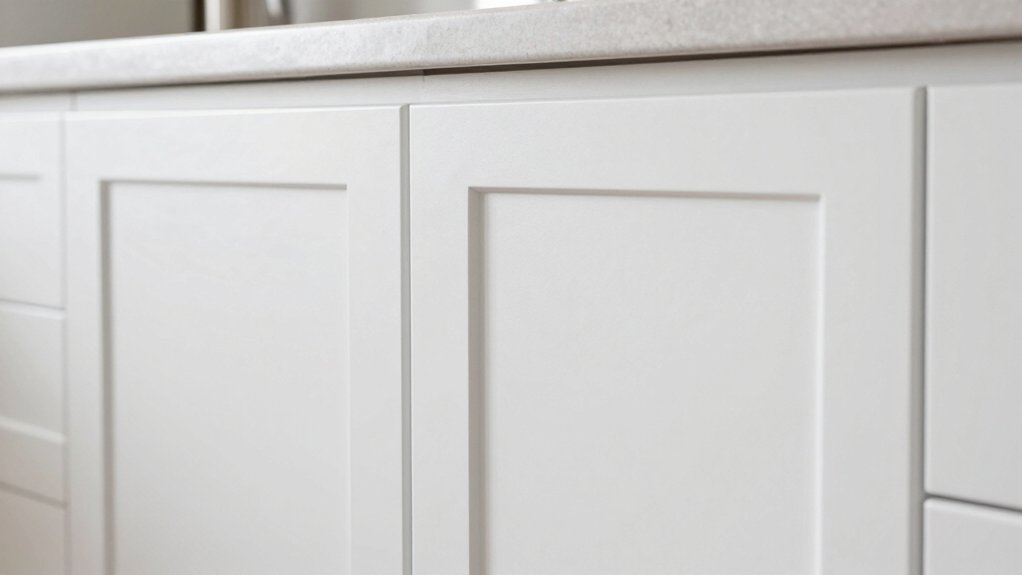
For the best white paint for kitchen cabinets, you want true white or soft off-white in a satin to semi-gloss enamel. These sheens resist wipes and stains, while still hiding wear fairly well in busy kitchens. Prioritize durable, low-VOC interior enamels from reputable brands, with good coverage and minimal brush marks. Prep thoroughly, prime, and apply thin, even coats, letting each cure fully. If you stick with these tips, you’ll uncover more specifics that can elevate your project.
White Paint Finishes to Consider for Cabinets
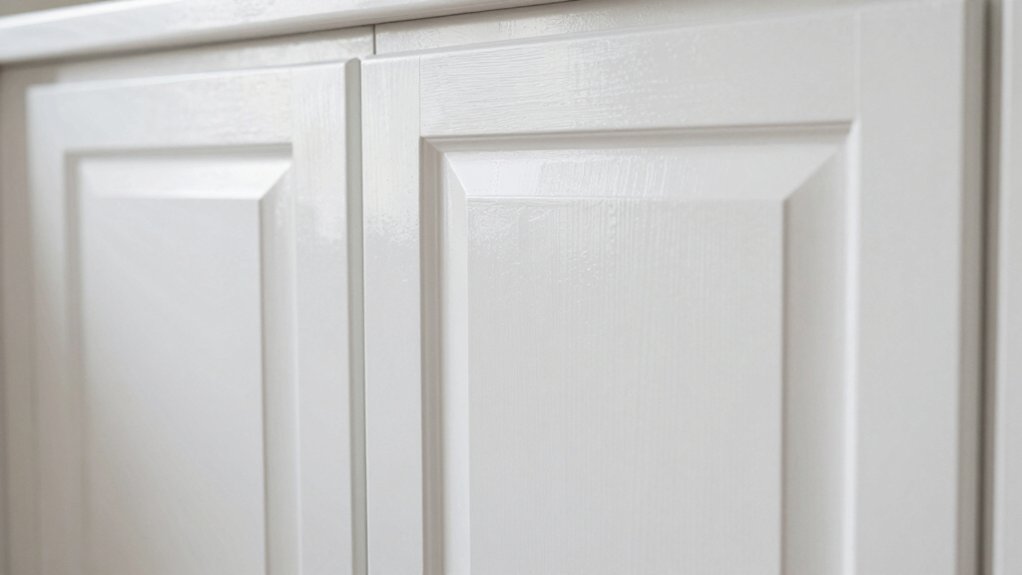
When choosing white paint finishes for cabinets, you’ll want to balance cleanliness with practicality. You’ll discover options that suit every style and maintenance plan, from ultra-matte to high-gloss.
Satin finishes strike a balance of subtle sheen and durability, making them great for high-traffic kitchens. Eggshell offers a soft look with easier touch-ups, while gloss delivers a more modern, reflective surface.
For a traditional vibe, consider enamel or doors with a slight cream undertone rather than stark pure white. Pay attention to lighting, since color shifts can occur with different bulbs.
Use decorative techniques, like glaze accents or subtle distressing, to add depth without overpowering. Maintain color coordination by pairing whites with complementary undertones in cabinetry, countertops, and hardware to achieve cohesive, timeless contrast.
True White vs. Off-White: How to Choose
True white and off-white aren’t just about shade; they set the mood for your entire kitchen. When choosing, you’ll balance brightness with warmth, and consider how the tone plays with your cabinets, countertops, and lighting.
True white delivers crisp clarity and a clean backdrop, ideal if you want a modern, high-contrast look. Off-white softens spaces, reducing glare and creating coziness, especially under warm bulbs or daylight.
Your decision hinges on color matching with existing elements and how the shade shifts throughout the day. Test swatches in prime cooking zones to observe under both natural and artificial light.
Also assess paint durability in high-use areas, ensuring the pigment holds evenly. In short, pick a white that aligns with your overall palette and stands up to daily wear.
Durable Sheens for Kitchen Cabinets
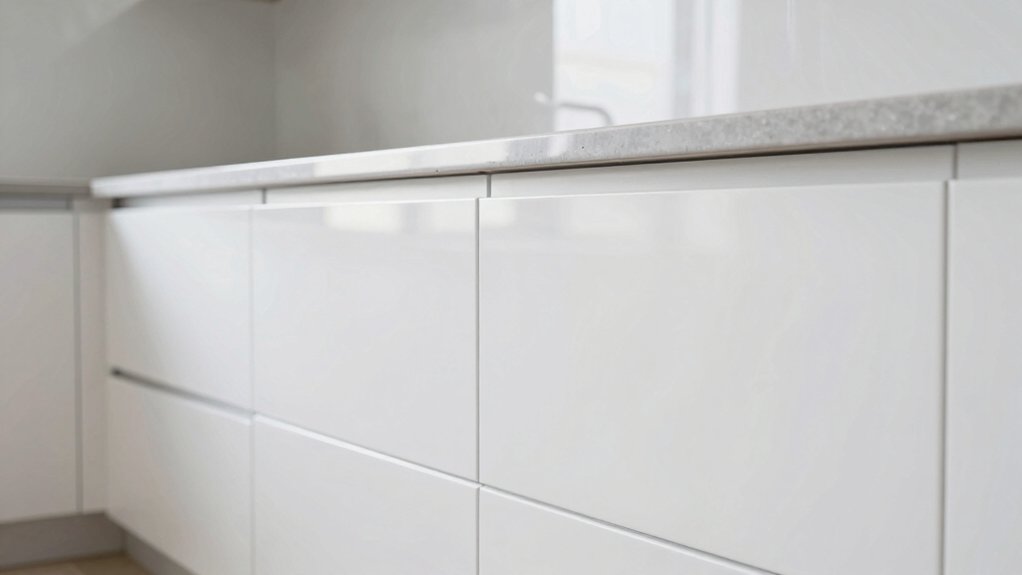
Durable sheens matter as much as color when you’re choosing kitchen cabinet finishes. In practice, the sheen controls wipe resistance, scuff visibility, and how light bounces around your space.
You’ll balance washability with touch tolerance: satin or semi-gloss tends to resist stains better and clean more easily than flat finishes. Consider the room’s lighting and the cabinet style—high-traffic kitchens often benefit from a resilient mid-to-high sheen.
When you apply paint, pay attention to paint brush techniques that minimize brush marks and ensure an even coat. Let each layer dry thoroughly; paint drying times vary by product, temperature, and humidity, so don’t rush.
Finally, test a small area to confirm sheen and durability before completing the full cabinet set.
Brand Recommendations for Cabinet Paints
A good paint brand can make or break cabinet projects, delivering reliable coverage, durable finish, and long-lasting color. When selecting products, prioritize brands with excellent color matching across lots and proven durability in cabinetry.
Look for premium interior enamels labeled for hardwood or cabinet use, as these resist scuffing and yellowing. You’ll want low-VOC options that still perform well, reducing odors during application and curing.
Consider finish options (satin or semi-gloss) that balance washability with glare control in kitchens. A reputable brand should offer consistent pigment load, smooth flow, and minimal brush marks, aiding efficient paint application.
Read warranty terms and check user reviews for real-world performance, especially on white shades prone to show-through. Consistency, coverage, and color stability matter as much as price.
Prep, Priming, and Application Tips for Long-Lasting Finish
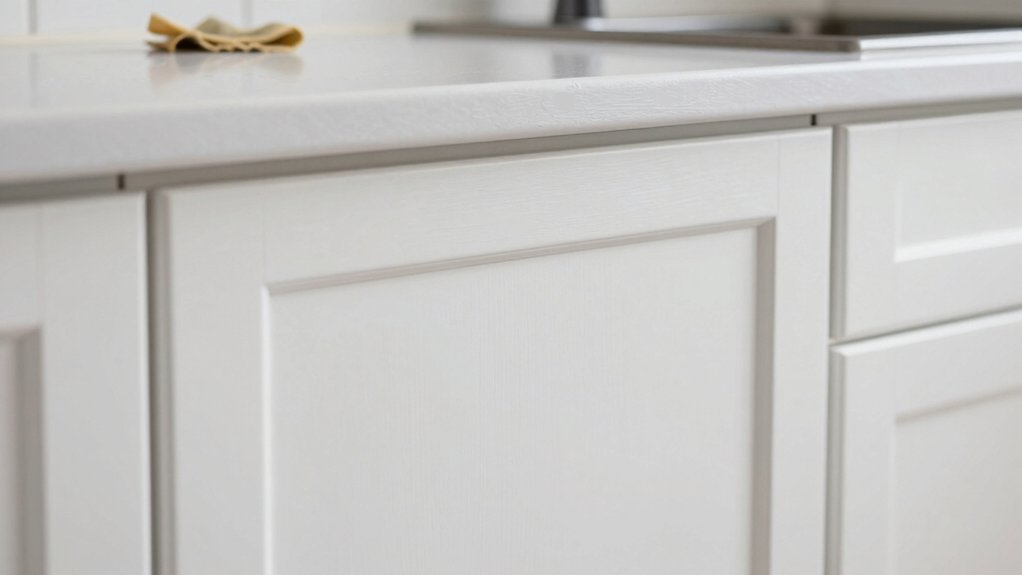
To guarantee a long-lasting finish on kitchen cabinets, start with meticulous prep: clean, sand, and repair as needed to create a smooth, intact surface for primer and paint to grip.
Then prime with a high-quality adhesion coat, seal gaps, and mask edges to prevent drips.
When you apply paint, use even, thin coats and let each layer cure fully before the next.
Use steady, overlapping brush strokes to minimize texture; choose brush techniques that reduce brush marks and yield a uniform film.
Between coats, lightly scuff with fine sandpaper and wipe clean.
Store leftover paint upright in a labeled, sealed container to preserve consistency.
Plan brush cleaning and paint storage after finishing to maintain quality for future touch-ups.
Frequently Asked Questions
How Much Does White Cabinet Paint Cost per Square Foot?
You’ll pay roughly a few dollars to a dozen per square foot, depending on finish and brand; expect coatings, primers, and prep to swing costs. cost factors and pricing estimates matter, so budget flexibly and compare multiple options.
Can White Paint Affect Kitchen Lighting and Room Temperature?
Yes, white paint can affect both lighting and temperature. Lighting impact depends on finish and brightness you choose, while Temperature influence comes from heat absorption and radiant reflectance, potentially making rooms feel cooler or warmer depending on shade and lighting.
Is White Chalk Paint Suitable for Every Cabinet Style?
“Don’t bite off more than you can chew.” Chalk paint suitability varies; it isn’t universal. You must evaluate cabinet style compatibility, prep, and finish needs to confirm it works with your specific cabinets and desired look.
Which Brushes or Rollers Hinder Visibility of Brush Marks?
You’ll avoid brush stroke visibility by using fine brushes or rollers with soft, short nap; opt for smoother application. For the best roller finish quality, choose a high-density, low-shed cover and apply lightly, avoiding heavy coats.
How Often Should White Cabinets Be Professionally Refaced or Repainted?
Repainting frequency depends on wear, sunlight, and finish, so plan every 5–7 years with proactive cabinet maintenance. Like clockwork, you’ll refresh surfaces before wear shows, preserving value and finish integrity.