
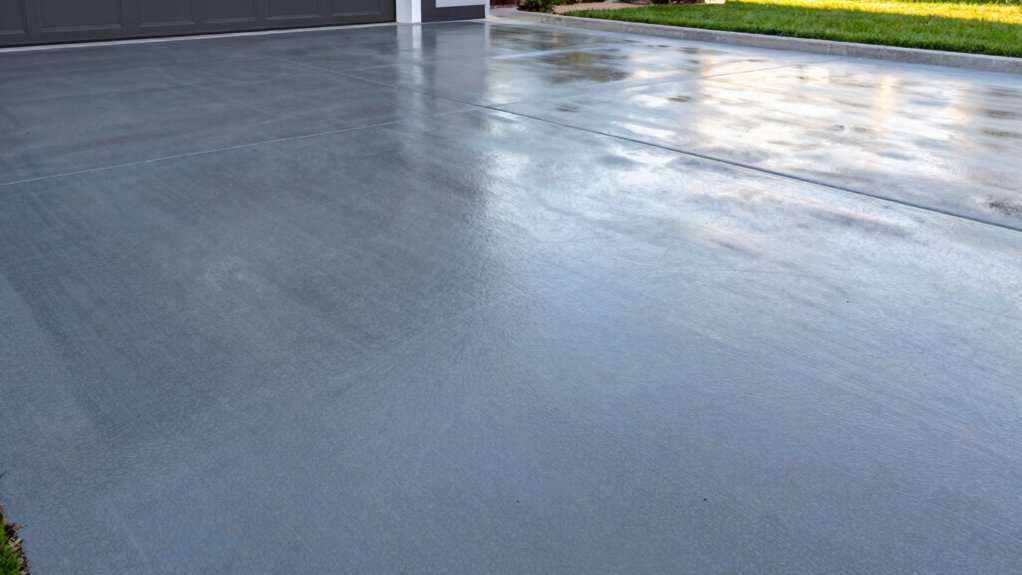
You’re considering coatings for concrete driveways, where you’ll balance hardness, chemical resistance, and substrate movement. Epoxies deliver a seamless, durable surface but demand meticulous prep and moisture control; polyurethanes and polyureas add flexibility and fast cure to resist cracking; acrylics offer rapid install and color options with UV stability. Proper surface prep, adhesion testing, and maintenance discipline matter, and choosing the right system hinges on traffic, climate, and substrate condition—a decision that invites deeper evaluation of options and results.
Epoxy Coatings: Benefits and Considerations
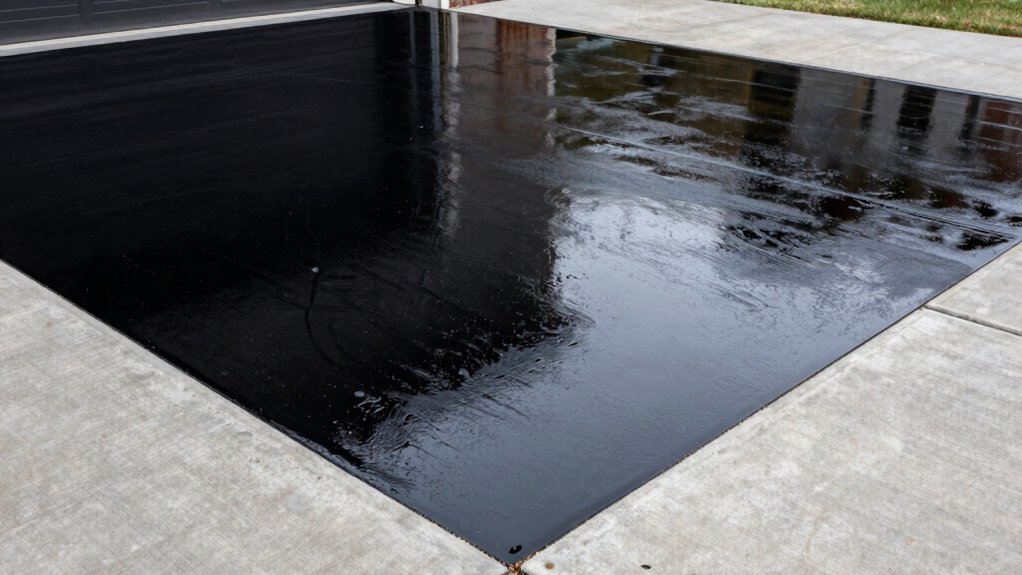
Epoxy coatings form a hard, chemically resistant layer that bonds to concrete—providing durability, chemical resistance, and a seamless surface. You gain a strong bond to the substrate through multi-layer curing, which minimizes porosity and reduces water ingress.
The cured film exhibits high compressive strength, hardness, and abrasion resistance, enhancing wheel traffic performance and load transfer. Epoxy systems offer low permeability, limiting chemical penetration from oils, solvents, and salts, which extends the life of the coating in harsh environments.
You’ll benefit from precise film thickness control and uniform cure in controlled conditions, ensuring predictable protection. Surface preparation is critical: remove contaminants, ensure moisture compatibility, and achieve mechanical key.
Temperature and humidity influence cure kinetics, pot life, and coating tack. Consider factors such as color stability, UV exposure, and maintenance cycles for long-term appearance and performance.
Polyurethane and Polyurea Options for Driveways
Polyurethane and polyurea options offer rapid-curing, flexible protective films that accommodate substrate movement and temperature fluctuations on driveways.
You select these materials for high adhesion, chemical resistance, and rapid return-to-service, minimizing downtime.
Polyurethanes provide good abrasion resistance, UV stability, and moisture tolerance, while polyureas deliver superior elongation, impact resistance, and rapid hardening at low temperatures.
In service, you’ll observe low permeability to waterborne contaminants and improved moisture barrier performance, contributing to long-term surface integrity.
Layer thickness is typically thin, yet the cured film yields a continuous, cohesive coat with controlled elasticity.
Cure kinetics depend on catalyst, ambient conditions, and substrate temperature, dictating tack-free times.
Compatibility considerations include substrate preparation, surface energy, and joint movement design to prevent microcracking.
Acrylics: Quick Install and Aesthetic Choices
Acrylic coatings offer fast installation and a broad range of aesthetic options, enabling quick return-to-service while delivering durable color and gloss stability.
You select acrylic formulations for concrete driveways based on resin type, solids content, and UV resistance, which determine film coherence and long-term performance. Acrylics cure through coalescence, forming a continuous film that resists moisture infiltration and chemical attack without relying on extended cure times.
You benefit from low odor, rapid handle, and minimal equipment needs, with easy film thickness control via roller or squeegee application. Film hardness and abrasion resistance align with traffic exposure, while pigment load provides fade resistance and uniform sheen.
Continuity of gloss is maintained under thermal cycling, and compatibility with sealers supports enhanced lightfastness and wash durability.
Installation Tips and Surface Prep Essentials
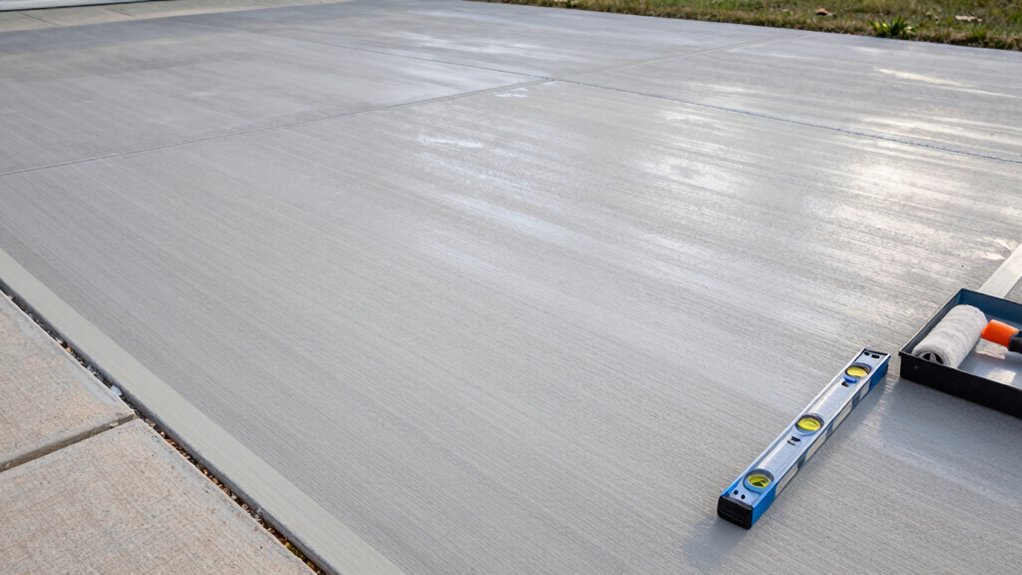
Proper surface prep is nonnegotiable for durable driveways, and starting with a clean, sound substrate guarantees the coating bonds firmly and performs under traffic. You guarantee substrate integrity by inspecting for laitance, dust, and contaminants, then perform mechanical scarification or shot blasting to achieve 3–5 mils of surface profile (SP 2–3).
Verify moisture compatibility with a pre-installation RH test, targeting below 85% for overlays, and use a calcium chloride or ASTM F1869 test where required. Clean all dust and debris with a 3,000‑plus RPM vacuum, followed by tack-free wipe with a compatible solvent.
Select primer per system specification, allow cure, and confirm adhesion with a pull test. Apply within the product’s open time, control ambient temperature, and prevent early traffic until cure is complete.
Maintenance, Longevity, and Best Practices
Maintenance and longevity for concrete driveways hinge on disciplined maintenance, timely recoats, and monitoring substrate integrity over time. You should schedule regular inspections to detect microcracking, delamination, or coating maturity shifts that signal performance changes.
Adhere to the manufacturer’s cure, film thickness, and recoat windows to preserve barrier properties and UV stability. Surface prep before any recoating remains essential: clean, repair, and re-profile to maintain adhesion and seamless coverage. Use compatible primers and topcoats with elastomeric or fluorinated components matched to exposure and traffic.
Expect abrasion resistance and chemical resistance to degrade gradually under winter salts and heavy loads; plan recoats accordingly. Document cycles, ambient conditions, and substrate temperature to optimize cure.
Finally, prioritize substrate maintenance to extend coating life and reduce total lifecycle costs.
Frequently Asked Questions
What About Cost Comparisons Between Coating Types?
Different coating types vary in upfront cost, application time, and long-term durability; epoxy generally higher initial cost but offers superior wear resistance, while polyurethane and acrylics cost less upfront yet may need more frequent maintenance or recoats. Consider lifecycle costs.
Do Coatings Affect Snow Removal and Salt Resistance?
Yes, coatings affect snow removal and salt resistance. You’ll see improved de-icing efficiency on smooth, bonded surfaces; lower salt tracking due to reduced texture. Non-slip formulations endure freeze-thaw cycles, but some coatings may stress and crack with salt exposure.
Can Coatings Be Applied Over Old Pavers or Stains?
Coatings can be applied over old pavers or stains, but surface preparation is critical to guarantee adhesion. You’ll need old material removed or abraded, clean, dry substrate, compatible primer, and test patches to confirm bond and durability.
Are There Eco-Friendly or Low-Voc Options Available?
Yes, there are eco-friendly low-VOC options. Look for acrylic or epoxy systems labeled low-VOC, with formaldehyde-free resins, water-based carriers, and durable, UV-resistant topcoats. Verify emissions data, cure times, and slip resistance ratings before application.
How Do Coatings Handle Heavy Vehicle Loads and Parking?
Coatings handle heavy loads with proven compressive strength blends and reinforced overlays; you’ll experience reduced deflection, controlled creep, and durable abrasion resistance under parking. Expect proper substrate prep, even load distribution, and periodic maintenance for longevity.