
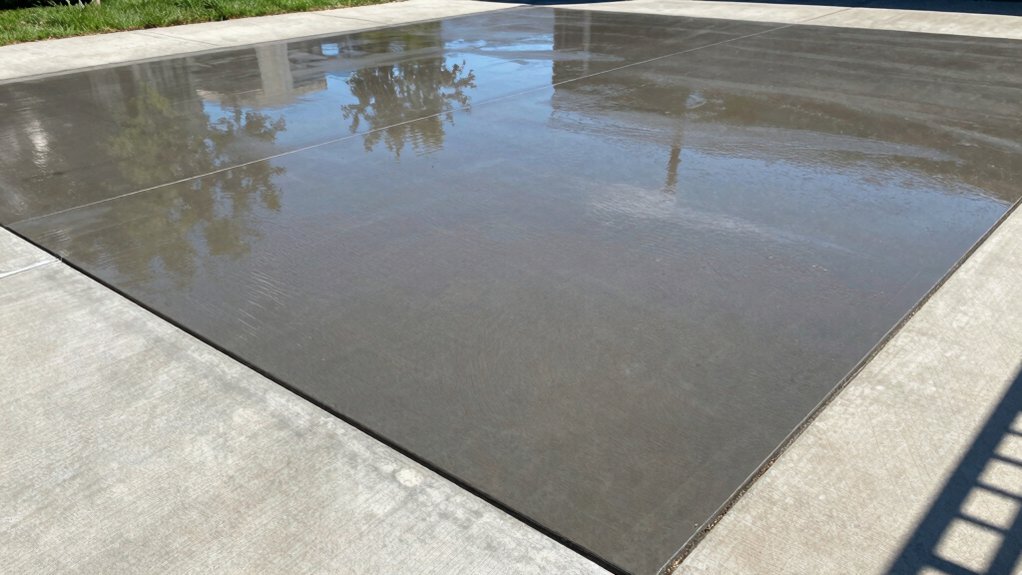
You evaluate coatings for concrete driveways by balancing durability, aesthetics, and exposure. Consider epoxy for chemical resistance, polyurethane for UV stability, and acrylic sealers for simplicity and maintenance. Surface prep—cleaning, profiling, and repairs—drives adhesion and longevity. Choose a system based on usage, climate, and desired look, then plan for proper application and ongoing maintenance. Each option has tradeoffs that affect long-term performance, so your next step is to align function with environment and goals.
Types of Coatings for Concrete Driveways
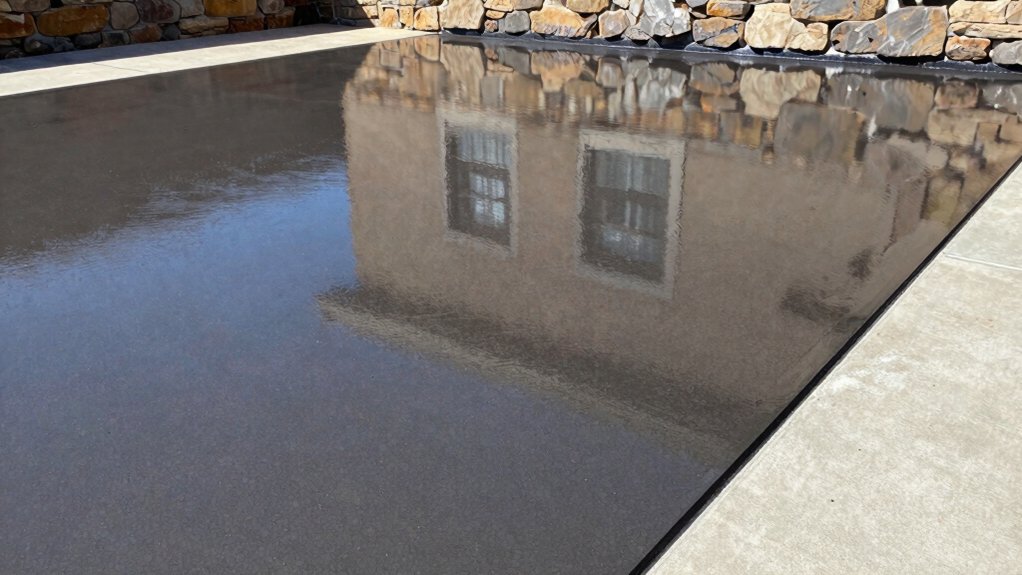
There are several coating options for concrete driveways, each with distinct properties and ideal applications. You select a coating based on substrate condition, exposure, traffic, and maintenance goals.
Acrylic sealers provide surface protection and color retention with easy application and shallow penetration, suitable for moderate wear.
Concrete stains alter appearance without significant thickness, delivering integral color yet limited abrasion resistance.
Acrylic-urethane hybrids combine durability with UV resistance, offering improved longevity for moderate to heavy use.
Epoxy coatings deliver high chemical resistance and strong adhesion but require sound substrate and controlled curing, making them more suited to protected or indoor-like conditions.
Polyurethane coatings enhance flexibility and abrasion resistance, best on surfaces subject to thermal movement and temperature changes.
Consider warranty, slip resistance, and maintenance cycles to determine the most suitable system for your driveway.
Epoxy vs. Polyurethane: Choosing the Right System
Epoxy and polyurethane each offer distinct advantages for concrete driveways, so selecting between them hinges on substrate condition, exposure, and performance priorities.
Epoxy systems provide superior adhesion, hardness, and chemical resistance, making them ideal for protected or indoor sections, garage floors, and areas with high traffic. They cure rigidly, forming a dense film that resists abrasion but can be susceptible to moisture-related issues and UV degradation when used outdoors.
Polyurethane systems offer greater flexibility, UV stability, and impact tolerance, enabling longer-term color retention and broader outdoor performance. However, they may exhibit slightly lower scratch resistance.
For exterior, sun-exposed applications, polyurethane is typically preferred; for interior, high-adhesion needs, epoxy is advantageous.
Consider substrate moisture, anticipated loads, cleaning regimens, and maintenance plans when selecting the system.
Preparation Steps for Long-Lasting Results
Proper preparation is essential to maximize adhesion, durability, and performance of coatings on concrete driveways. You’ll inspect the surface, remove contaminants, and verify structural integrity before any coating is applied.
Begin with a full-site assessment to identify moisture sources, loose aggregates, and laitance; document findings for corrective actions.
Clean using mechanical methods or approved cleaners, ensuring the surface is free of oil, dust, curing compounds, and efflorescence. Use a pH-neutral cleaner where appropriate, followed by rinsing and complete drying.
Profile the concrete to achieve the specified roughness consistent with the coating system; use a surface profile test per manufacturer guidance.
Address repairs with compatible patching mortars, cure adequately, and avoid sealing or coating until the substrate meets established specifications.
Avoid curing compounds during surface preparation to guarantee the best bonding.
Application Techniques and Tips
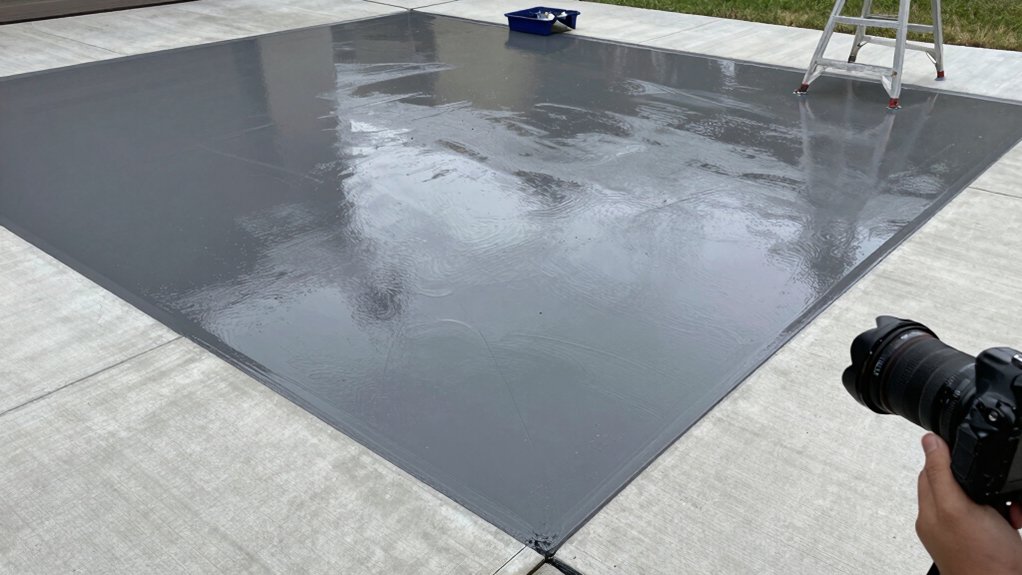
You’ll apply coatings using a consistent method that emphasizes Surface Prep Essentials, ensuring the substrate is clean, dry, and mechanically sound.
Follow the Application Methods Guide to choose the correct tools, mixing ratios, and application temperatures, then perform curing and protection steps to maintain film integrity.
Adhere to Curing and Protecting Tips to minimize defects, manage airflow, and schedule controlled exposure for ideal adhesion and longevity.
Surface Prep Essentials
Surface prep is the foundation for durable coatings, so start by verifying the concrete’s condition, moisture level, and porosity before any application. You’ll assess surface texture, cleanliness, and residual contaminants with standardized methods.
Remove bonds, laitance, oils, and curing compounds per manufacturer guidance, using appropriate tools and PPE.
Normalize moisture by performing relative humidity and moisture tests as required, recording results precisely. If moisture is excessive, delay coating or implement a mitigated regimen, such as surface drying or vapor barriers, per product specs.
Achieve uniform porosity through mechanical profiling or chemical etching, validating results with a porosity test.
Repair cracks, spalls, and delaminations to restore a sound substrate, then vacuum and tack-clean before primer compatibility checks.
Document prep steps and tolerances for quality assurance and future maintenance.
Application Methods Guide
Before applying coatings, confirm that the prepared concrete meets product-specific application conditions and can be uniformly coated. This guide outlines practical application techniques and tips to achieve consistent coverage and performance.
Select the correct product type for your substrate (solvent-based, water-based, epoxy, or polyurethane) and verify pot life, pot mix, and viscosity at application temperature.
Use calibrated tools: notched squeegees, microfiber rollers, and precision brushes for edges.
Maintain ambient and substrate temperatures within the manufacturer’s range; control humidity to prevent premature cure.
Apply in uniform passes, avoiding lap joints, runs, or Pinholes.
For textured finishes, back-roll to eliminate roller stipple and ensure film continuity.
Allow the specified tack-free time between coats, and schedule revisions during optimal weather windows to minimize defects.
Document batch codes and inspection results for traceability.
Curing and Protecting Tips
Proper curing and protection are essential to maximize coating performance and durability on concrete driveways. You must follow controlled curing conditions during the initial set to preserve moisture balance and prevent premature cracking.
Use recommended curing blankets or sealers as specified by the coating manufacturer, maintaining surface temperatures within the approved range. Avoid rapid drying by postponing wind exposure, high sun, or heat sources for the recommended cure period.
After application, protect the film from scaffold impacts, foot traffic, and debris until cured per product data. When applying protective topcoats, ensure surface is clean, dry, and within temperature limits; recoat times must align with the elapsed cure window.
Document substrate conditions, ambient parameters, and cure progress for quality assurance and warranty compliance.
Maintenance and Longevity of Driveway Coatings
Maintenance and longevity of driveway coatings depend on proper preparation, consistent protection, and timely renewal. You should begin with a clean substrate, verify moisture levels, and address cracks or damage before application. Follow manufacturer specifications for primers, primers, and topcoats, and apply under recommended temperatures and humidity windows.
Use dedicated traffic films and cleaners to maintain surface integrity between cycles, avoiding abrasive methods that compromise film thickness. Cure times must be respected; premature exposure accelerates wear and loosening.
Regular inspections identify UV degradation, wear, or microcracking, allowing targeted touch-ups rather than full recoats. Maintain records of coat dates, product batches, and performance notes to guide future cycles.
Recoat intervals depend on exposure, traffic, and coating type, yet consistency in maintenance drives extended service life and predictable performance.
Decorative and Protective Options for Curb Appeal
You’ll explore decorative color schemes and protective surface enhancements to boost curb appeal without compromising pavement performance. This discussion highlights color selection, finish durability, and uniform application methods that maintain slip resistance and longevity.
Decorative Color Schemes
What decorative color schemes best enhance curb appeal while maintaining durability and ease of maintenance? You select schemes that balance visibility with wear resistance, emphasizing contrast for fracture detection and texture differentiation. Use integral or adhered colorants that resist fading under UV exposure, with consistent saturation across panels to avoid patchiness.
For driveways, opt for high-contrast borders paired with mid-tone field colors to improve edge definition and traffic guidance. Apply colorants in multiple coats or using stencil fades to create depth without compromising surface integrity. Guarantee color compatibility with sealer systems to minimize gloss variability and chemical staining.
Document standard operating procedures for mixing ratios, cure times, and cleanup to maintain uniform appearance across seasons and users. Regularly inspect for color migration, addressing issues promptly.
Protective Surface Enhancements
Protective Surface Enhancements expand beyond aesthetics to deliver durability and moisture control for concrete driveways. You apply sealers, penetrating films, and epoxy or polyurethane topcoats to form barrier systems that resist chemical attack, water ingress, and freeze–thaw damage.
Select systems based on exposure, traffic, and cleanliness; surface preparation—scarification, cleaning, and laitance removal—determines adhesion and longevity. You’ll evaluate performance metrics such as hardness, abrasion resistance, permeability, and elongation to ensure compatibility with underlying concrete.
Use continuous, uniform coats to minimize pinholes and delamination, and implement proper curing where required. Maintenance involves periodic cleaning and reapplication intervals aligned to product specifications and environmental conditions.
Document substrate conditions, warranty terms, and application parameters to verify compliance and facilitate future repairs.
Frequently Asked Questions
How Long Does Curing Time Typically Take for New Coatings?
Curing typically takes 24 to 72 hours for most coatings, depending on product, humidity, and temperature. You should avoid foot traffic until tack-free, and full cure occurs within 7 days; verify with the manufacturer’s specific recommendations.
Can Coatings Be Applied Over Existing Paint or Sealer?
You can’t apply coatings over existing paint or sealer unless you properly prep, sand, and etch; otherwise adhesion fails, failure risks, and warranty issues. Prepare surfaces, test adhesion, remove contaminants, and follow manufacturer’s recommended primer and system steps.
Are DIY Epoxy Kits Reliable for Large Driveways?
DIY epoxy kits are not reliable for large driveways; they tend to cure unevenly, fade, and peel under heat and traffic. For sizable areas, hire a professional applicator using commercial epoxy systems and proper surface preparation.
Do Coatings Resist Oil Stains From Parked Vehicles?
Yes, coatings resist oil stains from parked vehicles, but performance depends on resin system and cure. You’ll maximize protection by using a high-solid, crosslinked epoxy or polyurethane, applying proper surface prep, and following exact curing times and maintenance.
How Do Color Choices Affect Heat Absorption and Reflection?
Color choices affect heat absorption: lighter colors reflect more sunlight, reducing absorbed heat, while darker colors absorb more, increasing surface temperature; choose mid-tone or reflective aggregates to balance aesthetics, durability, and thermal performance.