
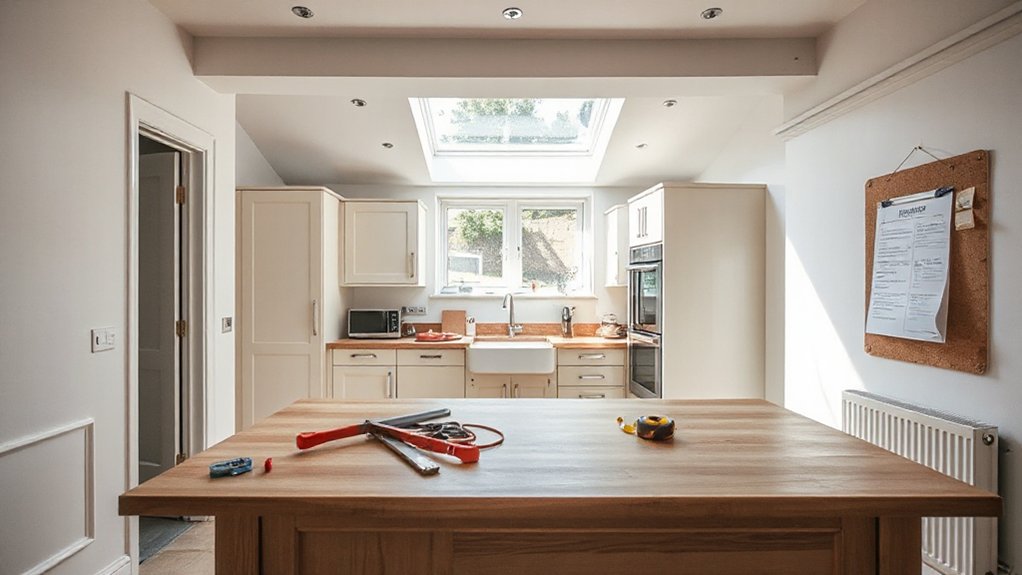
You might be surprised to learn that a kitchen refresh can swing by more than tenfold in cost, driven by choices in cabinets, appliances, and layouts. You’ll want a clear budget plan that estimates each major category, prioritises essentials, and builds in contingencies, because the price you actually pay hinges on design complexity, material quality, and contractor rates. Start with solid numbers and a plan that defends against surprises—there’s more to it than picking a tile. Keep reading to map your path forward.
What Factors Actually Drive UK Kitchen Renovation Costs

Several factors determine UK kitchen renovation costs, and understanding them helps you set a realistic budget. You’ll see costs hinge on scope, materials, and labour mix, not just prices.
Appliance upgrades drive upfront outlays and ongoing running costs, with energy-efficient models offering long-term savings but higher initial bills.
Cabinetry quality, installation precision, and door/drawer hardware influence labour intensity, while surface materials vary dramatically in price per square metre and maintenance needs.
Plumbing and electrical work scales with fixtures, zoning, and compliance requirements, affecting disruption time and permit fees.
Project management, contingency allowances, and waste disposal contribute to the total, especially in older homes with intricate layouts.
Eco-friendly fixtures reduce long-term consumption but may elevate initial spend, balancing cost against sustainability goals.
Budget in Four Steps: Define, Estimate, Prioritise, Defend
Budgeting a UK kitchen renovation happens in four clear steps: define what you want, estimate costs accurately, prioritise what to upgrade if funds are tight, and defend the plan against scope creep.
You’ll establish a concrete Budget allocation by mapping items to need and impact, then align with a realistic renovation timeline. Define scope with measurable targets (materials, labour rates, and contingencies) to reduce variance.
Estimate costs using current UK averages, local quotes, and VAT considerations, rounding to the nearest pound.
Prioritise features by function and durability, reserving funds for critical replacements over cosmetic upgrades.
Defend the plan by documenting decisions, monitoring changes, and enforcing a change-control process.
This disciplined approach minimizes surprises and supports timely delivery within the agreed Budget allocation and renovation timeline.
What Your Money Buys: Major Cost Categories
Major cost categories in a UK kitchen renovation are driven by function and long-term value: cabinetry and fittings, appliances, surfaces, plumbing and utilities, flooring and finishes, and labour plus contingency.
You prioritise the structural footprint, storage, and usability, then map costs to each category.
Cabinetry and fittings define tactile quality and function; expect higher spend where customization, soft-close hardware, and durable carcasses are chosen.
Appliances drive energy efficiency, capacity, and reliability, with appliance upgrades typically producing long-term savings on utilities and maintenance.
Surfaces affect maintenance, hygiene, and longevity; quartz and solid-surface countertops outperform laminates in wear resistance.
Plumbing and utilities changes underpin future-proofing.
Flooring ties to durability and aesthetics.
Labour and contingency capture planning, installation cadence, and risk mitigation for a Kitchen layout and project timeline.
Save Smart: Trades, Materials, and Timing Levers

Across trades, materials, and timing levers, you can tighten costs without compromising value by making informed choices up front. Your approach should quantify options: compare tradesperson expertise across reputable firms, not just cheapest hourly rates, and verify warranties, installation timelines, and aftercare.
Prioritize material quality that meets durability standards yet aligns with your budget, favoring mid-range options with proven performance over ultra-premium, low-volume brands.
Schedule work to minimize idle days and optimize delivery windows, reducing storage and rush fees. Consider phased procurement: secure essential components first, defer noncritical finishes until price cycles shift.
Maintain tight change-control, documenting decisions to prevent scope creep. Data shows disciplined selection and scheduling deliver measurable savings without sacrificing kitchen functionality or long‑term value.
Price Ranges by Scope: Small Update to Full Kitchen Remake
When you scope a kitchen update—from a small refresh to a full remake—price ranges hinge on three core factors: cabinet scope and finish, countertop and appliance upgrades, and labor intensity.
For a small update, you’ll likely see costs concentrated on finish changes and hardware, with a typical range around £5,000–£12,000 if you reuse existing cabinets.
A mid-range remodel adds new doors, upgraded countertops, and modest appliance upgrades, targeting roughly £12,000–£25,000.
A full remake includes new layout considerations, premium cabinets, stone or engineered surfaces, and all-encompassing appliance upgrades, often £25,000–£45,000 or more depending on finishes and installation complexity.
Consider project scope, labor hours, and entitlement to potential VAT or discounts.
Kitchen layout decisions and appliance upgrades drive the largest variances in total expenditure.
Frequently Asked Questions
How Long Does a Typical UK Kitchen Renovation Take From Start to Finish?
Typically, a UK kitchen renovation takes 3–6 weeks from start to finish, depending on scope. You’ll experience design trends and material choices shaping schedules, with disruption minimized through phased work, clear milestones, and precise contractor coordination.
Are Any UK Government Grants or Incentives Available for Kitchen Renovations?
There aren’t broad government grants for kitchen renovations, but you can explore renovation incentives like energy-saving schemes. You’ll find targeted programs at local authorities or energy retrofit initiatives that may help fund efficiency upgrades alongside your kitchen project.
What Are Hidden Costs Homeowners Often Overlook Early in Planning?
Hidden expenses loom as your plan unfolds, so you avoid planning pitfalls today; you’ll track every line item, compare quotes, and verify permits, ensuring you don’t overspend or stall, and you stay aligned with data-driven expectations.
How Can I Minimize Disruption to Daily Life During the Remodel?
You minimize disruption by scheduling major work during off-peak weeks, using modular components, and aligning deliveries. Track design trends and material durability to choose efficient layouts, protect routines, and maintain daily life with minimal noise, dust, and delays.
Is a Kitchen Remodel Typically Worth Refinancing Debt or Increasing Mortgage?
Refinancing can be worth it if you’ll save more on interest than costs. Consider refinancing benefits, then weigh mortgage considerations like rate, term, and closing costs before deciding if debt consolidation supports your kitchen project.
Conclusion
You can budget confidently by tracking costs from the four-step plan and weighing major categories against your priorities. Expect variability, but use firm price ranges and contingency buffers to stay on track. If a designer’s flashy fixtures threaten your cap, push back with data on value-for-money and long-term durability. A disciplined approach—define, estimate, prioritise, defend—lets you achieve a practical, stylish UK kitchen without overpaying.