
Yes, paints often dry darker or lighter than the wet swatch, and you must plan for it. Lighting, undertones, and sheen all shift how a color reads as it cures. A higher gloss or a dark base can trap heat and slow moisture loss, making the finish appear deeper; flat finishes often dry lighter as they reflect air and light differently. Test under multiple times and lighting, and you’ll predict the final shade more reliably. If you keep exploring, you’ll master true color outcomes.
Why Paint Colors Read Differently on Walls
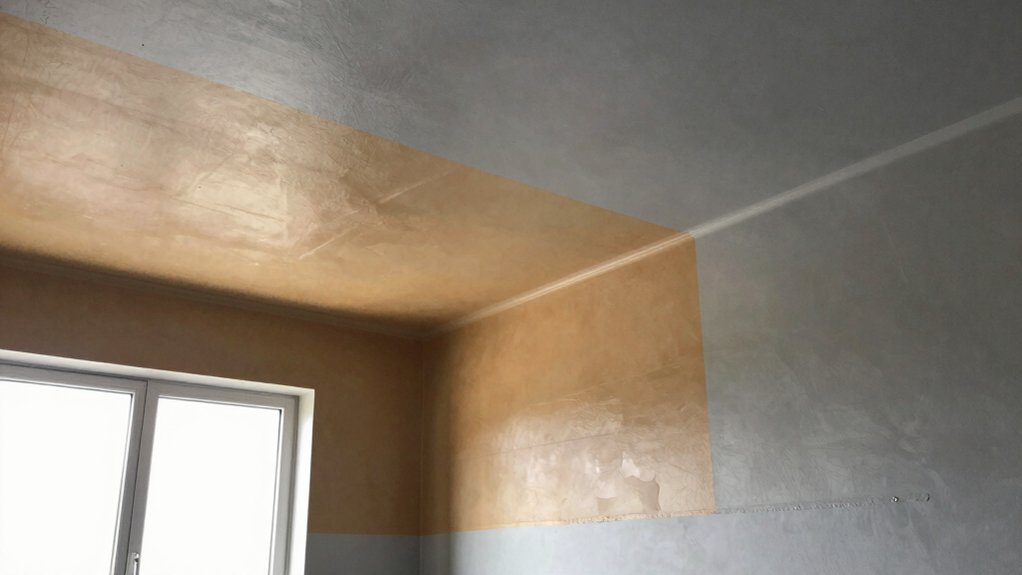
Paint colors can read differently on walls because surrounding light and texture alter how our eyes perceive hue and contrast. You’ll notice shifts as rooms brighten or dim, because the same shade reflects light differently across surfaces.
That variation hinges on paint chemistry: binder, pigments, and fillers influence translucency, saturation, and undertone visibility under varied lighting. You’ll also encounter color psychology at play, where perceived mood and temperature change with context, making a cool gray feel warmer near daylight or cooler under artificial light.
To predict outcomes, examine samples on your walls at different times of day and note gloss level, surface texture, and nearby colors. Confidence comes from observing real swatches rather than relying solely on chips.
Factors That Make a Color Look Darker or Lighter
Lighting changes how you perceive shade, so understand that brightness, glare, and color temperature can make a swatch read darker or lighter.
Your undertones—warm vs. cool—will push the hue toward or away from its true value, especially on large surfaces.
Finally, the finish—sheen—reflects light differently, altering perceived depth and intensity.
Lighting Effects Matter
Light interacts with color in nuanced ways, so the same swatch can read differently under varying conditions. You’ll notice how lighting shifts color perception, altering perceived darkness or brightness. This matters when you plan a room’s mood, not just its look.
- Natural daylight vs. artificial light: daylight tends to reveal cooler tones, while incandescent prompts warmth and depth.
- Color temperature and intensity: brighter, cooler temps can brighten a pigment; softer, warmer temps can deepen it.
- Lighting techniques: layered lighting (ambient, task, accent) changes how you perceive depth and shade.
Understand these effects to predict final results. Use color perception insights and practical lighting techniques to select confidently and avoid surprises.
Color Undertones Influence
Undertones quietly steer how a color reads once it’s on the wall. You’ll notice subtle shifts as lighting and adjacent hues interact with the pigment, changing perceived darkness or brightness.
A warm paint undertone can push a midtone toward caramel, while a cool undertone may read crisper and lighter in daylight. These shifts aren’t flaws; they’re expectations you should manage with intent.
To predict results, test swatches in the room’s actual lighting at different times, and compare them against furniture and cabinetry to ensure color harmony.
Remember that undertone choice governs how the final shade sits with existing finishes. You’re shaping mood, not just color—select undertones that reinforce the space’s character and keep the palette cohesive.
Sheen And Finish Impact
Sheen and finish dramatically influence how a color reads, often more than the pigment itself. You’ll notice significant shifts based on gloss and texture, not just shade. Understanding finish variations helps you predict outcomes in a room’s lighting and perceived depth.
- paint sheen levels determine reflections and perceived darkness or lightness
- surface texture alters light diffusion, changing how color lands on walls
- sheen consistency across a project prevents mismatched appearance
Choose wisely: lower sheens read flatter and can look darker in strong light, while higher sheens reflect more, often appearing lighter. In tight spaces, test samples under your actual lighting to confirm your choice.
How Lighting and Time of Day Change Your Shade
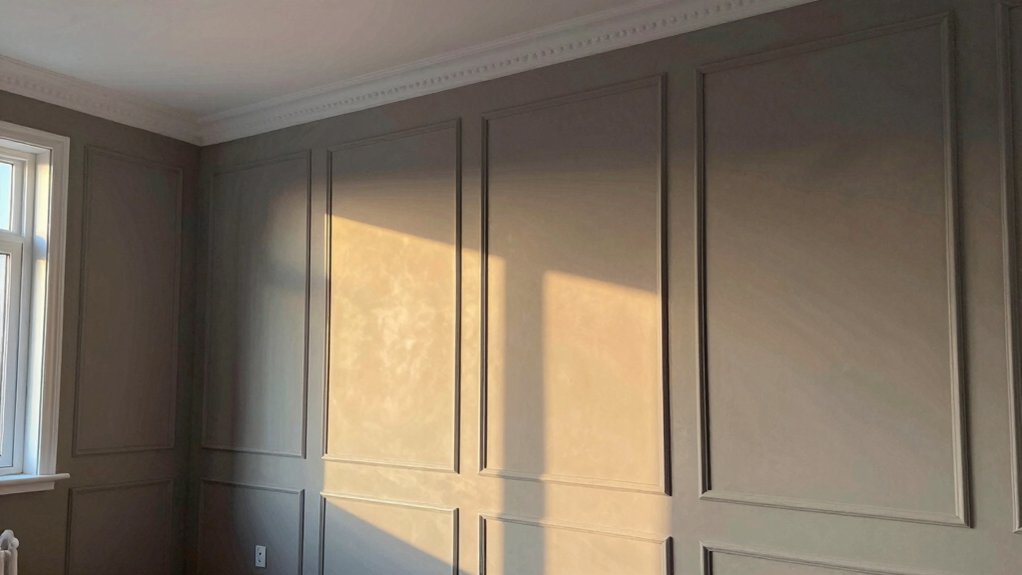
Light shifts your hue as daylight changes, so the shade you see isn’t fixed from morning to evening. You’ll notice daylight’s temperature and brightness alter the color’s tone.
While artificial room lighting can push it warmer or cooler. Understanding how the light source and time of day interact with your walls helps you predict the true shade when it dries.
Lighting Impact On Hue
Lighting can shift a paint’s hue as the day unfolds, since the color you see depends on the light source and its intensity. You’ll notice warmer tones under incandescent light and cooler notes under daylight, which means your perception changes with time and fixtures.
To navigate this, focus on how lighting interacts with color psychology and your paint application.
- Assess in 2–3 lighting scenarios before committing, so hue stays true across rooms.
- Use a mid-range white or neutral base to minimize shift and optimize consistency.
- Test samples on walls at different times of day to confirm your final choice.
Daylight Tone Shifts
Daylight shifts can subtly redraw a paint’s character as the sun moves and clouds drift. Daylight Tone Shifts occur because color perception changes with illumination color temperature and brightness.
You’ll notice this most on white, pastels, or bold hues, as the shade interacts with warm afternoon light and cooler morning light. To minimize surprises, eye-test swatches under the room’s actual daylight patterns at different times of day.
Maintain consistent paint consistency across coats, and don’t skip proper surface preparation, since glossy spots or repairs can exaggerate tone shifts. Remember that sheen also affects perceived color as light changes.
Use consistent lighting during final checks, and document daylight observations to guide touch-ups. This helps you keep the shade faithful from dawn to dusk.
Room Light Interaction
Even as you choose a shade, the room’s light dictates how it will read throughout the day. You’ll notice color shifts from morning to twilight, and those changes come from both artificial and natural light. Understanding this helps you pick a true match, not a fleeting impression.
1) Observe under your typical lighting at different times to see how the hue evolves.
2) Consider how paint odor and paint texture interact with light, sometimes making tones look warmer or cooler.
3) Test a small area in multiple lights before committing to a full room, documenting the readings.
In practice, you’ll gain confidence by syncing shade choice with real-time observations, ensuring consistency from first coat to final finish.
How Sheen, Finish, and Base Color Alter Drying Outcomes
Sheen, finish, and base color all shape how paint dries by influencing heat capture, moisture loss, and film formation. You’ll notice higher sheens (like gloss) tend to reflect heat and slow moisture release, shortening or lengthening drying times depending on ambient conditions.
Flat or matte finishes absorb heat differently, promoting steadier moisture loss and potentially longer cure periods. The base color matters: lighter tones reflect more light and heat, often drying quicker, while darker colors trap heat and can extend wet edges.
Brush textures affect application and drying behavior; thick, textured strokes trap more solvent, delaying uniform film formation. Plan for longer times where texture or deep hues are involved, and monitor edges to prevent lap marks.
Preview Colors With Swatches, Room Scenarios, and Digital Tools
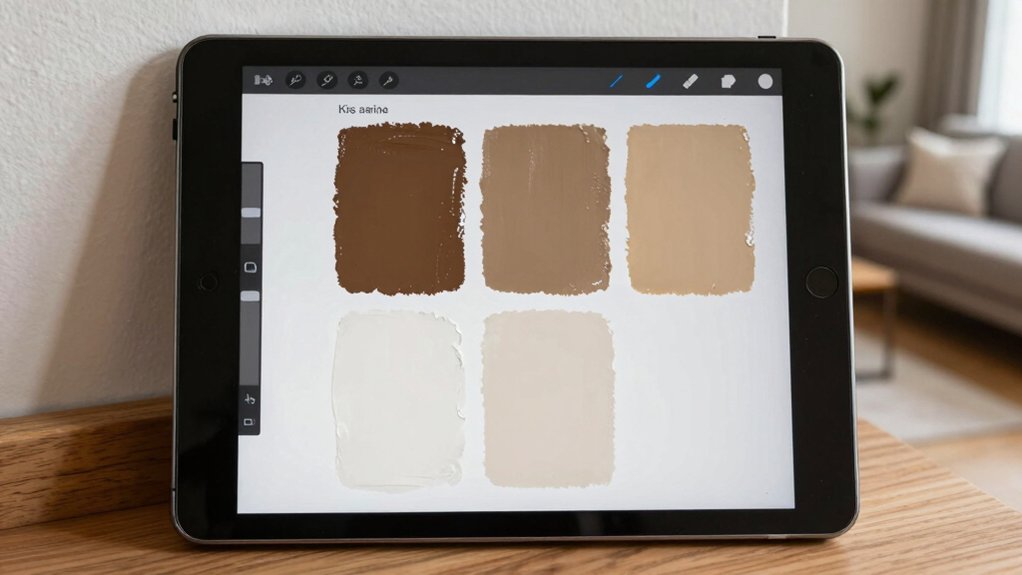
Curious how your color choices translate in a real room? You can preview shades with swatches, room scenarios, and digital tools to see how palette selection plays out under lighting and furnishings. This approach helps you verify color matching before committing, reducing surprises on paint day.
Use true-to-life swatch sets, test with multiple lighting conditions, and render room views to compare against existing finishes. Digital previews let you experiment without investing in samples, while room scenarios reveal how furniture and textiles influence perceived shade.
Combine swatches and simulations to refine your chosen palette and feel confident in the final decision.
- Leverage swatches and faux-room overlays to compare color paths
- Toggle lighting scenarios to assess shifts in palette selection
- Use digital tools to validate color matching across surfaces
A Practical Step-by-Step: Test and Confirm Your Final Shade
You’ve tested swatches under multiple lighting and against room scenarios, now it’s time to lock in your final shade with a practical, step-by-step process.
First, mix a small sample from the can to equal the paint volume you’ll use on blank test boards, checking paint consistency until you reach a uniform, brushable texture.
Second, apply a thin coat on a neutral test panel, labeled with shade and date.
Third, observe in the room’s drying environment for 24 hours, comparing to your swatches at representative times of day.
Fourth, assess color stability by viewing under both bright and dim light; note any shifts.
Finally, confirm your final choice by applying the same coat to a less-visible area, ensuring consistency across conditions before proceeding.
Troubleshooting: If Your Color Doesn’t Match the Swatch
If your color doesn’t match the swatch, start by rechecking the sample setup: confirm you mixed enough paint to the same volume as your final coat and that the consistency is brushable.
If mismatch persists, test under the same lighting and apply a small test patch to compare side by side.
Note how paint smell and surface texture can hint at primer or sheen issues that skew perception.
Consider drying time differences between indoor and outdoor temps before trusting a shade.
1) Reproduce the sample precisely—volume, mix, and brushing technique.
2) Compare under identical lighting and on a representative surface.
3) Allow proper drying time before a final judgment; reassess if odor or tackiness remains.
Conclusion
Do paints read differently on walls, and do they dry darker or lighter? The truth is: they can shift with lighting, sheen, base color, and time of day, so expect subtle to noticeable changes. Preview with swatches, test in your room, and compare under your actual lighting. If your swatch looks perfect, will your walls stay that way once dried and lit by sunset? With methodical testing, you’ll confirm your final shade confidently.