
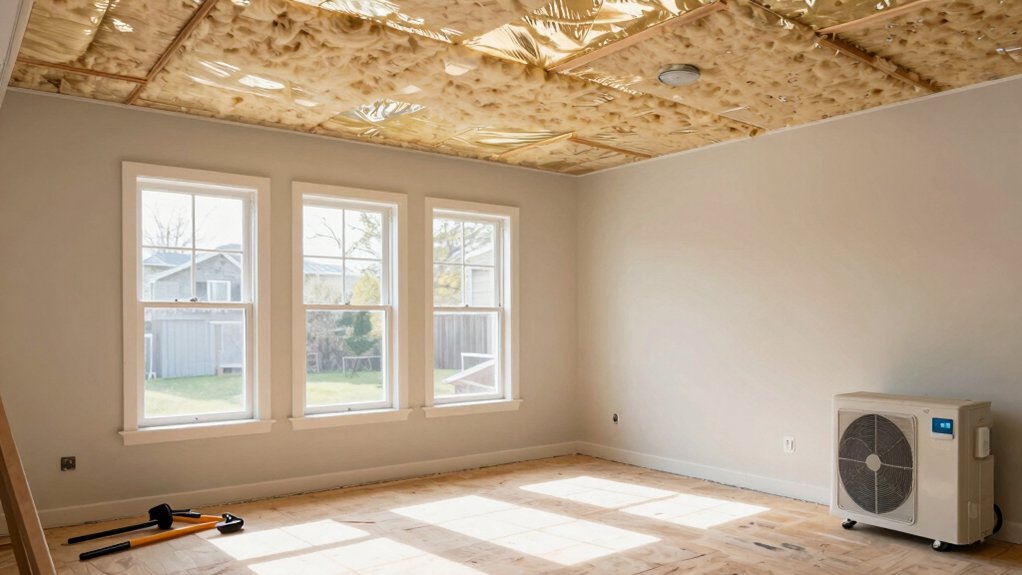
Imagine you cut your winter bills by 30% after sealing leaks and insulating an attic hatch. You’ll start with a quick energy profile, then target leaks, insulation gaps, and efficient windows. Upgrades to HVAC, LEDs, and a smart thermostat compound the savings. It’s practical, data-driven work, not hype, and the best plan balances cost with impact. The next steps reveal where you get the biggest returns and how to schedule them for steady, year‑round comfort.
Assessing Your Home’s Energy Profile
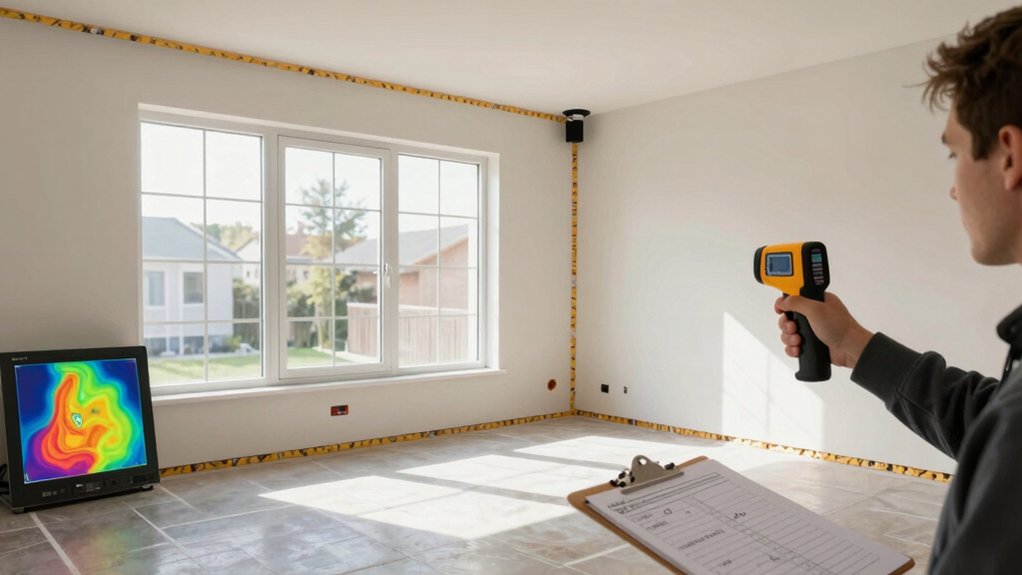
Evaluating your home’s energy profile starts with a clear snapshot of current usage and inefficiencies. You’ll collect utility bills, note seasonal shifts, and map peak demand periods to identify where energy is wasted.
Measure envelope performance, equipment efficiency, and lighting loads, then quantify savings from potential upgrades. Practical data tips include comparing kWh per square foot, tracking HVAC runtime, and estimating standby losses.
For solar panel integration, assess roof orientation, shading, and panel area to estimate yield versus demand. Use this baseline to evaluate renewable energy options, including small-scale solar, battery storage, or grid-tied systems.
Prioritize fixes with the highest return on energy saved per dollar invested, and set measurable goals.
Concluding this assessment, you’ll know which improvements justify further actions.
Sealing and Insulation Upgrades
Sealing and insulation upgrades follow naturally from your energy profile, because air leaks and poor insulation are often the biggest offenders behind wasted heat in a home. You’ll target gaps around foundations, plumbing penetrations, and attic hatches, aiming for a continuous air barrier.
Prioritize measured air sealing where tests show leakage hotspots, and verify improvements with blower-door readings or simple AC-runtime observations.
Choose durable insulation materials with proven R-values for your climate, considering retrofit-compatible products that minimize setup time and mess. In walls, ceilings, and crawl spaces, combine air sealing with sufficient insulation thickness to reduce thermal bridging.
Track performance over seasons, noting indoor temperature consistency and monthly energy use. These steps establish a robust, cost-effective baseline before exploring downstream window and door solutions.
Windows, Doors, and Air Leakage Solutions
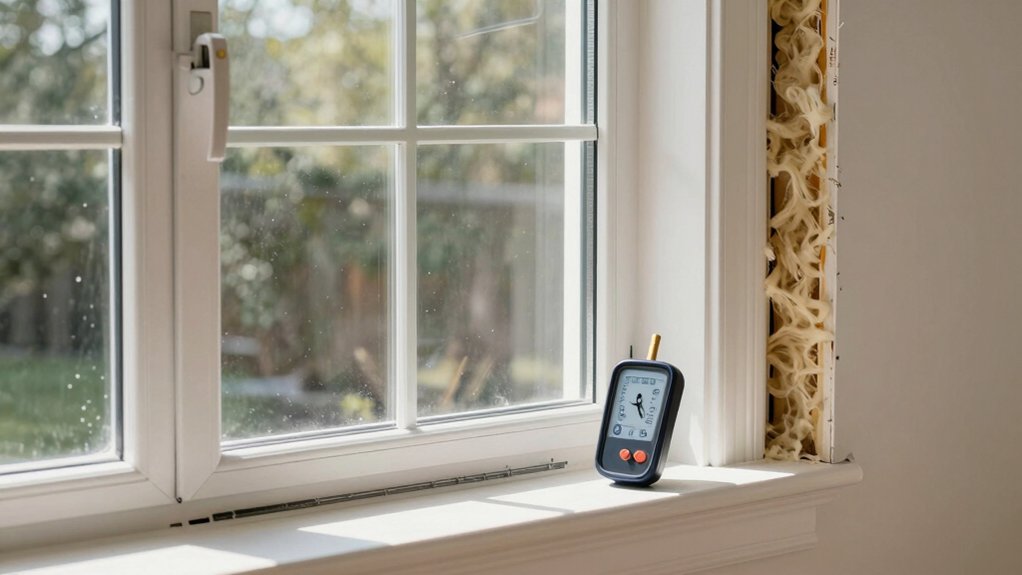
Have you quantified how much heat leaks through windows and doors in your home? You can estimate using simple measurements and energy bills, then prioritize improvements by payoff.
Start with airtight gaps around sash, frames, and thresholds; a small crack can waste significant heat over the season. Replace or retrofit single-pane units to double- or triple-glazed options, and install weatherstripping or door sweeps where drafts persist.
Consider window treatments that reduce solar gain while preserving light, such as cellular shades or reflective blinds, and pair them with proper door hardware to seal hardware gaps.
Track performance after upgrades with a baseline and follow-up readings. Combine these steps with consistent maintenance to minimize air leakage and stabilize indoor temperatures efficiently.
Heating, Cooling, and Ventilation Efficiency
Heating, cooling, and ventilation efficiency builds on tighter envelopes by optimizing how your system uses the air it’s already conditioning. You’ll see gains when you match load with appropriate equipment and reduce losses through ducts and vents.
Prioritize properly sized HVAC units, sealed ducting, and programmable thermostats to avoid oversizing and wasted energy. Regular filter changes and air balancing maintain steady airflow, improving comfort per kilowatt-hour.
When solar panels are installed, you can offset cooling loads by using solar-powered comfort strategies and pre-cooling during peak sun.
Geothermal systems offer low operating costs with stable performance, especially in extreme climates, by exchanging heat with the ground.
Couple these approaches with heat recovery ventilation to maintain air quality without spiking energy use.
Appliances and Lighting for Lower Bills
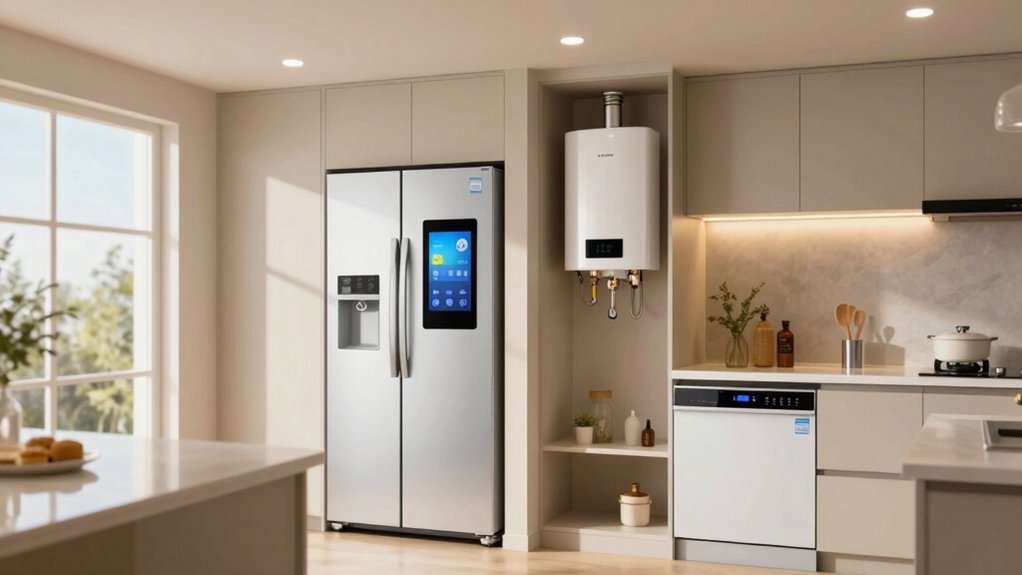
Upgrading to energy-saving appliances and choosing efficient lighting can noticeably cut your monthly bills. Start with ENERGY STAR or similar ratings and compare annual energy use to see real cost differences.
We’ll look at practical picks and clear data to guide your next buy.
Energy-Saving Appliances
Smart choices in appliances and lighting save energy and cut monthly bills from day one. When you select ENERGY STAR-certified models, you reduce standby drain and optimize performance, delivering measurable monthly savings.
Look for high-efficiency refrigerators, dishwashers, washers, and heat pumps, and compare true annual energy use rather than labeled efficiency alone.
Use smart thermostats and timers to align runtime with off-peak pricing, lowering peak-demand costs.
Maintenance matters too: clean filters, seal gaps, and service coils to sustain efficiency.
Consider pairing energy-saving appliances with solar panels and renewable energy sources to maximize return.
Track usage with a household energy monitor to identify waste and validate savings over time, guiding future upgrades without guesswork.
Efficient Lighting Choices
Efficient lighting pays off quickly, especially when you prioritize high-quality LEDs and smart controls. You’ll cut energy use by targeting common fixtures with modern LED upgrades, reducing wattage while maintaining brightness. Compare lumen output and color temperature to match room tasks, avoiding over-lighting.
Smart lighting schedules, motion sensors, and dimming adapt to habits, saving hours on daily runs without sacrificing comfort. In kitchens and living spaces, replace incandescent or CFL bulbs first, then tackle outdoor lighting with weatherized, low-amp options.
Check compatibility with existing switches and hubs to minimize retrofit costs. Track performance with utility bill notes and meter readings to confirm savings. Prioritize LED upgrades in high-traffic areas and ensure proper fixture design for uniform light distribution.
Budgeting and Prioritizing Energy-Boosting Renovations
Are you getting the best value from each dollar you spend on energy upgrades? Start with a clear budget baseline and define goals for comfort, drafts, and bills.
Use a cost benefit analysis to compare options, factoring up-front costs, expected energy savings, maintenance, and incentives. Prioritize projects with high return: attic and duct sealing, insulation, high-efficiency cooling, and windows where warranted by heat gain.
Sequence renovations to minimize disruption and maximize overlap with existing systems. When selecting contractors, emphasize transparent estimates, verified performance guarantees, and references.
Compare proposals on energy performance, not just price. Track savings during implementation to validate decisions and adjust priorities if needed.
Document measurements, timelines, and contingency plans to stay disciplined and avoid scope creep.