
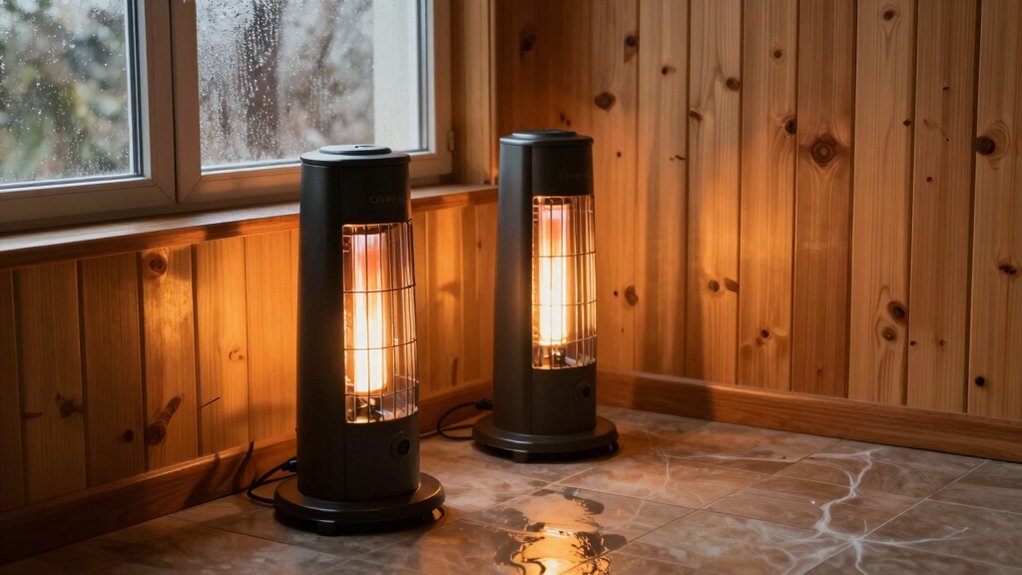
Infrared heaters warm objects and surfaces, not just the air, so you target damp zones like windows and external walls to cut condensation and boost comfort. Radiant heat lowers surface temperature differences that cause damp patches, making humidity distribute more evenly. Choose units with IP ratings, sealed elements, and safety features like automatic shutoff. Position panels away from direct water spray and use a steady thermostat or timer. Keep this approach in mind and you’ll uncover more practical steps ahead.
What Infrared Heat Is and Why Damp Spaces Matter
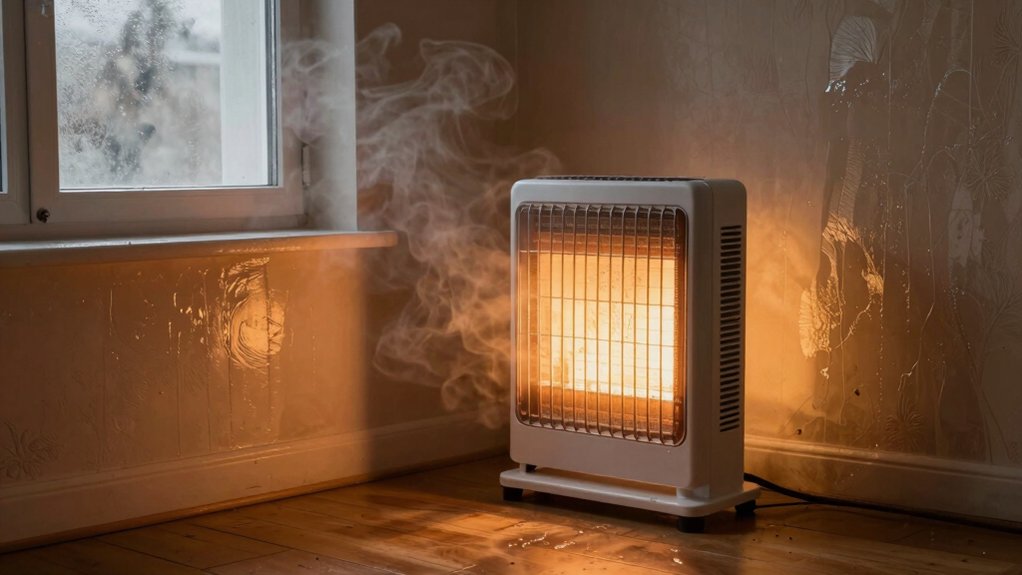
Infrared heat isn’t about blasting air or heaters that warm the whole room; it’s about warming objects and people directly. You feel the heat where it matters, not just the air you breathe. Infrared waves transfer energy from the heater to walls, furniture, and you, reducing the need to heat empty space.
Damp spaces conduct cold humidity, making surfaces feel chillier and fistier to the touch. With infrared, you target troublesome areas: a cold wall, a drafty corner, or a damp couch.
Quick-start tip: place the heater so its rays hit the damp zone without reflecting off shiny surfaces. Maintain consistent settings, not extremes, to avoid moisture swings. Check panels and adjust placement to optimize dry warmth where it counts.
How Radiant Warmth Reduces Condensation and Improves Comfort
When radiant warmth covers surfaces, it reduces surface temperature differences that drive condensation, so you’ll notice fewer damp patches on walls and windows.
You’ll feel warmer near cold surfaces, and humidity stays more evenly distributed because warm air from the heater travels directly to cooler spots without overloading the air’s capacity to hold moisture.
To maximize comfort, position the heater to warm common damp zones first, like windows and external walls. Use a timer to maintain steady heat during peak condensation times, such as evenings or rainy mornings.
Keep rooms at a moderate, consistent temperature rather than blasting heat briefly.
Improve airflow with gentle cross-ventilation after heating to balance moisture without losing warmth.
Regular maintenance prevents cold spots from returning.
Choosing an Infrared Heater for Damp Rooms: Key Specs and Safety
Choosing an infrared heater for damp rooms means focusing on specs that support steady, safe operation in moist environments.
First, check IP ratings or splash resistance to ensure the unit can withstand humidity and incidental splashes.
Look for a sealed heating element and a corrosion-resistant finish, such as stainless steel or powder coating.
Opt for models with automatic shutoff if overheating or tipping occurs, and choose a thermostat with a clear temperature range for precise control.
Wattage should fit the room size; higher power isn’t always better if you can’t maintain steady humidity.
Include a built-in humidity sensor if you want automatic adjustments.
Finally, prioritize reputable certifications (ETL/CE) and accessible customer support for ongoing safety reassurance.
Installation Tips for Bathrooms, Basements, and Moisture-Prone Areas
To install infrared heaters safely in bathrooms, basements, and moisture-prone areas, start with a solid mounting plan that keeps units away from direct water spray and high humidity zones. Choose sealed, corrosion-resistant housings and IP-rated electrical connections suited for damp environments.
Position heaters above eye level and away from standing water, soak zones, and shower paths to minimize splash risk.
In basements, mount on solid walls or ceilings with appropriate studs and use outdoor-grade, GFCI-protected circuits. Use a licensed electrician for wiring and a moisture-rated thermostat or control module.
Ensure adequate clearance from combustibles, vents, and fixtures, and seal penetrations to prevent humidity intrusion.
Regularly inspect seals and cords, replace damaged components promptly, and follow manufacturer guidelines for maintenance intervals.
Maximizing Efficiency and Long-Term Comfort With Infrared Heat
Maximizing efficiency and long-term comfort with infrared heat starts with designing a system that delivers steady warmth where you need it most. Choose zones you spend the most time in and space heaters accordingly, rather than heating empty rooms. Use thermostatic controls and timers to prevent overshoot, keeping surface temps comfortable without waste.
Insulate walls and floors to reduce heat loss, so infrared panels work less hard to maintain comfort. Opt for panels with appropriate wattage per square foot and consider lower, multiple units for even coverage instead of a single high-wattage source. Maintain proper clearances and clean panels regularly for consistent output.
Sealing leaks around doors and windows minimizes drafts that undermine efficiency, while annual system checks catch aging components before comfort declines.
Conclusion
Infrared heat can quietly tackle damp spaces when you pick the right heater and install it safely. Use a unit with adequate wattage for the room, keep vents clear, and follow manufacturer guidance for moisture-prone areas. Regularly inspect seals and cords, and set a sensible thermostat to avoid overheating. Ready to reduce condensation and boost comfort without bulky equipment or risky setups? Your options are practical, affordable, and within reach—start with a focused, properly rated infrared heater.