
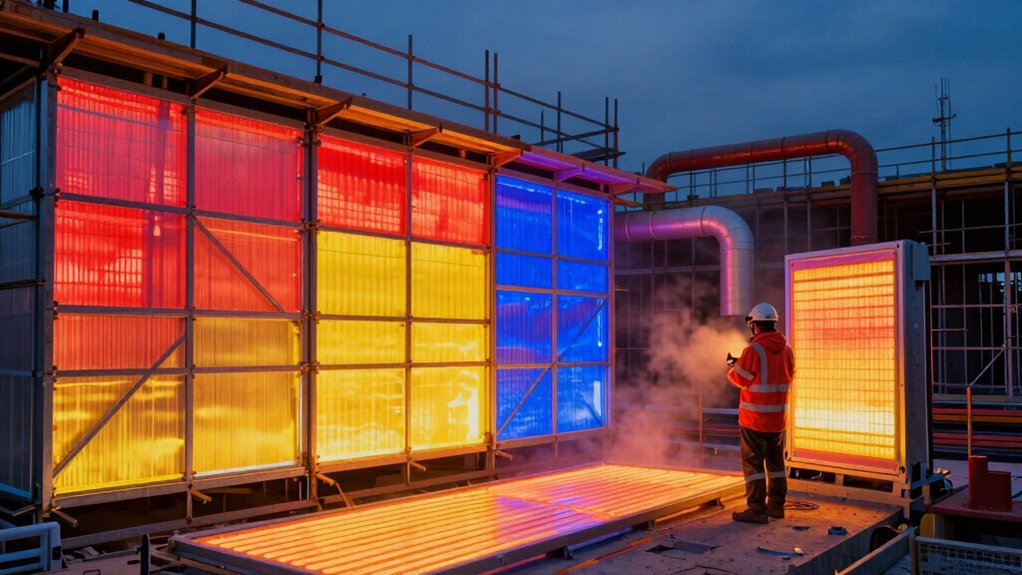
Infrared heating represents the future of modern construction by delivering direct, rapid warmth to surfaces and occupants, reducing energy waste from heated air and drafts. You gain precise zoning, faster occupancy readiness, and steadier surface temperatures, which cut comfort losses and improve IAQ. Its modular panels simplify installation and lower lifecycle costs, with low maintenance and high efficiency. By targeting heat where it’s needed, you optimize envelope performance and long-term energy savings. Explore how this approach reshapes projects and outcomes.
What Infrared Heating Is and Why It Matters for Construction
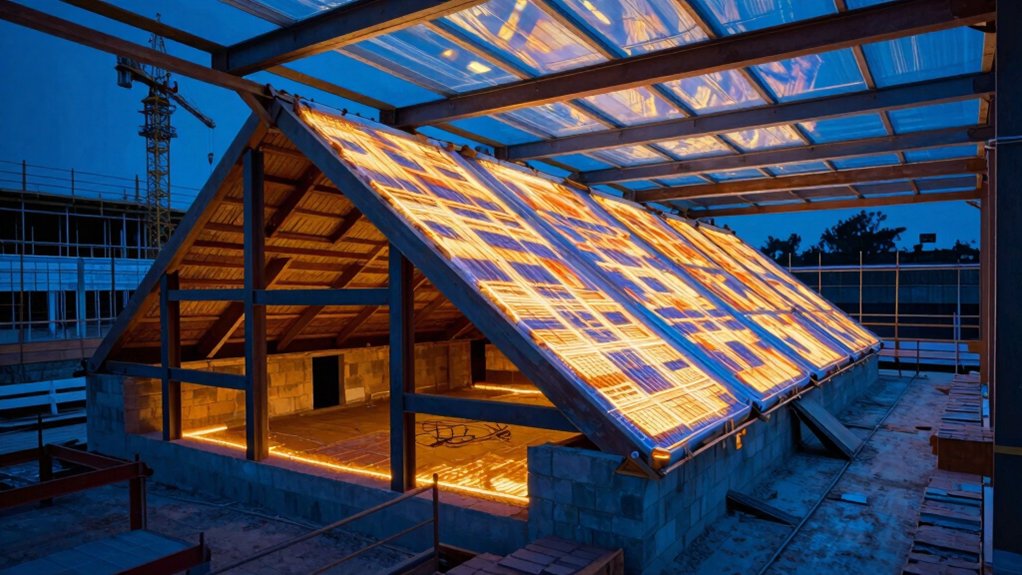
Infrared heating uses electromagnetic waves in the infrared spectrum to transfer heat directly to objects and surfaces without relying on convection. You engage this technology to warm interiors by emitting energy that converts to warmth upon contact with occupants, equipment, and structure.
Unlike traditional systems, infrared heats where heat is needed, reducing losses from air handling and distribution. In construction terms, you gain rapid response, precise zone control, and improved comfort with fewer drafts.
The core mechanism relies on radiant transfer, which minimizes heat transfer to unintended spaces and materials. You must consider source placement, surface emissivity, and line-of-sight paths to critical surfaces.
When integrated with materials that tolerate high radiant flux, infrared heating supports faster occupancy readiness, tighter envelopes, and streamlined maintenance compared with conventional heating methods.
How Infrared Heating Improves Energy Efficiency in Buildings
Because infrared heating targets surfaces directly, buildings waste less energy on heating air and not the space itself. You gain efficiency by delivering heat where it’s needed, reducing heat transfer losses from walls, floors, and objects, not just air.
Infrared systems respond quickly, so setpoint changes translate to faster thermal equilibrium with lower overshoot. Unlike convection-only approaches, you minimize circulating air heat losses and occupant discomfort from drafts.
On insulation-rich envelopes, radiant layers heat occupants and furnishings, not voids, improving perceived comfort at lower ambient temperatures. When you design with zoning, you tailor radiant output to occupancy patterns, increasing overall system COP.
Maintenance stays straightforward: fewer moving parts, predictable degradation, and easier fault isolation, preserving energy savings over the system’s life.
Health, Comfort, and Indoor Air Quality Benefits
Accelerated radiant heating improves occupant comfort by delivering warmth directly to people and objects, reducing cold spots and drafts that often accompany convection-heavy systems. You experience steadier surface temperatures, which minimizes thermal gradients that drive movement of dust and allergens.
With targeted heat transfer, you inhale air that’s closer to setpoint conditions, supporting healthier indoor environments and fewer irritants triggered by excessive air circulation. You’ll notice reduced reliance on space-wide air changes, preserving humidity pockets that deter desiccation without compromising comfort.
Infrared systems minimize convective stirring of particulates, supporting improved IAQ in occupied zones. Thermal asymmetry is damped, decreasing uncomfortable temperature swings.
Installation, Maintenance, and Long-Term Cost Advantages
Installing infrared heating systems can be straightforward and cost-effective when planned with proper sequencing, feeder layouts, and zoning. You’ll benefit from modular panels and single-point power feeds that simplify routing, minimize voltage drops, and reduce conduit work.
Maintenance is minimal: rely on solid-state controls, accessible elements, and cleanable surfaces to sustain efficiency. Ensure regular calibration of thermostats, verification of EMR ratings, and periodic door and window sealing to preserve performance.
Long-term costs lean on high efficiency, lower operating temperatures, and uniform radiant heat that reduces heating cycles and electrical load peaks. Wire sizing, protective junction boxes, and clear labeling streamline service intervals.
Document warranty terms, spare parts, and expected depreciation for budgeting. Emphasize preventative checks, fault tracing, and firmware updates to sustain reliability and predictable life-cycle costs.
Real-World Applications and Selection Criteria for Projects
Infrared heating finds its best value when tailored to project scales, occupancy patterns, and target temperatures. In real-world settings, you assess space usage, insulation quality, and heat load to choose the right panel types, layouts, and zoning schemes.
You evaluate occupancy schedules, time-of-use constraints, and equipment interactions to determine heat distribution priorities and control strategies.
Select panel wattage, surface finish, and mounting method based on wall geometry, reflectivity, and thermal mass.
Consider retrofit viability by surveying existing envelopes, penetrations, and ventilation to avoid thermal bridges.
Implement zoning to match usage zones, enabling demand-driven operation and energy savings.
Validate with trial runs, monitor performance against design targets, and adjust controls to maintain comfort, efficiency, and system reliability across fluctuating loads.
Conclusion
Infrared heating represents a practical, scalable solution for modern construction, delivering targeted warmth with reduced energy waste and faster payback. In tight building envelopes, it minimizes heat loss and supports improved IAQ by reducing circulating particulates and humidity stratification. Maintenance is simple, and long-term costs stay predictable with fewer major system components. As you weigh options, remember: time is money, and efficiency compounds—invest early, install right, and let infrared do the heavy lifting. Adage: the early bird saves more.