
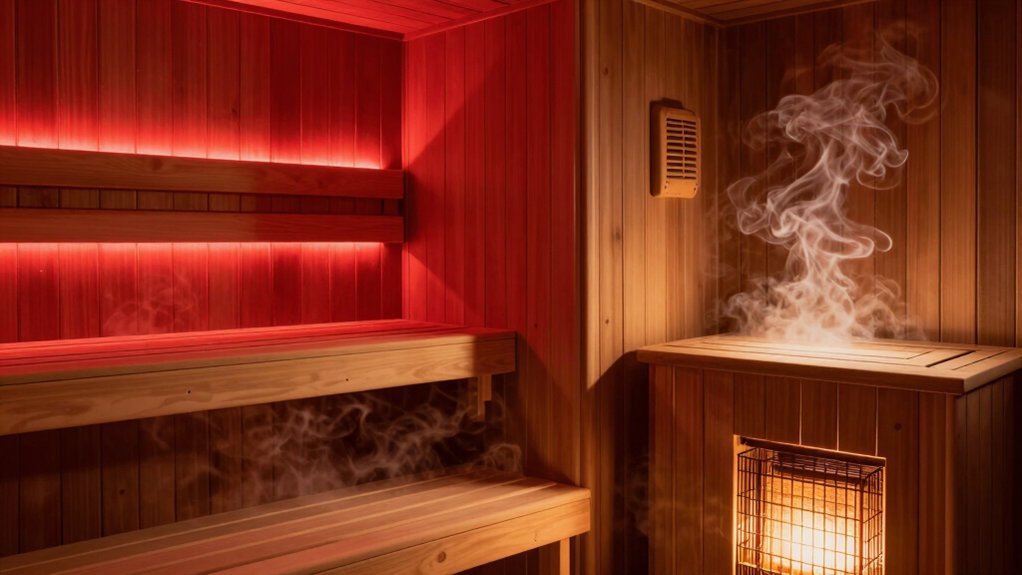
Infrared saunas heat you with penetrating radiant energy at lower ambient temps, while traditional saunas warm the air and room for fast sweating and either dry or humid heat. Infrared often costs less upfront and uses less electricity, but traditional setups can offer quicker surface warming and social, sauna-room vibes. Benefits include improved circulation and skin hydration with both; results vary by duration, temperature, and personal tolerance. If you keep exploring, you’ll uncover how to choose what fits your goals and budget.
What Are Infrared and Traditional Saunas, and How They Work
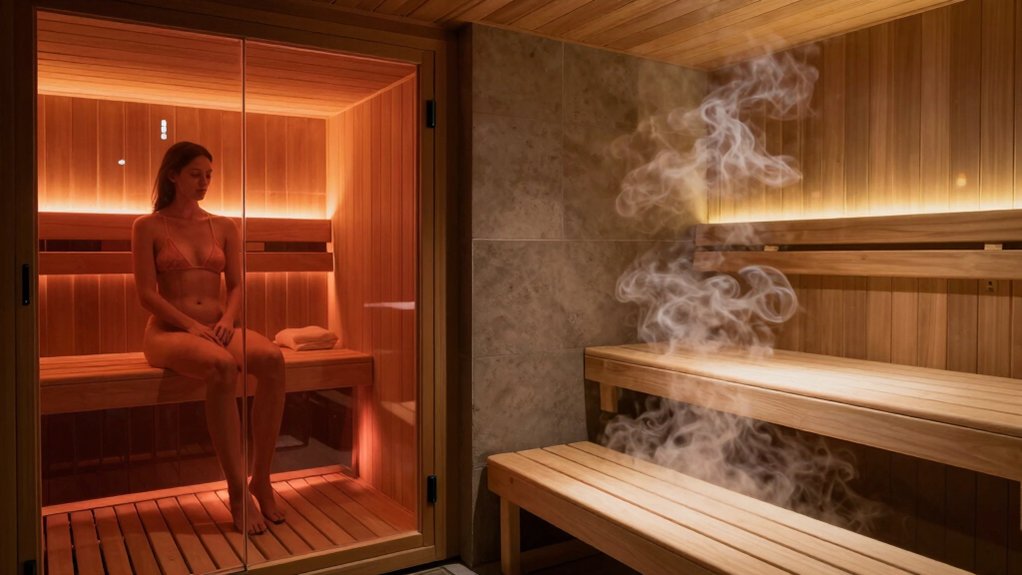
Infrared and traditional saunas deliver heat in different ways, but both aim to raise core body temperature and promote relaxation.
Infrared saunas use infrared heaters to emit radiant heat that penetrates the skin, warming muscles and joints directly without heating the surrounding air as intensely.
Traditional saunas heat the room with a heater or stove, creating high ambient air temperatures that transfer heat to your body through convection and convection plus radiant heat from heated surfaces.
In a traditional setup, humidity can be added via water on hot rocks, influencing perceived warmth.
Both types rely on elevated temperature to trigger sweating and circulatory responses.
Comfort, experience, and perceived heat differ, yet both are designed to induce relaxation, time-efficient sessions, and predictable thermal exposure.
Health Benefits: Skin, Circulation, and Recovery Compared
Both infrared and traditional saunas influence skin, circulation, and recovery, but they do so through different mechanisms, which can shape what you feel and gain from each session.
Infrared heat penetrates deeper tissues, potentially supporting cellular detoxification signals and skin hydration responses while warming you at lower ambient temperatures.
Traditional saunas create rapid surface heat, promoting sweat driven by higher humidity and ambient temperatures, which can enhance hydration status transiently and increase cutaneous blood flow with short-term warmth.
In both, improved circulation supports nutrient delivery and waste removal, aiding recovery after exercise.
Evidence suggests modest skin improvements and subjective recovery benefits, though results vary by individual, session duration, and temperature.
Neither replaces medical treatment, and consistency matters for any measurable impact.
Costs at a Glance: Upfront, Operating, and Long-Term Value
When choosing between infrared and traditional saunas, you’ll want a clear view of upfront purchase or rental costs, ongoing operating expenses, and long-term value.
Upfront, infrared units generally cost less than traditional stoves and heaters, with portable options starting lower and built-in models reaching higher prices. Traditional saunas may require electrical wiring, venting, and durable timber, increasing initial outlays.
Operating costs hinge on wattage, session length, and insulation quality; infrared usually uses less electricity per minute, while traditional saunas may use higher power for shorter cycles.
Long-term value depends on durability, maintenance needs, and energy efficiency, plus expected lifespan. Consider resale value and replacement costs over time.
Informed choices balance upfront, ongoing, and value against your usage patterns and space.
What It Feels Like: Experience, Heat, Duration, and Comfort
Imagine stepping into a sauna and focusing on how the heat feels, how long you comfortably stay, and what supports your comfort. Both infrared and traditional saunas raise core temperature, but you’ll notice different sensations: infrared delivers steady, lower air temperatures with penetrating warmth on muscles, while traditional saunas heat the air, producing a dry or humid climate that builds through a rapid sweat.
Comfort centers on ventilation, seating, and personal tolerance. Typical sessions range 10 to 30 minutes, guided by body cues like lightheadedness or excessive sweating. Hydration matters, as fluid intake affects endurance.
People report eased muscle stiffness and mood shifts, though experiences vary. Use caution with medical conditions and listen to your body’s signals for safety.
How to Decide: Which Sauna Fits Your Goals, Budget, and Lifestyle
To decide which sauna fits your goals, budget, and lifestyle, start by clarifying your priorities: relief from muscle soreness, relaxation, or daily wellness rituals; your preferred heating style (steadier infrared warmth vs. faster, air-driven traditional heat); and how you’ll use the sauna (frequency, duration, and whether privacy or space constraints matter).
Then compare mechanisms, costs, and maintenance: infrared units typically lower upfront cost, shorter heat-up times, and simpler installation, while traditional saunas may offer more ambient heat, social use, and historical体验.
Evaluate energy consumption, replacement parts, and warranty coverage. Consider space availability, noise, ventilation, and safety features.
Align choices with demonstrated benefits, personal schedule, and budget, ensuring practicality and consistency with your health goals.
Conclusion
In sum, infrared and traditional saunas offer distinct paths to similar goals—relaxation, circulation, and recovery. Infrared can feel gentler on the lungs and joints, while traditional heat buffs sweat-based detox and time-tested comfort. If you’re budget-conscious or limited by room, infrared often wins; if you crave classic heat and social ambiance, the traditional route shines. Anticipated objection: “I’ll miss the steam.” You won’t—modern infrared models still deliver deep warmth and measurable benefits, without heavy humidity.