
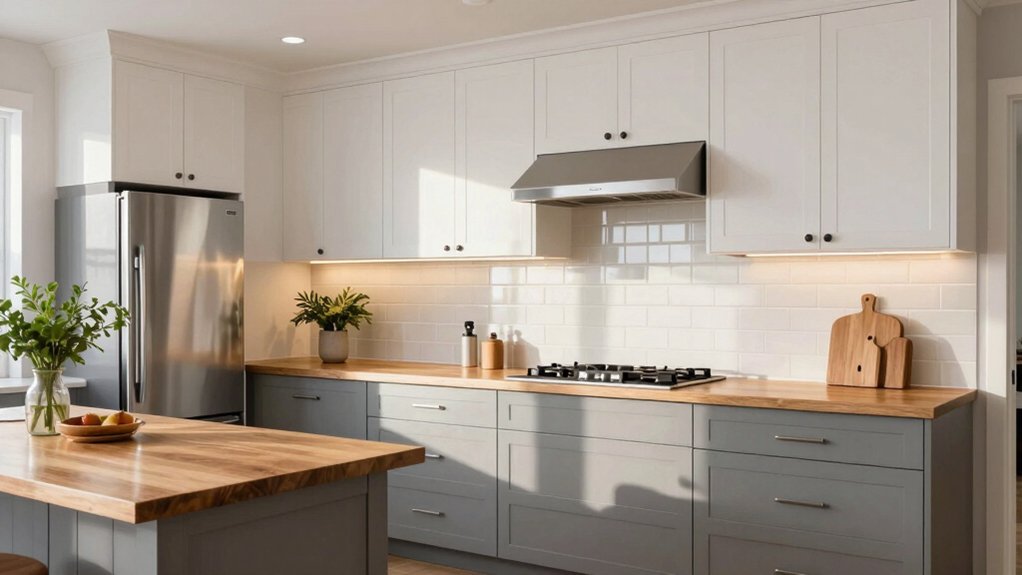
For example, you notice the workflow bottleneck when you move between the sink and stove. You can fix the layout first—clear counters, optimize the kitchen triangle, and plan how you’ll work in the space—before touching cosmetic details. Choose durable, affordable materials like quartz and porcelain, upgrade essential appliances, and swap hardware to refresh the look without a full rebuild. Smart storage and timing matter, but the big question is where to start and what to skip—keep going to map your best move.
Prioritize Layout and Workflow Improvements
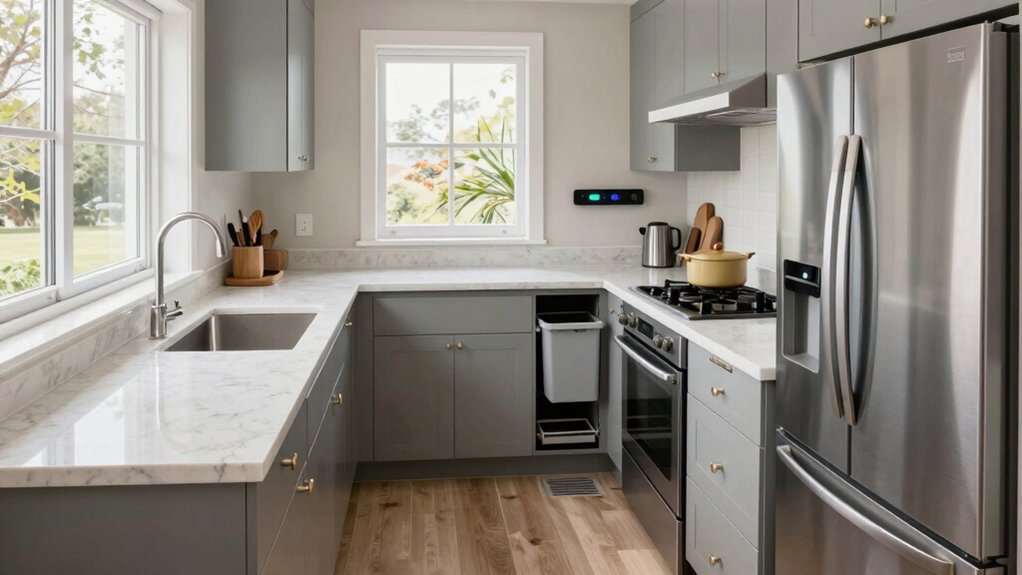
To start with a solid kitchen remodel, focus on layout and workflow first. You’ll gain the most value by mapping tasks you perform daily and trimming dead zones.
Start with the triangle: fridge, sink, and stove should form efficient routes, minimizing steps between steps. Keep counters clear along primary prep zones, and group frequently used tools near their tasks.
Consider corridor width, door swing, and appliance placement to prevent bottlenecks. Lighting fixtures matter: plan bright, shadow-free task lighting over counters and dimmer options for ambience.
Choose paint colors that read clean and calm, helping you see details clearly while cooking. Reevaluate storage ranks, installing pull-outs and labeled zones to speed routines and reduce clutter.
Prioritize moves that cut motion and frustration, not cost alone.
Focus on Durable, Cost-Effective Materials
When you’re choosing finishes, opt for durability and value that hold up under daily use. Focus on materials that resist scratches, heat, and moisture, so you won’t pay for frequent replacements.
For countertops, consider solid surface or quartz over high-maintenance natural stone; both give long life with lower upkeep. Cabinets should feature thermofoil or high-grade plywood with durable finishes rather than exposed wood that scars easily.
Floors benefit from porcelain tile or luxury vinyl plank that mimics stone or wood but tolerates spills and humidity. Look for low-maintenance options that still feel refined, like matte-sheen surfaces and simple patterns.
Incorporate luxury fixtures and decorative accents sparingly, choosing quality where it matters most to extend your budget’s reach.
Upgrade Essentials: Cabinets, Hardware, and Appliancess
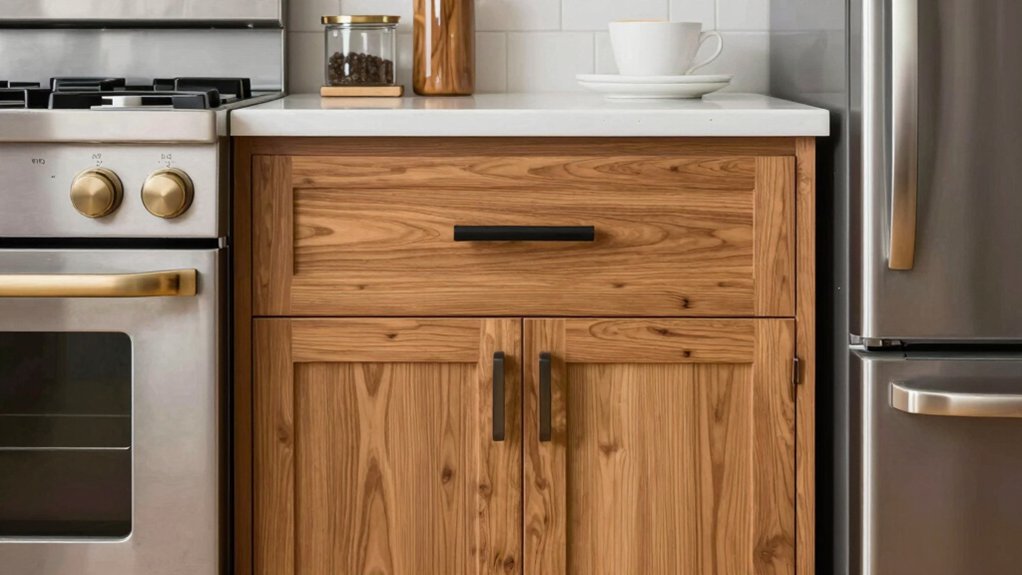
Upgrading cabinets, hardware, and appliances can dramatically boost function and style without blowing your budget. You’ll prioritize a cohesive look with stock or semi-custom cabinets, selecting a finish that matches existing trim to avoid repainting.
Hardware matters more than you think: choose pulls and knobs that suit your door style and scale, then swap them in a single afternoon.
When it comes to appliances, focus on energy efficiency and the features you actually use; a smaller, efficient fridge or a compact range can save space and money.
Add a decorative backsplash as a unifying accent, and plan kitchen lighting upgrades to illuminate work zones.
Keep the layout intact if possible to avoid costly plumbing or electrical changes.
Smart Storage and Organization Solutions
Smart storage isn’t an afterthought—it’s the backbone of a functional kitchen. You’ll gain the most value by prioritizing accessible zones, clear containers, and modular organizers that grow with your needs.
Start with a pantry organization plan: measure shelves, group similar items, and label for quick finds. Use uniform canisters for flour, sugar, and rice to reduce visual clutter and prevent overbuying.
Invest in a spice drawer that’s shallow and wide, so jars stay visible and within reach, with a moisture- and heat-protected lid to preserve flavor.
Install pull-out racks for pots, pans, and cleaning supplies, and pair this with dedicated zones for baking, snacks, and everyday staples.
Regularly purge expired products to keep the system sharp and cost-efficient.
Timing and Budgeting Strategies to Maximize Impact
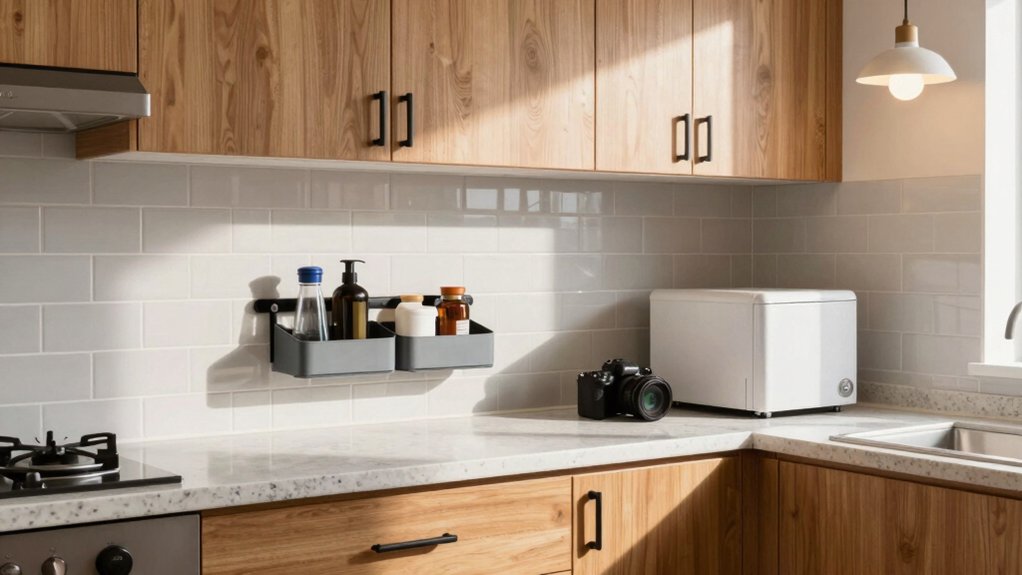
Managing a kitchen remodel on a budget hinges on smart timing and disciplined budgeting. You’ll gain more impact by sequencing tasks that facilitate quick wins, like fresh lighting design and hardware updates, before bigger investments.
Set a realistic budget with a priority list: essential upgrades first, then cosmetic changes that transform the space on a shoestring. Align purchases to one color palette to minimize waste and simplify decisions.
Shop during sales, compare materials, and consider alternate finishes that look premium without the price tag. Schedule trades to avoid downtime and capitalize on bundled labor discounts.
Track costs in real time, adjust as needed, and document changes for future resale value. Plan a phased timeline that preserves function while you renovate, preventing budget creep.