
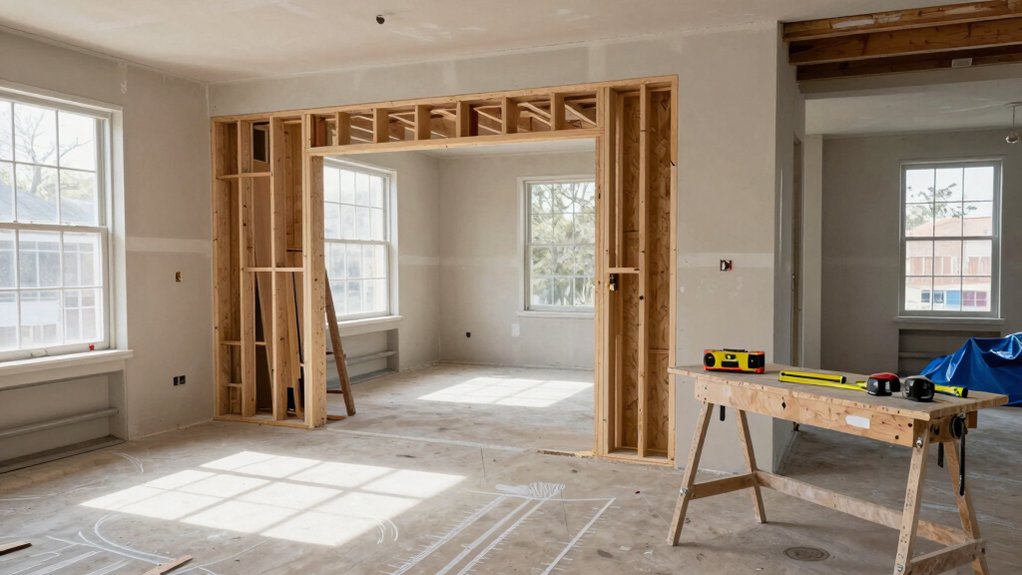
You’re tackling a knocked-through living room project that must balance structural safety, clear space planning, and budget discipline from the outset. Start with a feasibility check: confirm load-bearing status, and plan for temporary supports if needed. Align open-plan layout with sightlines and traffic flow, using grid-based furniture placement. Budget carefully for materials, labor, permits, and contingencies, and lock down a change-control process. With the right permits and utilities planning, you’ll position yourself for a smooth, controlled upgrade—more details await.
Assessing Feasibility and Planning Your Knock-Through
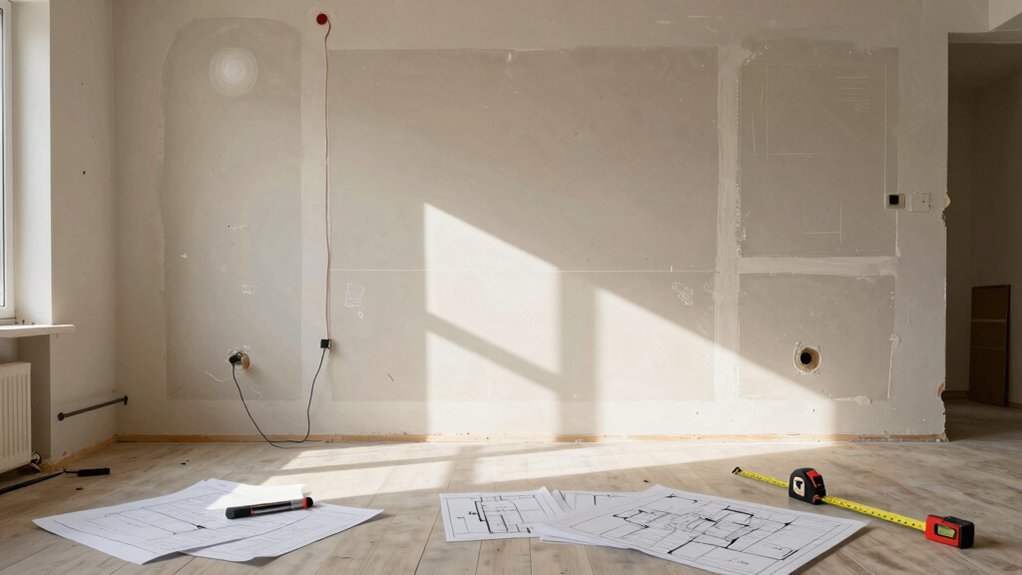
Before you begin, assess whether removing the wall is structurally viable and meets local codes. You’ll start with a structural assessment, confirm load-bearing status, and identify necessary supports such as a beam or lintel.
Check existing services—electrical, plumbing, HVAC—to determine relocation needs and safety risks. Obtain approvals from building authorities and, if required, a licensed structural engineer’s report.
Consider how the change affects interior decoration and furniture arrangement, ensuring sightlines and accessibility are preserved. Plan temporary supports during demolition and establish a clear sequence to minimize damage.
Map utilities, storage, and access routes to prevent interference with trades. Document the scope, timeline, and contingencies to reduce disruption and keep costs predictable.
Avoid scope creep by maintaining precise criteria for success.
Designing the Open-Plan Layout and Space Flow
Designing the open-plan layout hinges on aligning sightlines, traffic flow, and functional zones with the newly connected spaces. You map how each zone relates to primary activities, ensuring transitions remain seamless and unforced.
Start with grid-like planning for furniture placement to preserve clear pathways and avoid bottlenecks, then test sightlines from primary seating, entry points, and work zones. Consider zoning rules that separate cooking, lounging, and dining while preserving visual openness.
Lighting design should complement spatial logic, balancing ambient, task, and accent layers without glare or shadows that disrupt flow.
Structural removals and HVAC runs are accounted for in the layout, preventing rework. Document reference points, tolerances, and adjustments to align with ceiling heights, floor finishes, and door axes, ensuring modular flexibility for future reconfigurations.
Costs, Budgeting, and Timeframe for the Project

Costs, budgeting, and the project timeframe must be defined early and tracked meticulously: establish a total project budget, allocate allowances for contingencies, and set milestone-based payments to maintain cash flow.
You should quantify all costs, including materials, labor, permits, and delivery fees, with documented assumptions.
Create a detailed schedule linking tasks to durations and milestones, updating forecasts as design decisions unfold.
Track interior decor expenses separately from structural work to prevent overruns, and reserve funds for furniture arrangement changes during execution.
Maintain rigorous change control; require written approvals for scope shifts and price adjustments.
Communicate regularly with stakeholders and contractors, distributing updated cost and timeline analyses.
This disciplined approach supports predictable outcomes while preserving design intent and client satisfaction.
Structural Requirements: Load-Bearing Issues, Lintels, and Utilities
Structural integrity defines the parameters you must respect as you modify the living space. You’ll analyze load bearing walls to determine which sections transfer weight and require reinforcement. Identify structural members, noting wall orientation, floor loading, and roof loads to avoid underestimating demands.
Before any removal, confirm whether a beam or support is needed, and plan for temporary shoring during transfers of load. Lintel installation becomes critical where openings alter load paths; you must specify size, material, bearing, and span in accordance with structural calculations.
Utilities—electrical, plumbing, and HVAC—must be relocated with attention to routing, access, and fire separation, ensuring no compromised firestopping or insulation. Document changes, coordinate with professionals, and verify that all alterations meet applicable building codes and safety standards.
Working With Contractors, Permits, and Practical Phasing
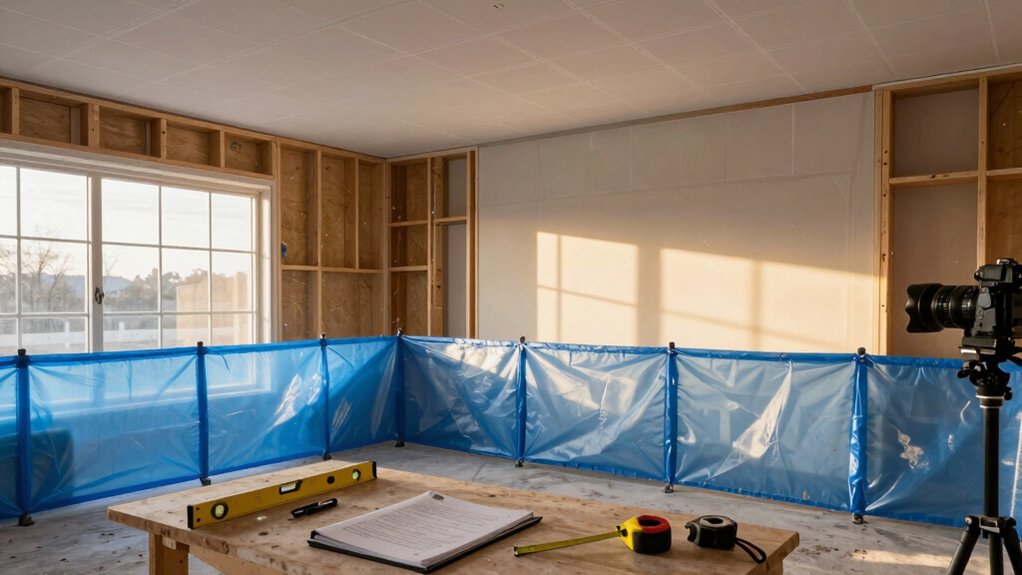
Hiring the right team and securing approvals are critical before you start any physical work; you’ll align scope, schedule, and budget with clarity. You approach this phase by documenting a clear brief, including design intent, material constraints, and safety requirements. Require written quotes, detailed schedules, and milestone criteria from each contractor.
Prioritize licensing, insurance, and proven track records in similar projects. When evaluating, emphasize contractor selection criteria such as experience with structural changes, tolerance for phased work, and ability to coordinate trades without compromising safety.
Obtain demolition permits early, and ensure inspections align with progression milestones. Establish a change-control process to manage scope creep.
Communicate crate-by-crate progress updates, risk logs, and contingency plans to keep the project on time and within budget.