
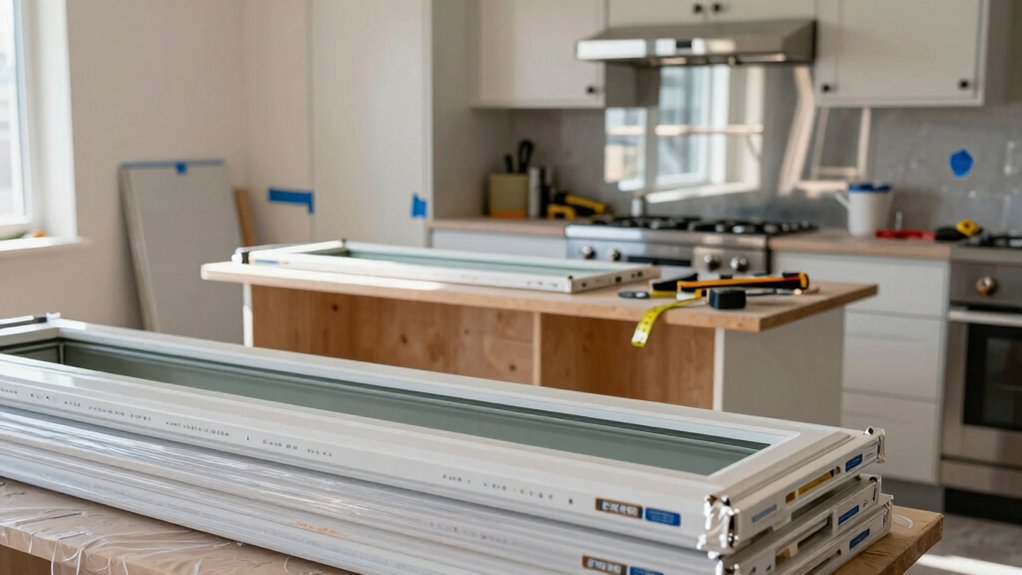
Lead times in 2026 are longer, but more predictable if you plan around supplier performance, inventory trends, and risk buffers. You’ll see variability driven by demand, factory utilization, and port throughput, with longer delays from sourcing constraints and transportation bottlenecks. Build a schedule with deliberate buffers, milestone checkpoints, and contingency budgets to absorb shocks. Prioritize flexible materials and substitutions to preserve timelines, and negotiate cycle-time targets with suppliers. If you push ahead with these strategies, you’ll reduce surprises and stay on track as you proceed.
Lead Times in 2026: What You Need to Know Up Front

Lead times in 2026 are tightening as supply chains adjust to persistent demand shifts and evolving macro conditions; understanding the drivers helps you forecast accurately and avoid costly delays.
You’ll see variability driven by market demand patterns, factory utilization, and port throughput, all shaping order-to-delivery timelines.
In the supply chain, lead times lengthen when material sourcing becomes constrained or transportation cycles slow, then compress when capacity expands or inventories normalize.
You should model scenarios that pair demand forecasts with supplier performance data, tracking calendar effects and disruption risk to quantify risk-adjusted timelines.
Prioritize procurement visibility, alternate sourcing, and just-in-case planning to stabilize schedules.
With precise data you’ll align commitments, improve on-time delivery, and protect project milestones amid evolving market dynamics.
Why Shortages Happen and How It Impacts Your Budget
Shortages arise when demand outpaces supply, but the cause-and-effect runs deeper: constraints in sourcing, production hiccups, and transportation bottlenecks converge to tighten inventories just as needs surge.
You’ll see feeds of higher input costs, longer lead times, and erratic availability across windows, cabinets, and appliances. The result is a tighter budget, since you must accommodate price volatility, expedited shipping, and alternative sourcing.
In the supply chain, fragility shows up as batch production gaps and supplier consolidation, elevating risk for any single order. Labor shortages compound delays and erode throughput, pushing unit costs higher and narrowing your margin for error.
Plan with scenario analysis, lock-in quotes, and flexible specifications; the data consistently points to greater upfront budgeting and contingency planning.
How Delays Affect Your Remodel Timeline and Milestones
Delays don’t just push a date on a calendar; they shift every milestone in your remodel. When lead times extend, your sequencing changes: ordering, permitting, and fabrication align around new delivery windows, with knock-on effects for permitting staff and trade availability.
You’ll likely see extended task durations, increased idle time, and tighter windows for coordination among teams. To preserve momentum, quantify impact: map each phase’s critical path, then forecast cascading delays to the project finish.
Use material substitutions strategically to avoid bottlenecks while preserving design intent, and document trade-offs in a change log to maintain accountability. Maintain proactive contractor communication, updating schedules weekly, and flagging risks early to recover schedule where possible.
This data-driven approach keeps milestones aligned with reality, not optimism.
Prioritize Your Remodel in 4 Simple Steps
To keep your remodel on track, start by setting four priority pillars that align with your budget and timeline.
1) Define material selection priorities that balance cost, durability, and lead times to keep suppliers honest and schedules predictable.
2) Build design flexibility into plans, selecting adaptable layouts and finishes that minimize substitutions if delays occur.
3) Anchor decisions to a strict milestone map, tracking approvals, orders, and deliveries with data-driven buffers.
4) Establish contingency spend and time buffers, quantifying risk by category and assigning ownership to preserve momentum.
Expediting Orders: Negotiation, Shortcuts, and Logistics
Negotiating faster delivery hinges on clear expectations, real-time data, and disciplined supplier alignment. When you pursue expediting, you lock in priority scheduling by defining firm lead times, acceptable trade-offs, and minimum order quantities that trigger acceleration.
You’ll leverage real-time visibility into inventory, production status, and shipping contingencies to replace guesswork with actionable insight. In supplier negotiations, insist on transparent capacity constraints, staged milestones, and defined remedies for delays, including partial shipments and re-sequenced production.
You should quantify impact with measurable targets—reductions in cycle time, dock-to-door time, and queue length—to justify expedited fees. Finally, build contingency routes: alternative suppliers, buffer components, and expedited logistics options that preserve schedule integrity without sacrificing cost controls.
Speeding Shipments: Carrier Tactics and Scheduling Windows

Speeding shipments hinges on choosing the right carriers and carving out precise scheduling windows that lock in reliability. You’ll lean on data to compare carrier tactics, optimize routes, and reduce dwell time, turning insights into action.
By aligning pickup times with capacity forecasts, you minimize empty runs and maximize on-time performance.
- Select carriers with transparent SLA metrics and proven transit reliability.
- Sync scheduling windows with carrier capacity dashboards to avoid bottlenecks.
- Lock in service levels that prioritize overnight or expedited options when critical.
- Use dynamic routing and real-time visibility to adjust timing before delays propagate.
Budgeting for Uncertainty: Contingencies and Cushions
You’ll set contingency percentages that align with historical volatility and project risk, keeping buffers tight but sufficient to protect critical milestones. Cushion for delays isn’t optional—it’s a measured return on reliability, backed by data on past overruns and their cost.
We’ll frame budgeting for uncertainty around three core levers—Contingency Percentages Made Easy, Cushioning For Delays, and Budgeting For Uncertainty—to drive clear, actionable decisions.
Contingency Percentages Made Easy
Contingency percentages are essential for maintaining project stability when uncertainty hits. You’ll use them to cap overruns and protect key milestones, not to panic-buy.
When you set contingency, anchor it to data: historic variance, lead-time volatility, and current supplier reliability. Your goal is a precise cushion that preserves schedule and cost control, while remaining reasonable to stakeholders.
By tying percentages to inventory management and supplier relationships, you’ll align buffers with real-world risk, not worst-case fantasies.
- Base on historical variance and current order exposure
- Separate design/construction risks from supply-chain shifts
- Align contingency with critical path items and inventory turnover
- Recalibrate monthly as supplier performance data updates
Cushioning For Delays
Delays are inevitable in complex projects, but you can limit their impact by embedding cushioning directly into your budget. Cushioning should reflect realistic lead-time variability and supplier performance data, not wishful thinking.
Allocate a dedicated contingency pool sized from prior project deltas, plus a management reserve for unforeseen swings. Tie cushions to concrete milestones and trigger thresholds, so you adjust quickly when signals shift.
Build in material substitutions and design flexibility as part of the cushion strategy—these options often preserve schedule without sacrificing function or value. Track utilization versus plan weekly, and reallocate funds to critical paths as needed.
Document assumptions, reforecast frequently, and maintain decision rights with a clear escalation path to prevent scope creep under delay pressure. Outcomes improve when cushions are proactive, not reactive.
Budgeting For Uncertainty
Budgeting for uncertainty requires a disciplined approach to contingencies and cushions that’s tied to real data and project risk. You’ll align buffers with historical variance, supplier reliability, and build-cycle volatility to protect outcomes without inflating budgets.
1) Calibrate contingency percentage by phase using past lead-time spread and current supplier performance.
2) Separate cushions for material sustainability risks (e.g., scarce finishes) and schedule shocks (e.g., backorders) to keep design flexibility intact.
3) Include a formal review milestone to adjust allowances as real data arrive, not after decisions are locked.
4) Tie contingency governance to decision points, ensuring funding follows progress and risk exposure remains transparent.
These practices deliver predictable costs, reinforce material sustainability goals, and preserve design flexibility under uncertainty.
Build a Realistic Schedule With Buffers and Checkpoints

You’ll start by building in buffers to absorb variability and protect the critical path. Then set checkpoint milestones to verify progress at key moments.
Data shows that properly planned buffers reduce schedule slippage by X% and keep delivery dates reliable. Checkpoints catch issues early and prevent cascading delays.
Use these mechanisms to maintain a realistic, predictable timeline that supports on-time outcomes.
Build In Buffers
Do you know how buffers can transform a project schedule from optimistic to achievable? When you build in buffers, you create predictable slack around critical tasks, enabling you to absorb delays without derailing the whole plan.
This shift improves reliability for inventory management and strengthens supplier relationships, because timelines become measurable commitments rather rather than guesses.
- Define buffer amounts at key milestones based on historical data and risk tests.
- Schedule early warning points to trigger recovery actions before delays compound.
- Align buffers with lead times for raw materials, components, and installation windows.
- Monitor and adjust continuously using real-time performance metrics rather than averages.
Checkpoint Milestones
Checkpoint milestones act as concrete decision gates that keep a project on track by pairing planned buffers with explicit review points; they force early visibility into variances and trigger corrective actions before delays cascade.
You’ll set milestones at key phases—design, procurement, fabrication, and installation—to assess progress against baseline, then adjust buffers if actual lead times diverge. Use data-driven checkpoints to validate material selection and align contractor coordination, ensuring decisions reflect current supplier realities.
Each milestone should require a documented yes/no decision, a refreshed forecast, and owner sign-off. Tie milestones to buffer consumption, so overruns prompt expedient reallocation or scope tightening rather than unchecked drift.
This discipline improves predictability, reduces last-minute scrambles, and sustains schedule integrity across windows, cabinets, and appliances.
Choosing Flexible Materials and Substitutions for Delays
Delays can disrupt production schedules, so choosing flexible materials and substitutions is a critical risk-management step. You’ll reduce downtime by prioritizing sources that offer rapid switchability, stable pricing, and consistent finishes. Use data to compare lead times, durability, and compatibility, then map substitution options to each project phase.
This approach minimizes schedule slips and preserves customer commitments, while maintaining quality.
- Evaluate alternative materials for compatibility with existing cabinets and windows, focusing on performance and finishes.
- Develop substitution strategies that uphold aesthetics and function, with contingency suppliers and clear approval processes.
- Quantify cost and schedule impact of each option, updating risk registers weekly.
- Establish testing and approval gates to ensure new materials meet specs before production starts.
Conclusion
Despite steady demand, expect lead times to stretch 6–12 weeks for cabinets and appliances, with windows lagging even longer. One striking stat: updated kitchen orders now commonly face a 20% longer timeline than pre‑2023 norms. You’ll win by pricing in contingencies, locking milestones, and choosing flexible materials. Stay data‑driven, renegotiate timelines proactively, and build check‑points into your plan. A disciplined, buffer‑rich schedule turns uncertainty into measurable progress and predictable results.