
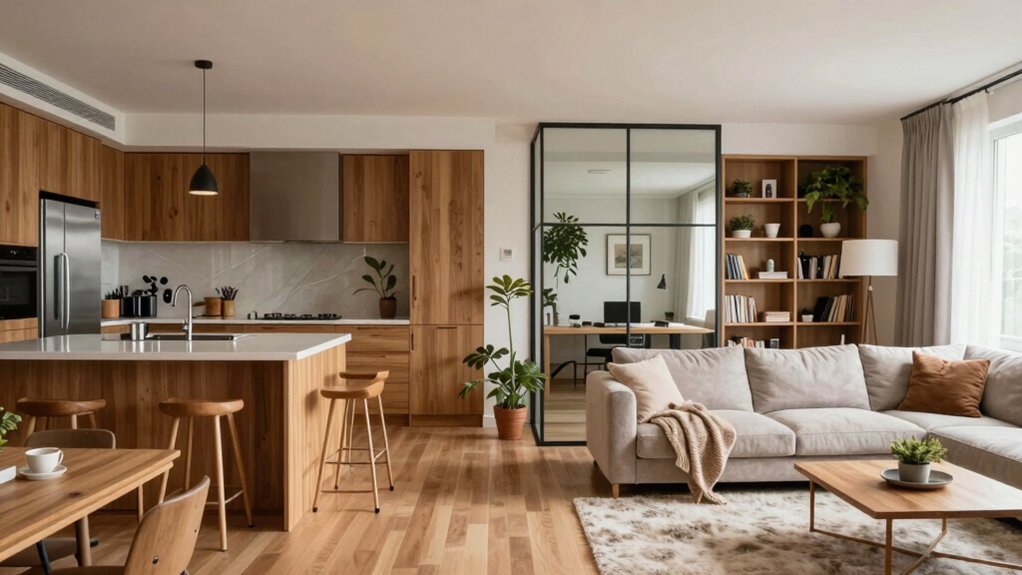
You might worry that an open plan means chaos, but it can actually boost light and connection if you shape it with clear zones. If privacy and quiet are your anchors, separate rooms keep focus intact and conversations contained. The choice hinges on how you live day-to-day—do you crave sociable flow or your own quiet corners? There’s more to weigh: noise, flexible use, and how your habits evolve. Let’s explore what fits your rhythm.
Understanding Open-Plan Living
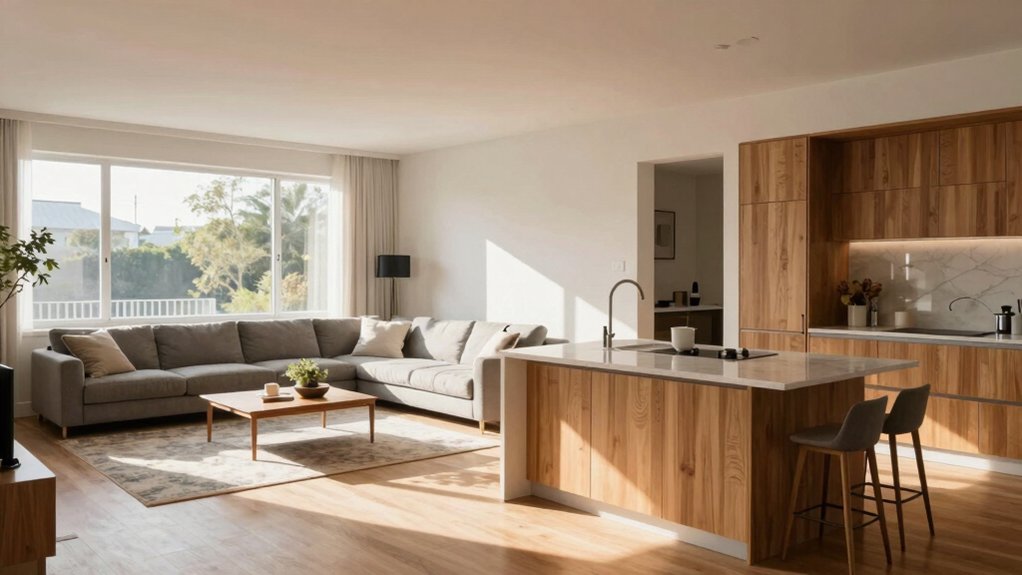
Open-plan living blends spaces into one, light and flow instead of walls and corridors. You embrace openness, where sightlines guide movement and rooms share atmosphere.
You’ll notice how multifunctional furniture becomes a core strategy, transforming a single area to suit meals, work, and relaxation without crowding. Spatial clarity relies on deliberate placement, rhythm, and zones that feel connected yet distinct.
You’re aiming for visual connectivity: consistent materials, aligned edges, and a calm palette that lets furniture anchor each function without shouting boundaries. Noise is managed through soft rugs, ambient lighting, and thoughtful acoustics, so conversations flow rather than collide.
You’ll choreograph daily life around openness, prioritizing flexibility, access to natural light, and a sense of cohesion that preserves personal retreat within shared spaces.
The Case for Separate Rooms
You’ll notice that separate rooms offer true privacy in your daily routines and conversations.
With distinct spaces, you gain clearer zones for work, rest, and play, reducing interruptions.
This setup also strengthens noise control, helping you keep conversations contained and focus intact.
Privacy in Spaces
Ever wonder how privacy shapes our daily play between noise and quiet? In spaces designed for separation, you gain control over focus, downtime, and personal rituals. Separate rooms create intentional boundaries, guiding your attention from the kitchen’s chatter to a focused workspace or a hush for reading.
You’ll lean on thoughtful layouts, door placement, and acoustical details to preserve calm without isolation. When a room feels private, you’re less exposed to interruptions, and conversations stay contained. Consider sound-absorbing materials and subtle thresholds that cue shift, not confrontation.
For visual privacy, you rely on appropriate sightlines, doorways, and furnishings that shield a zone without visually closing it off. Soundproofing techniques become a practical tool, balancing openness with personal retreat.
Noise Control Benefits
Separate rooms aren’t just separate places; they’re deliberate noise buffers that let conversations stay contained and disruptions stay outside. In this setup, you gain control over everyday clatter, from blaring TV to ringing phones, without blasting others’ quiet.
Noise travels less where walls, doors, and ceilings act as barriers, so you maintain focus in study nooks or home offices. The case for separate rooms hinges on predictable acoustics: you can tailor space to your routines, reducing cross-room spill and enhancing privacy during calls.
Implement soundproofing options like staggered studs, solid core doors, and decoupled ceilings to maximize attenuation. Pair these with thoughtful acoustic design—directional furnishings, soft textures, and strategic layouts—to create calm, productive zones within a bustling home.
How Layout Affects Natural Light and Flow
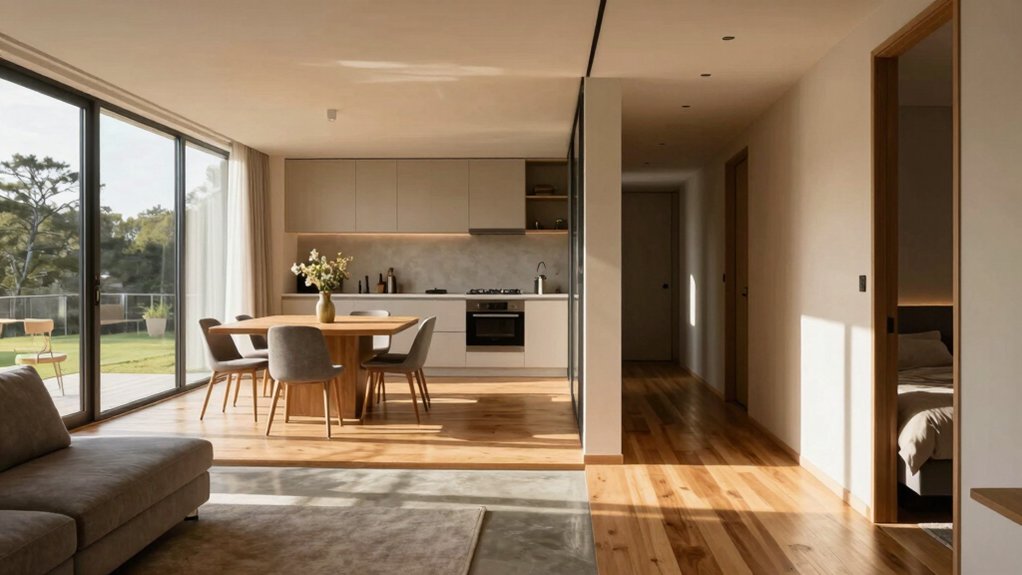
Natural light isn’t a bonus feature here; it’s the backbone of how spaces feel and move. When you choose an open plan, you invite sunlight to travel farther, weaving through zones and enlarging perceived depth.
In a compartmentalized layout, you control cadence by placing windows strategically, curbing glare while preserving warmth. Your walls become guides for spatial flow, directing movement with sightlines and doorway timing.
Consider ceiling height, window placement, and reflective surfaces to bounce light into corners, creating a brighter, more cohesive story. Fewer barriers encourage eye-level continuity, making errands—reading, cooking, or working—feel effortless.
Balance light and function by mapping how natural light travels from morning to dusk, aligning it with daily routines. The payoff: clarity, comfort, and a seamless, well-lit environment.
Noise, Privacy, and Acoustic Considerations
Sound travels differently in open plans and compartmentalized layouts, so you’ll want to map where noise originates and how it moves. In open spaces, a single sound can ripple across rooms; in closed ones, noises stay contained but can echo between doors.
You’ll prioritize sound insulation where private tasks occur and where shared chatter intrudes. Acoustic design isn’t just panels and padding—it’s placement, materials, and air gaps that dampen steps, voices, and appliances.
Consider ceiling, floor, and wall assemblies that minimize transmission without deadening everyday life. Use zones with selective buffering: a quiet nook adjacent to a lively kitchen, or a study near living areas.
Balance openness with boundaries to preserve calm without sacrificing sociability.
Flexibility: Adapting Spaces Over Time
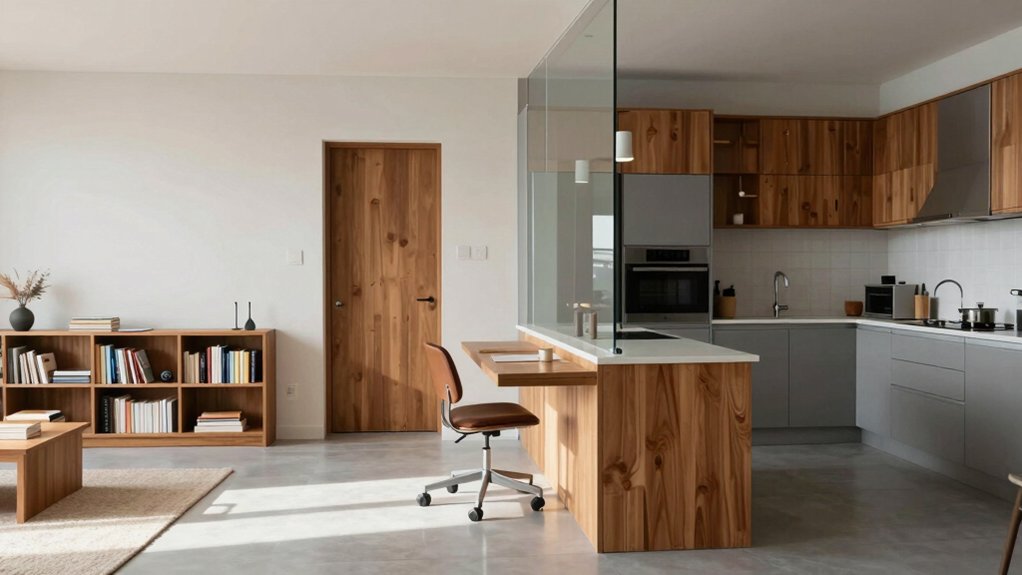
You’ll design spaces that flex as needs change, swapping rooms or reconfiguring layouts without a full overhaul. Walls can be moved to reclaim or separate areas, keeping options open for future uses.
Privacy versus openness shifts as life evolves, so your plan should balance flexible use with occasional quiet zones.
Flexible Use Over Time
Flexible use over time means spaces adapt as needs shift, so your home can grow with you rather than forcing you to relocate. You’ll design rooms that morph from work zones to rest zones with simple, intentional choices.
Consider furniture that doubles in function, like a bookshelf that hides a desk, or a dining table that becomes a workstation. Prioritize adaptable layouts that invite reconfiguration—movable partitions, modular seating, and wall mounts that relocate as your routines change.
Storage becomes a flexible ally, keeping clutter out of sight while preserving open flow. Embrace multi-use spaces that invite collaboration and solitude in equal measure.
With evolving needs, your home remains purposeful, not permanent, supporting a dynamic lifestyle.
Walls Adapt Living Spaces
Walls shape how you move through a space, and when they’re designed with flexibility in mind, rooms can shift as quickly as your needs do. You can lean on movable partitions or sliding panels to carve zones without sacrificing light or flow. Wall elements become tools for adaptation, not barriers, supporting cumulative changes in use—from work nooks to intimate entertaining areas.
Focus on wall aesthetics that harmonize with evolving functions, so progressions feel intentional rather than abrupt. Consider material options that balance durability, install ease, and mood—think lightweight composites, timber veneers, or glass divisions that preserve sightlines.
Flexibility emerges when you pair modular systems with smart storage, so walls serve future layouts as naturally as current ones. In time, your space evolves while remaining cohesive and calm.
Privacy Vs Openness Shifts
Privacy and openness pull at a space from opposite directions, so your plan should accommodate both as needs shift. You’ll design for flexibility, not rigidity, allowing rooms to soften or sharpen their functions over time.
Think modular zones you can reconfigure with lightweight screens, sliding panels, or tall bookcases that create visual separation without confinement. Soundproofing options become strategic rather than decorative, isolating noisy tasks while preserving daylight and sightlines.
Embrace soft thresholds rather than hard walls to invite flow when desired and privacy when needed. The goal is adaptive balance: a living area that opens for entertaining, then narrows for study or rest without costly renovations.
In practice, integrate subtle dividers, layered textures, and responsive lighting to cue different moods.
Design Strategies for Small and Large Homes
When you’re designing spaces for both small and large homes, smart layout choices beat sheer square footage every time. In small rooms, prioritize furniture arrangement that preserves flow: pick compact pieces, use corners, and create clear sightlines to avoid visual clutter.
In large spaces, define zones with rugs and backdrops rather than walls, so you retain openness while guiding activities. Color schemes matter: light neutrals extending ceilings visually; bold accents to cue focus zones without overwhelming.
In every scale, measure proportional relationships—casegoods should mirror room width, not overpower doors or windows. Storage should emerge from built-ins and clever under-fixtures, keeping surfaces uncluttered for daily use.
Balance form and function through deliberate placement, consistent lighting, and restrained texture variety.
Zoning, Storage, and Clutter Control
Zoning, storage, and clutter control fuse form and function to make any space feel intentional. You’ll define zones with decorative partitions that don’t shout, but softly guide activity—work, play, rest—while preserving flow.
In open plans, let furniture placement create boundaries; in closed layouts, doorways and alcoves mark purpose without shrinking light. Storage solutions matter more than size: drawers, bins, and modular offenses of space keep surfaces clean and ideas clear.
Prioritize horizontal and vertical storage, so you don’t chase clutter down hallways. Choose multifunctional pieces—beds with drawers, coffee tables with hidden compartments, or benches that double as seating and storage.
Regularly reassess what you keep; ruthless editing reduces visual noise and preserves a calm, intentional atmosphere.
Making Your Choice: Personal Habits and Priorities
Choosing between open-plan and closed layouts hinges on your daily rhythms and what you value most: light and flow or privacy and focus.
Your habits determine what feels seamless: do you thrive with constant activity, or need pockets of quiet for deep work? Consider how you use spaces: does a single area fatigue you, or do progressions drain your energy? Prioritize tasks you perform most often.
If you crave collaboration, design for visibility and easy interaction; if you require concentration, carve boundaries and acoustic comfort. Integrate multifunctional furniture to adapt on a schedule, keeping rooms flexible without clutter.
Apply color psychology: energize zones for creativity, calm others for focus. Your choice mirrors routines, not trends, delivering a layout that supports daily life.