
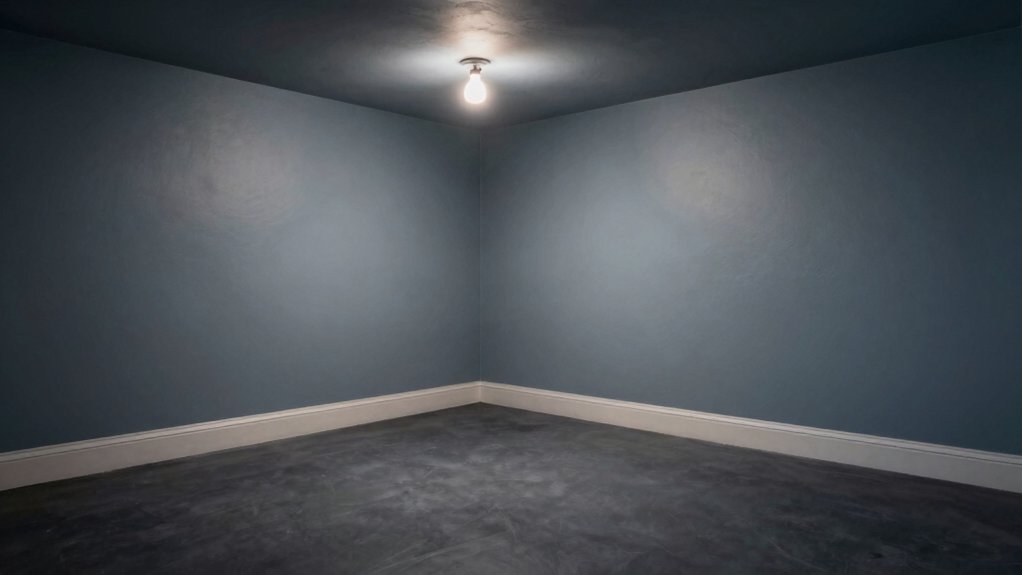
For a basement with no natural light, pick bright, reflective neutrals and soft whites in satin or eggshell finishes to bounce what you do have. Aim for midtone beiges or warm grays that read light without yellow or pink casts, and keep walls and ceiling consistent to maximize openness. Use lightweight, breathable sheens and test swatches under basement lighting. Add mirrors and light-wood accents to amplify glow. Want more tips to elevate brightness even further?
Brightening Neutrals That Make a Basement Feel Airier
To brighten a basement, start with neutrals that reflect more light than they absorb. You’ll choose midtone beiges or warm grays that don’t bow to yellow or pink casts, keeping color consistency from wall to ceiling.
In color psychology terms, opt for hues that convey calm and openness, which helps the space feel larger and more inviting. You’ll test swatches in your basement’s lighting, noting how each shade shifts under fluorescent or LED light, then pick the one that maintains brightness without shifting mood.
For paint durability, select a high-quality, washable finish that resists scuffs and moisture exposure common in basements. Apply with even coats, allow proper drying, and use painter’s tape along trim to preserve clean edges.
This practical approach yields a visually airy, resilient backdrop.
Soft Whites and Pale Blues to Maximize Light Reflection
Soft whites and pale blues reflect the most light without washing out detail, so you get a bright, open basement that still feels warm. You’ll notice how subtle shifts in shade change brightness without sacrificing depth.
Choose ceiling paints in cool whites or pale blues to bounce daylight across corners, keeping verticals feeling lifted. For walls, lean toward satin or eggshell finishes to balance reflectivity with easy cleaning.
Ceiling paint techniques, like a slightly lighter ceiling than walls, amplify perceived height and airiness.
Consider wall mural options that are understated—soft geometric shapes or pale icicle motifs—to add depth without absorbing light.
Pair these tones with bright trim to sharpen edges and maintain a cohesive, luminous look.
Warm-Toned Palettes for Cozy Atmosphere in Low Light
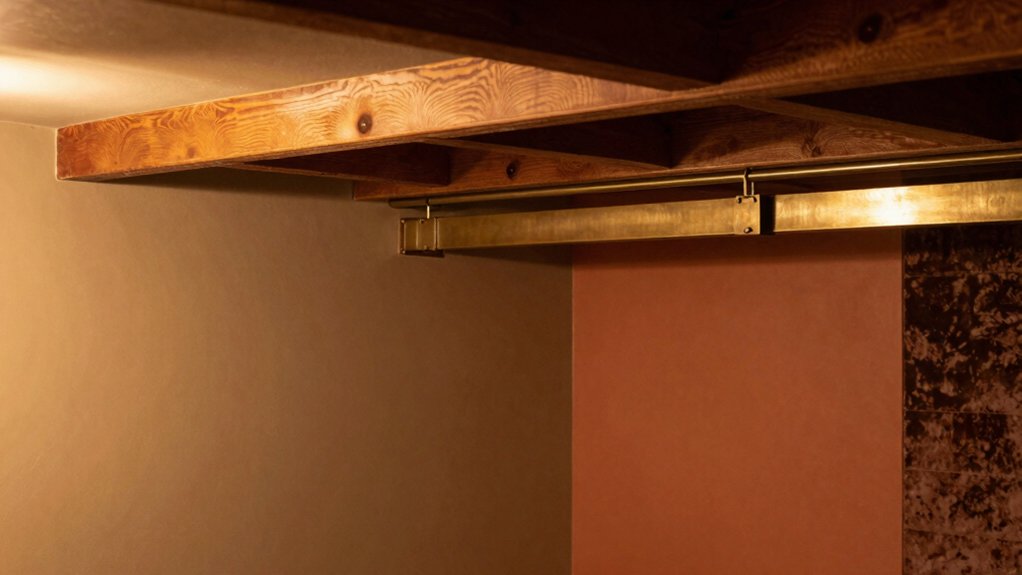
If your basement tends to feel dim, warm-toned palettes can cozy the space without making it feel crowded. You’ll benefit from colors like honey, amber, and warm taupe paired with medium woods, which reflect ambient light without shouting.
Use matte or satin finishes to reduce glare and keep textures tactile. Prioritize layered lighting: combine recessed or track lights with warm bulbs, plus table lamps or wall sconces to add pockets of glow where you sit or work.
Introduce warm accents in textiles, rugs, and curtains to reinforce the atmosphere without overwhelming. For placement, balance large painted surfaces with darker furniture silhouettes to ground the room.
Consider wall mounted decor ideas that complement the palette without crowding sightlines.
Sheen and Finish Choices That Enhance Brightness
Glossy finishes reflect more light, but the trick is pairing them with the right base color and layered lighting so glare isn’t overwhelming. You’ll use sheen strategically: glossy vs matte for ceilings and walls creates depth, while matte trims keep contrast calm.
In a basement, opt for higher reflectivity on walls to bounce limited daylight and amplified lamps, then balance with a soft, satin ceiling that won’t steal focus.
Choose color temperature choices that feel bright without coldness: cool whites or warm whites in the 2700–3500K range can redefine space perception.
Avoid overly saturated hues in glossy finishes; instead, lean on subtle shifts in tone to maintain cohesion under artificial light.
Test samples at various times, noting how finishes respond to your lighting plan.
Practical Accent Touches to Elevate Dim Spaces
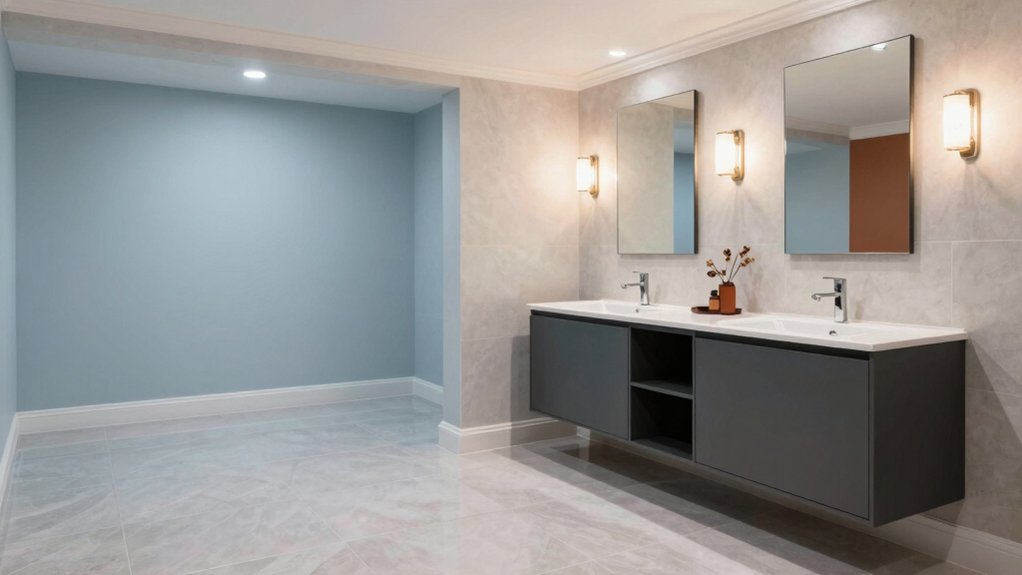
Accent touches can instantly brighten a dim basement without overhauling the layout. You’ll want practical, visible results you can trust. Start with wall murals that reflect light or add a subtle sheen; choose designs that read as airy rather than heavy, so the space feels lifted instead of crowded.
Pair these with accent furniture in light or mid-toned woods, streamlined silhouettes, and legs that showcase floor depth. Keep contrast purposeful: a brighter rug or throw against darker walls creates depth without breaking harmony.
Use mirrors strategically to double light, reflecting sources you already have. Think vertical instead of sprawling: tall shelving or slim cabinets draw the eye upward.
Finally, curate a minimal gallery to sharpen focus and texture without clutter.
Frequently Asked Questions
How Does Moisture Affect Paint Longevity in a Basement?
Moisture accelerates paint deterioration: moisture causes paint peeling, especially in damp basements, while humidity affects paint durability, causing bubbles and slower drying. You should seal leaks, use mold-resistant primer, and install a dehumidifier to extend longevity.
Can Color Influence Perceived Ceiling Height in Dark Basements?
Yes, color can influence perceived ceiling height in dark basements. Lighter, cool tones create a ceiling illusion, while slightly darker walls enhance depth; your color perception improves with strategic contrast and consistent, reflective finishes that brighten the space.
Do Ultra-Dark Colors Work in Small, Windowless Spaces?
Ultra-dark colors can work, but they shrink small, windowless rooms. If you insist, choose dark hues on one feature wall, use bright accents, and maximize lighting. This creates visual expansion while avoiding oppressive, cave-like vibes.
Which Finishes Resistant to Mildew Are Best for Basements?
You should choose mildew resistant finishes for basements, like epoxy paints or ceramic-coated primers, and pair them with washable basement wall treatments. These options resist moisture, simplify cleaning, and keep surfaces looking fresh in damp, windowless spaces.
Are There Barrier Paints for Water-Prone Basement Walls?
Yes, there are barrier options—waterproof coatings and mold resistant paints—that seal walls against moisture. You’ll apply them carefully, and you’ll notice coincidence: dry, bright walls emerge as you choose the right waterproof coatings and mold resistant paints.