
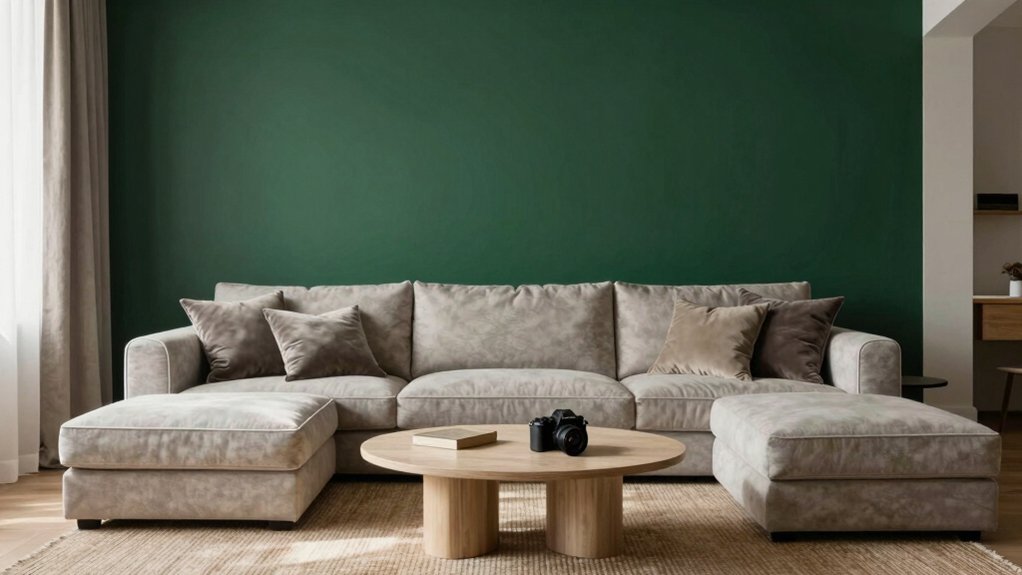
You’ll find 2026 nudges you toward calming neutrals as your steady base, with warm taupe and cream grounding every room, while bold accent walls in smoky blues or terracotta offer a focused punch you can refresh without a full overhaul. The balance creates rooms that feel both timeless and adaptable, inviting texture and subtle plant-inspired hues to deepen the mood. If you want a space that shifts with you, there’s a practical path to explore next.
Calming Neutrals as the Foundation for Living Rooms
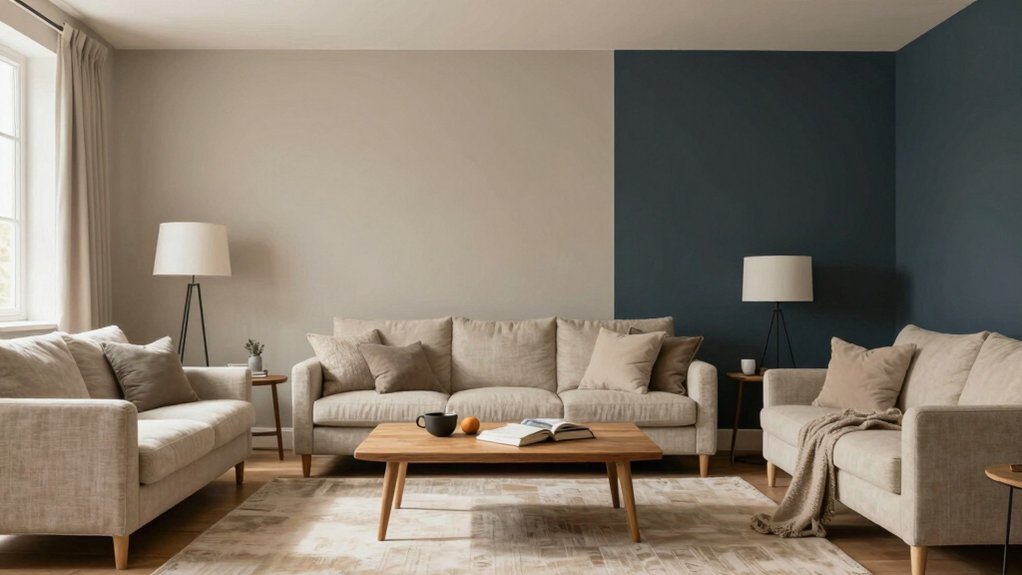
Calming neutrals form the foundation of a living room because they create an adaptable backdrop for any style. You feel the space breathe when you choose soft, balanced tones that don’t shout. This isn’t about bland sameness; it’s about precision in mood and light.
Color psychology guides you to lean into hues that soothe, improve perception of space, and invite conversation. With calming neutrals, you gain flexibility to switch accents without repainting, preserving coherence.
Furniture coordination matters: select pieces that respect proportion, texture, and silhouette, so every seat feels intentional. A cohesive palette clarifies focal points and flow, letting art, textiles, and lighting lead without clashing.
Your room becomes adaptable, timeless, and thoughtfully composed.
Soothing Creams and Warm Taupes: The Core Palette
Soothing creams and warm taupes form the heart of the core palette, delivering warmth without overpowering. You’ll notice their versatility in living rooms where natural light fluctuates; they adapt, neither shouting nor fading.
In artificial lighting, these tones smooth out contrasts, preserving cohesion across spaces. You’ll pair them with simple furniture finishes—matte wood, brushed metal, or satin laminates—so textures read clearly rather than competing.
The nuance lies in undertones: buttery creams lean forward in daylight, taupes recede near dusk, yet both stay complementary to bold accents you might later introduce. This core remains calm, not clinical, inviting quiet conversations and easy layering.
Choose creams for walls and taupes for cabinetry or upholstery to achieve a timeless, balanced backdrop.
Desaturated Greens and Plant-Inspired Hues for Depth
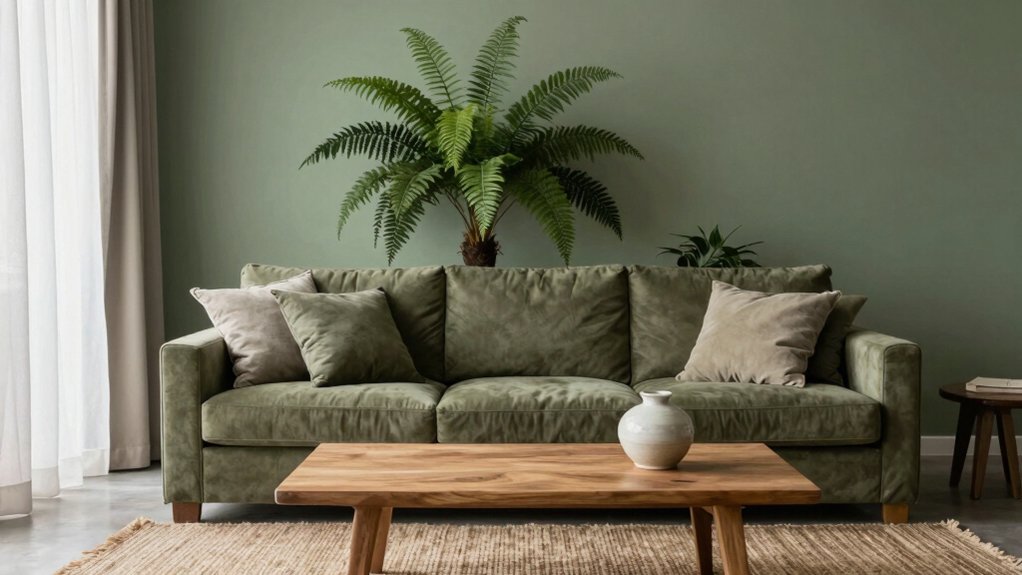
Even as creams and taupes keep the backdrop quiet, desaturated greens and plant-inspired hues insert depth without shouting. You’ll notice how softened leafy tones create a sense of airiness while anchoring furniture with quiet confidence.
Desaturated greens behave like architectural neutrals, revealing texture in fabrics, wood, and woven screens without dominating the room. Pair muted jade accents with natural materials to emphasize organic continuity, not novelty.
Botanical accents, from fern silhouettes to pressed-leaf textiles, feel deliberate rather than decorative, guiding your eye through space with subtle momentum. When you introduce these hues, avoid high-contrast clashes; aim for tonal harmony that broadens perceived space.
The result: a refined, contemplative living area that remains versatile, layered, and visually calm.
Bold Accent Walls: Smoky Blues and Terracotta Statements
Bold accent walls can redefine a living room, turning a quiet backdrop into a deliberate statement without overpowering the space. You’ll see smoky blues grounding the room with chromatic contrast, while terracotta adds warmth and a tactile surprise. The effect isn’t about shouting color; it’s about confident placement and scale.
Choose a dominant wall to anchor seating or a focal niche, letting the remaining surfaces read as quiet teammates. In smaller rooms, a smoky blue can feel expansive when paired with lighter trim; in larger spaces, terracotta creates inviting intimacy without dominance.
Balance is key: align furniture profiles and metallic accents to harmonize the bold hue. The result delivers visual impact that remains sophisticated, purposeful, and adaptable to evolving decor needs.
Layering, Texture, and Flexibility: Switching Vibes With Ease
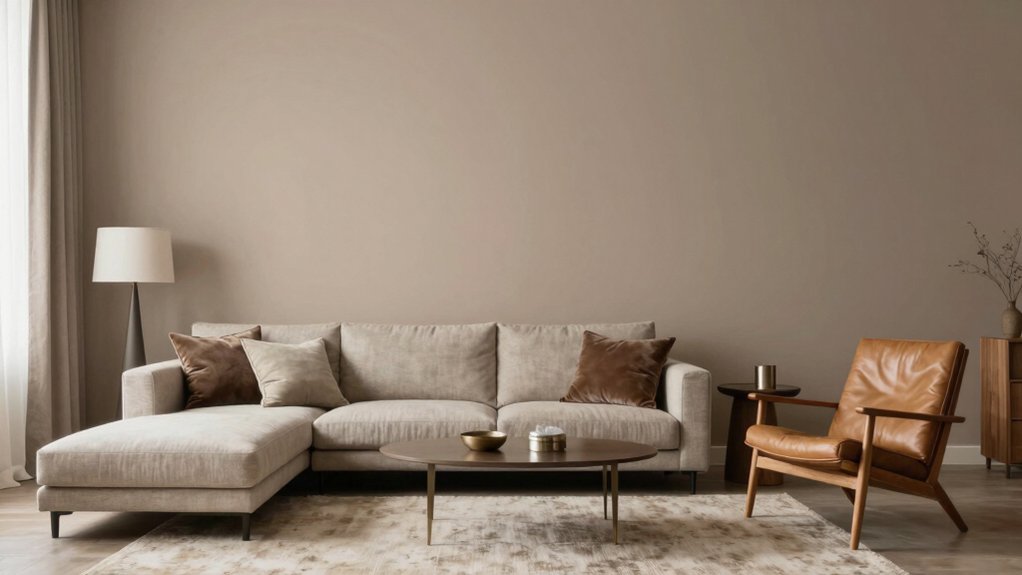
Layering, texture, and flexibility aren’t just aesthetic tricks; they’re how you keep a living room dynamic without reconfiguring the whole design. You mix neutral bases with tactile surfaces, then swap cushions, throws, and rugs to shift mood without overhauling walls.
Texture adds subtle depth: a woven rug, velvet sofa, or linen drapes catch light differently as you reframe the space. Layered lighting—ambient, task, and accent—lets you dial atmosphere on demand.
Flexibility means modular furniture styles that rearrange easily, plus decorative accessories that tell new stories with minimal effort. Be intentional: choose pieces that adapt to both calming neutrals and louder accents.
This approach preserves cohesion while enabling quick, affordable mood shifts.