
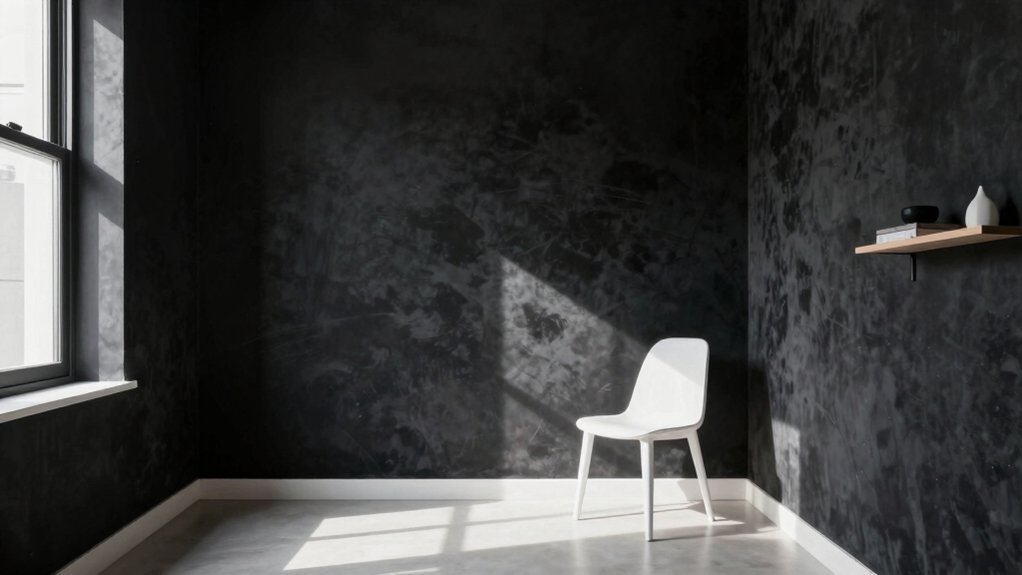
Dark walls in a small room can pull you in—cozy, intimate, and visually expansive with the right lighting. But they can also shrink the space if you skimp on brightness or contrast. You’ll want to weigh depth against glare, tone against function, and the risk of smudges or moodiness. The next steps show you how to balance these factors so the room feels purposeful rather than overpowering. Let’s explore where the trade-offs lie and how to tip them in your favor.
The Dramatic Impact of Dark Walls in Small Spaces
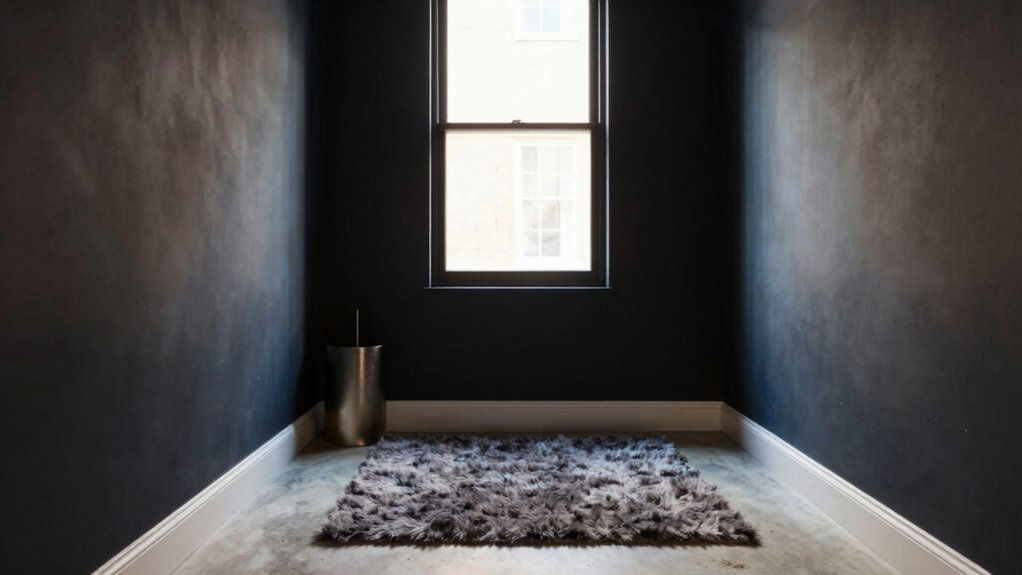
Dark walls can dramatically alter a small room, creating a cozy, intimate feel rather than a cramped one. You’ll notice that color psychology guides how you perceive space: deep tones absorb light, making walls recede visually and walls feel closer. Yet, you gain a sense of enclosure that can heighten comfort. Choose carefully, because saturation influences mood and functionality.
Historical influences show that dark walls evoke elegance in traditional schemes and drama in modern palettes, so you’ll want to align tone with purpose. Use contrast strategically—light trim, accented furniture, or a bright focal art piece prevents monotony and preserves clarity.
Practical application matters: test swatches under different lighting, consider matte finishes to minimize glare, and document outcomes to refine your small-room strategy with confidence.
Visual Tricks: How Dark Hues Create Height and Depth
Dark hues pull the eye inward, creating a sense of depth as lighter elements stand out against the backdrop.
You’ll notice the contrast between dark walls and brighter ceilings or trim can visually elongate the room.
This same tactic can also trick the eye to perceive greater height by stacking vertical highlights and clean lines.
Depth Through Contrast
In small rooms, using dark walls can trick the eye into perceiving more depth by creating strong contrast with lighter trim, flooring, or furniture. Depth through contrast relies on precise placement of tones, not sheer darkness.
You’ll heighten perception by pairing matte or satin paint finishing with sharp trim lines, which prevents flattening glare and keeps edges crisp. Color psychology guides your choices: cool velvets recede, while warm inks advance, shaping how space feels at a glance.
Carefully calibrate contrast levels so focal pieces read clearly without overpowering the room. Use selective lighting to amplify depth without creating harsh hotspots. Maintain cohesion by repeating one or two accent colors in textiles and hardware.
This disciplined approach delivers perceptual height while preserving livable balance.
Perceived Ceiling Height
A dark ceiling can visually raise the ceiling line and play with depth by pairing it with lighter walls and trim. This ceiling illusion tricks the eye, making the room feel taller rather than narrower. You’ll notice the boundary line recedes, creating a sense of extended space and refined verticality.
For effective space perception, keep the walls a soft contrast to the dark plane—avoid stark white gradients that cancel the effect. Use consistent lighting to prevent flatness; diffuse, even illumination preserves the perceived height.
Reserve dark ceilings for rooms with ample light sources and modest square footage to maximize impact without shrinking the field of view. In practice, test samples at scale, observe from multiple angles, and prioritize subtle shifts over dramatic contrasts to maintain balance.
Light and Contrast: Balancing Dark Walls With Accents
To balance dark walls, use light and contrast strategically: add accents that pop without overwhelming the room. You select accents that feel intentional, not decorative clutter, and place them where they guide the eye.
Begin with neutral foundations—bright textiles, pale ceilings, and reflective finishes—to create color harmony across surfaces.
Accent accessories should tell a cohesive story, repeating a small palette to avoid chaos. Pair a cool or warm undertone in accessories with the wall color for subtle depth, not discord.
Use metallics or glass sparingly to catch light without introducing glare.
Maintain negative space so dark walls breathe. Test a few pieces at eye level, then step back to confirm balance remains calm and purposeful.
Lighting Strategies to Maximize Brightness
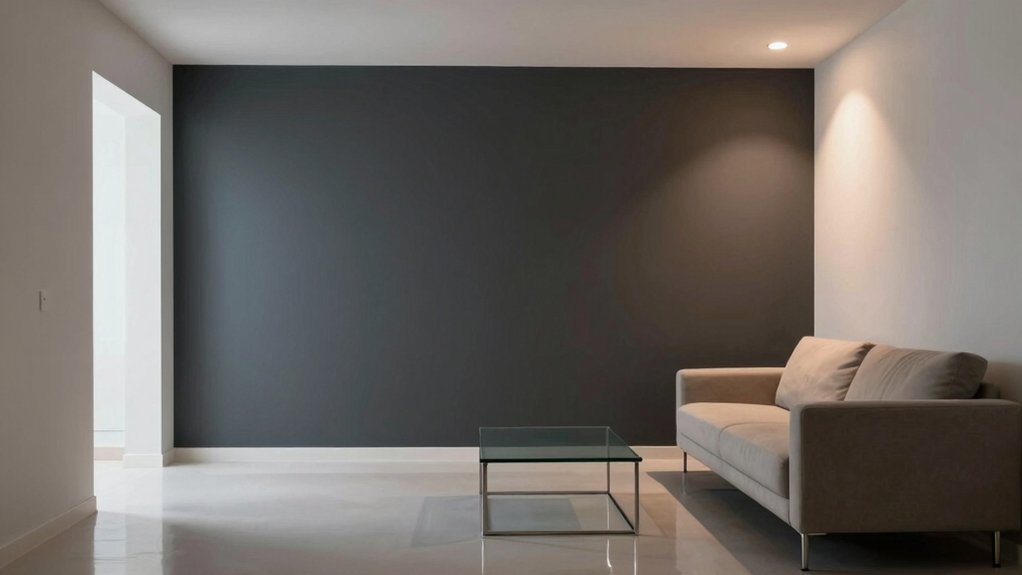
So, maximize brightness starts with smart lighting layout: place main light source overhead for even coverage. Add layered lighting with task and ambient options, and choose fixtures that reflect or diffuse light to bounce off walls.
In small rooms with dark walls, maximize natural light by positioning mirrors and light-colored surfaces opposite windows to bounce daylight deeper.
Pair natural light with purposeful artificial lighting: use a bright ceiling fixture for general use, task lights at desks or countertops, and wall sconces to reduce harsh shadows.
Select fixtures with high lumen output and good color rendering to keep colors true. Opt for cool white tones to sharpen perceived space, while dimmers let you adjust intensity without sacrificing brightness.
Avoid cluttered fixtures that absorb rather than reflect illumination.
Practical Downsides: Maintenance and Smudges
Smudges show up more on dark walls, so you’ll want a plan for visibility and touch-ups.
Consider how often you clean and how the finish hides or reveals fingerprints, smudges, and dust. Start by balancing Smudge Visibility Tuning with a practical Cleaning Frequency Impact to keep rooms looking sharp.
Smudge Visibility Tuning
Smudge visibility in dark walls isn’t just a cosmetic concern; it directly affects upkeep and the room’s perceived cleanliness. You tune this by selecting finishes that resist fingerprints and by deploying deliberate maintenance habits.
Start with smudge concealment: choose a semi-gloss or satin sheen to ease wipeability without glaring reflections, and apply with a steady hand to minimize smear risk. When marks appear, adopt targeted touch-up techniques rather than repainting whole sections; keep a small kit of matching touch-up paint, a fine brush, and a microfiber cloth.
Use a gentle cleaner, then dry thoroughly before re-sealing any edge. Establish a simple routine: quick wipe-downs after high-traffic events and periodic spot fixes to maintain a consistent depth and road-map of color.
Cleaning Frequency Impact
Cleaning frequency directly shapes how dark walls stay looking sharp and how much maintenance they require. With high-contrast colors, smudges show fast, so you’ll schedule regular wipe-downs rather than sporadic cleanups. A consistent routine preserves depth, especially on wall texture that catches fingerprints or dust.
Choose a practical cadence—weekly touchups for busy spaces, or biweekly if you keep a tidy household. When you clean, use a soft microfiber cloth and the right balance of water and a mild cleaner to avoid dulling the paint finish. Avoid abrasive scrubbing that can lift color or create micro-scratches.
Documenting your routine helps you compare results between paint finishes and adjust frequency for optimum clarity and long-term vibrancy.
Room Function and Mood: When Deep Colors Work Best
When choosing deep wall colors, you’ll want to contemplate how the room will function and how mood will shift with lighting.
In small spaces, deep tones can anchor a room’s purpose, making a cooking nook feel intimate or a study feel focused. Consider color psychology: darker hues can concentrate attention, reduce visual distraction, and heighten perceived warmth when paired with warm light.
But the mood hinges on lighting coordination—cool LEDs create crisp contrast, while amber bulbs soften atmosphere and prevent dungeon-like effects.
Use deep accents to define zones without overwhelming. Prioritize durable, matte finishes to minimize glare.
Guarantee window light is balanced with artificial sources so color integrity remains intact across tasks. Test swatches at different times of day to confirm the intended function and mood.
Choosing the Right Deep Shade: A Quick Guide
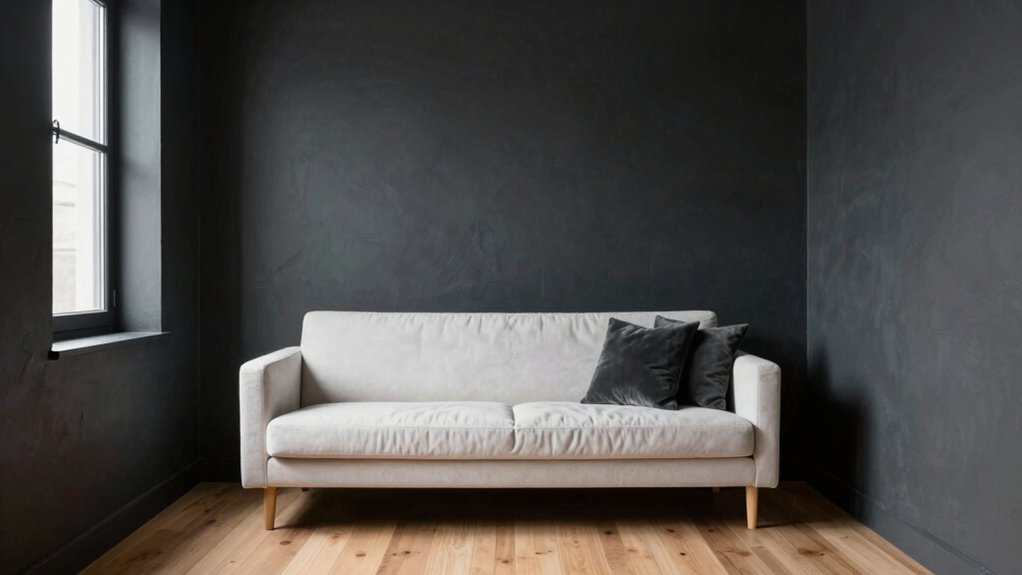
Choosing the right deep shade starts with a quick assessment of the room’s light and function. You’ll want to map how natural and artificial light shifts color through the day, and how the space is used.
Narrow your choices by test-painting swatches on all walls, not just the main one, and compare at different times. For color psychology, pick tones that support the intended mood without overwhelming the space: warmer neutrals feel cozier, cooler hues read more formal.
Consider paint finish choices—matte hides flaws and softens glare, satin offers subtle sheen and durability, and semi-gloss excels in high-traffic areas.
Finally, guarantee contrast with trim and adjacent rooms to preserve depth and balance, avoiding overly heavy saturation that narrows perceived dimensions.
Frequently Asked Questions
Can Dark Walls Affect Resale Value in Small Homes?
Dark walls can affect resale value in small homes, but you can mitigate it. You’ll boost appeal with strategic wall maintenance and lighting effects, ensuring balanced tones, crisp accents, and versatile spaces that feel brighter and more welcoming.
Do Pets Show Scratches More on Dark Walls?
Pet scratches show on dark walls, but wall visibility depends on finish and lighting. You’ll notice shallow dents and marks more readily, so choose durable, wipeable finishes and careful sealant to minimize visibility and ease touchups.
Are There Dark Colors That Feel Less Claustrophobic?
Yes. A deep blue, paired with bright lighting options, feels less claustrophobic. For example, a case study shows lighter ceiling contrast with the blue walls helping perception. You’ll gain room depth through thoughtful color contrast and strategic lighting options.
How Do Window Coverings Influence Mood With Dark Walls?
Window coverings influence mood by controlling lighting effects and privacy considerations; you’ll tune brightness, reduce glare, and craft intimacy, so you feel calmer or more focused, depending on fabric, color, and layering you choose.
Can Dark Walls Improve Acoustics in Small Rooms?
Yes, dark walls can modestly improve acoustics in small rooms by enhancing sound absorption; however, gains depend on materials and furnishings. You’ll also notice altered visual perception, with depth and reduced glare, influencing overall ambiance and perceived space.
Conclusion
You’ll see the room swallow light, then breathe it back with a velvet sigh. Dark walls aren’t a trap; they’re a stage for your best features—art, texture, furniture—punctuated by bright accents and smart lighting. When you balance depth with contrast, the space becomes a quiet, magnetic backdrop, not a cave. Choose shade, plan edges, and keep smudges at bay. With measured choices, small rooms glow with quiet drama and lasting clarity.