
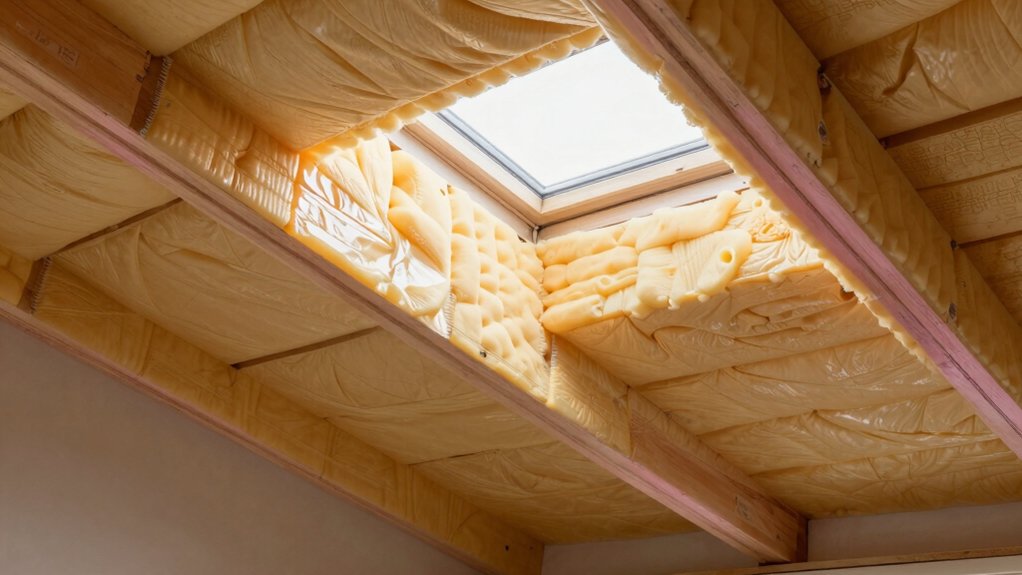
Like a shield that tightens kitchen seams, spray foam attic insulation stops air leaks you didn’t know you had. You’ll weigh its top benefits—air sealing, high R-values, energy savings—against drawbacks like cost and the need for professional installation. The decision hinges on your attic’s conditions, your budget, and how you value long-term performance. Ready to weigh the trade-offs and decide what fits your home best?
What Is Spray Foam Attic Insulation?
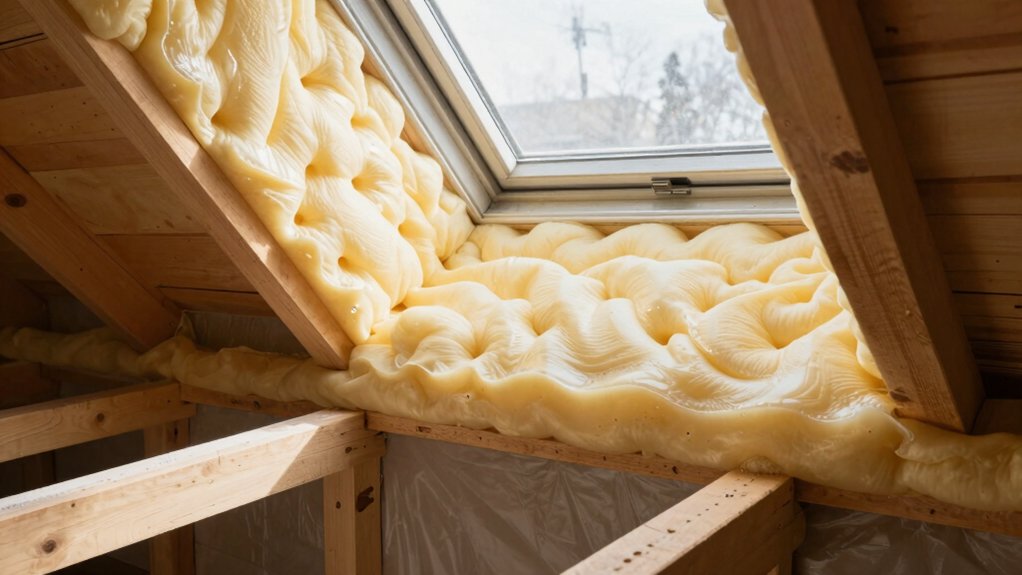
Spray foam attic insulation is a type of insulation that expands as it’s sprayed into attic cavities, creating an air-tight layer that slows heat flow. You’ll find it forms a seamless barrier, reducing drafts and improving conditioned-space efficiency.
It’s installed as two liquid components that react and cure on-site, filling cracks and voids. You’ll benefit from high R-values per inch, but you’ll also consider cost and workmanship quality.
Historical insulation methods relied on bulk fiber, loose-fill, or rigid boards with gaps. Spray foam changes that approach by sealing leaks at the source.
Environmental impact factors include materials’ lifecycle, off-gassing potential, and disposal. You’ll want professional guidance on proper ventilation and cure times to balance performance with indoor air quality and long-term energy savings.
Open-Cell vs. Closed-Cell: Types and Differences
Open-cell and closed-cell spray foams are the two main types you’ll choose from, and they differ in structure, performance, and适 use. Open-cell foam is softer, lighter, and typically less expensive; it expands to fill cavities and improves sound dampening.
Closed-cell foam is denser, stronger, and acts as a rigid barrier, offering higher R-values per inch. You’ll see trade-offs between cost, space, and moisture handling: open-cell absorbs some moisture, while closed-cell resists water intrusion.
Fire resistance varies by formulation, so check specific product ratings and local codes. Environmental impact matters too: consider blowing agents, odor, and lifecycle effects.
In most attic projects, balance budget, vapor control, and comfort goals to pick the right type for your climate and building needs.
Energy Efficiency and Air Sealing Benefits
Air sealing with spray foam reduces drafts and stops warm or cool air from leaking through attic gaps, which helps you stay comfortable year-round.
You’ll see energy savings as fewer conditioned air losses translate to lower utility bills and more predictable heating and cooling costs.
This change in air flow also strengthens overall insulation performance, making your attic more airtight and energy-efficient.
Air Sealing Impact
Good air sealing can dramatically boost attic insulation performance by reducing heat loss and preventing drafts. When you seal gaps, the foam system works more effectively and you save on energy bills.
You’ll notice fewer air leakage paths, so conditioned air stays inside and hot or cold spots diminish. Proper sealing also stabilizes insulation performance, since foam expands to fill cavities, gaps, and seams rather than settling away from edges.
In practice, target joints around plumbing, electrical penetrations, attic hatches, and rim boards; don’t overlook attic access doors. A tight shell minimizes moisture movement and helps maintain consistent temperatures.
Combine sealing with correct spray foam density and thickness to maximize overall efficiency and protect against drafts without adding unnecessary material.
Energy Savings Gains
Spray foam’s energy savings come from how effectively it stops heat flow and blocks drafts, especially once you’ve sealed gaps around penetrations and access points. When you install it, you reduce air leakage, which directly improves thermal performance by maintaining steady indoor temperatures with less furnace or AC work.
You’ll notice fewer cold spots and reduced condensation risk, because the barrier remains continuous over irregular framing. The upfront cost pays off through monthly savings and a faster return on investment.
In addition, the material’s closed-cell density helps resist air infiltration in attic joints and rooflines. Consider environmental impact as you evaluate options, including foam formulation choices and installation practices that limit off-gassing and streamline long-term performance.
Moisture Control and Vapor Considerations
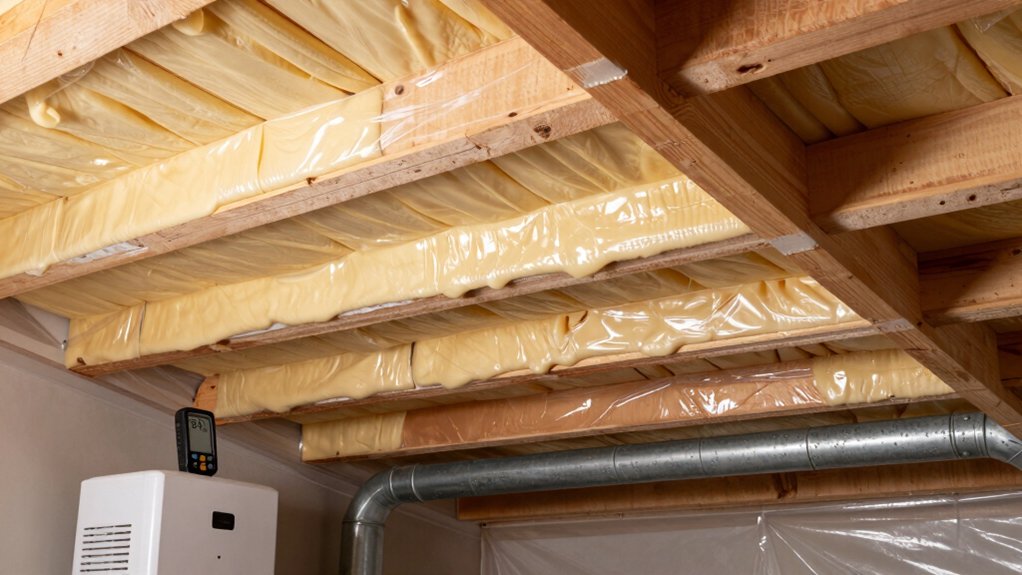
You’ll want to understand how moisture diffusion works with spray foam and where vapor moves through attic assemblies.
Consider how vapor retarders can influence where moisture accumulates and how that interacts with attic ventilation.
Stay practical: identify points of potential condensation and choose details that keep the space dry and stable.
Moisture Diffusion Dynamics
Moisture diffusion in attic spaces matters because vapor moves from warm indoor air into cooler roof assemblies, and uncontrolled movement can lead to condensation, mold, and wood rot. You’ll influence this process by choosing spray foam with appropriate density, installation quality, and air sealing.
Vapor diffusion is driven by temperature and humidity gradients, so expect moisture migration from heated living areas toward cooler roof sheathing, especially during winter or when humidity spikes.
You should verify that insulation meets code- and climate-specific standards, and that any gaps or cracks are sealed to minimize unintended air leakage.
Vapor Retarders Impact
Vapor retarders play a key role in controlling moisture movement within attic assemblies, especially after you’ve chosen a spray foam system and addressed air sealing. A properly installed vapor barrier reduces drying potential across seasonal swings, helping you manage moisture where you want it most.
However, you must align barrier placement with climate and ventilation goals to avoid trapping latent humidity. In mixed climates, selective use or staged layering can balance moisture control with necessary drying paths. Choose materials that resist permeance at expected temperatures and humidity levels, and ensure seals are continuous at joints and penetrations.
Avoid creating hidden gaps by inspecting edges, seams, and fasteners. Regularly assess attic moisture trends to confirm the vapor retarder’s effectiveness and prevent condensation issues.
Costs, Longevity, and Maintenance
Costs, longevity, and maintenance are all about value and reliability: initial pricing varies by material and square footage, but you’ll often see energy savings that offset the upfront expense over a few years. You’ll evaluate cost comparison by comparing installed costs against expected insulation performance and HVAC savings.
Spray foam’s longevity hinges on proper installation, product choice, and climate; expect a long life with minimal degradation if gaps aren’t present.
Maintenance requirements are generally low: inspect for cracks or moisture intrusion after heavy seasons and seal promptly if needed. Plan for periodic professional checks to verify adhesion and insulation thickness.
Budget for occasional re-foaming in the attic where access or damage occurs.
Health, Safety, and Installation Concerns
Spray foam insulation brings strong energy performance, but you must address health, safety, and installation concerns to avoid risks. You’ll want proper ventilation during any application and curing. Follow manufacturer guidelines for protective gear, and keep doors closed to limit exposure times.
Allergy concerns may arise for sensitive individuals during and after installation, so plan work when occupants can avoid the area. Ensure correct mix and spacing to reduce off-gassing and odor, and verify that materials meet local code requirements before purchase.
Inspect finished areas for gaps, shrinkage, or improper adhesion, which can create moisture traps or drafts. Document warranty terms and air-sealing performance, and schedule a professional inspection if you notice persistent smells or irritation.
Chemical exposure risks are mitigated with proper handling, ventilation, and curing practices.
Professional Installation: What to Expect
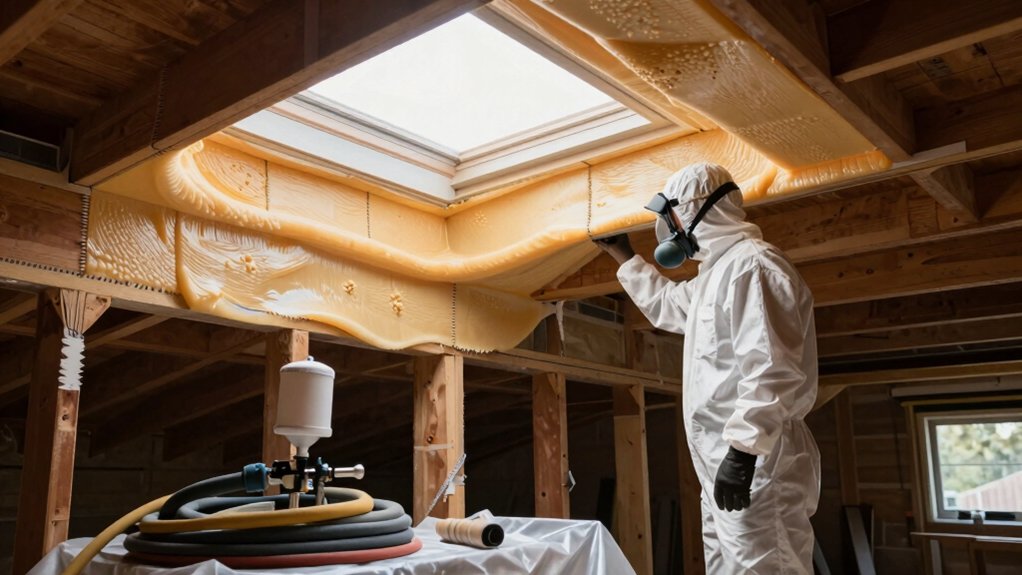
During professional installation, you’ll see a staged, supervised process designed to maximize performance while keeping occupants safe. The installer arrives with trained technicians who follow a defined sequence: surface prep, masking, and ventilation setup, then controlled application.
You’ll hear about the application process steps, including material mixing, delivery, and curing times, all calibrated to your attic’s layout. Expect temporary off-gassing and temporary access restrictions during cure, with no lingering odors once fully cured.
Safety precautions are enforced through PPE, containment, and proper ventilation. The crew checks gaps, ensures vapor barriers remain intact, and documents material temperatures and pressures.
Clear communication helps you understand what’s happening, when to vacate, and how long the space stays restricted, minimizing disruption while guaranteeing maximum insulation performance.
Practical Tips for Choosing and Maintaining Spray Foam
To choose and maintain spray foam effectively, start by evaluating your goals, attic conditions, and budget, then compare product types, installers’ certifications, and warranty terms to find a fit.
Begin with a clear plan: assess code requirements, ventilation needs, and potential moisture risks.
When researching, prioritize reputable brands and documented performance data, not flashy claims.
DIY installation is generally discouraged due to specialized equipment and safety concerns; if you pursue it, follow manufacturer instructions to the letter and wear proper PPE.
Schedule expert inspections for air leaks and cure quality, and request a third-party blower test if available.
Consider environmental impact by selecting low-GWP foams and responsible disposal practices.
Maintain records of repairs, re-foams, and warranty, and periodically re-evaluate energy savings and comfort.
Frequently Asked Questions
How Does Spray Foam Affect Roof Venting and Attic HVAC Space?
Spray foam can reduce roof venting efficiency if installed thickly, limiting natural ventilation and impacting attic HVAC space. You may see decreased airflow, so prioritize proper venting design and consider dedicated intake/exhaust paths to maintain ventilation impact.
Can Spray Foam Be Installed in Historic or Small Attic Spaces Safely?
Yes, you can; consider Historic preservation guidelines and assess small attic spaces carefully. You’ll need specialized installers, vapor barriers, and moisture management to protect historic materials while ensuring insulation performance without compromising structure or ventilation.
Are There Odor or Off-Gas Concerns After Installation?
Odor concerns and off gas issues can appear temporarily after installation, but they typically dissipate as curing completes. You should ventilate, follow manufacturer guidelines, and wait for the recommended cure period before occupying the attic.
How Does Spray Foam Handle Attic Dust and Allergen Control?
Spray foam helps limit airborne allergens by sealing leaks, reducing dust intrusion, and blocking airflow paths; for dust mitigation, maintain ventilation and sealing around penetrations, and pair with regular cleaning to minimize settled dust and allergen buildup.
What Maintenance Triggers Require Reapplication or Remediation?
You notice moisture damage signs and pest intrusion; you should treat compromised areas. When degrades, inspect for gaps, moisture, or spray foam cracks, repair promptly, reseal, and recoat as needed to maintain performance and prevent further deterioration.
Conclusion
You’ll notice how, by coincidence, the attic feels just right: a quiet, steady warmth when it’s cold outside and a cool calm inside on hot days. Spray foam seals gaps you didn’t know existed, turning efficiency into habit. It’s not magic, but with proper install and regular checks, you’ll see lower bills and fewer drafts. So plan carefully, choose seasoned pros, and maintain the system—your space rewards your diligence with lasting comfort.