
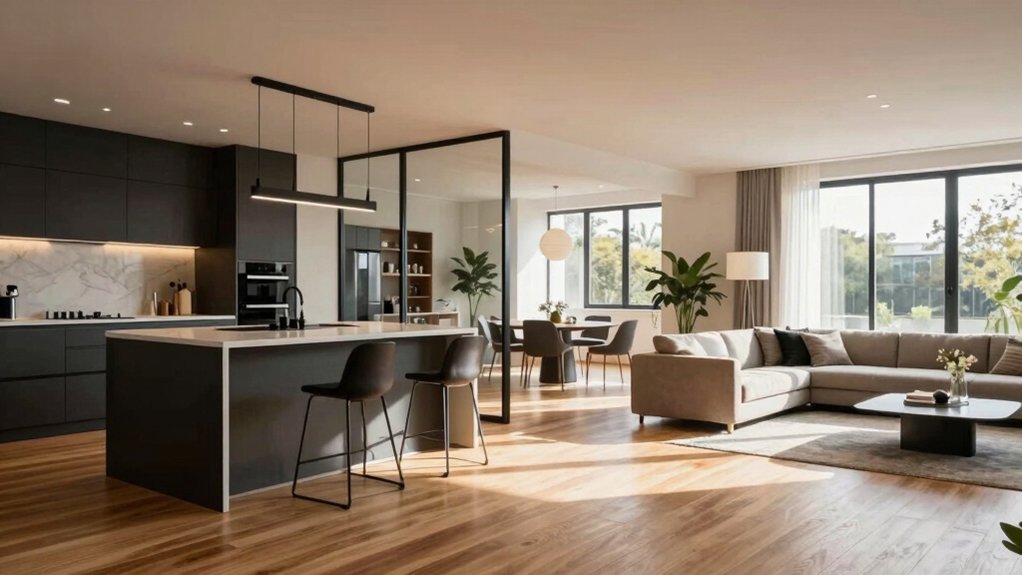
Open-plan spaces feel liberating for daily life, inviting natural light and social flow, but they can blur boundaries and demand sharper acoustics and storage solutions. Zoned layouts offer privacy and focus, yet risk feeling closed off or disjointed. The right move often lies in how you balance openness with subtle delineation, creating a adaptable rhythm that supports both connection and quiet. Curious how to tune that balance to your routines and space constraints, you’ll want to weigh trade-offs as you plan.
Understanding Open-Plan Living: Benefits and Drawbacks
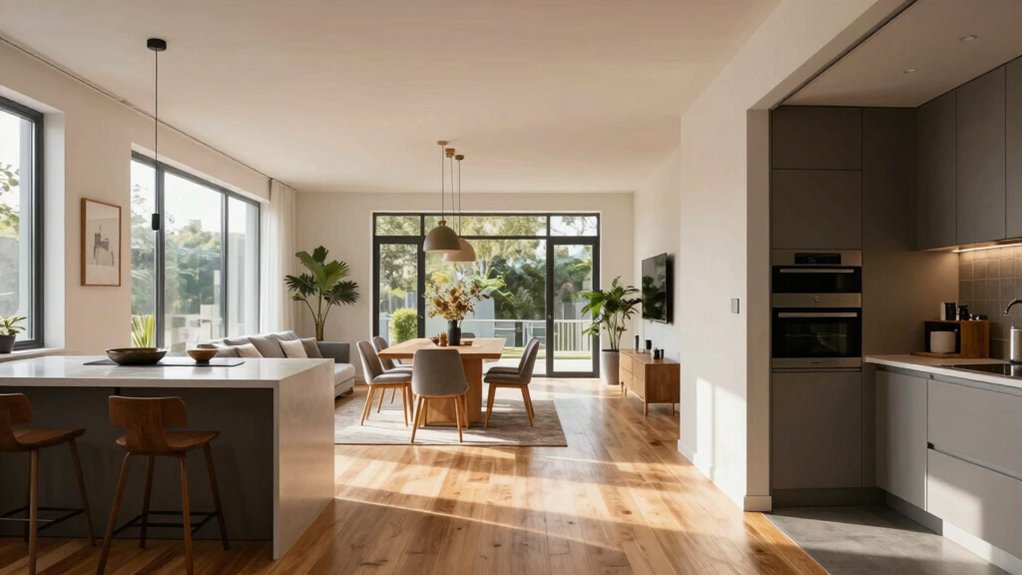
Open-plan living centers rooms around flow and light, but it isn’t a one-size-fits-all setup. You gain spacious sightlines and social ease, yet you trade defined boundaries for acoustic and activity spillover. When you examine it, you’ll notice how furniture arrangement shapes perception: lines, corners, and sight paths that either calm or chaos the day.
Light feels amplified, but glare and heat can intensify without zoning or shading. The upside is seamless interaction—family meals, hosting, and multitasking in shared zones—while the drawback is potential privacy loss and noise reach.
For decor cohesion, unify finishes and palettes across zones, so distinct activities still read as a single story. If you align function with flow, open-plan can deliver clarity, connection, and purposeful living.
The Case for Zoned Spaces: Privacy, Noise Control, and Focus
You’ll see how privacy isn’t just a luxury but a productivity lever when spaces are zoned for different needs. By defining quiet zones, work zones, and social zones, you reduce interruptions and keep focus intact.
This is about designing for predictable rhythms where noise and privacy align with how you live.
Privacy Amid Noise
Noise never respects walls, so creating zones that safeguard privacy and sharpen focus isn’t a design necessity. It’s a practical response to busy households and open-plan rhythms. You’ll notice that privacy amid noise hinges on deliberate zoning, not silence alone; you’re managing perception as much as sound.
Begin with core rooms—bedrooms, home offices, and study nooks—placed away from high-traffic zones and equipped with layered barriers. Implement sound-damping materials, door seals, and floating floors where possible.
Explore sound-absorbing panels, textiles, and ceiling treatments to soften echoes without visually shrinking spaces. Prioritize visual privacy through strategic layouts and partitions that don’t trap light or flux.
Soundproofing options matter, but so does how you curate sightlines, ensuring calm zones remain intimate even in shared environments.
Focus-Driven Zoning
Zoned spaces aren’t a luxury; they’re a method for preserving focus within busy homes. You’ll design zones that cue attention and reduce cross-talk, so you can work, study, or create without constant distraction.
Start with clear perimeters: consider walls, screens, or bookcases that visually separate tasks without shutting out light. Use furniture placement to reinforce function—position desks away from entry doors, and cluster private work zones in quieter corners.
Color schemes matter, too; understated tones for work areas suppress glare while warmer accents in living zones invite collaboration.
Implement sound control with layered materials—soft textiles, tuned shelving, and appropriate rug thickness—to dampen interruptions.
Finally, align circulation with intention: easy, intuitive paths minimize interruptions and preserve focus across the day.
Designing for Flow: How to Combine Open Plan With Subtle Boundaries
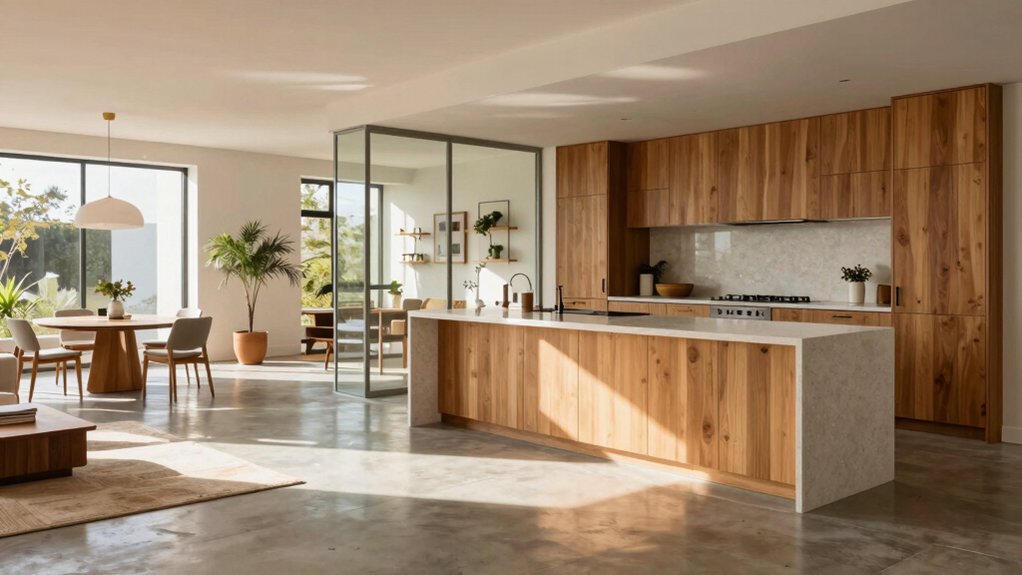
Designing for flow means letting spaces breathe while keeping moments of connection intact. You blend openness with gentle boundaries, guiding movement through sightlines, textures, and subtle zoning cues.
Think in layers: a shared surface, a softly defined niche, a color shift that signals progression without closing off dialogue between zones. You’ll rely on proportion and furniture placement to create breathability while preserving function.
Use decorative accents to stitch rooms together—repetitive motifs, materials, or metallic highlights that echo across areas. Color schemes matter: keep a cohesive palette, then introduce small contrasts to mark distinct tasks without jarring the eye.
Avoid abrupt separations; instead, orchestrate continuity with varied furniture heights, rug scales, and built-ins. The result feels deliberate, fluid, and comfortable for everyday life.
Practical Considerations: Lighting, Acoustics, and Storage
Lighting layers define mood and function at once, so you’ll balance ambient, task, and accent light to shape rooms you can live in.
Sound and storage interplay matter too, since acoustic control and clever built-ins reduce clutter while improving quiet and flow.
Let’s start by mapping where light, sound, and shelves meet your daily routines and design goals.
Lighting Layers
How do you layer light to transform a space? You balance ambient glow, task lighting, and accent cues to guide mood and function without glare.
In open plans, set a base with wide, even illumination that softens angles and reduces shadows. Add task lighting at work zones—kitchens, desks, vanities—where concrete activities happen, and choose dimmable options to modulate intensity.
Use accents to highlight architecture or art, creating depth and focal points. Consider color temperature: warmer tones for living areas, cooler for task zones, and guarantee a seamless shift between zones to avoid visual jarring.
Finally, design with control in mind: layered layers, zoning, and smart controls keep everything efficient, adaptable, and comfortably ambient.
Sound and Storage
Sound and storage aren’t afterthoughts; they’re the backbone of everyday comfort in modern spaces. You’ll design with intention, balancing acoustic clarity and practical capacity as you reframe open areas or define zones.
Start by mapping sound paths: identify where noise travels and choose fixes that fit your plan, from soft materials to strategic room placement. Explore soundproofing options that align with your aesthetics and budget, prioritizing walls, floors, and ceilings that dampen reflections without trapping you inside.
For storage, think modular and accessible—built-ins, tall cabinetry, and under-seat options that optimize floor space. Pair storage solutions with display intent so daily items stay visible yet controlled.
This dual focus protects serenity, enhances workflow, and sustains a flexible, modern living environment.
Budgeting and Timeline: Making Either Approach Feasible
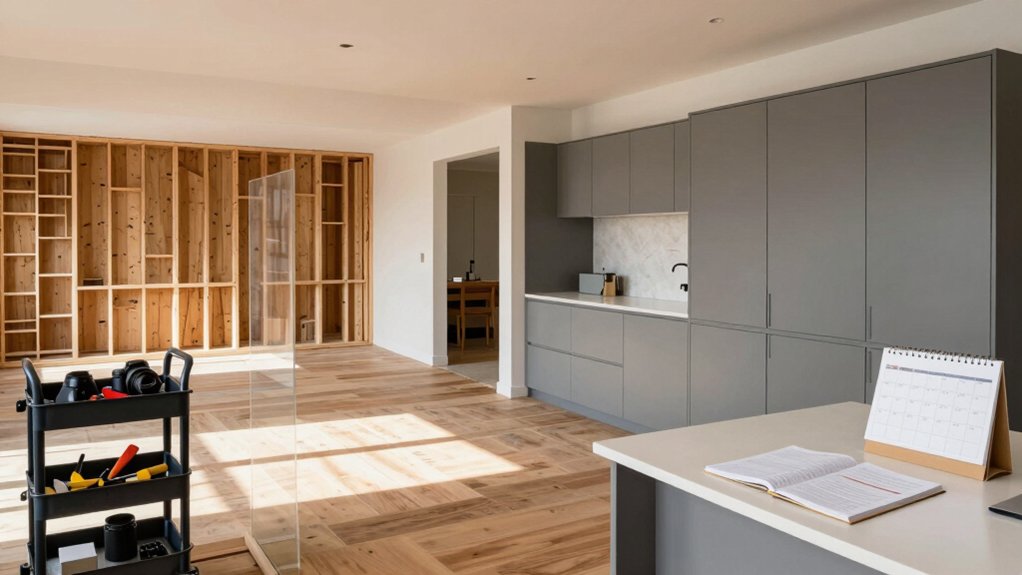
When you’re weighing renovation options, a clear budgeting plan and realistic timeline are essential to making either approach feasible. You’ll need precise cost estimation to avoid surprises, from materials to labor and permit fees. Break the project into phases, then assign fixed targets and contingency buffers to each. A transparent scope helps you control overages and keeps conversations with contractors productive.
For timeline, map critical path items—demolition, structural changes, and inspections—so you can forecast interruptions and plan around them. Use project scheduling tools or simple calendars to visualize dependencies and milestones. Track progress weekly, adjusting estimates as realities shift.
With disciplined budgeting and responsive scheduling, both open-plan and zoned layouts become viable, empowering you to choose the option that best supports daily flow and long‑term value.
Hybrid Solutions: When to Blend Open Areas With Defined Rooms
Hybrid layouts strike a balance between openness and enclosure, letting you enjoy generous sightlines while preserving intimacy for certain activities. You’ll blend zones with purpose, using open passages for flow and defined corners for focus.
The key is timing: identify which tasks demand separation and which benefit from togetherness. When you invite natural light and outdoor cues, you gain energy; when you require quiet, you create a subtle boundary.
Multi functional furniture helps you adapt—sofas that rearrange, screens that fold, surfaces that morph into workspaces or dining islands. Consider outdoor integration: a patio line that blurs indoors with weatherproof seating, plants, and lighting.
This hybrid strategy reduces redundancy, boosts usability, and sustains ambiance across daily rhythms and occasional entertaining.