
Did you know homes that undergo quick, neutral renovations can boost resale value by up to 5–10% in a tight market? You’re weighing a fast flip against long-term comfort, and the choice hinges on your goals, finances, and timing. If you’re aiming for peak resale, prioritize curb appeal and low-risk updates; if you plan to stay, prioritize durability and personal fit. The right path hinges on market cycles and your priorities—consider what happens next.
Assessing Your Goals: Quick Flip Vs Long-Term Comfort
When you’re deciding between a quick flip and long-term comfort, start by clarifying your primary goal: maximize immediate resale value or optimize daily living for years to come. Your answer sets the framework for decision-making and prioritizes outcomes you’ll measure.
If resale dominates, focus on high-ROI improvements, neutral finishes, and time-efficient investments. If long-term living matters more, emphasize durability, flexibility, and appeal to future buyers as a secondary benefit.
In either path, define success with concrete metrics: expected cap rate, hold period, and monthly carrying costs. Align your investment strategies with these targets, then map ongoing property maintenance to preserve value.
This disciplined approach reduces uncertainty and keeps you client-focused, data-driven, and aligned with your personal priorities.
Budgeting for Impactful Upgrades and Longevity
Smart budgeting choices prioritize upgrades that deliver real value and long-term durability, so you’ll get more usable life from every dollar.
Focus on longevity-built upgrades that reduce maintenance and avoid cosmetic fixes that fade quickly, backed by data on cost per year of service.
Smart Budgeting Choices
Smart budgeting for impactful upgrades and longevity starts with clear priorities and a tight cost plan. You map goals against a realistic ceiling, then allocate reserves for unseen contingencies. Prioritize renovations that drive value in your market, not just vanity projects.
Use data to forecast return on investment, especially for an investment property where rental income hinges on appeal and durability. Capex decisions should favor durable materials, energy efficiency, and simple maintenance over trend-driven features that fade fast.
Create a phased plan to stretch dollars without sacrificing quality, and document every assumption. Track actuals vs. budget weekly, adjusting scope before costs explode. Seek tenant feedback to align upgrades with demand, ensuring longevity without overinvesting in spaces that tenants rarely value.
Longevity-Built Upgrades
Longevity-built upgrades prioritize durable materials and designs that withstand wear while delivering solid returns. You’ll maximize value by choosing components with proven longevity, lower upkeep, and strong resale appeal.
Focus on high-impact, cost-per-year benefits rather than short-term fads. Prioritize luxury upgrades where durability and aesthetics meet, such as premium cabinetry, solid-surface counters, and steel or composite fixtures that resist stains and damage.
Simultaneously improve energy efficiency—LED lighting, smart thermostats, and insulation upgrades deliver ongoing savings and attract buyers or future buyers if you stay.
Budget with a long horizon: calculate replacement timelines, expected maintenance, and resale lift. You’ll reduce total ownership costs, enhance daily comfort, and position the home for sustainable appeal beyond immediate occupancy or sale.
Key Updates That Boost Curb Appeal and Resale Value
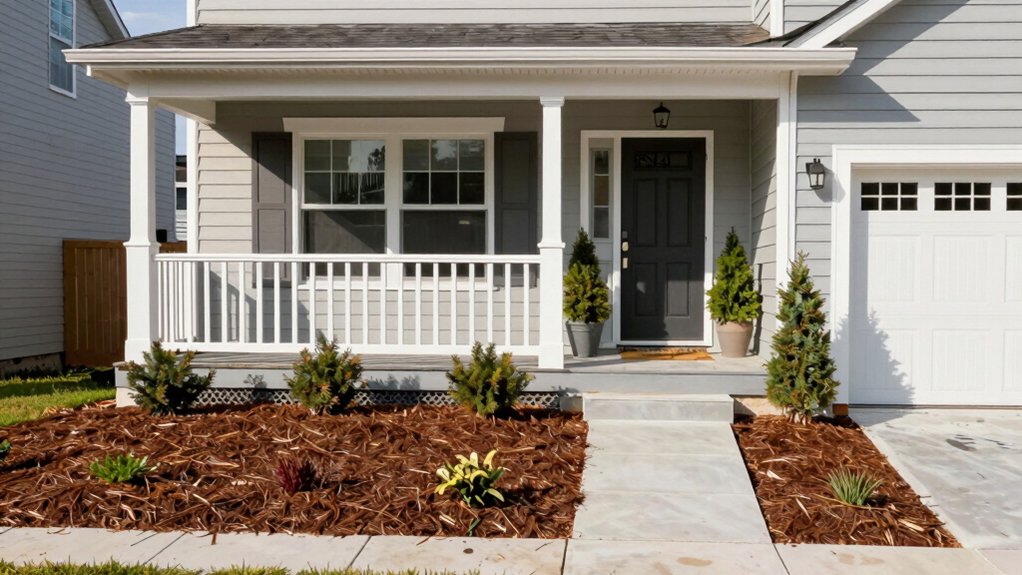
When you focus on high-impact updates, you’ll boost curb appeal and resale value quickly. Prioritize exterior updates with measurable impact: fresh, neutral exterior paint; drought-tolerant landscaping improvements that frame the home and reduce ongoing maintenance; and a clean, well-maintained entryway.
Exterior lighting should highlight architectural features and deter nighttime concerns, while also enhancing safety for buyers. Upgrade siding or trim where needed, seal gaps, and address visible wear to prevent buyer objections.
Window replacements or efficient, well-sealed units deliver energy savings and aesthetics without overhauling the whole façade. Create a cohesive look with consistent materials and color schemes.
Pair these shifts with a well-maintained lawn and clear driveway to maximize perceived value.
Design Choices: Personal Taste Vs Broad Appeal
Design choices are a balancing act between personal taste and broad appeal, because buyers respond to familiar, timeless styles more than niche trends. You’ll want to align color schemes and furniture styles with widely accepted palettes and layouts, not just what you love.
Data shows that neutral bases plus subtle, cohesive accents reduce decision fatigue and increase perceived value. Prioritize durable finishes and simple, versatile silhouettes that accommodate varied lifestyles.
Avoid polarizing patterns or highly specific themes that could alienate potential buyers. Document your rationale for color schemes and furniture choices, linking them to resale value and move-in readiness.
In practice, you’ll blend warm tones with clean lines, ensuring spaces feel open, bright, and easy to personalize without costly updates. This approach supports both selling speed and future enjoyment.
Timing Considerations: Market Cycles and Personal Readiness
You weigh market timing signals against your own readiness, recognizing that a seller’s market can shorten timelines while a buyer’s market may demand patience.
Consider how current pace, rate trends, and inventory levels align with your renovation schedule and financial goals.
This is a data-driven check: if readiness lags market momentum, delaying may reduce risk and cost; if market signals are favorable, acting sooner can maximize value.
Market Timing Signals
Market timing hinges on both market cycles and your personal readiness. You should align renovations with observable cycle phases—upswings for stronger buyer demand, downturns for cost-conscious negotiations—without abandoning your goals. Track housing turnover, days-on-market, and price momentum as they signal when to accelerate or pause projects.
Personal readiness matters too: cash flow stability, allowed carrying costs, and your willingness to adapt scope. Use data-driven signals rather than gut feel to decide timing, especially when considering market volatility and interest rate fluctuations.
If rates are rising and inventory is tight, selling renovations may capture value early; in steadier or improving markets, longer timelines could reduce risk. Plan contingencies, monitor indicators, and synchronize work with sequential milestones for predictable outcomes.
Readiness Vs Market Pace
Though market cycles shape timing, your readiness should drive pace as much as the data does. Readiness versus market pace isn’t about chasing the top or bottom; it’s about alignment.
If you’re emotionally prepared to endure renovations, delays, and uncertainty, you can tolerate longer timelines and potential price fluctuations without panic.
If your financial preparedness is solid—cash reserves, financing lined up, cost buffers—you gain flexibility to adjust scope or timing rather than compromise on outcomes.
Data shows cycles cycle, but personal constraints often determine when to start or pause. Use objective milestones: inspection findings, permit timelines, and the ability to carry costs during a setback.
Prioritize readiness, then calibrate pace to the market, not the guesswork.
Staging, Documentation, and Seller Psychology
Staging, documentation, and seller psychology work together to shorten time on market and maximize offers. You’ll see home staging lift perceived value by presenting spaces more clearly, while neutral hues reduce buyer friction.
Documentation speeds negotiations: pre-inspection reports, repair receipts, and transparent disclosures prevent delays and back-and-forth. You should anticipate buyer questions and provide a clean packet that reinforces confidence.
Seller psychology matters: you’ll be steadier when you communicate a clear timeline, pricing rationale, and renovation scope, which minimizes perceived risk for buyers.
Data shows homes with staged interiors and thorough docs close faster and at higher offers, especially in competitive markets. Align your strategy with buyer expectations, maintain consistent messaging, and avoid last-minute changes that trigger uncertainty.
Clarity, preparation, and trust drive decisive offers.
Making the Call: How to Decide Between Flipping and Staying
Deciding whether to flip or stay requires turning insights into a clear, client-focused plan. You weigh market data, holding costs, and personal timelines to determine which path yields the strongest after-repair value.
If you’re risk-averse or aiming for long-term stability, staying with strategic upgrades often outperforms rapid flips. If comps show rapid appreciation and you’re comfortable with volatility, flipping can capture outsized equity.
Evaluate your liquidity, renovation budget, and the time you can dedicate to DIY projects versus outsourcing. Align improvements with proven ROI: durable finishes, neutral interior color schemes, and cost-efficient discoveries.
Create a decision rubric: break-even horizon, maintenance needs, and resale window. Finally, test scenarios with conservative and aggressive sale assumptions to decide with confidence.