
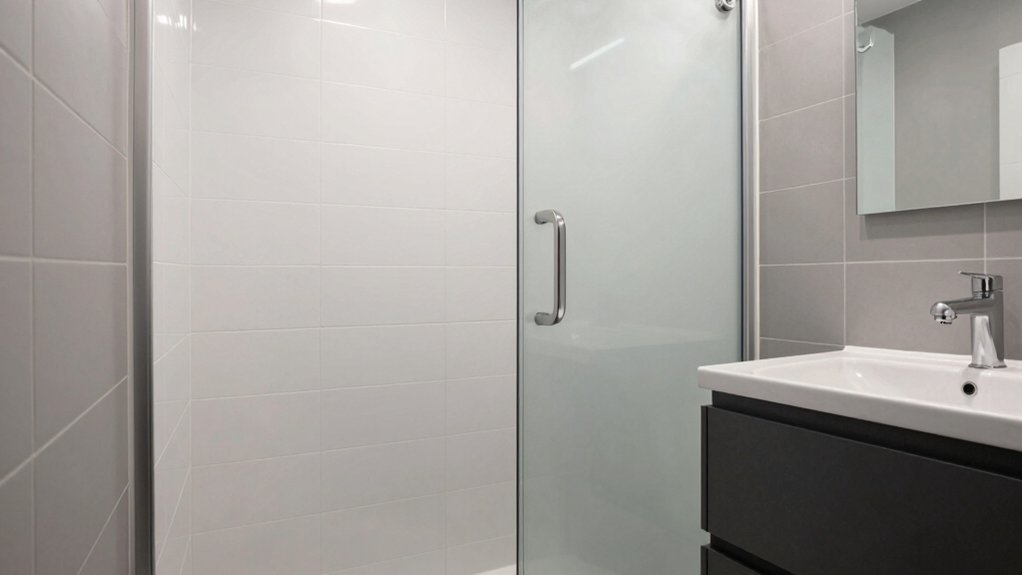
Bright whites with warm neutrals can open up a windowless bath by reflecting light without glare. Pair pure white walls with a soft almond ceiling, creamy tiles, and wooden accents for warmth. Try light-reflecting blues or greens in satin finishes to add depth without heaviness. Use bold accents sparingly—a bright vanity or a punchy tile edge—paired with plenty of artificial lighting. Match sheens across surfaces for cohesion, and you’ll discover a brighter, bigger feel—with more tips just ahead.
Bright Whites and Warm Neutrals to Open Up a Windowless Bath
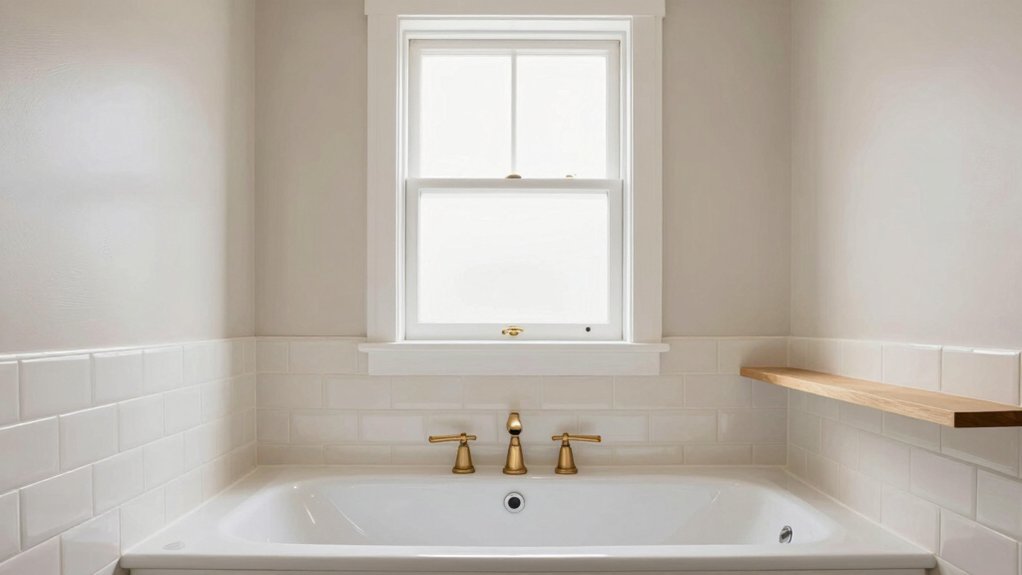
Bright whites and warm neutrals bounce light around a windowless bath, making the space feel instantly larger and more inviting. You’ll maximize brightness by pairing pure white walls with a soft almond or satin-cream ceiling, then introduce subtle warmth through creamy tiles and wooden accents.
Color coordination matters: keep a cohesive palette so contrasts don’t fragment the room. For practicality, choose finishes with low reflectivity to prevent glare, and select a single accent color to avoid visual clutter.
Texture contrast adds depth without weight: satin walls balance matte cabinetry, and a woven basket or linen textiles spread warmth without crowding. In short, lean into light, unify tones, and let tactile variety guide the eye.
Your small bath feels larger, calmer, and more functional.
Light-Reflecting Blues and Greens for Small Spaces
Light-reflecting blues and greens are your secret for making a small bathroom feel airy and calm. In a space without natural light, choose airy tones that bounce what you have. Opt for blues and greens with a soft, satin or eggshell finish to avoid glare while maximizing reflected light.
Consider muted pastels for the walls to create depth without heaviness, pairing them with brighter accents to guide the eye. Avoid heavy saturation; instead, lean into pale, cool family colors that feel expansive.
For fixtures, keep finishes light and metallic hints minimal to preserve luminosity. If you’re unsure, test large swatches at different times of day.
Reserve dark hues for as-needed drama in small, strategic details.
Bold Accents That Shine Without Natural Light Drawbacks
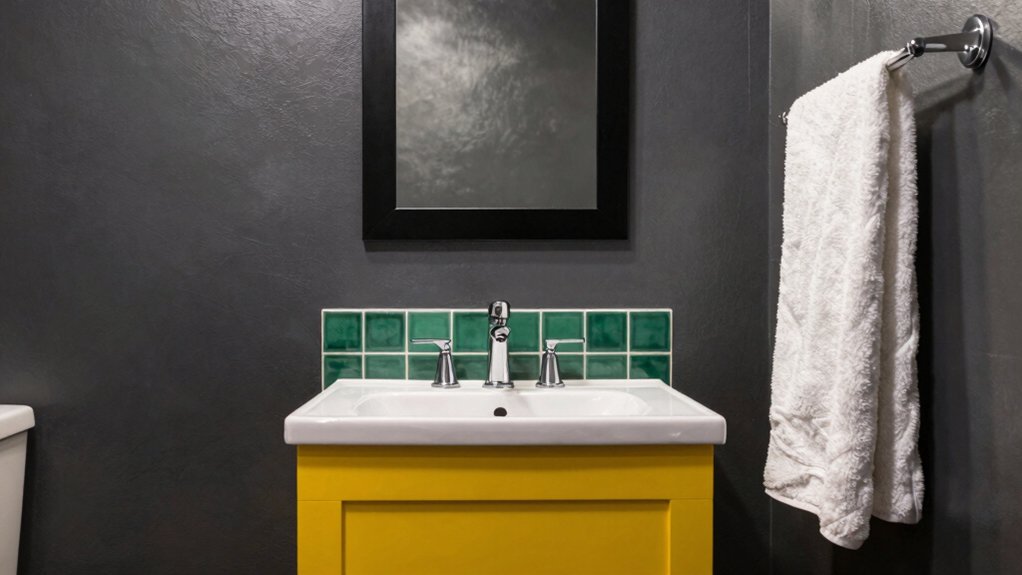
Bold accents can punch up a small bathroom even when natural light is scarce. You can plan bold accents with purpose, using color blocks on a single wall or a vivid vanity as a focal point. Choose saturated hues that reflect warmth, like ruby, teal, or mustard, and pair them with light neutrals to prevent overwhelm.
To avoid glare, balance matte or satin finishes with glossy trim to create subtle contrast. Introduce artificial lighting in layered forms: a statement pendant, sconces beside the mirror, and ambient ceiling lights. This trio keeps shadows at bay while emphasizing the bold color.
Keep patterns minimal, and let the bold accents do the talking, so the space feels intentional, bright, and inviting without depending on daylight.
Sheen and Finish Tips to Maximize Light Bounce
If you want to boost bounce without repainting, choose sheens intentionally: higher-sheen paints reflect more light, while flatter finishes hide imperfections. First, compare gloss vs matte options: gloss or semi-gloss amplifies brightness in small spaces, but can emphasize repairs.
Matte hides flaws yet absorbs light, reducing glare. For ceilings, lean toward satin or eggshell to balance diffuse glow with minimal glare. In walls, test a mid-sheen that brightens without overpowering.
Consider sheen impact across fixtures and cabinetry; consistency matters. Use small swatches on the actual wall to observe real reflections under your bathroom lighting. Keep finishes smooth; avoid heavy textures that trap shadows.
Clean, even coats maximize light bounce, while strategic placement of brighter accents completes the illusion of space.
Undertones and Color Placement for Perceived Space
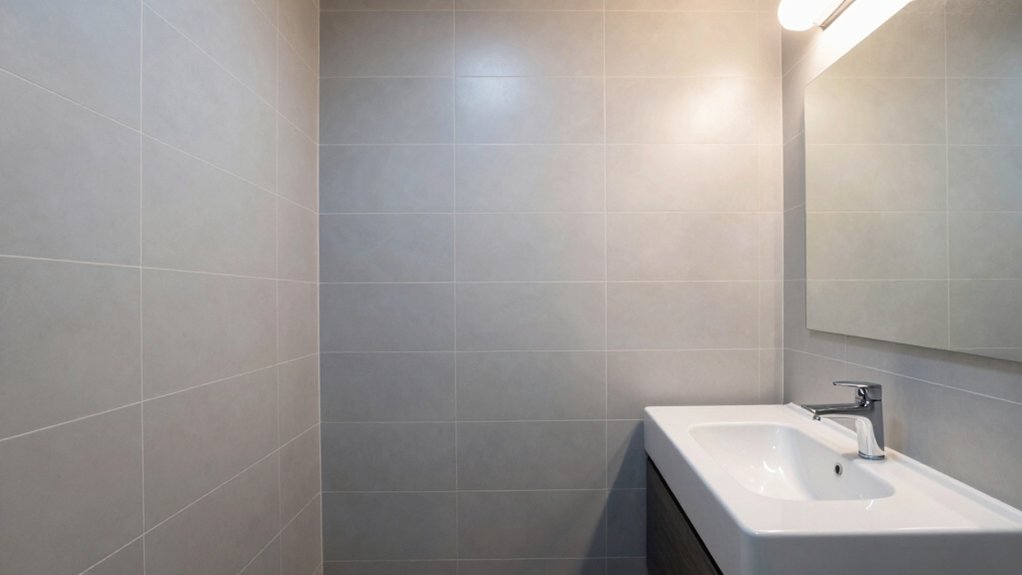
Undertones can make or break a small bathroom, so choose hues with subtle warmth or coolness that align with your lighting and fixtures.
In tight spaces, color balance matters more than bold statements, so pair midtones with a cooler base or warmer accents to preserve perceived size. Use undertone matching to keep walls, trim, and cabinetry cohesive, avoiding clashes that feel busy.
Place lighter shades on the largest wall or the wall opposite the door to reflect what you have, not what you lack.
Introduce contrast with accessories rather than stark paint shifts, keeping ceilings airy and mirrors strategically placed to bounce light.
Test swatches at eye level, observe under both morning and artificial light, and adjust until the space reads open, calm, and deliberate.
Frequently Asked Questions
How Can I Prevent Mildew With No Natural Light?
Paint with mildew resistant paints and practice moisture control techniques. You’ll prevent mildew by running a fan, wiping surfaces, and using a dehumidifier; you, cozier with less humidity, keep air moving and surfaces dry, like a savvy pioneer.
What Lighting Fixtures Best Mimic Daylight in a Small Bath?
Install LED bulbs with daylight simulation to mimic noon sun; choose bright, high-CRI fixtures and evenly spaced ceiling panels. You’ll notice truer colors, less shadow, and a lighter, more spacious feel in your small bath.
Can Color Size Affect Perceived Ceiling Height in a Windowless Space?
Yes—color size can trick the eye. You’ll gain perceived ceiling height by bright ceiling color and taller wall proportions, so you’ll feel airier. Wall proportions matter, and ceiling color boosts that illusion with practical, imaginative simplicity.
Are There Any Affordable Paint Brands That Brighten Interiors Effectively?
Affordable paint brands exist that brighten interiors effectively. You’ll love affordable options offering brightening interior paints, easy coverage, and durable finishes. You can refresh a room without breaking the bank, choosing light neutrals and soft whites for maximum glow.
How Do I Avoid Color-Matching Mistakes in a Windowless Bathroom?
Color palette selection matters: avoid color-matching mistakes by testing swatches in your windowless bathroom’s lighting, using contrast techniques to prevent flatness. Imagine your space as a lighthouse; pick edges that glow, adjust tones, and compare against reflections.