
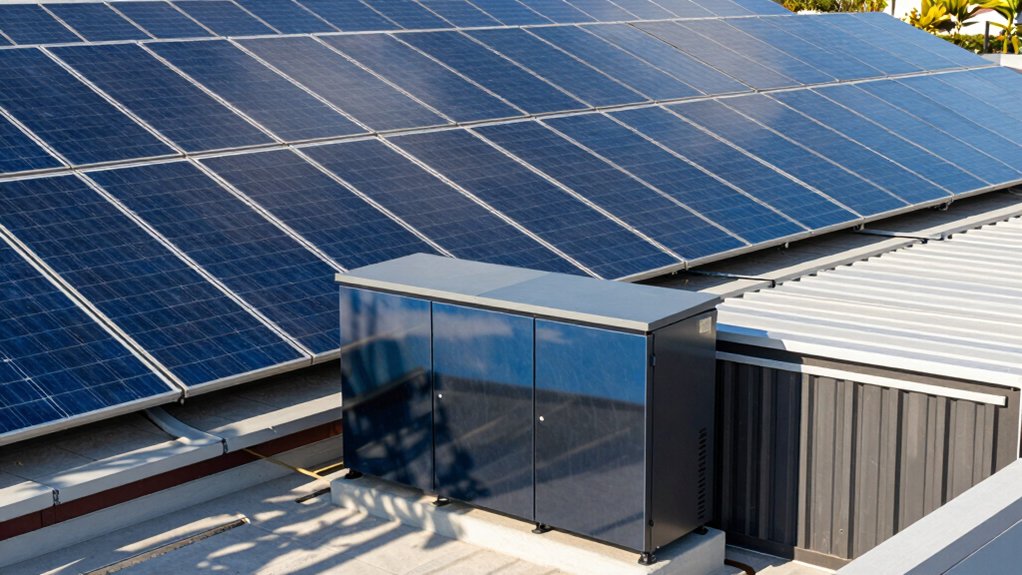
Like a steady heartbeat beneath the roof, your solar system could stop relying on the grid as storage scales up. You’ll weigh evolving battery tech, rising capacities, and shrinking costs against upfronts and incentives to decide if 2026’s storage makes financial sense for your home. With outages, demand charges, and grid dynamics in play, a data-driven look at payback, policy, and real-world setups can help you gauge resilience and long-term value—without hype, just the numbers.
How Home Battery Storage Works With Solar
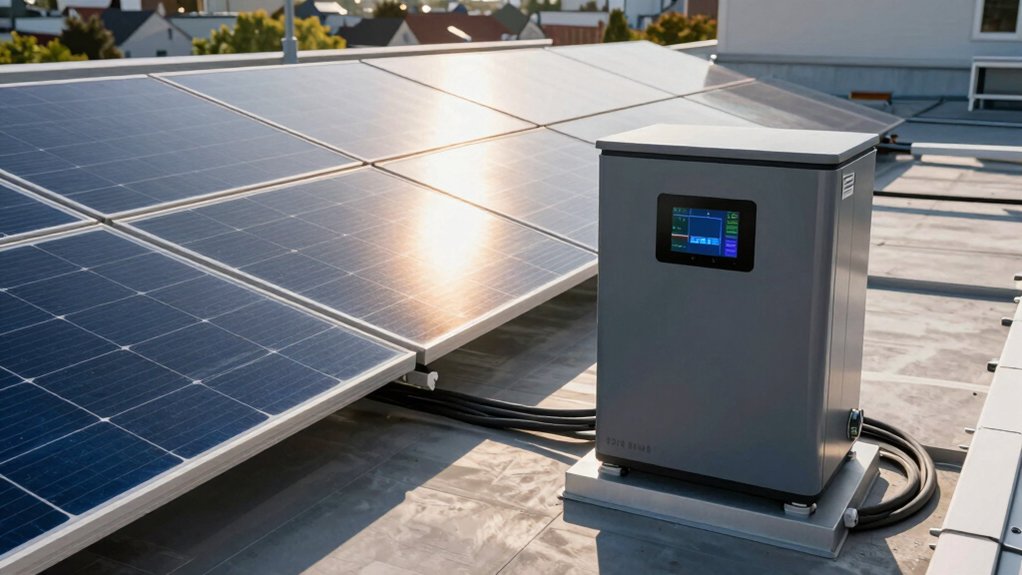
A home battery storage system pairs with solar panels to capture daytime energy and deliver it when the sun isn’t shining. In practice, you’re pairing a DC/AC converter, a battery pack, and a management system to optimize charging, discharging, and safety.
During sun hours, excess PV output charges the pack; at dusk, the system discharges to power loads or exports, depending on your controls. Battery management uses state-of-charge targets, temperature sensing, and cycle counting to maximize efficiency.
You’ll see metrics such as round-trip efficiency, depth of discharge, and calendar life informing performance forecasts. For you, predictable costs hinge on battery lifespan and maintenance needs.
Prioritize reliable cooling, firmware updates, and periodic checks as part of home battery maintenance to sustain long-term reliability and return on investment.
Latest Tech and Pricing Trends for 2026
New tech and pricing trends for 2026 show continued momentum toward higher energy density, lower costs, and smarter integration with home energy systems. You’ll see improved module efficiencies, larger usable capacity, and shorter payback periods as manufacturing scales lift prices downward.
Pricing signals point to decreasing balance-of-system costs and favorable financing for solar-plus-storage bundles. Innovative battery chemistries, including high-nickel and solid-state approaches, are pushing energy density up while maintaining safety and cycle life.
System design now prioritizes modular, software-defined architectures that enable rapid upgrades. Smart energy management remains central, with advanced inverters and analytics delivering peak-shift, demand-response, and self-consumption optimization.
You’ll benefit from tighter warranties, clearer performance guarantees, and transparent performance dashboards that quantify long-term savings and resilience.
Battery Storage for Outage Resilience
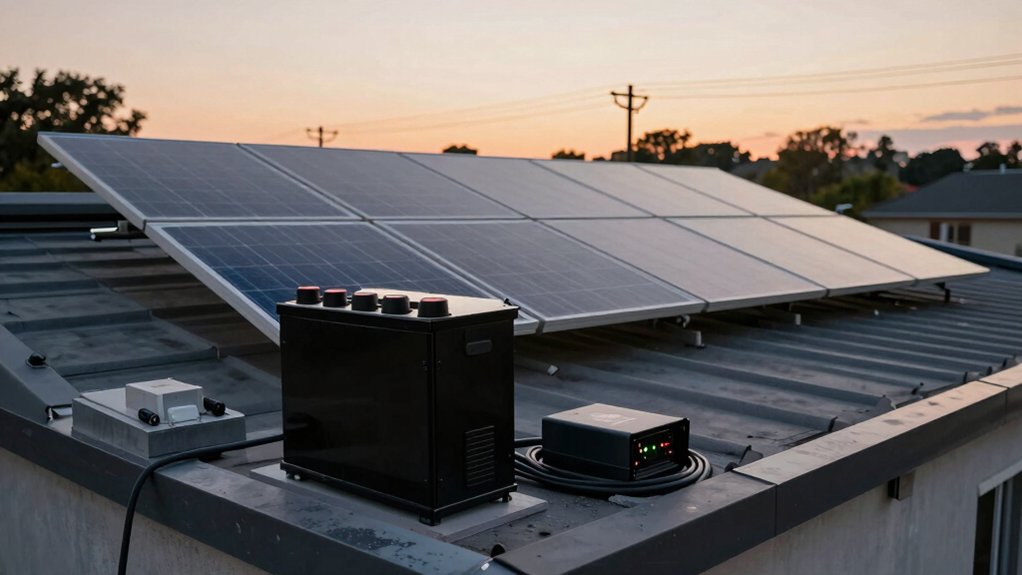
You’ve seen how higher energy density and smarter integration are driving down costs, but outage resilience adds a separate, time-critical dimension: ensuring you have reliable power during grid instability or outages. Battery storage for outage resilience prioritizes quick response, sustained runtime, and seamless islanding of your home load when the utility grid goes down.
Data shows longer-duration chemistries can bridge essential circuits, while control algorithms optimize discharge with minimal depth-of-discharge loss. Consider system sizing, inverter peak capacity, and automatic transfer switching for uninterrupted power.
In parallel, perform a transparent cost comparison across storage, maintenance, and replacement cycles to gauge total ownership. Environmental impact matters too: select chemistries with clean manufacturing footprints and high recycling rates to minimize lifecycle emissions.
Financial Math: Payback, Incentives, and Policies
Financial math for solar battery storage centers on payback timelines, incentives, and policy drivers that shape project viability. You quantify capital costs, expected lifetime, and system efficiency, then map cash flows under different price scenarios. Payback is sensitive to storage degradation, inverter upgrades, and demand charges, so you model annual savings with a discount rate to reveal net present value and internal rate of return.
Tax credits and policy incentives reduce upfront outlay and boost after-tax returns, while evolving tariffs affect avoided energy costs. Policy incentives may be time-limited, so you incorporate schedule risk and sensitivity tests.
You compare stand-alone storage versus hybrid solar-plus-storage configurations to identify the most economical path, documenting assumptions for investors and decision-makers.
Real-World Scenarios: Households and Grid-Tied Setups
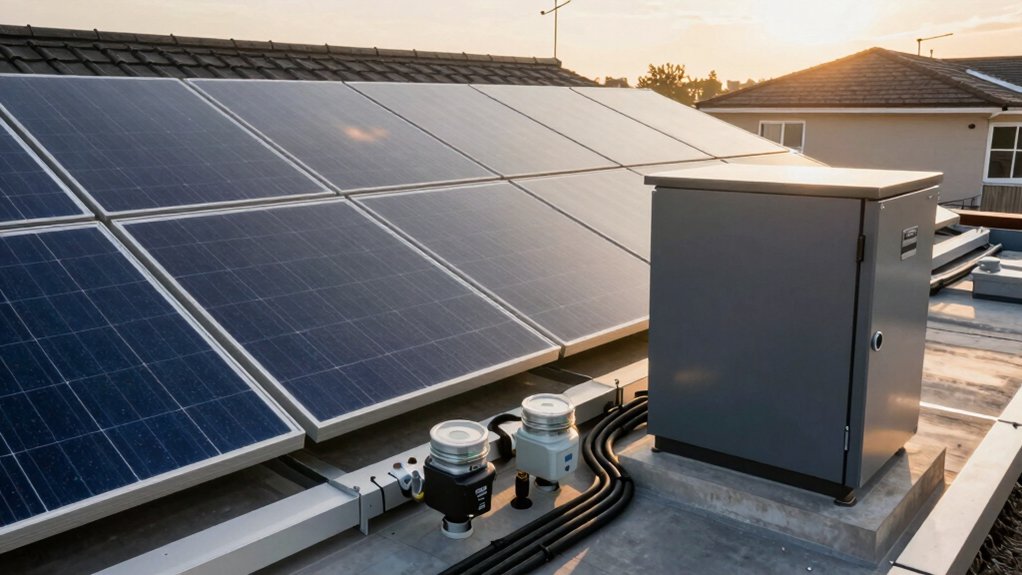
Households and grid-tied setups present practical, data-driven pathways to leverage solar storage for reliability, cost savings, and resilience. In real-world homes, you’d pair PV output with storage to smooth daytime-to-night energy progressions, lowering peak usage and demand charges.
Data show urban integration benefits: compact, modular storage adapts to roof and lot constraints, while advanced inverters optimize charging cycles based on weather forecasts and utility tariffs. Grid-tied systems can island briefly during outages, supporting critical loads without compromising safety or grid stability.
Track environmental impact through lifecycle analyses, emphasizing battery chemistry choices and recycling. Forecasts indicate higher self-consumption rates as software analytics improve dispatch.
Realistic adoption hinges on incremental clearances, monitoring, and transparent pricing aligning with regulatory environments and evolving tariff structures.