
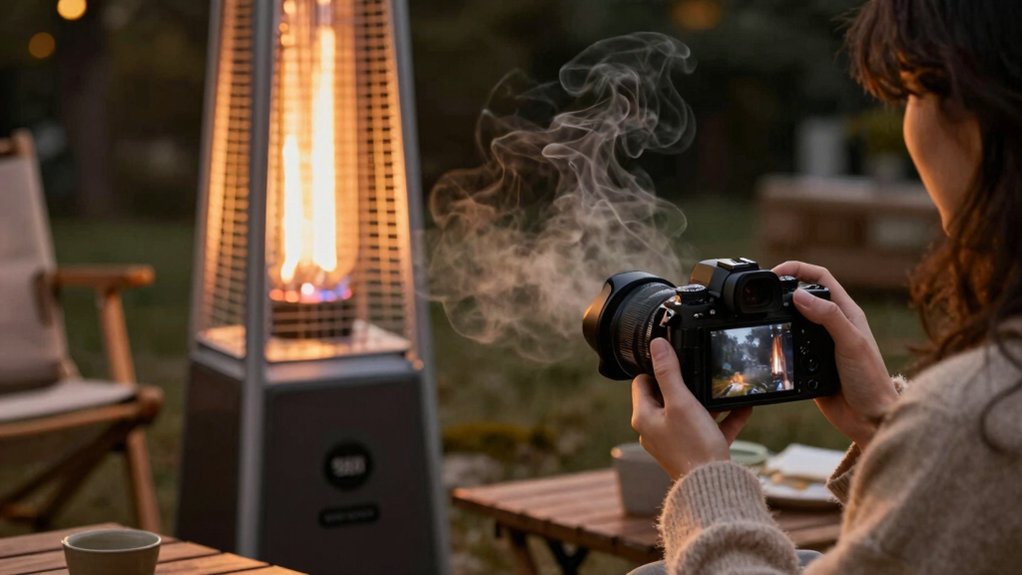
Stay warm and cosy outdoors with an electric patio heater by picking a unit sized for your space and choosing a wattage that matches your deck or patio. Look for infrared or radiant options for efficient heat, and prioritize models with safety features like tip-over and overheat protection. Place the heater on a stable surface with at least three feet of clearance, and use a grounded, outdoor-rated setup. For smart controls and long-term comfort, you’ll discover more tips as you continue.
What Makes Electric Patio Heaters Worth It
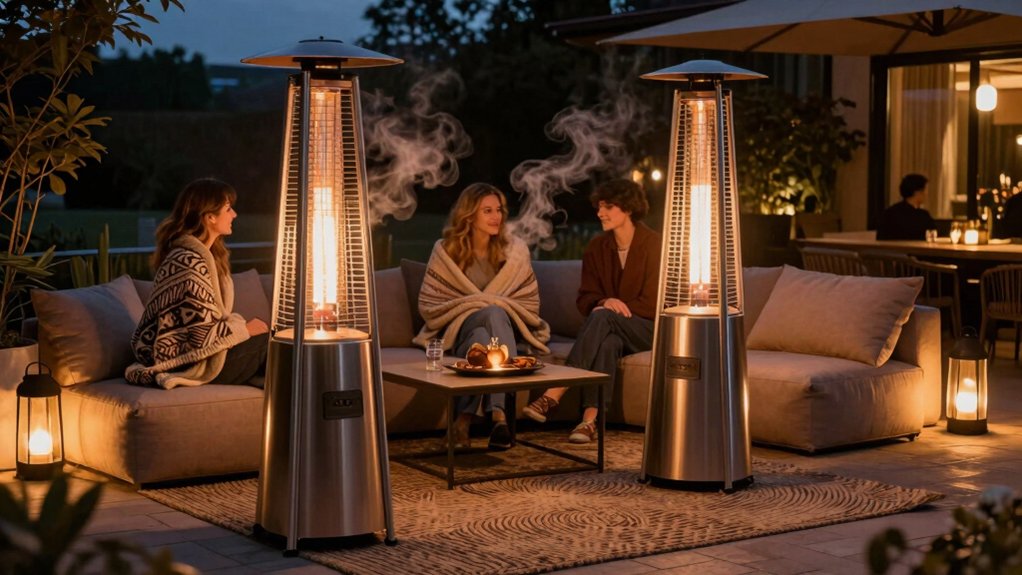
Electric patio heaters are worth it because they reliably extend outdoor usability without the mess, noise, or fumes of traditional options. You’ll enjoy instant warmth with simple controls, often a single switch or thermostat setting. Unlike wood fires or propane setups, you won’t chase embers or refill fuel, which saves time and effort.
Safety comes standard with built‑in tip‑over and overheat protection, plus weatherproof designs for patios and decks. Installation is straightforward: mount or place units where they’ll evenly cover seating areas, and ensure proper clearance.
Maintenance is minimal—wipe dust, inspect cords, and replace bulbs as needed. Power efficiency matters, too; you’ll notice lower running costs and predictable heat output.
In short, consistent comfort, ease, and safety justify the upgrade.
How to Choose the Right Heater for Your Space
Start by sizing your space to pick the right heater wattage and coverage. A too-small unit won’t warm well, and a too-large one wastes energy.
Consider fuel type—electric is easy for patios, but you may prefer gas or infrared if you need faster heat or off-grid options—and weigh maintenance and safety in your decision.
Finally, prioritize energy efficiency to save on running costs, looking for high efficiency ratings and features like timers or smart controls.
Space Size Matters
To choose the right electric patio heater, start by measuring the space you want to warm and note any obstructions like walls, fences, or furniture that can affect heat flow.
Determine the usable area in square feet and compare it to the heater’s heating capacity, usually stated in BTUs or watts. A smaller area benefits from a compact unit; larger decks require higher output or multiple units.
Consider ceiling height, outdoor openness, and wind exposure, which can drain heat quickly. Choose a model with directional heat options or reflective shields to focus warmth where you sit.
Verify clearance requirements from combustibles and walls, then consider local weather conditions.
Finally, map out safe placement for cord length and plug type, ensuring stable mounting or steady footing.
Fuel Type Considerations
When choosing a heater for your space, consider the fuel type and how it fits your outdoor environment, safety needs, and ongoing costs. Electric patio heaters typically rely on electricity, are easily controlled, and emit no combustion byproducts, which reduces ventilation concerns and maintenance.
Gas models offer strong heat output and rapid warm-up but require safe clearance, proper venting, and fuel availability. Propane units are portable, yet their fuel supply and handling add ongoing expenses and hazards. Natural gas connects to your home supply for convenience but limits placement flexibility.
Inspect safety features like tip-over and overheating protection, plus weatherproofing for outdoor use. Compare running costs by analyzing wattage, burn time, and local utility rates.
Choose a fuel type that aligns with your space, habits, and budget constraints.
Energy Efficiency Picks
Electric efficiency isn’t just about watts; it’s about getting the most warmth with the least waste. To pick the right heater for your space, measure both footprint and ceiling height, then map where you’ll sit and how you’ll move.
Look for models with adjustable heat output and infrared elements targeted to you, not the whole area. Opt for a heater with a narrow profile and directional brackets so you don’t waste energy warming unused space.
Check wattage compatibility with your outlet and circuit capacity, avoiding overloads. Favor energy-efficient features like smart thermostats, timers, and auto-shutoff.
Compare heat retention from enclosure materials and reflectors. Finally, consider thermal mass nearby—walls, furniture—so you optimize radiant comfort without excess consumption.
Safety Basics for Outdoor Heating
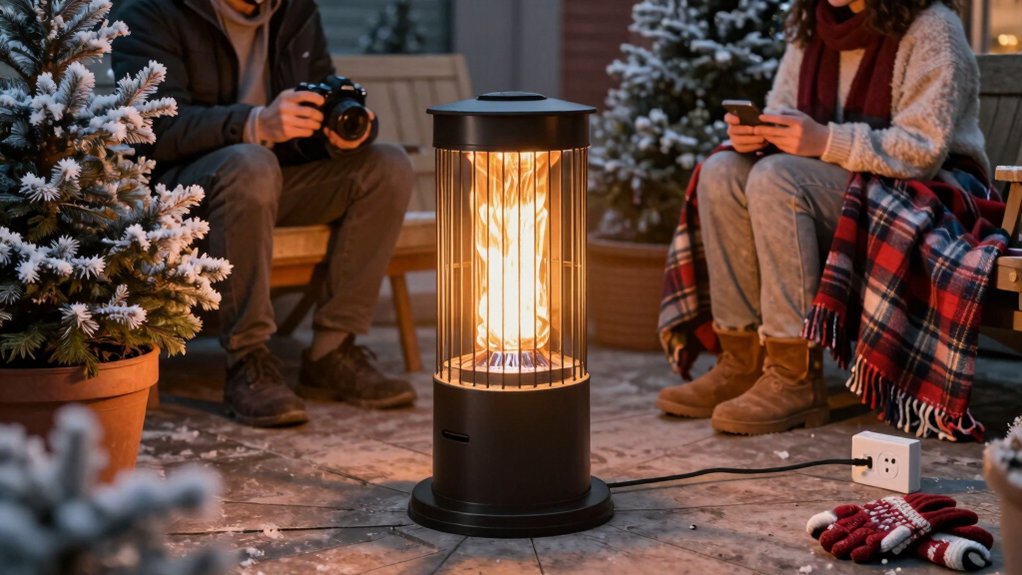
Outdoor heating can improve comfort, but you must start with safety. Before you power up, inspect cords, plugs, and mountings for damage. Keep the heater on a stable, level surface away from wet conditions and standing water.
Use outdoor-rated equipment only, with a grounded plug and weatherproof extension if needed. Never run cords under carpets, rugs, or through doorways where tripping or heat damage could occur.
Maintain at least three feet of clearance from walls, furniture, and decorations; avoid low-hanging branches. Plug into a GFCI outlet to reduce shock risk.
Follow the manufacturer’s On/Off cycle and never leave an operating heater unattended. Turn off and unplug when you store or move the unit.
Regularly clean vents to prevent overheating.
Quick Setup and Placement Tips for Best Warmth
To get the most warmth, place the heater where it can unobstructedly radiate heat toward your seating area, not across a walkway. Position it at and above head height for ideal downward heat, avoiding direct contact with materials that could overheat.
Center the unit so warm rays cover sofas, chairs, and tables evenly, not just one spot. Orient the reflector toward the main seating zone, then test with a quick five‑second cycle to confirm coverage.
Leave at least three feet of clearance from walls, furniture, and drapes; ensure cords stay clear of foot traffic. Install on a stable, level surface, using the built‑in mounting or a sturdy stand if required.
Regularly inspect for loose fittings, corrosion, or frayed wiring before use. Adjust placement as your seating layout changes.
Power Options and Energy Efficiency Explained
You’ll review power source options, weighing cords, outlets, and hard-wired setups for safety and reliability.
We’ll compare efficiency, operating costs, and how wattage affects heat output, so you can estimate ongoing expenses.
Finally, you’ll follow outdoor-use tips to protect electronics, minimize waste, and extend heater lifespan.
Power Source Options
Power source options for electric patio heaters include corded electric, battery-powered, and propane or natural gas adaptations via hybrids. Corded units draw steady power from an outlet, delivering consistent heat but restricting placement to accessible wiring.
Battery-powered models offer portability, ideal for decks without outlets, yet rely on battery life and charging cycles, which limits continuous use.
Hybrid designs combine electrical input with gas fuels, delivering high heat when needed while reducing electrical draw.
When selecting, consider ambient conditions, run-time requirements, and safety clearances. For frequent use, invest in a robust cord setup with outdoor-rated extension options and surge protection.
For low-visibility areas, prioritize models with clear indicator lights and overheat shutoffs.
Always follow manufacturer instructions and local electrical codes to guarantee safe, efficient operation.
Efficiency and Costs
When evaluating efficiency and cost, start by comparing heat output per watt for each power option. You’ll notice electric radiants typically deliver steady, directional warmth with high efficiency, while infrared elements heat objects rather than air, reducing waste in open spaces. watt-for-watt comparisons matter: higher wattage isn’t always better if heat delivery isn’t targeted.
Next, assess operating costs by multiplying power use (kW) by your electricity rate and expected daily run time. Short daily sessions at moderate power often beat long, low-output runs.
Consider standby and transformer losses, cord length, and heat loss from vented or partially sheltered spots.
Finally, factor in purchase price, lifespan, and maintenance—dust, debris, and protective enclosures influence long-term cost efficiency.
Outdoor Usage Tips
To get the most from outdoor electric heaters, match heat output to your space and activities, and choose a power option that minimizes waste. Start by evaluating your area: measure square footage, note wind exposure, and identify seating clusters.
For small patios, use lower heat settings or emitters with directional reflectors to focus warmth where people gather. If you expect frequent use, consider heaters rated for higher wattage with built-in thermostats to prevent overheating.
Opt for models offering adjustable power levels and energy-saving modes, and enable automatic shutoff when no motion is detected. Use outdoor-rated plugs, avoid extension cords, and keep heaters off when you’re not nearby.
Finally, combine windbreaks, insulating surfaces, and proper clearance to maximize efficiency and safety.
Styling and Outdoor Ambiance With Heaters
Outdoor aesthetics matter as much as warmth, so choose heaters that complement your space and mood. Start by matching size to area: small porches stay unobtrusive, larger patios benefit from a glow that fills the space. Pick finishes that harmonize with furniture and lighting, not clash. Position the heater for visual balance and even warmth, avoiding clutter or sightline interruptions.
Use ambient elements—string lights, lanterns, or planters—to extend the glow without competing with the heater’s light. Consider mounting options or freestanding designs to suit traffic flow. Coordinate controls with your exterior scheme; simple on/off or dimming capabilities let you adjust mood quickly.
Finally, ensure cables and bases are safe and tidy, reinforcing a calm, inviting outdoor vibe.
Maintenance and Longevity You Can Count On
Regular maintenance keeps electric patio heaters safe and reliable, so start with a simple routine: wipe the exterior with a damp cloth, inspect vents for dust, and check the power cord for wear before each season.
You’ll extend longevity by keeping the heater clean and dry, preventing overheating and corrosion.
After use, unplug the unit, allow it to cool, and store it in a dry area off the ground.
Inspect mounting hardware and feet for stability; tighten loose screws as needed.
Use a dedicated outdoor outlet with ground fault protection, and avoid extension cords that could cause voltage drop.
Schedule annual internal checks or professional servicing if you notice unusual noises, hot spots, or reduced heat.
Replace damaged elements promptly to maintain performance and safety.
Common Mistakes and How to Avoid Them
Common mistakes with electric patio heaters often stem from assuming they’re maintenance-free or misplacing them in damp or poorly ventilated spots. To avoid issues, inspect cords and plugs regularly for wear, and unplug before cleaning.
Mount or position units according to the manufacturer’s clearance guidelines, keeping at least a couple of feet from walls, furniture, and drapes. Don’t ignore condensation or moisture on outdoor outlets; use weatherproof covers and ensure circuits are GFCI protected.
Operate at appropriate heat settings rather than blasting at full power in every situation, which wastes energy and shortens element life. Protect heaters from dirt, debris, and obstructions by keeping the grill area clear.
If you smell burning or notice reduced performance, shut down and consult the manual rather than improvising repairs.
Budget Guidance: What to Invest In and What to Skip
When budgeting for electric patio heaters, start by identifying where you’ll place them, how often you’ll use them, and what safety features matter most. Prioritize models with reliable thermostats, tip-over shutoff, and weather resistance.
If you’ll run heaters regularly, invest in higher efficiency infrared units or radiant tubes rather than cheap, short-lived options. Skip underpowered heaters for larger spaces; you’ll waste money on extended runtime.
Consider wattage needs: 1500W covers most decks, but larger areas may require 2000W or dual units. Look for easy installation and a durable housing to reduce maintenance.
Compare warranties and service networks; longer coverage saves cost over time. Don’t chase aesthetics over safety or performance—choose simple, robust, energy-efficient designs that meet your space and climate.
Conclusion
Think of electric patio heaters as the quiet, steady sun you can summon on demand. The theory that “more heat equals more comfort” holds true if you place a unit properly, choose the right power, and protect it outdoors. When you avoid shade, enclosures, and wind tunnels, warmth travels efficiently, saving energy. So invest wisely, set up strategically, and you’ll stay toasty without burning through bills or compromising safety. Your outdoor evenings stay bright, cozy, and practical.