
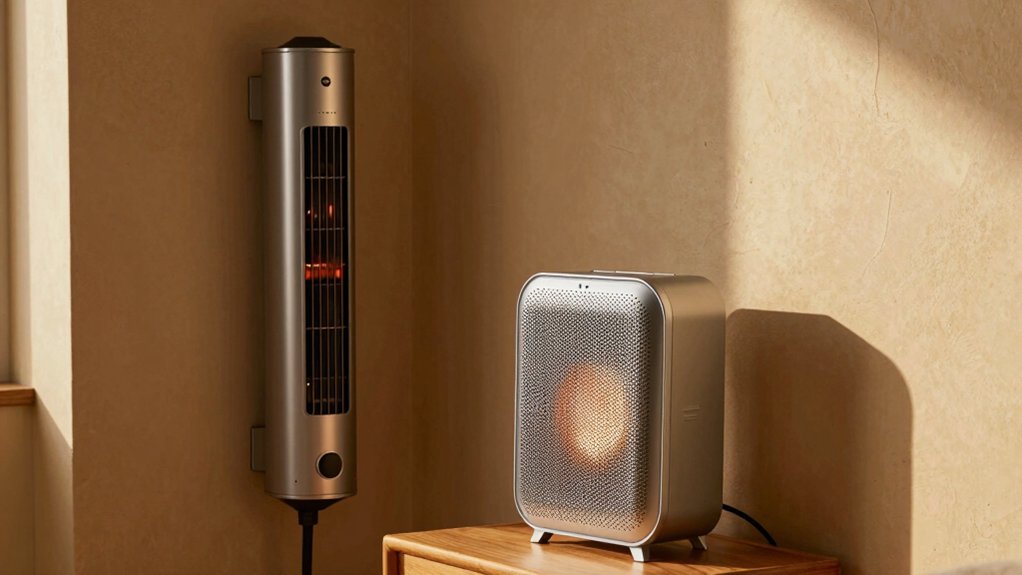
Wall-mounted infrared heaters deliver steady, wall-fixed warmth with minimal floor clutter, while portable units offer flexible, rapid spot heating you can move where you need it. Mounts provide permanent zoning and quiet operation, but require proper mounting and dedicated wiring. Portables pay off with quick setup, easy repositioning, and floor-space versatility, yet they demand careful placement for safety and stability. Consider room size, insulation, and usage pattern—if you want deeper insight, you’ll uncover practical placement tips and maintenance guidance next.
What Wall-mounted vs Portable Infrared Heaters Really Do
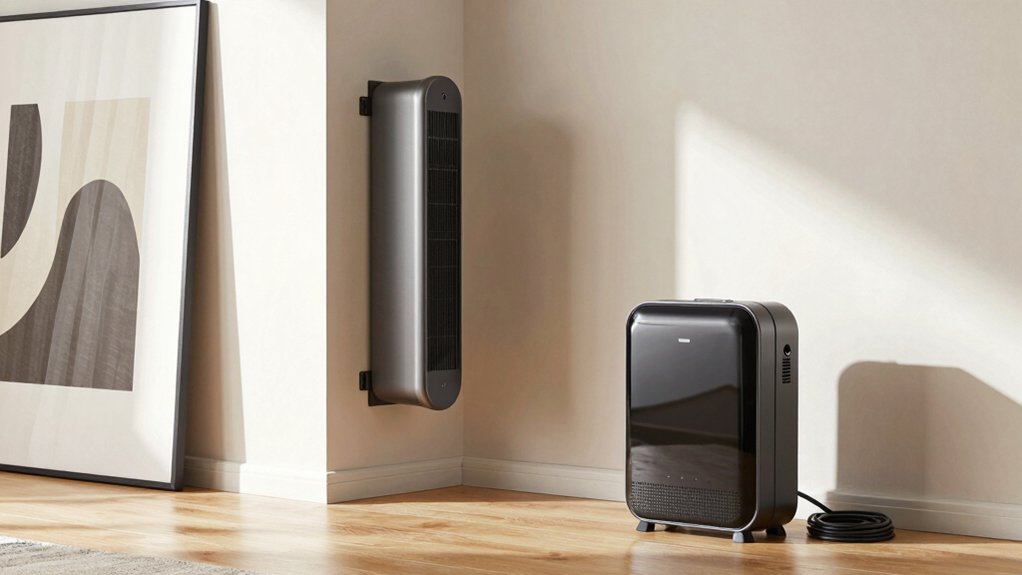
Wall-mounted and portable infrared heaters both convert electrical energy into heat, but they do so in ways that affect how you use them, where you install them, and how efficiently they warm a space.
Wall-mounted units radiate heat from a fixed plane, delivering consistent surface warmth and minimizing floor clutter. You’ll install brackets or studs, ensure proper clearances, and wire for a dedicated circuit if needed.
Portable models rely on mobility, circulating heat across rooms with directional panels or wheels; you can relocate them as you change zones or occupancy.
Both types convert electricity via infrared elements, yet wall-mounted systems typically offer quieter operation and lower heat loss to floors, while portable units provide rapid spot heating and flexible placement.
Choose based on permanence, space layout, and your short-term usage goals.
How to Decide Which Fits Your Space and Lifestyle
Start by evaluating your space for fit: measure room size, heat target zones, and any clearance or mounting constraints.
Weigh mobility and control needs against your lifestyle—do you want ceilings-to-floor flexibility or a fixed setup with precise temperature zones?
Use these insights to compare how space fit, mobility, and control influence whether a wall‑mounted or portable infrared heater serves you best.
Space Fit Balance
When choosing between wall-mounted and portable infrared heaters, assess how your space and daily routines interact with heat delivery, control access, and safety considerations. Space fit hinges on room geometry, airflow, and mounting options.
Wall-mounted units optimize corner usage and consistent ceiling-to-floor heat spread, but require secure mounting, wall clearance, and cord management. Portable heaters offer rapid placement flexibility, easy repositioning between rooms, and simplified electrical access, yet demand open floor space and distance from combustibles.
Consider occupancy patterns: high-traffic zones benefit from controlled placement and directional heat, while low-traffic areas tolerate looser targeting. Compatibility with furniture layout, wall finishes, and cabinetry informs both aesthetics and performance.
Finally, weigh installation effort against long-term occupancy shifts to determine the most stable, low-maintenance configuration for your lifestyle.
Mobility And Control
To determine the right fit for mobility and control, assess how you move through your space and how you prefer to adjust heat quickly.
Mobility hinges on placement flexibility, cord management, and the ability to relocate without tools. Portable units win here, offering wheels, handles, and plug-and-play setup; wall-mounted models prioritize permanence and minimal footprint but limit relocation ease.
Control precision matters: pick devices with multiple heat settings, programmable timers, and thermostatic feedback for consistent comfort. Look for intuitive interfaces—digital panels, app integration, or remote controls—to reduce interaction time.
Safety features reduce risk during movement: tip-over shutoffs, cool-to-touch surfaces, and auto-restart after power loss.
Finally, evaluate your routine: does rapid, on-demand warmth trump fixed, always-on performance, or vice versa?
Performance: Heating Speed, Output, and Efficiency Comparisons
Despite similar ratings, wall-mounted and portable infrared heaters differ in how quickly they rise to comfort, how much heat they deliver in a given period, and how efficiently they convert electrical power into usable warmth.
You assess heating speed by time-to-room-ambient after activation, noting startup delays, sensor-coupled ramp profiles, and any fan-assisted distribution.
Output is measured in BTU/h or watts per square meter, with wall-mounted units typically delivering steadier, zone-focused warmth and portable units offering rapid, localized bursts.
Efficiency hinges on radiant-to-convective balance and insulation coupling; wall-mounted models often benefit from fixed angles and reduced air mixing, while portable units may rely on oscillation and proximity.
Compare nameplate COP or SEER where available, and consider real-world performance under identical setpoints, load, and ambient conditions.
Installation and Setup: Fixed Mounting vs Plug-and-Play
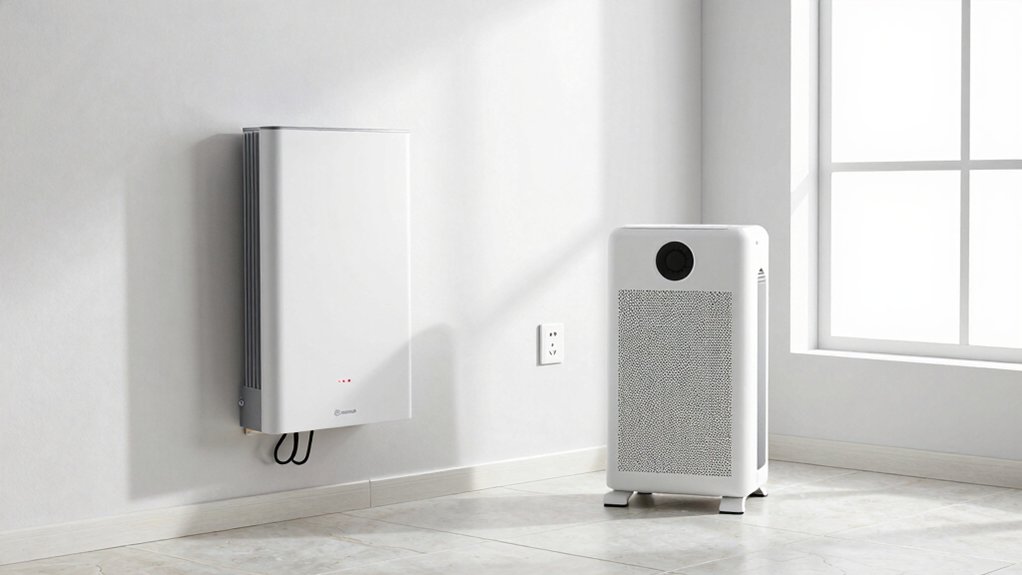
Fixed mounting requires precise placement, while plug-and-play models prioritize ease of setup.
In this section, you’ll compare how each installation path affects safety, clearance, and user effort.
For fixed mounting, verify wall studs, use a level, and install brackets with manufacturer screws. Maintain recommended distal distances from heat-sensitive surfaces and ensure proper cord routing to prevent trips.
On fixed units, you’ll typically need a dedicated electrical circuit or confirm compatible outlet amperage, and you’ll follow mounting templates to align vertically and horizontally.
With plug-and-play, you’ll connect to a standard outlet and engage any included stabilizing feet or stands.
When choosing, assess room geometry, wall material, and preferred clearance; prioritize secure mounting where hands-on access is limited.
Always consult the user manual for model-specific requirements.
Cost of Ownership: Purchase Price, Running Costs, and Longevity
Cost is more than the upfront price when evaluating wall-mounted versus portable infrared heaters. You’ll compare purchase price, energy use, and service life to determine total ownership cost.
Wall-mounted units often have higher initial costs but can optimize space and minimize relocation expenses; portability adds lower initial flexibility tradeoffs but reduces install costs.
Running costs hinge on wattage, efficiency, and thermostat control; smaller portable models may draw less power but run longer to maintain comfort, raising energy use over time.
Longevity depends on build quality, component durability, and maintenance frequency; replaceable elements and warranties influence total cost of ownership.
Calculate annual energy consumption, expected lifespan, replacement intervals, and salvage value to contrast scenarios precisely for your space and usage.
Safety Considerations for Walls and Floors
Make certain you observe wall clearance requirements to prevent heat damage and fire risk, keeping the heater at the recommended distance from any combustibles.
Assess floor surface safety by selecting a non-slip, heat-absorbent base or mounting platform that remains stable during operation.
This discussion will establish practical guidelines for clearances and surface considerations to support safe wall-mounted and portable installation.
Wall Clearance Rules
Wall clearance is essential for safe operation and fire prevention, so always maintain specified distances from walls and surrounding objects. You must select a mounting height and setback per the manufacturer’s instructions, typically ensuring a clear gap from any vertical surface.
Measure the wall clearance in all directions, including above, below, and beside the unit, before power application.
Prohibit installation within alcoves or behind doorways that can trap heat or obstruct airflow.
Avoid placing heaters near combustible materials, curtains, or furniture, and ensure cords or hardwired connections are shielded from heat exposure.
Use marked warning zones to verify no obstructions infringe the mandated clearance.
Regularly inspect mounting hardware for loosening, and immediately adjust if vibrations or remodeling alter clearances.
Floor Surface Safety
To prevent damage and fire risk, inspect the floor surface before installing a wall-mounted or portable infrared heater, ensuring it’s level, clean, and free of debris, spills, or carpets that could trap heat.
Verify the floor is dry, solid, and capable of supporting the unit’s weight without indentation or wobble.
Remove loose objects and secure long cords away from heat paths to prevent ignition or tripping.
Use a rigid, non-combustible mounting surface for wall brackets or a vibration-damping pad under portable models when applicable.
Confirm that flooring materials near the heater comply with fire-resistance standards and maintain recommended clearance.
Avoid soft flooring that can compress under load.
Periodically inspect for cracks, discoloration, or moisture, addressing issues before operation.
Document compliance for maintenance records.
Flexibility in Usage: Scenarios Where Each Option Shines
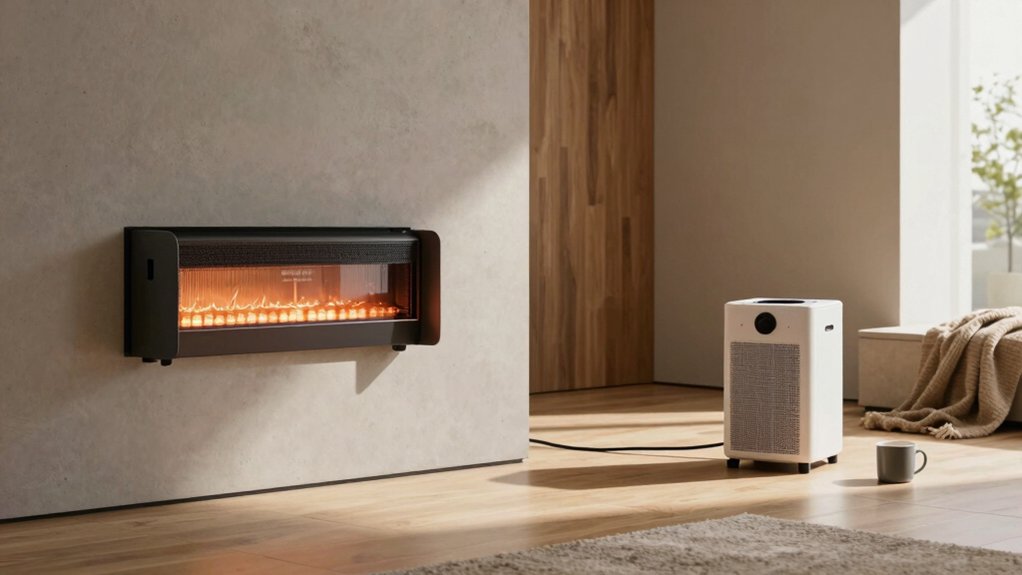
When you need targeted warmth in fixed spaces, wall-mounted infrared heaters excel by delivering steady heat without occupying floor space. In scenarios where you prioritize permanence, choose wall-mounted units to maintain consistent comfort with minimal footprint and unobtrusive operation.
You’ll benefit from controlled heat zones, reduced risk of tip-overs, and easy integration with existing wall systems. For portable use, you gain flexibility to reallocate warmth across rooms, or relocate to align with activity zones, albeit with increased attention to stability and power routing.
Compare power options, heat output ranges, and installation constraints to determine suitability for ongoing occupancy. Consider cord management, mounting hardware compatibility, and room dimensions to ensure predictable performance without compromising safety or aesthetics.
Practical Placement Tips and Everyday Maintenance
Practical placement starts with a clear plan for heat flow and safety: position the heater where its infrared output can reach the target area without obstructions, and keep it away from combustibles, wet zones, and high-traffic paths.
You should verify wall clearance and air intakes, ensuring no blocked vents or reflective surfaces that distort heat. Place portable units on stable, level floors away from doors, and avoid carpet frays or petty trip hazards.
For wall-mounted models, mount at a height that directs radiant warmth to seating or work zones while maintaining accessible cord routing.
Routine maintenance includes inspecting cords, plugs, and housings for wear, cleaning grills with a soft brush, and testing auto-off or thermostat functions monthly.
Refrain from obstructing outlets or using adapters that overload circuits.
Verdicts by Use Case: Best Picks for Apartment, Large Room, and Budget
For apartment living, choose compact, wall-mounted infrared units or low-profile portable models that deliver targeted warmth without dominating floor space.
In this verdicts-by-use section, you’ll compare three scenarios: apartment, large room, and budget.
For apartments, prioritize units with adjustable heat zones, safe operating temps, and wall mounting to minimize tripping hazards.
In large rooms, select higher wattage panels with broad dispersion and whisper-quiet fans, ensuring even coverage from a central placement.
For budget-conscious buyers, compare initial cost, long-term efficiency, and warranty coverage, favoring models with good insulation, low standby power, and durable elements.
Execute precise installation measurements, verify outlet compatibility, and implement child- and pet-safety features.
Finally, record energy use data to validate performance against spec sheets.
Conclusion
Conclusion:
When you choose between wall-mounted and portable infrared heaters, you’re tailoring heat delivery to your space and routine. For a small apartment, a wall-mounted unit can offer steady output with minimal clutter; for a flexible living area, a portable heater adapts to rooms and seasons. Example: a renter switches from a freelance studio space to a shared living room, installing a slim wall unit in winter and using a portable model for occasional extra warmth on weekends.