
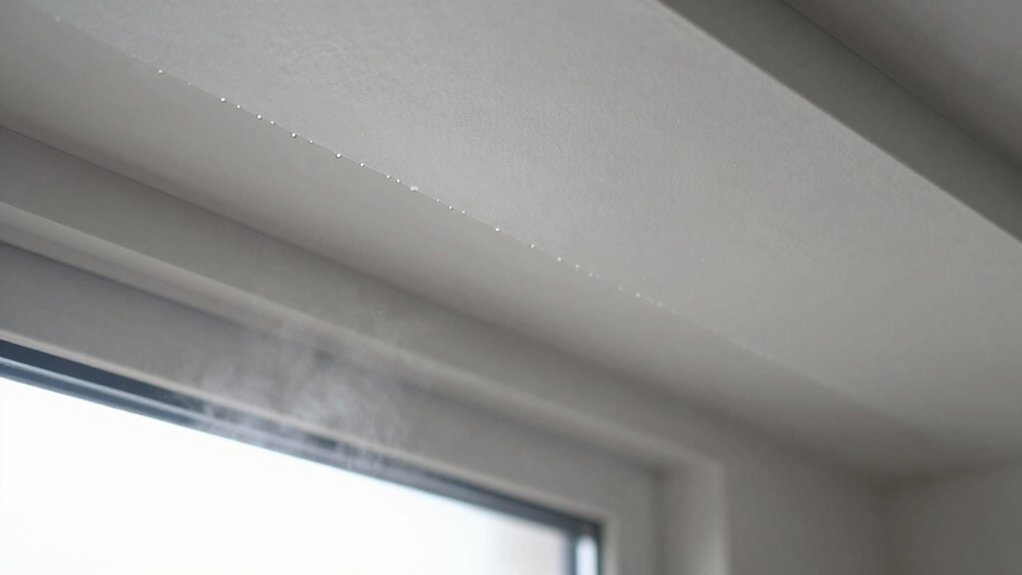
A coincidence you’ll notice is how fast a warm room can feel damp when the ceiling goes cold at night. You push towels or a fan aside, but the real issue is moisture in the air meeting a cooler surface, which makes dew form on the ceiling. High humidity from cooking or showers, poor insulation, and limited ventilation all feed the problem. You’ll want to explore how to control moisture and temperature differences to prevent damage and mold. Let’s look at practical fixes.
Humidity Levels and Moisture in Everyday Spaces
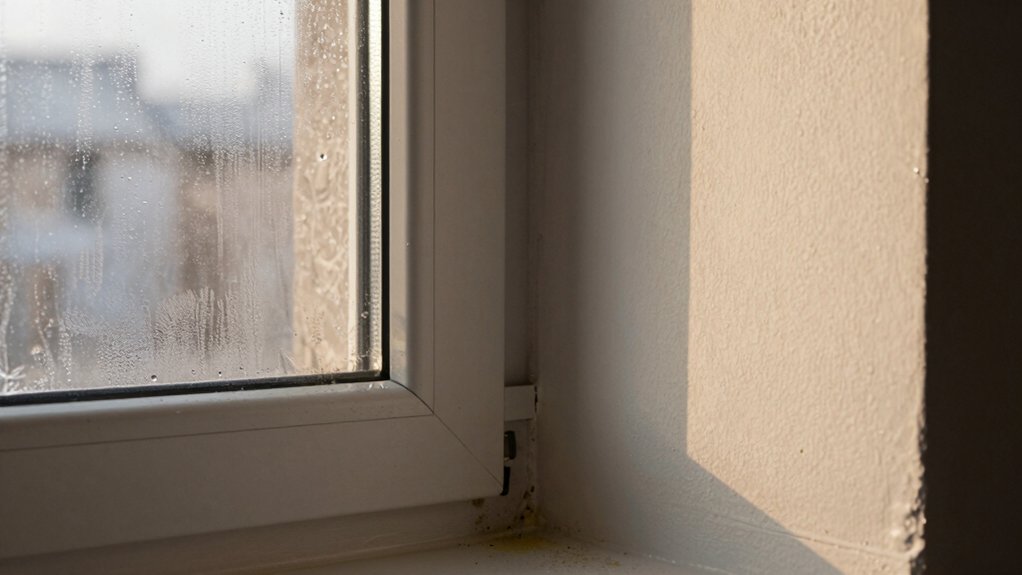
In everyday spaces, humidity levels directly influence condensation. You track moisture sources, airflow, and surface exposure to predict where droplets form. Relative humidity (RH) indicates how much moisture is present relative to saturation at a given temperature; higher RH increases the likelihood of dew point attainment on ceilings.
You monitor typical contributors: occupant activities, cooking, showers, plants, and indoor dampness from leaks. Ventilation effectiveness matters; insufficient air exchange allows moisture to accumulate near ceilings, raising local RH.
You assess materials and finishes that emit or absorb moisture, noting that porous substrates retain humidity longer. Temperature interacts with humidity; cooler ceiling surfaces meet the dew point sooner.
Temperature Differences and Surface Condensation
Why do temperature differences drive surface condensation? You experience condensation when warm, moist air contacts a cooler surface, causing the air to drop below its dew point at the interface.
Temperature differences create a boundary layer where heat transfer concentrates: the cooler ceiling surface absorbs latent heat from the adjacent air, lowering its capacity to hold water vapor. If the surface temperature falls beneath the local dew point, vapor condenses into liquid droplets.
Larger vertical or horizontal temperature gradients increase the rate of heat transfer and promote rapid condensation onset. Airflow, insulation quality, and surface emissivity influence these gradients, shaping when and where droplets form.
In practice, monitor surface temperatures and ensure they remain near or above the ambient dew point to mitigate surface condensation.
Heat Sources That Worsen Ceiling Condensation
Certain heat sources raise ceiling temperatures unevenly, increasing the local cooling of adjacent air and driving condensation. You’ll see this when radiant heaters or forced-air vents deliver uneven warmth across the ceiling plane, creating hot spots next to cooler zones.
Electrical equipment on or near the ceiling, such as fans, lighting, or vents connected to unbalanced circuits, can introduce additional heat flux that disrupts uniform temperature, promoting localized condensation.
In kitchens and bathrooms, continuous hot-water use or heat-generating appliances near the ceiling elevates air temperature aloft but leaves surrounding surfaces cooler, enabling vapor to condense at the boundary.
Keep exposure to intense, localized heat sources minimal and ensure even distribution to reduce condensation risk. Regular maintenance helps identify stray heat paths.
Poor Insulation and Cold Surfaces
Poor insulation lets warmth escape to surrounding spaces, while cold surfaces foster condensation when warm room air meets them.
You’ll see heat loss dynamics drive surface temperatures, creating dew points on ceilings if insulation is insufficient.
This naturally links to how cold surface interaction influences moisture buildup and condensation risk.
Heat Loss Dynamics
Heat loss during condensation often stems from poor insulation and cold surfaces. You measure how heat moves through the ceiling assembly, driven by temperature differences between warm indoor air and colder attic or exterior layers. Thermal resistance, R-value, and conductive paths define losses, while gaps or framing cavities create localized jets of heat flow.
You assess insulation thickness, material quality, and installation integrity to estimate U-values for each component. Moisture impacts embedded materials, potentially reducing effective R over time. You quantify condensate risk by comparing indoor surface temperatures to dew point, linking heat flux to surface chill.
You isolate heat loss contributions from ventilation, radiant heating, and insulation discontinuities, documenting changes with steady-state and transient analyses. You deliver actionable, repeatable measurements and recommendations for improving thermal barriers.
Cold Surface Interaction
Cold surface interaction arises when insulated ceiling assemblies fail to keep interior temperatures away from exposed cold layers. You’re directly confronting how contact between warm air and cold ceiling zones drives condensation risk.
Poor insulation creates temperature gradients that let warm, humid interior air reach cool decking or rafters, where it cools below dew point. Surface roughness, gaps, and thermal bridges intensify this effect by creating localized cold spots that nucleate moisture.
You’ll encounter higher condensation potential when humidity stays elevated, especially with intermittent heating or night setbacks.
To mitigate, ensure continuous insulation, eliminate air leaks, and seal joints around penetrations. Use robust vapor retarders suited to climate, and design for minimal thermal bridging.
Regular inspection confirms that cold surfaces remain above dew-point temperature under design loads.
Inadequate Ventilation in Bathrooms and Kitchens
Inadequate ventilation in bathrooms and kitchens lets moisture accumulate on ceilings, especially where humidity is high.
Poor bathroom ventilation and kitchen exhaust inefficiency raise condensation risk by keeping moist air present without proper removal.
We’ll examine how these gaps between extraction capacity and room humidity drive ceiling condensation and warrant corrective air-flow improvements.
Poor Bathroom Ventilation
Poor bathroom ventilation can let moisture linger, promoting condensation on walls, mirrors, and fixtures. When ventilation is inadequate, warm, humid air rises and saturates cooler surfaces, increasing surface dewpoint risk.
You’ll see higher humidity readings after showers, baths, or hot water use, especially in small or poorly sealed rooms. Effective ventilation requires a dedicated exhaust path, appropriate fan capacity, and minimal air leakage around doors and windows.
Without it, condensate plus damp traces invite mold growth, paint blistering, and mineral deposits from hard water. Practical mitigation involves sizing fans to remove peak moisture loads, running them during and after use, and ensuring unobstructed ducting to an exterior vent.
Periodic audits check for duct leaks, backdrafts, and fan performance to sustain drywall integrity.
Kitchen Exhaust Inefficiency
Even with a dedicated kitchen exhaust, insufficient ventilation diminishes moisture removal, leaving steam to condense on surfaces and ceilings. You’ll notice vapor lingering after cooking, especially during high-heat tasks like boiling or frying.
An underperforming fan, improper ducting, or a blocked intake limits air exchange, causing humid air to circulate within the room rather than exit. Check fan CFM relative to room size; a mismatch wastes energy and fails to translate into effective drying.
Duct length, bends, and leaks degrade performance, reducing exhaust flow by friction losses and air leakage. Filtered intakes may accumulate grease, further restricting airflow.
Ensure seals around vents are intact, the hood interface is airtight, and the exhaust path is straight and short. Regular maintenance prevents buildup that undermines condensation control.
Building Habits That Increase Indoor Moisture
Building habits that increase indoor moisture often go unnoticed, but they measurably raise humidity levels and, in turn, raise the risk of ceiling condensation. You contribute moisture through daily activities and tools, so identify persistent sources and habits you can control.
Showering without venting, running multiple humidifiers, and cooking with lids off can elevate room RH well above 50–60%. Drying laundry indoors adds a significant moisture load; use a vented dryer or outside line-dry when possible.
Houseplants add gradual humidity; monitor their numbers and prune excess to prevent over-humidification.
Rapid changes in occupancy, temperature, and activities alter latent moisture release; plan ventilation strategically around these cycles.
Seal leaks, run exhausts during high-moisture tasks, and avoid unnecessary moisture generation when outdoor humidity is high.
Consistent monitoring prevents unforeseen condensation risk.
Localized Cooling Surfaces: Windows, Attics, and Ceilings
Localized cooling surfaces such as windows, attics, and ceilings are common sites for condensation when indoor humidity is high or surface temperatures fall below the dew point. You monitor surface temperatures and humidity to identify risk zones.
For windows, you assess insulation gaps, glazing quality, and frame materials that increase heat transfer; draft suppression and low-emittance coatings reduce surface cooling.
Attics require ventilation balance to avoid warm, moist air contacting cooler sheathing; seal penetrations and improve attic insulation thickness and uniformity.
Ceiling condensation often reflects radiant cooling from cold exterior walls or poor interior thermal continuity; verify insulation depth, air leakage paths, and vapor control layers.
Implement targeted mitigation: dehumidification, controlled ventilation, and consistent vapor barriers aligned with local building codes.
Hidden Moisture Problems: Leaks and Condensation Traps
Hidden moisture sources can lurk behind walls and ceilings, creating condensation traps that persist even when visible moisture is gone. You’ll want to identify hidden leaks, stagnant air pockets, and poor ventilation that feed these traps, since they raise condensation risk and damage potential.
Addressing these issues requires targeted inspection, precise moisture measurements, and corrective ventilation or sealing strategies to break the cycle.
Hidden Moisture Sources
Hidden moisture sources often hide in plain sight, including leaks and condensation traps that quietly sustain damp conditions. You’ll identify small, persistent drips from plumbing joints, roof penetrations, or vent seals, then trace them to hidden pathways inside walls or ceilings.
Treat any damp spot as a symptom, not a cause, and map its spread with careful observation and moisture readings. Condensation traps aren’t always obvious; they form where warm, moist air meets cooler surfaces, so you’ll look for temperature differentials, airflow patterns, and insulation gaps.
You’ll measure humidity and surface moisture, recording elevations and times to distinguish transient from chronic sources. Prioritize sealed systems, continuous vapor barriers, and targeted insulation upgrades to reduce recurring moisture without unnecessary remediation.
Condensation Traps Risks
Condensation traps pose significant risks because they concentrate moisture where it’s least expected, often behind walls or under ceilings. You must treat trapped moisture as a hidden hazard that can worsen corrosion, rot, and mold if left unchecked.
In practice, traps form when warm, moist air cools and can’t vent, creating ongoing moisture pockets. They may hide behind finished surfaces or within voids, so visible signs like damp patches can mislead you.
The primary risk is progressive damage: structural timbers, insulation, and framing degrade without obvious leaks. Traps can foster microbial growth that spreads through concealed cavities, complicating detection and remediation.
Address traps with targeted moisture mapping, controlled drying, and moisture barrier inspection. Don’t assume uniform drying; verify with measurements and insulated, accessible pathways for ventilation and monitoring.
Leaks and Stagnant Air
Leaks and stagnant air are common hidden moisture problems that often accompany condensation traps. You’ll encounter leaks around joints, flashing, or roof penetrations, allowing water entry to reach ceiling cavities and insulation. Inspect visible plumbing fixtures first; even a small drip can saturate drywall and create hidden damp zones.
Stagnant air occurs when airflow is restricted by closed doors, insufficient venting, or blocked soffit and ridge vents. Inadequate air exchange raises relative humidity near ceilings, promoting condensation and mold growth.
To diagnose, perform a systematic check: record moisture readings, trace dampness to its source, and verify that ventilation paths remain open. Repair leaks with appropriate sealants or fittings, restore airflow with balanced vents, and ensure insulation is continuous to minimize temperature differentials driving moisture migration.
Regular maintenance prevents recurring hidden moisture problems.
Consequences of Ceiling Condensation on Health and Structure
Moisture buildup from ceiling condensation can directly affect health and the building’s integrity. You’ll notice higher humidity, mold growth, and dust mite proliferation in occupied spaces, increasing allergy and asthma risks.
Surfaces soften, paint blistering occurs, and adhesives loosen, potentially compromising finishes and interior assemblies. Hidden wet zones promote wood rot and corrosion in metal components, threatening structural members if moisture persists.
You may detect musty odors, ringing noises in gypsum board, or sagging ceilings as boards absorb moisture. Condensation can degrade insulation, reducing thermal performance and elevating energy use.
Chronic dampness encourages microbial activity that irritates eyes, lungs, and skin. If unchecked, compromised assemblies may require costly remediation, structural reinforcement, or material replacement, affecting safety, durability, and occupant comfort.
Practical Fixes: Ventilation, Moisture Control, and Insulation Improvements
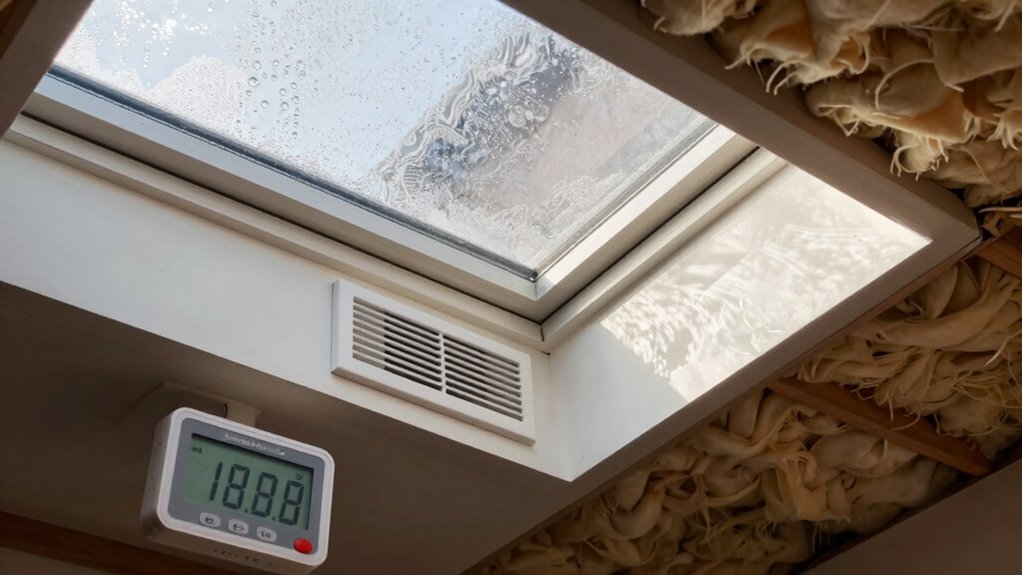
To reduce ceiling condensation, focus on practical fixes: improve ventilation, control moisture sources, and upgrade insulation. You’ll start by ensuring continuous, balanced ventilation in kitchens and bathrooms, with exhaust fans rated to remove moisture efficiently and venting outdoors.
Pair these with air leakage reductions around doors, windows, and attic hatches to prevent warm, moist air from migrating upstairs. Next, identify moisture sources: fix leaks, vent clothes dryers externally, and minimize indoor humidity peaks by using lids on boiling pots and using dehumidifiers when needed.
Finally, upgrade insulation thickness and continuity in attic and roof lines, seal gaps, and install vapor retarders as appropriate for climate. Regular maintenance, moisture monitoring, and prompt repairs keep condensation under control.
Frequently Asked Questions
Can Ceiling Condensation Occur in Warm Climates?
Yes, ceiling condensation can occur in warm climates when moist indoor air meets cool surfaces or poor insulation, creating dew. You’ll reduce it by improving ventilation, sealing leaks, and boosting insulation to keep interior surfaces warmer.
Do Houseplants Contribute to Ceiling Condensation?
Yes, houseplants contribute to ceiling condensation by releasing moisture that adds humidity, increasing air saturation near surfaces; guarantee proper ventilation, avoid overwatering, and use dehumidifiers or exhaust fans to control interior humidity while maintaining plant health.
How Quickly Does Condensation Form After Showers?
Condensation forms within minutes after a hot shower, especially if the bathroom is poorly vented. Expect faster buildup at higher humidity and cooler surfaces; use exhaust fans or dehumidifiers, and improve insulation to slow and reduce accumulation.
Can Ceiling Paint Cause Condensation Issues?
Yes, ceiling paint can contribute to condensation issues if it’s vapor-permeable or inadequately dried, trapping moisture beneath. You’ll improve performance by using breathable primers, proper drying, and high-quality, low-VOC coatings; otherwise, moisture accumulates, promoting mold and damage.
Is Ceiling Condensation Worse With Metal Roofs?
Yes, ceiling condensation can be worse with metal roofs due to greater temperature swings and higher heat transfer, increasing dew point proximity; guarantee proper ventilation, insulation, and radiant barriers to control moisture and prevent condensation buildup.