
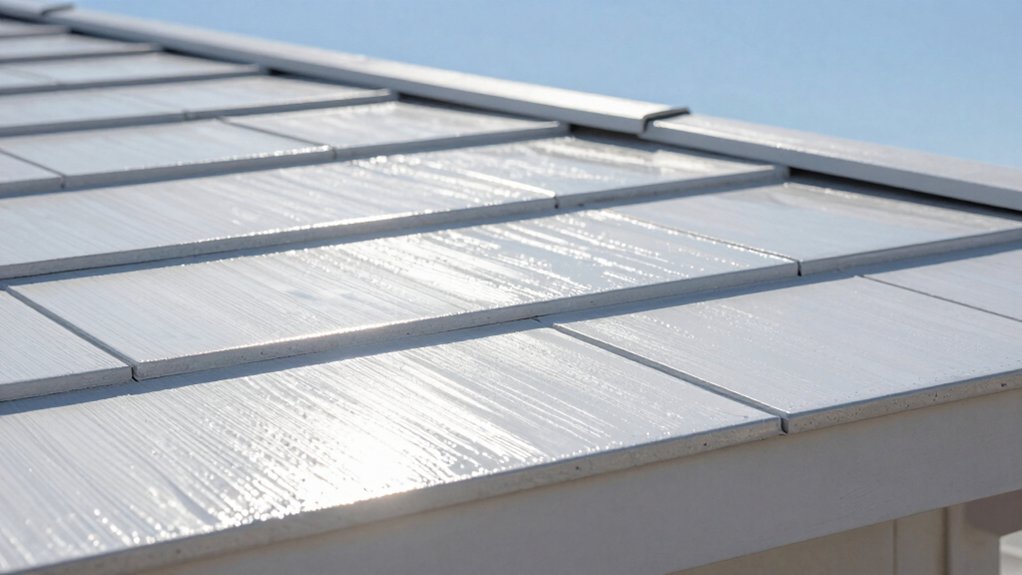
Solar reflective roof paint is a durable coating that uses high-reflectance pigments and a strong binder to reflect a large portion of sunlight, reducing heat absorption and keeping your roof cooler. It combines reflectivity with infrared emissivity to limit heat transfer into the building, lowering cooling loads and energy use. Proper surface prep, primers if recommended, and even coats ensure durability against UV, moisture, and wear. If you want to know more, you’ll discover how to choose, apply, and maintain it.
What Is Solar Reflective Roof Paint?
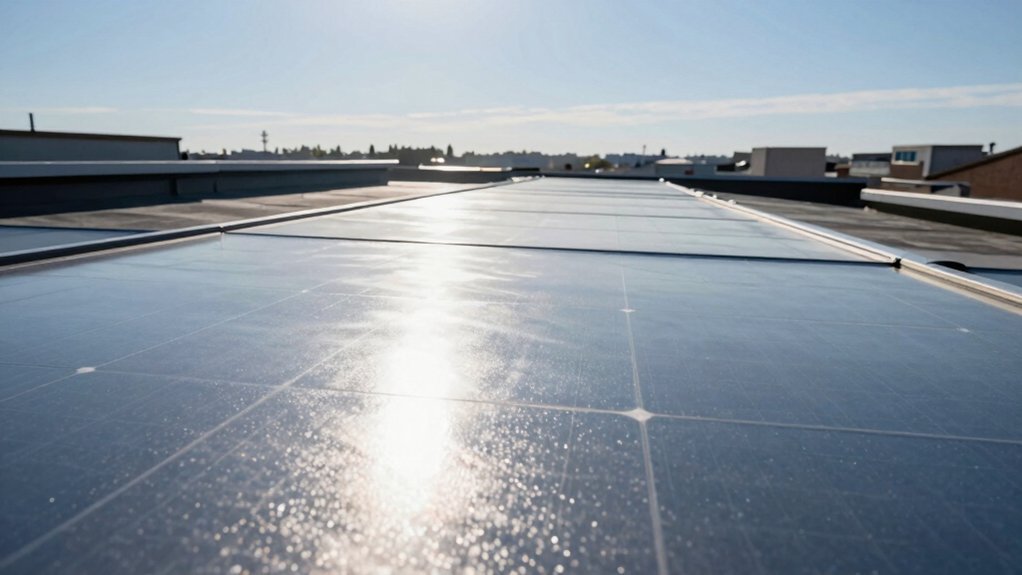
Solar reflective roof paint is a coating designed to reflect a high percentage of sunlight, reducing heat absorption and lowering roof surface temperatures. In material science terms, it combines reflective pigments with binder chemistry to minimize solar gain while maintaining adhesion and durability.
You assess performance through solar reflectance, infrared emissivity, and weather resistance, ensuring the system withstands cycles of wetting and drying. Color selection matters because pigment concentration affects reflectivity and aesthetic compatibility with the building envelope.
You’ll evaluate rooftop material compatibility, coating thickness, and application method to maximize uniform reflectance across the spectrum. Choose formulations that balance high reflectance with UV stability and long-term weathering.
The result is a durable, energy-saving layer that reduces cooling loads without compromising roof integrity.
How Do Reflectivity and Emissivity Cut Heat?
Reflectivity and emissivity work together to limit heat in a roofing system. You reduce heat gain by reflecting solar radiation and emitting absorbed energy as heat at a lower temperature, lowering surface and attic temperatures.
In practice, higher reflectivity lowers the amount of energy entering the roof, while higher emissivity helps release stored heat more efficiently. This combination mitigates heat transfer to the building interior, supporting roof insulation effectiveness and reducing peak cooling loads.
In urban heat scenarios, reflective coatings counteract heat island effects, keeping rooftop surfaces closer to ambient temperatures.
- Improves roof insulation performance by reducing heat flow
- Curtails daytime heat buildup on flat and low-slope roofs
- Lowers cooling demand in urban heat environments
- Decreases thermal gain without relying on mass
- Supports energy efficiency while preserving roof longevity
Benefits: Comfort and Lower Energy Bills
Reducing indoor heat and lowering cooling costs are direct benefits of using solar reflective roof paint. By reflecting more sunlight, you’ll experience cooler indoor temperatures.
This also results in less demand on your air conditioning. This translates to noticeable comfort gains and ongoing energy savings.
Reduced Indoor Heat
Wondering how much comfort and savings you’ll gain indoors when you choose solar reflective roof paint? You’ll notice reduced heat gain as surfaces reflect more solar energy, keeping interiors cooler during peak sun. This lowers cooling demands and stabilizes indoor temperatures without compromising comfort.
Properly applied coating harmonizes with roof insulation and existing construction, enhancing overall thermal performance. It also maintains more uniform indoor conditions, reducing hot spots near ceilings and walls.
With compatible systems, you’ll preserve roof integrity while supporting energy efficiency efforts, including potential load reductions on cooling equipment. In short, indoor heat is controlled, comfort improves, and energy use drops when you pair reflective paint with sound building practices and solar panel compatibility.
- Reflects sun, lowers heat absorption
- Works with roof insulation for steady temps
- Reduces peak cooling load and runtime
- Supports solar panel compatibility and layout
- Improves comfort without added bulk
Lower Cooling Costs
Lower cooling costs follow from the improved thermal performance of a solar reflective roof. When you choose reflective coating, you reduce heat gain, which lowers indoor temperatures and minimizes HVAC runtime. That means steadier comfort without sudden swings, especially during peak sun hours.
You’ll see tangible bill reductions as cooling demands drop, and equipment runs more efficiently over a longer lifespan. Color options matter: lighter hues reflect more solar energy, while darker tones may compromise gains.
Material quality and proper application determine sustained performance, so verify spec sheets and installation guidelines. Environmental impact matters too: selecting low-VOC formulations minimizes emissions and indoor air exposure.
How to Choose the Right Solar Reflective Paint (Checklist)
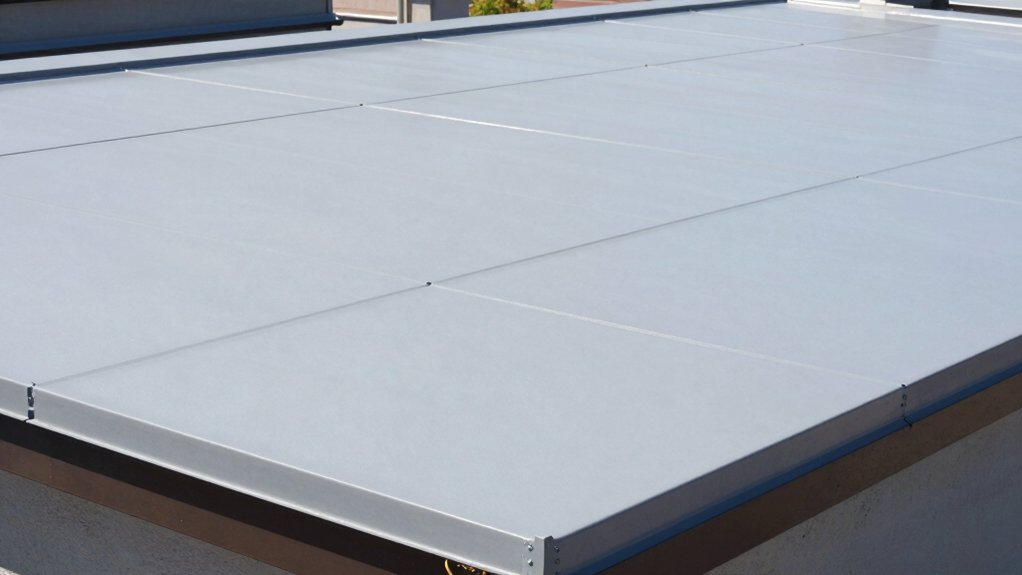
Choosing the right solar reflective paint starts with a clear set of criteria you can verify quickly: reflectivity (measured by solar reflectance), durability under UV exposure, compatibility with your roof type, and the warranty terms.
- Color options: verify aesthetic compatibility and heat performance, since lighter colors aren’t the only option for reflectivity.
- Solar reflectance rating: target a high, documented SR value to ensure heat rejection.
- Weather resistance: check abrasion, moisture tolerance, and chalking specs for your climate.
- Application methods: confirm surface prep, primer needs, and spray vs. roller suitability.
- Compatibility with roof materials: ensure the coating adheres to asphalt, tile, metal, or slate without delamination.
How to Apply, Maintain, and Ensure Longevity
You’re trained on data up to October 2023. To apply solar reflective roof paint correctly, prepare a clean, dry surface, remove loose coatings, and repair cracks. Use a high-quality, breathable primer if recommended by the manufacturer, and select a compatible topcoat with the correct reflectivity rating.
Apply in even coats using standardized application techniques, typically brush, roller, or airless spray, following manufacturer guidelines for film thickness and cure time.
Maintain durability by inspecting after rainfall and during seasonal changes, addressing blisters or peeling promptly. For longevity, keep roof debris-free and avoid aggressive cleaning that can wear the coating.
Document recoat intervals and veil edges to prevent moisture infiltration. Maintenance tips include prompt repairs and periodic performance checks of thermal reduction.
Myths vs. Realities About Solar Reflective Roof Paint
You’ll separate myths from proven results by examining how heat reduction actually occurs and where evidence supports or refutes common claims.
Real-world data on heat mitigation and long-term performance guide you beyond hype, while longevity considerations shape maintenance expectations.
This discussion sets a precise baseline for understanding myths versus realities in solar reflective roof paints.
Myth vs Reality
Myth: solar reflective roof paints always deliver dramatic cooling. Myth vs Reality is about expectations: you’re balancing Sun exposure, coating quality, and installation. You won’t get uniform results without proper surface preparation and correct color choice; color options influence heat absorption and aesthetics, not just appearance.
Realities hinge on system compatibility, coating longevity, and where you live. You’ll achieve meaningful benefits when you select a high-reflectance product with proven performance, and apply it using correct techniques. Application techniques matter for adhesion, durability, and consistency.
Don’t assume instantaneous impact; performance compounds over time with wear. You’ll also consider building envelope, attic ventilation, and climate to interpret outcomes accurately.
- Color options influence appearance and perceived heat
- Application techniques affect adhesion and longevity
- Surface prep determines coating performance
- Infrared reflectance varies by product specification
- Climate and building design modulate results
Heat Reduction Evidence
Does heat reduction from solar reflective roof paint hold up under real-world conditions? In practice, performance varies with climate, building design, and outdoor shading. Tests show modest, context-dependent gains in surface temperatures and indoor comfort, not universal the same across all sites.
You’ll see the strongest effects in hot, sunny environments with unobstructed sun exposure and lower insulation. When mixed shading is present, benefits taper as roof temperatures converge with ambient air. Measurements indicate cooling is influenced by roof color, material emissivity, and ventilation, so reductions in energy use depend on occupancy patterns and thermostat settings.
Urban heat illustrates the potential but also highlights limits; reflective coatings help, yet you must consider site-specific factors and integration with other cooling strategies.
Longevity Considerations
Longevity claims around solar reflective roof paint often mix myths with real-world data. You’ll find durability varies by formulation, substrate, and climate, but you can expect meaningful service life if you choose high-quality coatings and follow proper surface prep.
UV resistance drives long-term performance, yet pigment stability and binder chemistry determine color retention. Color fading occurs more slowly on roofs with reflective white or light-steel tones, but over decades you may still notice subtle shift.
Regular inspection helps catch coating delamination or chalking early. Most warranties cover 5–10 years for color retention and adherence, not universal longevity across all conditions.
Proper maintenance, gentle cleaning, and avoiding abrasive tools extend life.
- UV resistance impact on longevity
- Color fading over time
- Substrate and prep quality effects
- Warranty scope and limits
- Maintenance practices to maximize life
Conclusion
You stand at the gate of a quiet castle, shade and heat kept at bay by a loyal coat of armor—solar reflective paint. Like a disciplined scribe, it reflects the sun and breathes out warmth, easing your castle’s burden. You’ll feel cooler rooms, steadier bills, and longer roof life. Trust the measurements, follow the care plan, and let the roof’s bright shield do the talking. The allegory ends with a practical, proven result: comfort that lasts.