
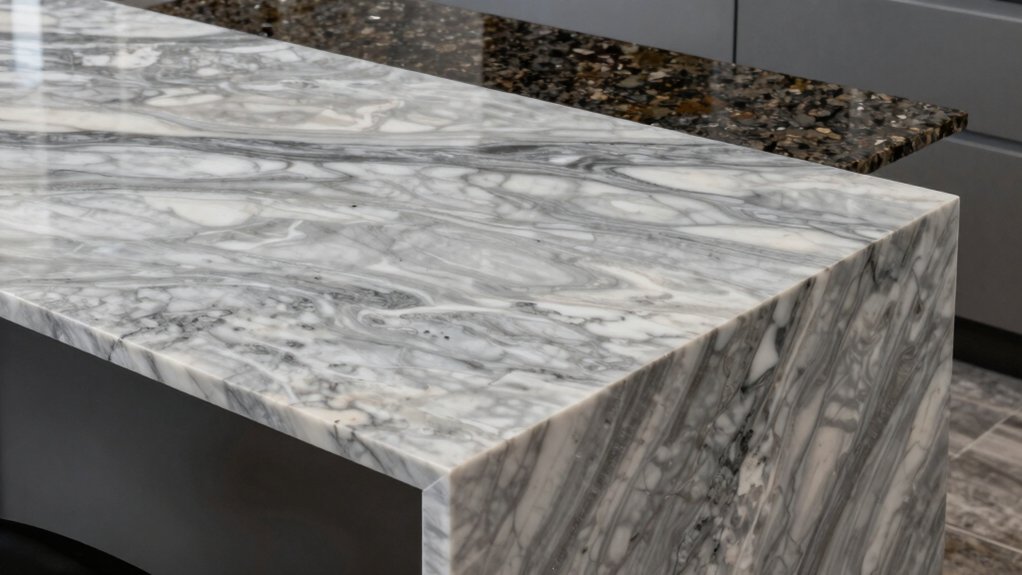
Quartz versus granite comes down to your lifestyle and design goals. If you want a low-maintenance, uniform look with easy cleaning and fewer surprises, quartz is your best bet. If you crave natural character, unique veining, and strong heat resistance with a timeless, organic feel, granite suits you. Quartz is grainless and non-porous; granite needs sealing and a bit more care. Either choice adds value and style—and you’ll uncover more options and tips as you continue.
Quartz vs Granite: Which Holds Up Better?
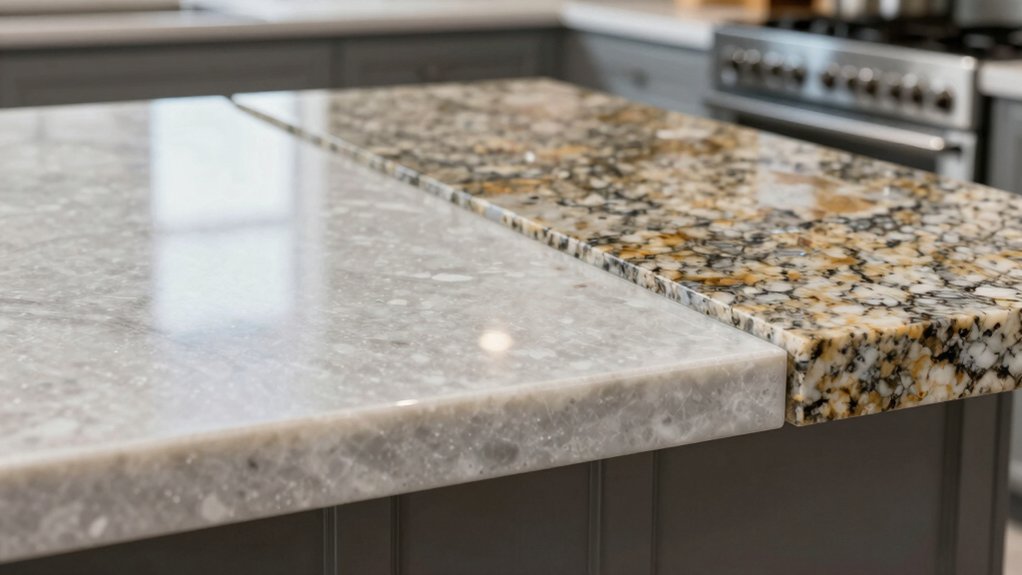
Quartz holds up better than granite in daily kitchen use due to its engineered durability: it’s non-porous, resistant to stains, scratches, and moisture, and it won’t chip as easily as some granite varieties. You’ll notice consistent performance with minimal maintenance, making it feel like a practical ally in shared spaces.
When you factor in color options, you get both reliability and personality in one surface, so you can design around your routine without second-guessing. Installation complexity is typically lower for quartz slabs with professional setup, reducing long-term hassles.
You gain confidence in everyday tasks, from slicing to prepping, knowing you chose a durable, cohesive look. This choice fosters belonging by aligning durability with your kitchen’s daily rhythm.
Quartz and Granite Maintenance: What Really Matters
Maintaining quartz and granite correctly boils down to two things: routine care and prompt stain or damage control. You’ll keep them pristine by sticking to simple cleaning routines and honoring sealing requirements when needed.
For daily care, use a soft cloth, warm water, and a pH-neutral cleaner to wipe surfaces after use. Avoid abrasive pads, citrus cleaners, or ammonia that can dull finishes.
Spills deserve quick attention—blot, don’t wipe, then clean. Recognize that sealing requirements vary by material and brand; some quartz surfaces don’t require it, while many granites benefit from resealing every 1–3 years depending on use.
Protect edges with coasters and avoid cutting directly on countertops. With consistent routines, you preserve value, texture, and the sense of belonging you want in your kitchen.
Quartz vs Granite Appearance: Look, Veining, and Feel
Despite their shared durability, quartz and granite look and feel distinctly different. You’ll notice quartz offers a uniform appearance with controlled color consistency across slabs, while granite presents natural variation and unique veining that can become a signature in your kitchen.
Quartz surfaces feel smooth and consistent to the touch, with a refined surface texture that resists minor scratches and shows color evenly under lighting. Granite, by contrast, reveals mineral pockets and subtle pits; its surface texture varies by slab, giving each countertop a one-of-a-kind character.
If you crave a contemporary, seamless look, quartz delivers predictability. If you prefer organic, evolved beauty, granite delivers personality. Choose based on how you want your space to read daily—a polished, cohesive vibe or a naturally evolving one.
Costs and Long-Term Value: Quartz vs Granite
While upfront price often grabs attention, the long-term value of quartz and granite hinges on durability, maintenance needs, and resale appeal. You’ll weigh pricing differences against lifespan and care needs, not just the sticker shock.
Quartz tends to offer consistent pricing with engineered composition, reducing surprise costs, while granite pricing varies by slab quality and source. Installation costs matter, since both materials require professional installation, skilled sealing, and proper substrate prep.
Quartz minimizes ongoing maintenance, potentially lowering yearly costs, whereas granite’s natural porosity may demand more regular sealing and rare repairs.
Consider resale appeal in steady markets: durable, low-maintenance options attract buyers.
Everyday Use: Stain Resistance and Heat With Quartz and Granite
Quartz and granite hold up differently in daily use, so understanding their stain resistance and heat tolerance helps you pick what fits your kitchen routine.
- Stain resistance: quartz resists most common spills with sealed surfaces, while granite needs timely cleanup to avoid etching on soft minerals.
- Heat tolerance: quartz withstands ordinary hot cookware, but avoid direct high-heat exposure; granite endures higher temps if you use trivets.
- Sealing techniques: granite benefits from periodic sealing; quartz typically doesn’t require it, keeping maintenance simpler.
- Edge styles: choose edges that minimize staining risk and hide minor wear, especially where you prep and serve.
Your choice supports belonging to a kitchen you trust daily.
Slabs, Finishes, and Installation: What to Expect
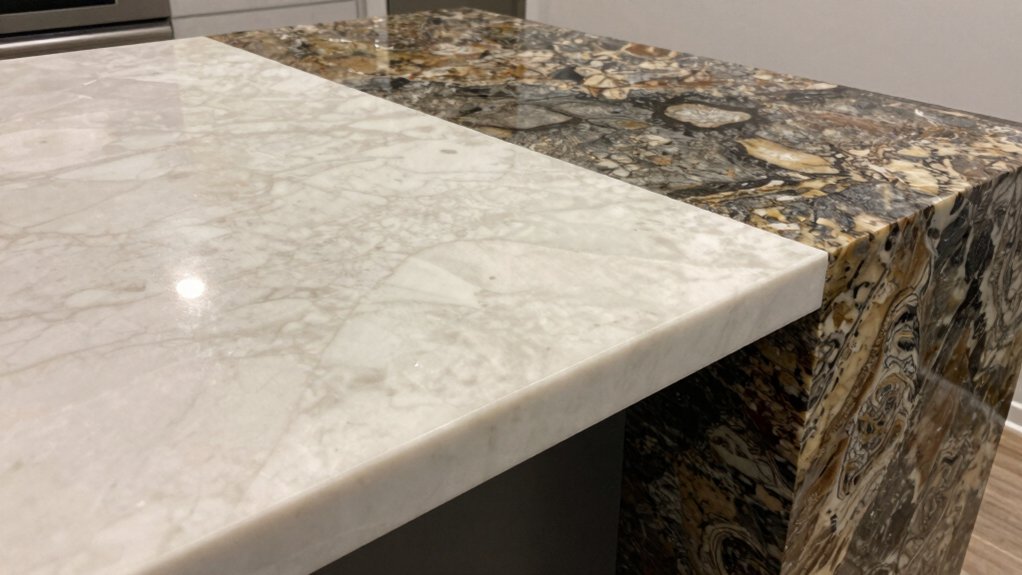
Slabs determine the look and durability of your counters, and you’ll find a range of options from solid slabs to large-format slabs that minimize seams.
When you pick finishes, consider matte for glare reduction or a polished surface for easy wipe-downs, but balance that with daily usage.
Seam integration matters: some layouts hide seams with longer slabs, others reveal them where cuts are unavoidable.
Edge profiles shape the feel of the kitchen, from sharp, modern lines to softer, eased edges that age gracefully.
Installation timing affects downtime, so align delivery with cabinet readiness and professional mounting.
Plan ahead for seasonal expansions, substrate prep, and subtle color shifts.
With careful selection, your counters echo your style while performing reliably.
Choosing Quartz or Granite for Your Kitchen Lifestyle
When you’re choosing between quartz and granite, start by weighing durability and longevity to fit how you cook and entertain.
Consider maintenance and care so you know what to expect day to day, then match the style and variations to your kitchen’s look and feel.
This quick lens helps you align each material with your lifestyle, from resilience to upkeep to design impact.
Durability and Longevity
Durability and longevity hinge on how you use and care for your countertops. You’ll notice surface resilience and impact resistance differ between quartz and granite, but both stand up to daily life when installed and used properly.
- Surface resilience: quartz resists stains and scratches better in everyday kitchen tasks.
- Impact resistance: granite can absorb some impact but may chip if hit hard.
- Consistency: engineered quartz offers uniform performance; granite varies by slab.
- Real-world living: sealant needs and annual checks affect long-term strength.
Choose based on your routine—quiet, steady use favors quartz; high-traffic gatherings with heavy use may lean granite.
Either way, you’re investing in a durable center for your home, built to endure.
Maintenance and Care
Maintenance and care dictate how long your countertop looks and performs at its best. You’ll protect your investment with a straightforward routine tailored to quartz or granite.
For quartz, maintenance is minimal: wipe with a damp cloth, use mild soap, and avoid abrasive cleaners.
Granite requires a bit more: seal periodically to maintain stain resistance and curb moisture penetration. Sealing requirements vary by product and usage, so follow manufacturer guidelines and re-seal as advised.
Scratch susceptibility differs—quartz resists scratches better under daily tasks, while granite’s hardness can still mar if you’re not careful with sharp objects. Use cutting boards, trivets, and avoid heat directly on surfaces.
With consistent care, you’ll enjoy consistent beauty and long-term performance in your kitchen.
Style and Variations
Quartz and granite set the tone for your kitchen, so choose based on style goals and how you live in the space. Your decision hinges on color options and edge styles, which define mood and practicality in daily use.
- Color options: from bold veining to solid tones, pick hues that complement cabinetry and lighting.
- Edge styles: go from classic eased to dramatic beveled or waterfall for personality and flow.
- Pattern scale: choose grains and patterns that suit countertop traffic and hiding minor marks.
- Finish feel: polished for glam, honed for softer, kitchen-friendly texture.
Consider how texture, pattern, and edge influence flow, then align with maintenance and resale goals to finalize your choice. Belonging comes from a countertop that mirrors your daily rhythm.
Frequently Asked Questions
Can Quartz Chips Be Repaired Like Granite Scratches?
“Turn the page”—quartz chips can be repaired, but not like granite scratches. You’ll likely pursue DIY repairs for small chips, yet reserve professional restoration for deeper damage to restore shine and durability.
Do Different Quartz Brands Affect Durability Comparison?
Yes—different quartz brands affect durability, with higher-quality brands often offering better impact resistance and consistency. Look for strong brand reputation and extensive warranty coverage, because you’ll feel confident choosing a trusted option that aligns with your long‑term needs.
How Eco-Friendly Are Quartz vs. Granite Countertops?
Quartz countertops are eco-friendly enough for many homes; granite leans traditional. You’ll love sustainable materials and lower environmental impact when you choose quartz, while caring for the planet with practical, purposeful, community-minded decisions.
Are Countertops Resell Value Impacted by Material Choice?
Resale value does tend to reflect material impact, but you’ll notice stronger results from overall kitchen quality and updates. You choose durable, timeless materials, finish, and maintenance; those priorities boost appeal and resale value more than price alone.
Which Countertop Is Better for Heavy Kitchen Use?
Quartz is better for heavy use. It’s durable, chip-resistant, and low-maintenance, keeping your kitchen aesthetics sharp. With proper maintenance considerations, you’ll feel confident and belong, knowing your surfaces stay pristine under daily wear.