
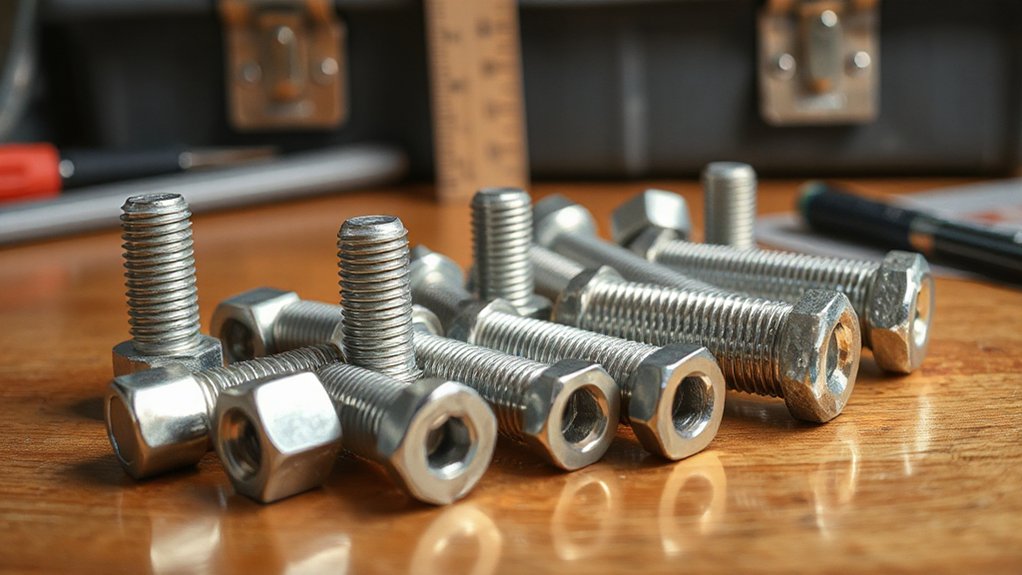
For home projects, you’ll most often reach for wood-to-wood bolts like coarse-threaded lag screws and carriage bolts for framing, trim, and decking, plus wood-to-metal screws that resist pullout in post-installed joints. For metal-to-metal connections, use structural bolts or heavy-duty carriage bolts designed for load distribution and corrosion resistance. Material matters too: steel for strength, stainless for durability, and brass for decorative/low corrosion. Finishes like galvanized or epoxy coatings extend life. Want more specifics? You’ll learn more next.
Why Bolts Matter in Home Projects
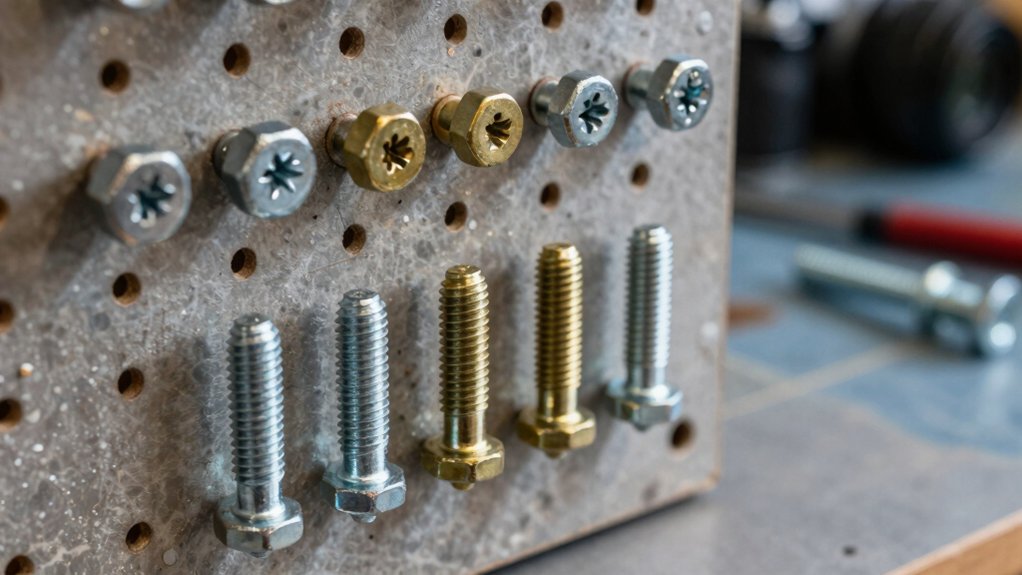
Bolts are the backbone of many home projects, linking framing, fixtures, and furniture with reliable strength. You need to understand why bolts matter, because precision choices determine safety, longevity, and performance.
Bolts provide clamping force, shear resistance, and accurate alignment, reducing movement that erodes joints over time. In cabinets, doors, and structural interfaces, the right bolt type delivers predictable load distribution and easy reassembly.
Your selection should consider material, thread pitch, and head style to match loads and aesthetics. Decorative accents can’t mask weak connections; they’ll fail under stress if fasteners aren’t up to spec.
When you plan, consult fastener charts, verify torque requirements, and equip yourself with dependable fastening tools. Power comes from knowing how each bolt supports the project’s integrity and finish.
Wood-To-Wood Fasteners: the Best Bolt Types for Framing and Trim
Framing and trim require fasteners that pair strength with install ease, so selecting wood-to-wood fasteners that resist pullout and shear is essential. You want bolts that maximize thread engagement in low- to moderate-strength lumber, minimizing wallow and misalignment.
In this space, consider bolts with coarse threads for better grip and a smooth shank to prevent binding during tightening. Stainless and hot-dip galvanized finishes deter bolt corrosion in typical indoor environments, while exterior use demands thicker protective coatings.
For framing, use structural screws or longer bolts with compliance to shear and tension loads, ensuring full thread contact across joints. Track bolt corrosion risk and install torque requirements to preserve joint integrity.
Prioritize fasteners that deliver consistent pullout resistance without over-stressing lumber.
Wood-To-Metal and Metal-To-Metal Bolts: When to Use Them
You’ll consider material compatibility first, noting when metals like steel, aluminum, or stainless steel pair with wood to prevent galvanic corrosion and guarantee long-term performance.
Next, you’ll weigh load and shear effects to choose fasteners that carry the expected forces without loosening or shearing under use.
Finally, you’ll compare fastener head types to balance installation ease, load distribution, and corrosion resistance in wood-to-metal and metal-to-metal assemblies.
Material Compatibility Notes
When choosing fasteners for wood-to-metal or metal-to-metal connections, material compatibility dictates both strength and longevity. You must match materials to resist galvanic corrosion, ensure compatible hardening, and account for thermal expansion differences.
In wood-to-metal scenarios, select bolts with coatings or inserts that prevent moisture ingress and distribute load without crushing the wood fibers. For metal-to-metal joints, favor compatible steels or stainless options with matching strength and coating systems to minimize galvanic cells.
Pay attention to thread forms, pitch, and head types that suit vibration and load paths, avoiding over-torquing that could strip threads or warp assemblies. Consider environmental exposure—salt, humidity, and temperature swings—because corrosion resistance and thermal expansion behavior drive long-term performance.
Choose fasteners that align mechanical and environmental demands, delivering predictable, lasting connections.
Load And Shear Effects
Load and shear forces drive bolt selection by defining how load transfers through wood-to-metal and metal-to-metal joints. You assess joint demands, noting whether shear or withdrawal governs performance, and match bolts accordingly.
For wood-to-metal applications, you optimize load paths by choosing fasteners with sufficient bolt length to engage the substrate securely without protrusion that can snag loads. In metal-to-metal connections, you prioritize shear strength, ensuring the bolt and nut resist seating failures under cyclic loads.
Consider thread pitch; finer pitches distribute load more evenly and resist loosening, while coarser pitches simplify installation in softer bases. Always verify anticipated forces, material thickness, and any withdrawal risk, then select a bolt length and pitch that maintain clamping force without over-penetration.
Precise sizing yields durable, load-resilient joints.
Fastener Head Types
Choosing the right fastener head type hinges on the joint context and installation sequence: wood-to-metal and metal-to-metal connections demand distinct head designs to optimize load transfer, ease of driving, and final flushness.
You evaluate whether the bolt head will sit flush against wood or metal, and how the surrounding material reacts to preload. For wood-to-metal, you prioritize fastener head types that minimize cam-out and distribute load across fibers, avoiding crush.
For metal-to-metal, bolt head design emphasizes shear resistance and clamp consistency, often favoring hex or flange heads with compatible drivers.
Consider countersinking needs, corrosion potential, and finish compatibility to prevent loosening. In sum, select fastener head types that maximize grip, minimize deformation, and preserve joint integrity.
Choosing Bolt Materials: Steel, Stainless, and Brass Explained
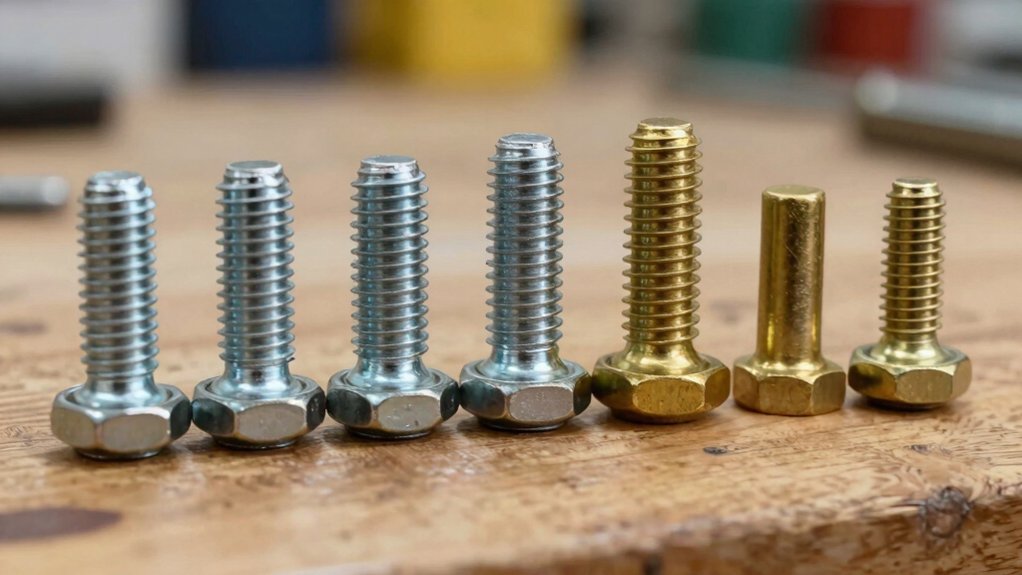
When you pick bolt materials, steel offers strength and affordability, while brass trades some strength for corrosion resistance.
Stainless steel blends durability with low maintenance, but at a higher cost and potential galvanic concerns in certain assemblies.
Compare brass and stainless to determine whether corrosion resistance or tensile performance best fits your project needs.
Steel Characteristics
Steel is the backbone of most home hardware, offering a range of grades and finishes that balance strength, cost, and corrosion resistance. You evaluate steel by alloy content, heat treatment, and coating, because these factors dictate performance in real-world conditions.
Low-carbon grades yield ductility suitable for light-duty fastening, while high-strength applications rely on alloyed steels with controlled heat treatment to achieve predictable tensile strength. Surface treatments—galvanizing, zinc-nickel, or epoxy coatings—address exposure to moisture and chemicals without inflating mass or cost.
You’ll prioritize corrosion resistance when exterior or damp environments loom, and tensile strength when load demands are high. Consistency matters: standardized grades ensure interchangeability, reliability, and safe load limits.
Brass vs Stainless
Brass and stainless offer distinct advantages for fasteners, with brass providing excellent corrosion resistance in humid or salt environments and stainless delivering higher strength and durability for load-bearing or exterior applications.
When you choose brass, you win in decorative hardware contexts where appearance matters and creep resistance is less critical; it’s superb for aesthetic fixtures and exposed faces. Stainless, by contrast, shines in structural roles, resisting rust longer and tolerating temperature swings with minimal deformation.
Consider bolt installation techniques: stainless often requires lubricants and proper torque to prevent galling, while brass may seize less, but can deform under heavy loads.
Use brass for style-driven, low-load applications, stainless for high-load, outdoor, or mission-critical connections. Balance appearance, strength, and environment to optimize performance.
Finishes and Coatings That Resist Rust and Wear
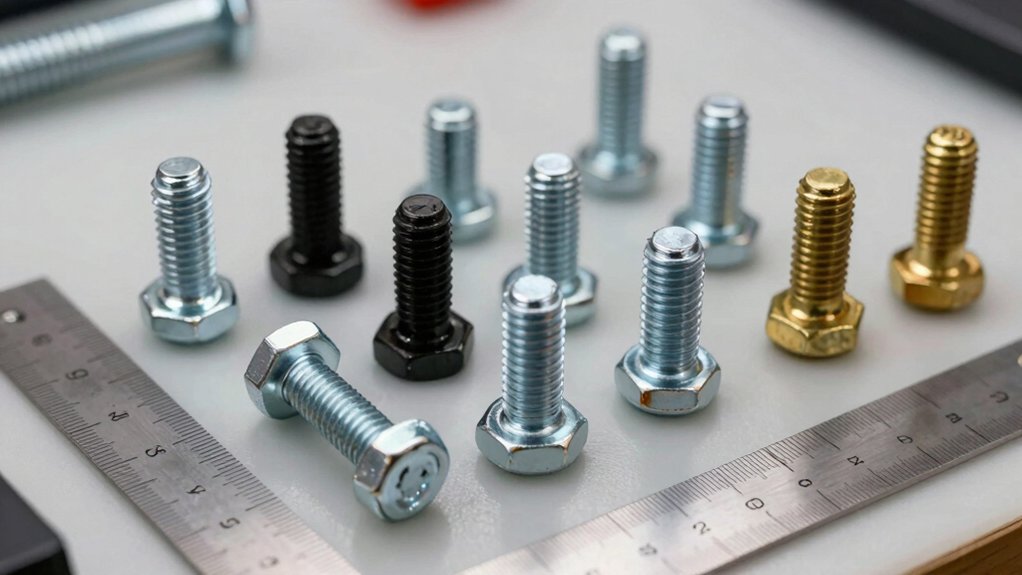
Tech finishes and coatings protect bolts from rust and wear by forming barriers that block moisture and inhibit metal reactions. You’re evaluating protection that lasts under stress, not just looks. Surface finishes vary, but performance hinges on adhesion, thickness, and environmental fit.
Anodizing, electroplating, and certain polymer coatings deliver strong corrosion resistance by sealing microchannels and impeding oxygen diffusion. For high-heat or salt-rich environments, consider ceramic or PVD coatings that resist wear without flaking.
Zinc-based galvanizing provides economical rust defense for general use, yet demands occasional inspection. Multi-layer systems, combining primers with topcoats, enhance durability where abrasion matters.
Choose finishes that align with load cycles, exposure, and maintenance expectations. Precision in selection yields predictable life, minimizes downtime, and maintains structural integrity over time.
How to Pick Bolt Size and Grade for Your Project
Choosing the right bolt size and grade starts with matching the load, environment, and connection type to the bolt’s specifications. You must quantify the expected shear and tension forces, then select a diameter and thread pitch that sustain those loads with a safe margin.
Consider material compatibility with the base and nut, and account for corrosion exposure, temperature, and vibration. For most home projects, you’ll balance strength with access constraints and cost.
Grade signaling is critical: higher grades offer greater tensile strength but reduce ductility and ease of installation. Always verify thread engagement—adequate depth and engagement length prevent loosening and pullout.
Opt for a deliberate, documented bolt installation process, including proper torque targets and lubrication when required, to guarantee reliable performance under real-world conditions.
Fastening Tips and Mistakes to Avoid
Even with the right bolt size and grade, fastening mishaps can undermine an entire project; practice and planning matter as much as material choice. You must sequence tasks, verify alignment, and prepare threads before torque.
Master threading techniques to ensure clean engagement and full thread contact, preventing cross-threading and stripped hardware. Use a sharp punch to start fasteners squarely, avoid over-tightening, and respect load paths to maintain structural integrity.
Observe recommended torque values and thread lubrication when appropriate; under-tightening weakens joints, over-tightening causes streaked threads and premature failure. Document any deviations from standard procedures to spot recurring bolt installation mistakes and refine your process.
Keep tooling sharp and clean, check for corrosion, and replace stressed fasteners promptly. Precision in preparation reduces risk, accelerates results, and delivers enduring strength.
Frequently Asked Questions
How Do I Determine Bolt Length for Through-Bolting?
To determine bolt length for through-bolting, you measure bolt measurement from shoulder to threads, plus nut thickness, ensuring you don’t exceed the hole. Consider thread length and load; pick the shortest that engages fully.
What’s the Best Bolt for Weather-Exposed Outdoor Projects?
For outdoor, weather-exposed projects, choose corrosion resistance stainless steel or hot-dip galvanized bolts, prioritizing material selection. You’ll maximize longevity, minimize maintenance, and guarantee reliable performance under moisture, salt, and temperature cycles with precise, analytical reasoning.
Can I Substitute Screws for Bolts in Framing?
Bolt compatibility matters: you shouldn’t substitute screws for bolts in framing, because strength and shear limits differ. You need proper bolts for load paths; screw vs bolt may fail. Symbolically, trust the anchor you choose.
How Do I Prevent Thread Galling on Stainless Bolts?
To prevent thread galling on stainless bolts, you lubricate threads and verify material compatibility, using thread lubrication consistently. You’ll apply the lubricant prior to assembly, check compatibility with coatings, and ensure proper torque to maintain strength and reliability.
Are There Budget-Friendly Bolt Options That Still Last?
Yes—budget-friendly options exist: cost effective fasteners, including alternative materials, can last if chosen for load, environment, and torque. You’ll maximize value by evaluating corrosion resistance, coating, and joint integrity, ensuring durability without overspending.
Conclusion
If you’re tackling home projects, you’ll want bolts that match the task—strong, reliable, and suited to materials and loads. Remember to choose the right type for wood, metal, or wood-to-metal connections, pick appropriate materials and finishes, and size and grade correctly. Double‑check threads and preload, avoid over-tightening, and use corrosion‑resistant options where moisture is present. Like a precise set of gears, proper bolts keep everything secure and moving smoothly. They’re the quiet engineers of your home.