
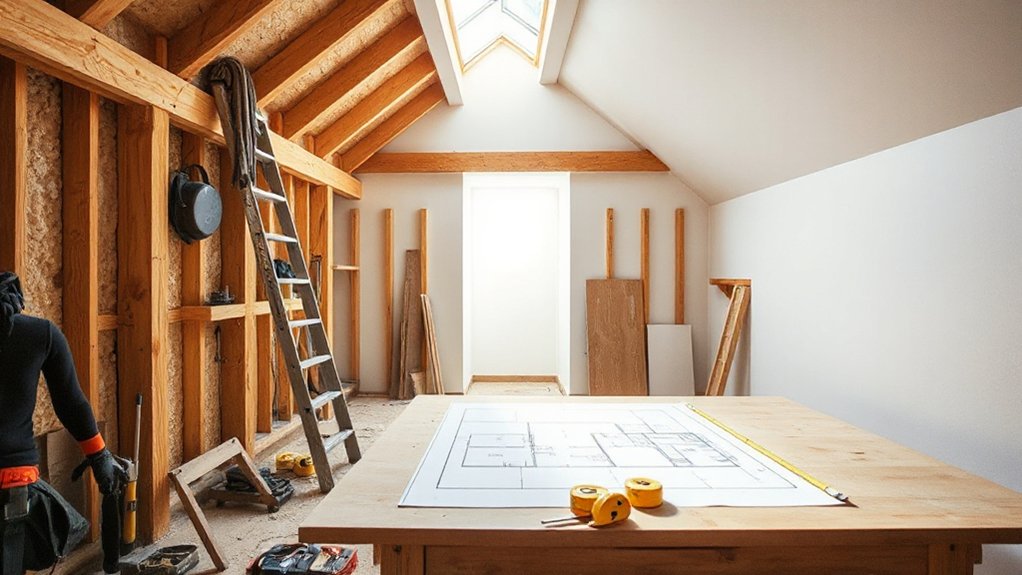
Planning a loft conversion in a terraced home starts with a precise assessment of your existing roof structure, loads, and potential truss configurations, followed by a clear plan for permits, party-wall responsibilities, and budget. You’ll map constraints, daylight strategies, and ventilation early, then align design with local regulations and your goals. Don’t overlook neighbour relations and contractor coordination. The path forward hinges on a detailed, phased plan that keeps risks visible and milestones tangible. You’ll want to know what comes next.
Terraced Loft Conversions: What’s Involved for You
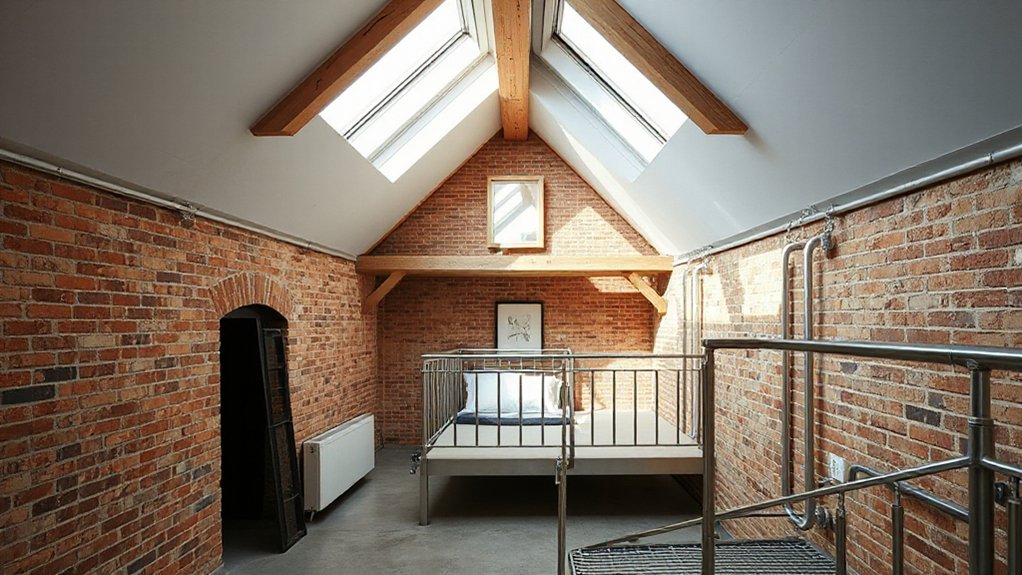
Terraced loft conversions involve extending your roof space while maintaining the terrace’s external appearance and alignment with adjacent homes. You assess structural realities, adjacent party walls, and shared drainage, then outline scope, constraints, and expected outcomes.
The process emphasizes historical preservation where applicable, ensuring any alteration respects heritage features, materials, and local guidelines. You determine roof geometry, insulation strategies, and vertical access, balancing headroom with existing eaves.
Structural loads, load paths, and party-wall agreements define safe execution, while service routes—electrical, plumbing, ventilation—are planned to minimize disruption to neighbors.
Aesthetic enhancements focus on consistent window alignment, brick or render finish, and terrace continuity.
Documentation includes plans, approvals, and maintenance implications, guiding procurement, contractor selection, and schedule synchronization for timely delivery.
Check Permits and Building Regs for Terraced Homes
Before starting any terraced loft project, verify the permits and building regulations that apply to your property. This section outlines the procedural checks you must perform before design work begins.
Identify local planning constraints, such as permitted development rights, listed-building considerations, and conservation-area stipulations, and determine whether planning permission or a prior notification is required.
Consult the building control authority for structural, fire, and access compliance, including required energy efficiency measures and ventilation standards.
Confirm party-wall responsibilities under the Party Wall etc. Act 1996 to avoid disputes with neighbors.
Assess historical preservation guidelines that may constrain exterior changes, and document any restrictions on rooftop alterations or dormers.
Finally, guarantee documentation aligns with energy efficiency targets and conservation requirements to streamline approvals.
Feasibility: Roof Space, Trusses, and Structural Load
Determining feasibility for a loft conversion hinges on roof space, truss configuration, and the existing structural load. You assess roof geometry, including ridge height, hip angles, and any existing dormers, to determine usable headroom and floor area.
Next, you identify truss types, joints, and bearing points, evaluating whether additional loads can be accommodated without compromising stability. Then you quantify dead and live loads, including floor loading, insulation, and potential snow or wind forces, comparing results with governing standards.
If capacity is marginal, you plan structural reinforcement before any build phase. Implementing roof insulation and proper thermal detailing is essential for efficiency.
Document required reinforcement measures, sequencing, and cost implications. Ensure calculations align with building regs and obtain professional sign‑off before proceeding.
Light, Layout, and Ventilation for Small Terraces
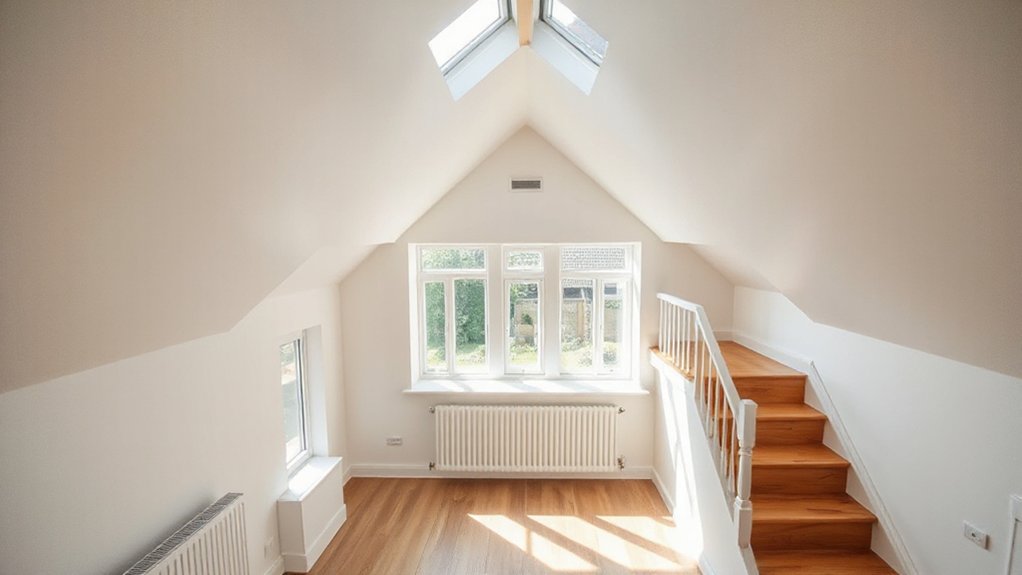
You’ll begin by evaluating natural light strategies to maximize daylight on compact terraces without compromising privacy.
Next, you’ll outline compact layout optimizations that preserve function and flow in tight spaces.
Finally, you’ll specify ventilation and airflow design requirements to maintain comfort and indoor air quality within limited terrace footprints.
Natural Light Strategies
How can you maximize natural light, optimize layout, and guarantee ventilation on a small terrace? You structure glazing strategically, prioritizing high-iceberg moderately tinted skylights and wall-to-wall openings where feasible, to harvest winter sun without overheating.
Use narrow, vertical transoms with operable sashes to maintain cross-ventilation across occupancy zones. Position stairs and mezzanine access to avoid obstructing light paths; align corridors to reflect daylight deeper into the loft.
Employ reflective interior color schemes to amplify illumination, choosing neutral bases with mid-tone accents that reduce glare. Integrate decorative window treatments that modulate brightness without blocking sightlines.
Seal acoustically around openings and balance shading with operable louvers for seasonal control. Document performance targets for glare, U-value, and ventilation rate to inform build decisions.
Compact Layout Optimizations
To optimize a compact terrace layout, align light paths with functional zones and minimize obstruction by structural elements. You should map primary circulation and storage to avoid dead zones, employing a grid-based approach to preserve sightlines and daylight.
Implement space zoning by clearly delimiting uses—sleep, work, and leisure—without full walls, using low partitions, color cues, or built-in furniture to maintain openness.
Prioritize vertical storage solutions: tall units, bed alcoves, and wall-mounted desks reduce floor clutter while improving usable area.
Use multi-functional pieces: sofa beds, fold-away tables, and extendable countertops that serve double duties during peak hours.
Ensure ventilation-friendly layouts by avoiding obstructed corners and maintaining cross-flow through strategic openings.
Regularly reassess furniture footprint against evolving needs to sustain efficiency.
Innovative storage optimizes capacity; space zoning preserves flow.
Ventilation and Airflow Design
Ventilation and airflow on small terraces must be deliberate and data-driven: optimize light paths and layout to promote cross-ventilation while minimizing stagnation. You assess room geometry, window operability, and stack effects to model air movement, then translate results into ducting and vent placement.
Prioritize continuous cross-ventilation corridors and balanced inlet–outlet ratios, aligning openings with prevailing winds and interior zones that generate pressure differentials. Use continuous soffit vents or clerestories to maintain air exchange without compromising interior aesthetics.
Select insulation, seals, and penetrations to reduce leakage yet allow controlled ventilation during extremes. Integrate mechanical ventilation with heat recovery where feasible to boost energy efficiency while preserving comfort.
Document performance targets, monitor results, and adjust apertures accordingly to sustain precise airflow; avoid disrupting light quality or spatial clarity.
Neighbours, Party Walls, and Your Shared Footprint
If you’re planning a loft conversion, understanding neighbours, party walls, and your shared footprint is essential to avoid disputes and delays. You’ll map shared boundaries to define ownership and determine which sections fall under party-wall legislation.
Identify boundary features, then verify existing rights of light, access, and light transmission for neighboring properties. Document party-wall agreements with clear scope: construction methods, sequencing, and vibration limits to minimize disruption.
Assess potential privacy concerns arising from added windows, skylights, or dormers that overlook adjacent homes; plan screening or repositioning where necessary.
Coordinate communication with neighbours early, presenting a neutral plan and a single point of contact. Maintain a concise audit trail: notices, responses, drawings, and written conditions to support compliance and swift resolution if conflicts emerge.
Budget, Timeline, and Contractor Coordination
Establish your Budget Allocation early to align scope with funds and set contingency targets.
Outline Contractor Coordination Essentials, defining roles, communication cadence, and decision rights to prevent delays.
Map Project Milestone Scheduling with clear deadlines, review points, and approval gates to track progress and manage risks.
Budget Allocation Timeline
How should you allocate your budget and schedule for a loft conversion? Remark the allocation framework first: establish a baseline total, then distribute by phase and risk.
Begin with design and approvals, typically 8–12% of total, reserved for contingencies.
Next, allocate structural and roofwork costs, including Roofing materials, to a dedicated line item with a ±15% tolerance.
Interior lighting costs should follow, scoped for circuiting, controls, and fixtures, ensuring integration with existing systems.
Utilities and ventilation get a separate envelope, plus insulation and fire safety provisions.
Timeline anchoring is essential; map milestones to permitting, method choice, and supplier lead times, maintaining a 5–10% float for unexpected delays.
Finally, align contractor coordination tasks with payment triggers to preserve cash flow and accountability.
Contractor Coordination Essentials
Effective contractor coordination hinges on integrating budget, timeline, and oversight into a single, accountable plan. You align cost control with procurement, ensuring quotes reflect scope and contingencies, and document approvals before any purchase.
Contractor selection framing prioritizes qualified, insured, and licensed trades, with objective criteria and a transparent scoring process to minimize risk.
You establish communication protocols that specify roles, reporting cadence, and escalation paths, reducing misinterpretation and rework.
Timelines are anchored to a critical-path method, linking milestones to task dependencies and material lead times.
You implement a centralized tracking system for changes, rebaselining when necessary, and maintain real-time visibility for stakeholders.
This disciplined approach sustains budget integrity, predictable progress, and cohesive coordination across the terraced loft conversion team.
Project Milestone Scheduling
Project milestone scheduling integrates budget, timeline, and contractor coordination into a single, actionable framework. You align milestones with required permits, material deliveries, and weather contingencies, then lock in dates for interior lighting design approvals and rough-ins.
Establish a budget baseline by sequencing costs for roofing materials, insulation, and structural mods, and assign owners for cost control at each milestone.
Create a critical-path timeline that marks procurement, site access, and inspection windows, ensuring minimal disruption to the terraced property’s neighbors.
Coordinate trades with clear handoffs, documented change orders, and progress checkpoints.
Track risk factors such as supply lead times and access constraints, updating contingency buffers accordingly.
Use objective metrics to verify milestone completion before advancing, ensuring roofing materials and interior lighting decisions meet compliance and performance criteria.
Smart Storage and Functional Zoning in Tight Spaces
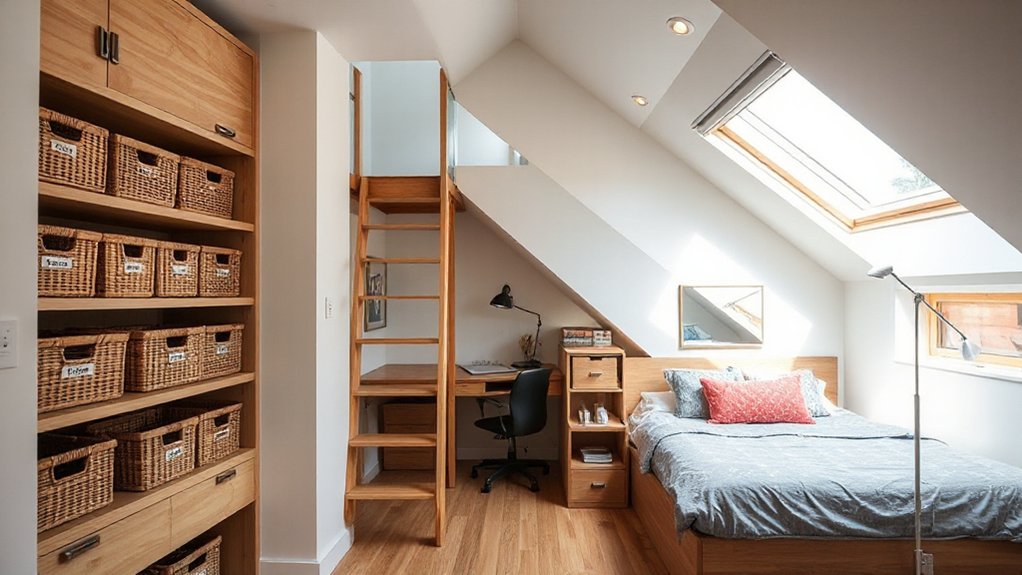
Smart storage and clear zoning are essential in tight loft spaces, where every square meter counts and clutter quickly overpowers function. You’ll design systems that maximize capacity without encroaching on circulation. Begin with a modular storage framework: wall-mounted cabinets, integrated benches, and under-eave drawers that align with ceiling heights.
Prioritize vertical solutions to reduce floor clutter, and label compartments for quick retrieval. Functional zoning should follow a logical sequence: sleeping, work, dressing, and storage zones placed along traffic routes to minimize crossflow. Use defined boundaries—visual lines or material shifts—to reinforce separation without isolating areas.
Select multiuse furniture that converts between functions, such as bed-storage hybrids or desk-integrated shelving. Regularly audit contents to maintain efficiency, ensuring smart storage remains unobtrusive and zones stay clearly legible.
From Approvals to Build: A Safe Construction Plan
From approvals to build, you’ll translate design intent into a safe, compliant construction plan by aligning permits, specifications, and risk controls into a cohesive sequence.
You establish a master schedule that links design documents to procurement, site logistics, and inspection milestones.
Define scope boundaries for structural, electrical, and mechanical trades, with clear interfaces to prevent rework.
Integrate supplier qualifications, method statements, and permit conditions into a single control plan.
Specify lighting fixtures with performance criteria, safety ratings, and installation sequencing to minimize disruption and risk.
For roofing materials, align load paths, weatherproofing, and compatibility with existing terraces.
Maintain change control, risk registers, and daily briefings to preserve traceability and accountability from approval to handover.
Continuous verification guarantees compliance and safe, predictable progression.
Frequently Asked Questions
How Will Loft Stairs Affect Floor-To-Ceiling Height in Tiny Terraces?
Loft stairs reduce floor-to-ceiling height slightly; you’ll lose headroom where stairs encroach. To minimize impact, prioritize staircase design that preserves headroom, and optimize headroom through precise alignment, riser heights, and landing placement for efficient headroom optimization.
Can I Preserve Original Features While Maximizing Headroom?
You can preserve original features while maximizing headroom by integrating careful interior lighting and targeted structural reinforcement, ensuring joists and roof timbers are supported without compromising aesthetics or period details. Maintain character while optimizing interior proportions and energy efficiency.
What’s the Best Insulation Strategy for Limited Space?
For limited space, optimize Thermal efficiency by selecting high-performance Insulation types, like rigid foam boards and mineral wool, layered within rafter bays, ceiling joists, and between studs; seal all gaps, plus air leakage barriers, for continuous coverage and reduced warm-up loss.
How Do Party Wall Agreements Impact Final Design Choices?
Party wall process and legal considerations govern final design choices, shaping layouts, trims, and loads you can share. You’ll coordinate notices, responses, and schedules, ensuring compliance, avoiding conflicts, and avoiding delays as you implement precise, structured, technical plans.
Are There Grants or Incentives for Terraced Loft Conversions?
There are limited Financial incentives for terraced lofts; grant eligibility depends on local programs. You should consult your council and housing associations to identify eligible schemes, verify criteria, and apply promptly, noting documentation, timelines, and potential competitive grants.
Conclusion
So you’ve mapped the permits, checked the loads, and drafted a flawless timeline—brilliant, really. Because nothing says “smooth build” like arguing over party walls while the scaffold sways in a gentle breeze. You’ll master daylight with clever skylights, maximize storage with every inch, and still thank the structural engineer for their weekly miracles. In short, you’ll quietly transform a cramped attic into usable space, all while keeping your sanity, neighbours, and building regs impeccably aligned. Irony included, of course.