
Like a watchman in a quiet street, you’ll see how small choices compound into real security. You’ll assess risks, then layer defenses with sturdy doors, reinforced windows, lighting, and clear protocols for smart devices. Evidence points to a mix of deterrence, accessibility limits, and community action as most effective in urban UK settings. If you want concrete steps that scale with your home and budget, you’ll want to follow the practical path that balances cost, practicality, and ongoing maintenance.
How to Harden an Urban Home on a Budget: A Practical Step-by-Step Guide
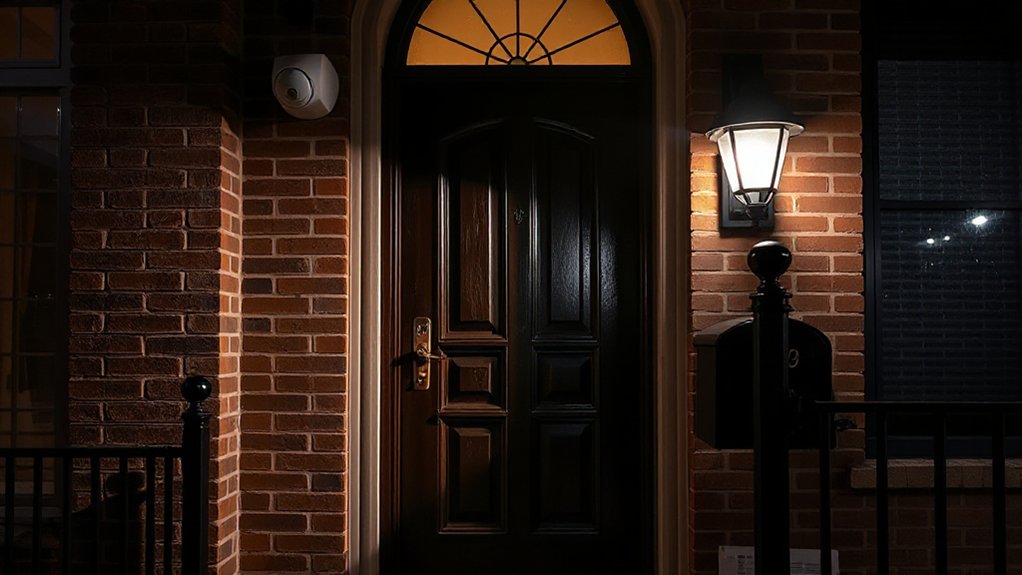
To urban homes, practical security starts with a clear plan: assess risk, then prioritize budget-friendly, high-impact measures. You assess entry points, lighting, and visibility, documenting risks with minimal cost.
Start with garden security enhancements: prune hedges to improve sightlines, install motion-activated lighting near corners, and keep fences intact to deter access.
For outdoor surveillance, position a compact camera at the front and rear eaves, ensuring weatherproofing and secure mounting. Use existing devices first: core deterrents beat expensive gear.
Reinforce doors with solid cores, strike plates, and longer screws; add door viewers or a peephole for unknown visitors.
Window security improves when you apply secondary latches and sensor alarms on vulnerable panes.
Finally, create routines: illuminate paths, clear debris, and review footage regularly to confirm efficacy.
Assess Your Risk First: Start Here
Assess your risk first by mapping your property’s specific threats and exposure. To begin, conduct a structured risk assessment that identifies entry points, lighting gaps, and blind spots around doors, windows, and perimeters.
Document likely threat scenarios, from opportunistic theft to targeted burglary, and rate their likelihood and potential impact.
Then perform a thorough threat analysis to prioritize investing where it reduces greatest risk: reinforce weak points, verify door and window locks, and assess view lines from street level.
Collect evidence from local crime data, insurer guidance, and security audits, weighting factors such as urban density and foot traffic.
This evidence-based approach helps you allocate resources efficiently, establish baselines, and track improvements over time.
Quick Wins to Lower Risk Today
You can cut risk today by applying quick lockdown tactics, like securing doors and ground-floor windows first, then expanding to other entry points.
Visible deterrents, such as exterior lighting and clear signaling of surveillance, reduce the likelihood of opportunistic theft and are backed by urban security data.
Add simple alarm enhancements, like low-cost sensors or smart alerts, to provide immediate, action-ready feedback that informs your next step.
Quick Lockdown Tactics
But in the next few minutes, you can harden your home’s defenses by applying proven quick wins that reduce risk right away. Start with tightening entry points: guarantee doors and windows are fully secured, use multi-point locks, and install reinforced frames where needed.
Verify exterior lighting covers all approaches and consider motion-sensor lamps to deter intruders. Inventory and close gaps in sightlines from street to doorway; trim hedges or relocate cameras so corridors aren’t hidden.
Establish a rapid-response routine: activate door alarms when you’re out, and practice a brief lockdown drill with household members. Integrate emergency preparedness planning and solidify a simple communication chain with neighbours.
Foster community watch habits so suspicious activity is reported promptly and efficiently. Maintain records of security checks for accountability.
Visible Deterrents That Work
Visible deterrents are practical, evidence-based tools that signal security to potential intruders while buying you time to react. You’ll apply low-cost, observable measures that raise perceived risk for trespassers and reduce actual opportunity for crime.
Focus on clear sightlines, robust lighting, and physical boundaries that don’t rely on alarm subscribers or complex tech. Use vandalism prevention strategies like durable, tamper-resistant fixtures and well-maintained exteriors to convey ongoing surveillance.
Elevate deterred risk by consistently displaying security signs and visible cameras, even if you don’t rely on them as sole defenses. Combine gate and fence integrity with trimmed hedges to reduce concealment.
For trespass deterrence, establish routine checks, documented maintenance schedules, and rapid repair protocols to sustain steady deterrence over time.
Simple Alarm Enhancements
Simple alarm enhancements can meaningfully lower risk today by adding immediate, low-friction protections that complement existing deterrents. You should begin by auditing current coverage: confirm door sensors detect entry points and verify window alarms trigger locally and remotely.
Prioritize events with high risk, such as ground-floor doors and vulnerable windows, then align responses to your routines. Use tamper-resistant devices and guarantee battery health is monitored, so false alarms don’t erode trust in the system.
Integrate alerts with a mobile app to shorten response times and enable rapid verification. Test regularly, documenting results to identify gaps.
Consider dual-zone sensing for busy entryways and hardening with anti-tamper cases. Finally, maintain clear escalation protocols with your monitoring service and trusted contacts for rapid, coordinated action.
Build Your Defenses: Perimeter Security for Urban Homes
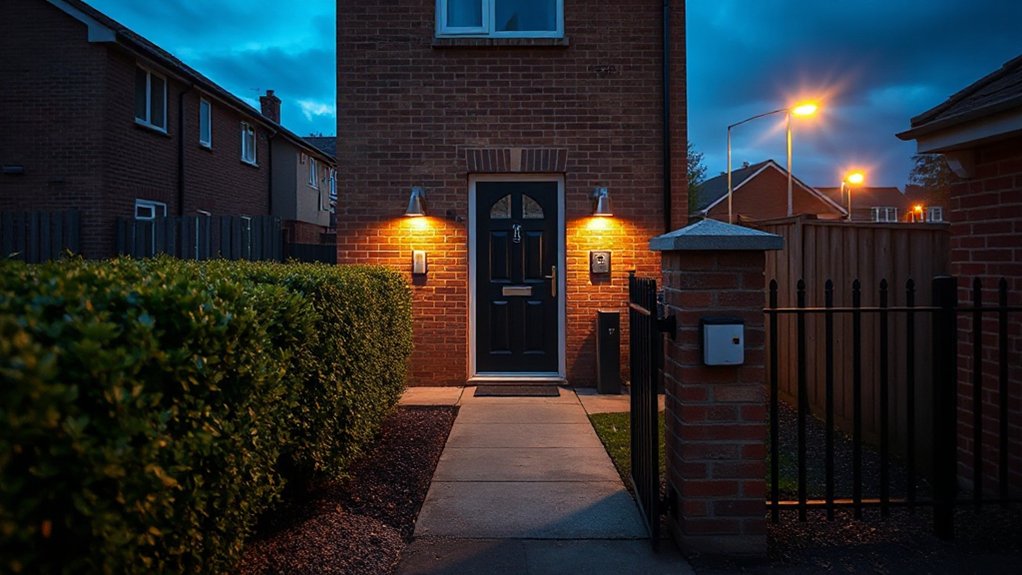
Your perimeter relies on clear fencing choices, strategic lighting, and well-placed access control points to deter intrusion and guide oversight.
We’ll compare material durability, maintenance needs, and visibility implications to balance security with aesthetics in urban UK settings.
Fencing Material Choices
Selecting fencing material for urban UK homes requires weighing durability, maintenance needs, and local regulations; because fragments and vandalism are common, you should prioritize materials that deter intrusion and withstand weather while remaining cost-effective over time.
In evaluating options, you compare initial cost, life span, and replacement cycles, then factor in upkeep demands. Material durability varies by exposure, so you assess wind load, corrosion resistance, and coating quality.
Garden fencing often favors privacy and height, while perimeter needs hinge on visibility and access control. Welded mesh offers strength with lower maintenance, though wooden panels may require regular staining.
Consider galvanised steel or powder-coated options for long-term resilience. Evidence suggests combining solid barriers with monitored gates improves deterrence without sacrificing appeal.
Lighting and Visibility
Lighting and visibility are critical because well-planned lighting deters intruders and improves sensor performance by illuminating access points and boundary lines without creating glare or blind spots.
You should map the perimeter, identifying blind corners and entry points where lighting is essential. Use a mix of low, shielded landscape lighting to minimize light trespass while maximizing coverage, ensuring continuous illumination along paths, gates, and hedges.
Prioritize fixtures with automatic dusk-to-dawn or motion-activated features to balance security with energy efficiency. Place sensors and cameras where lighting enhances detection ranges but avoids glare that could blind footage.
Regularly test brightness levels and adjust to seasonal changes. Prefer durable weatherproof components and consider solar options for remote sections to maintain outdoor visibility year-round. landscape lighting, outdoor visibility.
Access Control Points
Access control points are the first line of defense for urban homes, and their effectiveness hinges on deliberate placement, robust hardware, and clear procedures. You assess access points as a system, measuring threat vectors, entry types, and response times.
Prioritize perimeter doors, gates, and subordinate access to service corridors, ensuring visibility, tamper resistance, and auditability. Use reinforced frames, multi-point locks, and smart access controls that log events and restrict credential sharing.
Implement layered screening at entry security with physical barriers, video verification, and user-specific permissions. Regular drills and quarterly reviews reveal gaps in authentication, tailgating risks, and maintenance lapses.
Documented protocols shorten decision cycles during incidents, reducing exposure. Integrate cameras, door sensors, and alarm triggers to support rapid, evidence-based responses.
Secure Entry Points: Doors, Windows, and Shared Access
Secure entry points are a primary line of defense in urban UK homes, and a systematic approach to doors, windows, and shared access reduces risk more effectively than ad hoc fixes. You should audit each opening for vulnerabilities, then prioritize upgrades with proven impact.
For doors, install multi-point locking, reinforced frames, and strike plates; consider anti-tamper screws and door viewers.
For windows, choose laminated glass or laminated film, robust hinges, and secure catches; guarantee scalable retrofits that don’t impede ventilation.
Shared access requires controlled entry protocols: use multifactor authentication, timed codes, and monitored gates. Maintain visibility with exterior lighting and clear sightlines.
Document maintenance histories, test regularly, and replace aging hardware promptly. Secure entry decisions derive from data, not assumptions, and support ongoing risk reduction.
Smart Tech for Your City Home: Right-Sized Solutions
You’ll assess smart, scalable solutions that fit the modest footprint of a city home, prioritizing evidence-based performance and cost-effectiveness.
Weigh options like compact cameras, sensor networks, and access controls against your real-world needs, room-by-room, to avoid overreach.
This right-sized approach guarantees security tech is practical, maintainable, and adaptable as urban living evolves.
Smart, Scalable Solutions
Smart, scalable solutions let urban UK homes add security without overhauling systems or breaking the bank. You assess needs, then map capabilities to budget, focusing on incremental upgrades with clear ROI.
Begin with modular hardware that supports future integration, reducing sunk costs and enabling phased deployment. Prioritize reliability, choosing widely supported ecosystems to minimize compatibility risk.
When considering Home automation, evaluate how sensors, cameras, and access controls interoperate, and confirm vendor commitment to updates and data security.
Scalability options should include cloud vs. on-premises processing, local storage vs. scalable archives, and remote monitoring.
Test each component under real-world conditions, documenting performance, latency, and false alarms.
Maintain a clear upgrade path, avoiding proprietary lock-in, so your system evolves with evolving threats while staying cost-efficient.
City-Sized Security Tech
City-sized security tech delivers just-right interventions for compact urban homes by prioritizing scalable, evidence-backed devices that fit limited spaces and budgets. You should focus on deploying modular systems that integrate with existing infrastructure, reducing installation complexity and ongoing costs.
Evaluate devices by proven impact, ease of use, and data privacy controls, then tailor choices to your block’s risk profile. Urban drone surveillance can extend monitoring beyond the front door, but require clear usage policies and consent frameworks.
City-wide security apps should synchronize alerts, access logs, and incident reports without overwhelming you with noise. Prioritize low-maintenance hardware, strong encryption, and regular software updates.
Pair sensors with adaptive lighting and fences where needed, maintaining proportionality to threat levels while preserving urban livability. Continuous review guarantees upgrades stay aligned with evolving risks.
Daily Routines That Deter Crime
Even simple daily routines can considerably reduce the chance of burglary in urban UK areas. You’ll systematically integrate predictable patterns that deter intruders and reduce vulnerability.
Begin by documenting your typical daily presence and absences, then adjust to avoid obvious gaps. Implement a consistent personal routines framework: lock doors promptly, secure ground-floor windows, and store keys away from entryways. Maintain visible routines that signal occupancy, such as routine mail management and timed device use, without advertising leave times.
Strengthen neighborhood ties by participating in Neighborhood watch activities and sharing non-sensitive patterns with trusted neighbors. Coordinate with a designated contact for quick alerts during travel weeks.
Regularly review home security habits, measure incident indicators, and refine routines to close gaps while preserving everyday normalcy.
Lighting and Visibility That Deters Opportunists

Lighting and visibility play a crucial role in deterring opportunistic burglary by shaping what intruders can and can’t predict about your home. You should design lighting to remove dark, covert zones around entrances, paths, and vulnerabilities.
Use a layered approach: place outdoor lighting at entry points, overhangs, and key walkways, then supplement with motion-activated or timed fixtures to avoid predictable patterns.
Favor white or cool white LEDs for clear color rendering, aiding recognition of faces and objects.
Combine perimeter lighting with garden surveillance cameras to extend visual coverage without creating glare.
Guarantee lighting is shielded to minimize light spillage into neighboring properties.
Regularly test bulbs and sensors, and maintain clear sightlines by trimming vegetation. This reduces concealment opportunities and strengthens situational awareness. outdoors.
Neighborhood and Council Programs You Can Use
Neighborhood and council programs offer structured, evidence-based avenues to bolster home security without reinventing the wheel. You’ll evaluate local options, prioritizing programs with documented outcomes and clear application steps.
Neighborhood watch initiatives provide organized, community-driven surveillance and reporting channels, enabling quicker responses to incidents and better information sharing with residents and police. Participation often earns access to crime-reduction resources, risk assessments, and training on situational awareness.
Council grants can fund improvements like lighting upgrades, CCTV, and security devices, reducing financial barriers and aligning with local strategic priorities. Before applying, assess relevance to your street’s risk profile, required commitments, and reporting expectations.
Documented outcomes and transparent eligibility criteria help you compare programs and maximize impact.
Protecting Valuables: Safe Storage and Responsibility
To extend the gains from neighborhood and council programs, focus on protecting valuables through safe storage and clear responsibility. You should assess risk by mapping common targets and access points in your home, then align storage with verified practices.
Use valuable safes that meet independent security standards and are appropriate for the item types you own, ensuring tamper-resistant features and fire resistance where relevant. Pair safes with secure mounting in inconspicuous locations to deter opportunistic theft.
Implement responsible storage by limiting access to trusted household members, documenting key custody, and establishing a routine for lock checks.
Regularly review insurance requirements, update inventory, and retire outdated devices. This evidence-based approach reduces loss exposure and reinforces accountable behavior without increasing complexity.
Frequently Asked Questions
How Can I Assess My Specific Neighbourhood Crime Risk Effectively?
You should map your area’s risk by reviewing local crime statistics and neighbourhood patrols, then compare trends over time, identify hotspots, and cross-check with community reports; use this evidence to guide targeted, preventative security actions.
What Grants or Funding Exist for Urban Home Security Upgrades?
Grants and funding exist, seriously; you’ll find grant opportunities and diverse funding sources, then compare eligibility, deadlines, and impact. You’ll systematically apply, document benefits, track outcomes, and optimize security upgrades with evidence-based, cost-effective choices for urban homes.
Are There Legal Restrictions on Camera Usage in Shared Spaces?
Yes, there are legal restrictions on camera usage in shared spaces. You should assess camera privacy rights, obtain approvals, and document purposes; guarantee signage and data handling meet law. In shared space, avoid private areas and minimize recording.
How Often Should I Rotate Security Codes or Keys?
You should rotate security codes or keys every 3–6 months to maintain risk reduction. Analyze incidents, update access rights, and document changes. Prioritize key management and code security, using evidence-based policies and routine audits for ongoing accountability.
What Should I Do After a Security Incident to Recover Quickly?
After a security incident, you should assess damage, alert authorities, review footage, and implement a rapid recovery plan. For example, a case study shows documenting losses and costs. Prioritize emergency preparedness and emotional support to restore confidence.
Conclusion
Conclude with a concise, evidence-based takeaway that reinforces the layered approach. In the urban UK, security isn’t a single fix but a systematic mix of perimeter hardening, robust entry-point measures, lighting, and community engagement. Rely on data-driven steps, routine maintenance, and clear protocols to sustain protection. Objection: some may think high-tech solutions are prohibitively expensive. Counter: affordable, scalable options—good locks, lighting, and neighbor networks—deliver meaningful risk reduction while you scale up over time.