
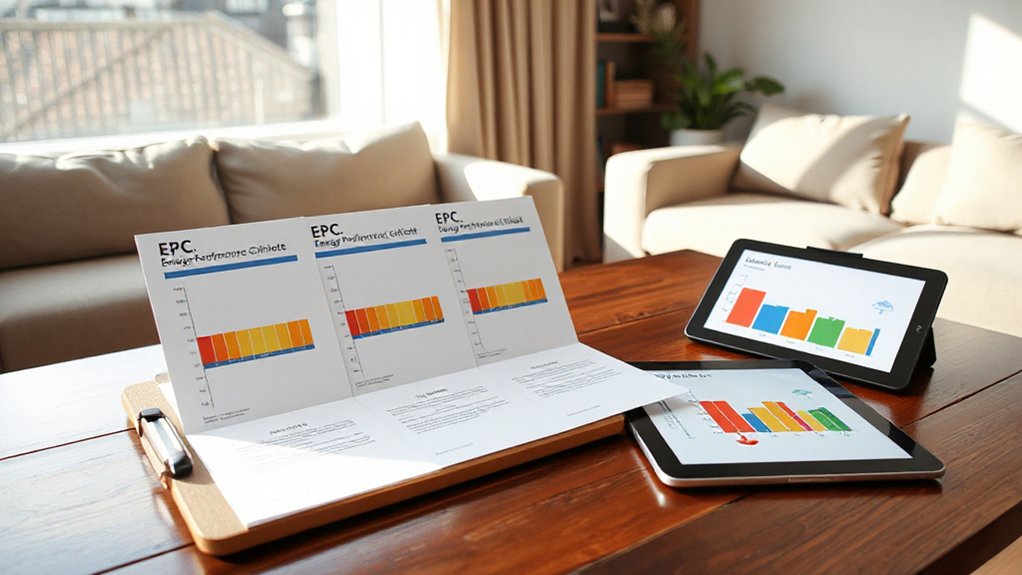
You should compare EPC ratings as a starting point for energy costs, but don’t rely on the grade alone. Look beyond the label to insulation quality, heating efficiency, and occupancy patterns, since these drive real bills. Higher bands mean better potential but aren’t guarantees. Consider location, fabric, and retrofit opportunities, then weigh upfront costs against long‑term savings. If you push further, you’ll uncover practical checks and negotiation angles that matter in real life.
What an EPC Tells You About Energy Use and Costs
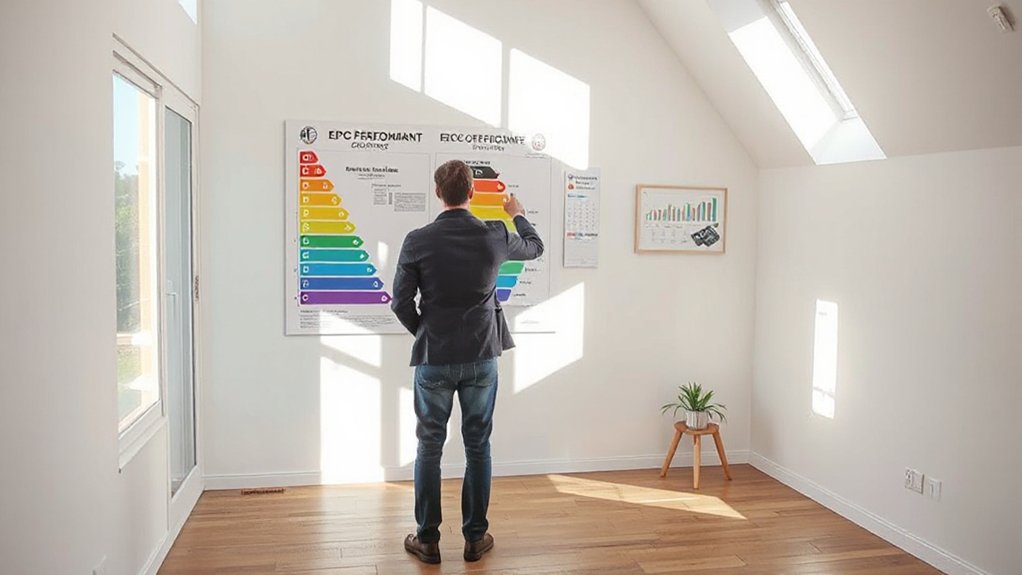
EPCs reveal how efficiently a property uses energy and where you’re likely to spend on bills. As you review the rating, you’ll see energy efficiency indicators that point to performance gaps and potential upgrades.
You’ll interpret the score alongside cost implications, identifying where improvements translate into real cost savings over time. The document highlights major energy drivers—heating, hot water, insulation, and ventilation—and shows how each area affects your monthly and annual outlay.
With this knowledge, you can compare properties not just by price but by long-term operating costs, framing a clearer value proposition. Use the EPC to prioritize fixes that deliver quick wins and durable efficiency, strengthening your choosing position and boosting your sense of belonging in a responsible, data-informed decision.
Choosing the Right EPC Context for Your Property Type
To choose the right EPC context, you’ll match EPC context by type to your property’s characteristics and market expectations.
Consider how property type shapes energy performance priorities, from compact homes to multi-unit blocks, and align data accordingly.
This buyer-focused lens establishes clear benchmarks for your next steps and negotiations.
EPC Context by Type
When choosing the right EPC context for your property type, focus on how the assessment boundaries and qualifying criteria align with typical use and occupancy patterns. EPC Context by Type guides you to select contexts that reflect real living and working scenarios, ensuring results are meaningful for day-to-day decisions.
You’ll see how different contexts emphasize energy flows, occupancy schedules, and fabric performance, rather than generic averages. This clarity helps you compare ratings with confidence, supporting a sense of belonging to a knowledgeable buyer community.
Use precise EPC terminology to interpret scores and identify where improvements affect perceived energy efficiency. By aligning context with your property type, you gain actionable insights, reduce ambiguity, and reinforce informed, practical choices for long-term comfort and cost management.
Property Type Considerations
For a family home, prioritize energy efficiency metrics tied to heating, insulation, and thermal comfort, ensuring practical pathways for ongoing property renovation without compromising comfort.
If you’re purchasing a compact apartment, emphasize compact energy systems, ventilation, and area-specific performance to avoid overestimating potential gains.
For multi-use or rental properties, factor in occupancy variability, maintenance accessibility, and regulatory expectations.
This approach anchors decisions in real-world use, supports long-term value, and reinforces community belonging by delivering transparent, actionable EPC context tailored to your property type.
Buyer-Focused EPC Insights
Choosing the right EPC context starts with how you’ll live in the space and how you’ll maintain it. Your property type shapes the most impactful energy decisions, so you’ll tailor EPC insights to maximize energy efficiency and cost savings without unnecessary complexity.
Focus on features that align with daily use, climate, and occupancy, then benchmark improvements against realistic budgets. You’ll communicate value to buyers by translating ratings into practical, measurable benefits, not abstract metrics.
Keep it clear, enforceable, and evidence-based, so your claims foster trust and belonging among potential owners.
- Align EPC context with daily routines to boost energy efficiency and comfort
- Prioritize cost-saving upgrades with proven payback periods
- Translate ratings into tangible, user-friendly benefits
- Use data-driven targets to demonstrate ongoing value and stewardship
Read the EPC: Decode What It Really Means
Read the EPC labels first to understand the overall energy performance of the property. Decode what each band means, and how it translates to annual running costs and improvement potential.
Compare these findings with your target thresholds to gauge affordability and necessary upgrades.
Read The EPC Labels
If you understand how to read the EPC labels, you’ll quickly grasp a property’s energy performance at a glance. You’ll assess overall energy efficiency, not just the number, by noting where the asset sits within the rating scale and how that translates to costs and comfort.
Reading labels helps you compare features, identify improvements, and align with Certification standards. The label communicates insulation quality, heating systems, and potential retrofit benefits in clear terms.
- Interpret the rating scale and estimated annual energy costs
- Compare heating, cooling, and hot-water efficiency at a glance
- Identify immediate retrofit opportunities for better performance
- Verify compliance with Certification standards and future proofing goals
Decode Energy Band Meaning
You’ve read the label, so now you’ll translate the band into real meaning. Translate the energy band into practical implications for your home and budget.
The energy efficiency rating isn’t a punchline; it’s a performance metric that informs operating costs, emissions, and retrofit needs. Focus on rating interpretation: higher bands signify better efficiency, smoother energy use, and lower utility bills over time.
Consider typical load patterns, climate, and appliance mix to assess true impact. Use the scale to compare properties, but guard against overgeneralization—context matters.
Note the baseline assumptions behind the rating, such as occupancy and insulation. This isn’t about perfection; it’s about choosing the best fit for your priorities and long-term belonging in a smarter, more efficient living environment.
Compare With Pitch Thresholds
When you compare EPCs, thresholds—often labeled as “target,” “pass/fail,” or tier cutoffs—show the minimum performance a property must meet to align with policy or market standards. You’ll see how energy efficiency targets shape value, risk, and buyer confidence, guiding decisions beyond raw numbers.
Rating thresholds help you gauge which properties meet, exceed, or miss expectations, reducing ambiguity in negotiations. Use them to benchmark properties against comparable homes and local requirements, ensuring your choice aligns with long-term costs and comfort.
Focus on how these thresholds translate to real-world benefits: bills, comfort, and resilience.
- Energy efficiency targets drive value alignment and risk assessment
- Compare properties against local rating thresholds for clarity
- Use thresholds to forecast operating costs and comfort levels
- Leverage benchmarks to strengthen your buying position
EPC Myths: Does a Higher Rating Mean Lower Bills?

The belief that a higher EPC rating automatically means substantially lower energy bills is a common misconception. You can’t assume direct, one-to-one savings from a better grade; ratings reflect efficiency potential, not guarantees.
Factors like occupancy, heating patterns, insulation, and equipment age influence actual costs, so a high rating may correspond with modest bills or, conversely, limited savings if usage remains high.
EPC myths persist because ticking up a letter often coincides with perceived affordability, yet real energy savings hinge on behavior and system health.
When evaluating properties, focus on measurable improvements, such as improved insulation, smarter controls, and efficient appliances, rather than chasing a ceiling-grade label.
Prioritize actionable upgrades that align with your long‑term cost certainty.
Balancing EPCs With Location and Home Condition: A Practical Framework
Balancing EPCs with location and home condition starts by recognizing that an energy label is only one piece of a wider puzzle. You weigh how Location considerations shape comfort, costs, and resale appeal, then assess how Home condition reflects real performance and potential upgrades.
- Prioritize sight‑line access to daylight, ventilation, and thermal mass within the property.
- Compare EPCs alongside neighborhood services, schools, and transport for practical value.
- Evaluate retrofit potential by identifying airtightness, insulation gaps, and system efficiency.
- Align your decision with long‑term ownership goals, not just current label.
This framework keeps you grounded in reality, guiding you to balanced choices that fit both your needs and your sense of belonging.
Estimating Real-World Costs From EPC Ratings
This helps you compare true operating costs, not just abstract scores. Include the likely impact of renovations, such as improved insulation or heat pumps, to estimate upfront outlays versus long-term savings.
When evaluating renewable energy options, balance capital costs against projected savings to determine payback periods. Focus on energy efficiency opportunities that align with your budget and timeline.
This approach clarifies affordability, supports informed decisions, and fosters confidence in pursuing sustainable changes that align with your values.
When EPCs Differ: Why Two Similar Homes Don’t Have the Same Score

Even similar-looking homes can earn different EPC scores because every property varies in construction details, fabric efficiency, and systems performance. You’ll see EPC rating variability even among twins, driven by insulation quality, window efficiency, heating controls, and ventilation standards. That means two homes can share exterior styling yet diverge in energy cost forecasts and comfort.
Don’t fall for home energy myths that oversimplify factors or assume one rating fits all. Your due diligence should compare specific components, not just overall scores.
- EPC rating variability is shaped by envelope, heating, and ventilation specifics.
- Minor improvements can shift a rating more than you’d expect.
- Measurements depend on occupancy patterns and usage assumptions.
- Verify assumptions to avoid misinterpreting a property’s energy profile.
Red Flags You Shouldn’t Ignore on an EPC
Missing data flags and inaccurate floor plans can undermine an EPC’s reliability, so you should flag any gaps or inconsistencies as red flags.
If data is absent or a floor plan doesn’t match the actual layout, the rating may be misleading and affect energy-saving decisions.
You should request verification or a re-inspection from the assessor to guarantee the EPC reflects reality.
Missing Data Flags
- Spot missing ratings and verify with the assessor or seller
- Check for inconsistent data across sections and documents
- Confirm dates, validity, and inspection details
- Request a formal amendment or updated EPC before finalizing
Inaccurate Floor Plans
Floor plan inaccuracies distort room sizes, corridor widths, and usable space, complicating energy calculations and comfort expectations. Look for clear scale, dated revisions, and alignment with actual property features.
Measurement discrepancies between plans and on-site dimensions should raise red flags, prompting remeasurement or a reissue of the EPC.
Trustworthy documentation builds confidence among buyers and sellers alike, supporting informed decisions and smooth transactions.
Prioritize plan accuracy as part of due diligence, and demand independent verification when discrepancies arise to maintain transparent market standards.
Use EPCs in Your Offer and Negotiations
When drafting an offer or negotiating terms, use EPCs to anchor price discussions and set realistic expectations about energy costs. You’ll leverage EPC cost implications to justify adjustments, credits, or contingencies, keeping negotiations data-driven.
Recognize EPC legal requirements to *guarantee* proposals comply and protect your position. If a property’s rating signals higher future bills, request concessions or a performance improvement plan.
Use energy performance data to frame risk, not biases, and reinforce your bargaining power with credible figures. Communicate with confidence, showing belonging to a informed buyer community that respects standards and due diligence.
- Interpret EPC ratings clearly to guide price and terms
- Align offers with EPC cost implications on monthly expenses
- Confirm EPC legal requirements are reflected in contracts
- Seek remedies if compliance or accuracy is uncertain
Practical Checks Beyond the EPC: Insulation, Windows, and Heating
Beyond the EPC, you should verify practical, tangible elements that drive energy performance: insulation, windows, and heating.
Start with insulation: check attic and wall thickness, gaps, and overall thermal continuity to minimize thermal bridging.
Inspect windows for glazing type, seals, drafts, and frame heat loss; older double glazing or single panes indicate upgrade potential.
For heating, confirm system age, efficiency, and controls; look for zone heating options and modernization needs.
Evaluate ventilation systems for balanced or mechanical ventilation with heat recovery, ensuring proper operation and filter access.
Note how air leaks around doors, sockets, and chimneys affect performance.
Document visible insulation gaps and any retrofit plans.
These checks reveal practical improvements that influence day‑to‑day comfort, energy bills, and resale appeal beyond the EPC score.
A Simple Buyer Checklist for EPC Comparison
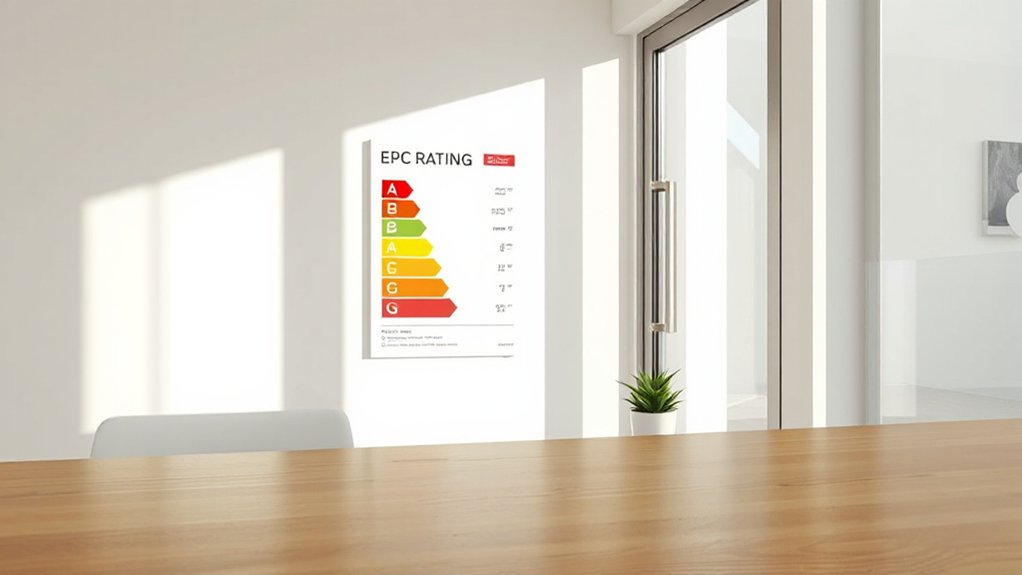
Use the practical checks you’ve already considered—insulation, windows, and heating—as a baseline, then compare EPCs with a simple buyer checklist. You’ll prioritize energy efficiency signals, rating trends, and the impact on home valuation.
Focus on clear gaps between EPC bands, not just overall scores, so you can quantify potential retrofit costs and payback. Cross-check competing properties to gauge market expectations and resale value.
Document and compare the specific measures driving each rating to avoid ambiguity in negotiations. This approach helps you assess long-term running costs and comfort, not just upfront price.
Keep the process systematic, avoiding assumptions, so your decision aligns with both energy performance and asset value.
- Energy efficiency gaps and retrofit costs
- EPC band trends and market expectations
- Running costs vs. upfront price
- Documentation for negotiation leverage
Next Steps: What to Ask Your Surveyor or Agent About EPCs
To move smartly on EPCs, you should ask your surveyor or agent for clear, itemized explanations of each rating, the specific measures driving the scores, and how gaps could affect resale value and running costs.
In your conversations, frame Surveyor questions that target methodology, data sources, and recency of the assessment, plus any caveats about local climate impacts.
Pair this with Agent inquiries about timeline, cost implications, and recommended improvements, including quick wins and long-term investments.
Seek transparent benchmarking against comparable properties and documented scenarios for energy bills.
By curating precise, actionable insights, you’ll align expectations, reduce uncertainty, and foster a shared commitment to ongoing energy performance improvements.
Belonging comes from informed, collaborative decision-making.
Frequently Asked Questions
How Do EPCS Factor Retrofit Improvements Into Future Value?
EPCs factor retrofit improvements by reflecting Renovation impact on future valuation; upgrades boost efficiency, lowering running costs and improving score, which you’ll notice in resale value and market appeal, aligning you with stronger, value-driven buying decisions and belonging.
Can Two Identical Homes Have Different EPCS and Why?
Yes, two identical homes can have different EPCs because energy efficiency, construction quality, and inspection timing vary; certifications depend on how strictly standards are applied. You’ll notice differing Certification standards and performance data despite similarities.
Do EPC Ratings Change With Seasonal Energy Use Variations?
Yes, EPC ratings can shift with seasonal fluctuations due to varying energy use,; they reflect energy efficiency under typical conditions, so warmer summers or colder winters may temporarily alter the measured rating for a property.
Are EPCS More Important Than Location or Condition in Pricing?
EPCs aren’t universally more important than location or condition; market trends and regulatory impacts shape pricing differently by property. You assess trade-offs, but you prioritize signals that indicate future costs and compliance, reinforcing belonging in informed investment decisions.
Should Buyers Trust EPCS Over Actual Energy Bills?
Yes, you should trust EPCs alongside actual energy bills. Energy efficiency matters, but certification standards guarantee reliability; use both sources. Anachronism: “back when” EPCs were simpler, your due diligence now ensures informed, confident belonging.
Conclusion
You’ll learn to read EPCs without fear, using them as a quiet nudge rather than a final verdict. Think of the rating as a moving target, shaped by insulation, windows, and heating. A better number can come without a bigger bill if you steer the process with care. By asking the right questions and comparing context, you’ll spot breathing room where it matters, letting you negotiate with confidence and comfort.