
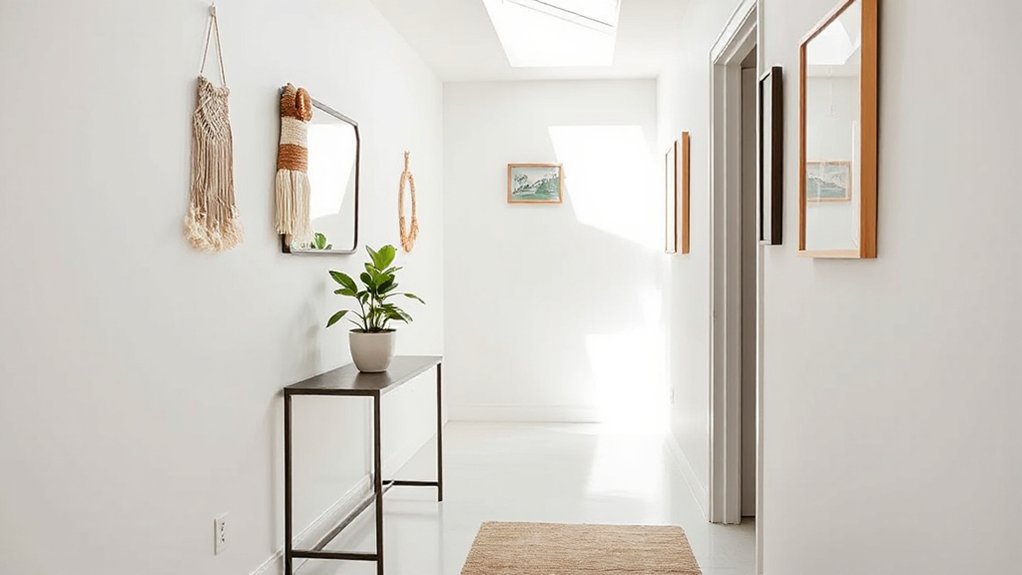
Start with a clear budget and goals, then target high-impact, low-cost updates. Use cohesive styling across zones with shared finishes, and add seasonal decor to refresh vibes without wrecking harmony. Maximize small spaces with light colors, mirrors, and strategic lighting that guides movement. Opt for budget-friendly wall treatments, DIY refinished furniture, and thrifted accents for character. Choose smart storage to curb clutter. If you keep going, you’ll discover practical, shop-smart steps that elevate the hallway without breaking the bank.
Define Your Budget Hallway Makeover: Goals and Constraints
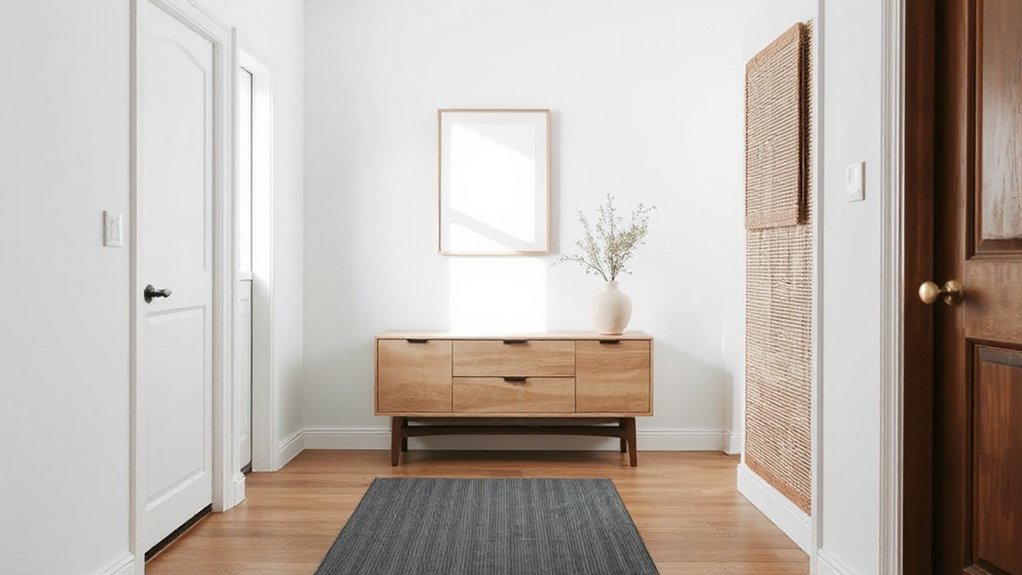
Before you pick paint or swap hardware, define your budget for the hallway makeover with real goals and clear constraints. You’ll use Budget planning to map exactly what you can spend and where it matters most, so every dollar earns value.
Start with Goal setting: decide what success looks like—better light, durability, or a cohesive style that invites you to linger.
Clarify constraints like time, labor, and existing materials you’ll reuse. Translate these into concrete limits: a total cap, per-item caps, and non-negotiables.
Then prioritize improvements that deliver the biggest impact for the least cost.
Document decisions clearly so you stay on track, resist impulse buys, and communicate intent with everyone involved.
Your careful planning makes cost predictable, choices purposeful, and your hallway feel welcoming from the moment you enter.
Quick Wins With the Highest Impact for Small Hallways
Small hallways punch above their weight with a few high-impact, budget-friendly tweaks. You’ll get big results by focusing on light, lines, and purposeful texture.
Start with doorway decor: a unified, slim frame, or a single statement piece set at eye level, *connects* your eye and anchors the space.
Next, maximize perceived height with ceiling treatments—painted or lightly textured ceilings, or a subtle runner that runs along the ceiling line visually elongates the hall.
Keep wall surfaces clean and cohesive; minimal wall decor prevents clutter and enhances flow.
Incorporate a single, functional mirror to bounce light and expand the sense of space.
Finish with strategic lighting: a dimmable layer near the entry, plus a bright, focused glow above key *passage* points.
These steps deliver high impact without overspend.
Color Plan That Makes Narrow Spaces Feel Bigger
Lighten the walls to create a sense of spaciousness, and pair lighter tones with strategic reflections to bounce light deeper into the hall.
Use reflective surfaces to visually widen the corridor, and consider vertical stripes to add perceived width without sacrificing flow.
Keep the palette simple and purposeful so each element supports a larger feel.
Lighter Wall Tones Create Space
Lighter wall tones can make a narrow hallway feel more open by reflecting more natural and artificial light. You’ll notice immediate tonal balance, and that creates an inviting, breathable feel. Choose hues close to white or soft neutrals to maximize visibility and rhythm. Color psychology suggests lighter walls can reduce visual clutter, while wall texture adds depth without shrinking space.
Keep finishes smooth or matte to avoid glare, and pair with warm lighting to preserve coziness. Your goal is cohesive flow, not contrast chaos.
- Select pale neutrals that harmonize with existing wood or tile
- Opt for a subtle wall texture, like a soft plaster or fine-grain paint
- Use consistent ceiling and trim colors for continuity
- Test in both daylight and lamp light to confirm spacious feel
Reflective Surfaces Expand Narrow Halls
Reflective surfaces are your quickest route to instantly expanding a narrow hallway. You’ll gain perceived width by placing strategically angled mirrors and polished panels that bounce light between walls.
Keep it simple: one or two mirrors at eye level create mirror illusions of space without overpowering the corridor. Choose reflective art, like metal frames or glass-backed pieces, to add depth without adding bulk.
Avoid busy patterns that multiply visual distractions; instead, opt for clean lines and minimal frames. Lighting matters: pair reflectivity with soft, even illumination to prevent harsh glares.
Position mirrors to reflect a light source or a brighter doorway, not your clutter. This approach feels deliberate, welcoming, and affordable, helping guests feel they belong the moment they step inside.
Vertical Stripes Add Perceived Width
Vertical stripes can visually widen a narrow hallway, because vertical lines draw the eye upward and create the illusion of more height and space. You’ll use wall patterns to cue expansiveness, while color psychology shapes mood and perceived size. Targeted stripes paired with a light base color feel open, fresh, and welcoming, reinforcing a sense of belonging.
- Choose a pale base with narrow, evenly spaced stripes to maximize perceived width.
- Align stripes with doorways and fixtures to extend flow and coherence.
- Balance bold patterns with calm accents to avoid visual fatigue.
- Test color temperature; cooler whites and soft grays read as larger in tight corridors.
Wall patterns and color psychology work together to elevate narrow halls without clutter or cost.
Budget Lighting Layouts: Where to Put Fixtures for Mood
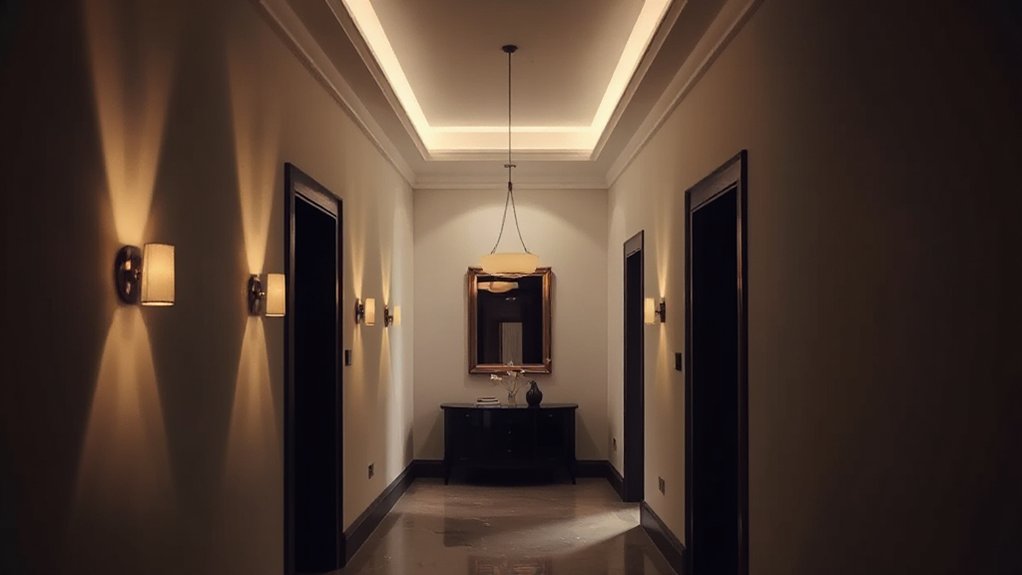
Good lighting sets the mood, so start by mapping where people will stand and move in your hallway.
Consider light placement psychology to guide paths and emphasize textures.
Then space fixtures evenly to avoid hot spots.
With budget-friendly options, prioritize a few well-placed sources over many busy details to keep the look clean and inviting.
Light Placement Psychology
Layering light in a hallway isn’t about flaunting fixtures; it’s about guiding movement and setting mood with budget-friendly choices. You’ll use placement to cue flow, create warmth, and reinforce a sense of welcome. Strategic contrasts keep paths legible, while soft pools of brightness curb shadows that feel lonely. Think心理: lighting triggers that elevate mood without shouting decor.
- Position wall sconces at eye level to produce even vertical rhythm and invite you forward.
- Layer ceiling and floor lights to carve zones, guiding steps with gentle contrast.
- Add a subtle uplight behind art or mirrors to create depth and psychological warmth.
- Use dimmers to adjust intensity, aligning lighting to time, mood, and traffic.
Fixture Spacing Basics
In a budget lighting layout, fixture spacing isn’t about filling space—it’s about keeping the hallway legible and inviting without overspending. You’ll optimize lighting placement by aligning fixtures with walls, doorways, and art so the eye travels smoothly.
Aim evenly distributed illumination at about 20 to 24 inches from the wall, with fixtures spaced to avoid glaring hotspots. In a narrow corridor, staggered rows or wall-wash lighting can create depth without clutter.
Don’t crowd corners; use softer, ambient sources near entry points and brighter task accents near key focal points. Check height—roughly 64 to 72 inches from floor to fixture center—to balance glare and shadows.
Practical, scalable, and inclusive, this approach helps everyone feel they belong in a well-lit home.
Premium-Look Wall Treatments on a Shoestring
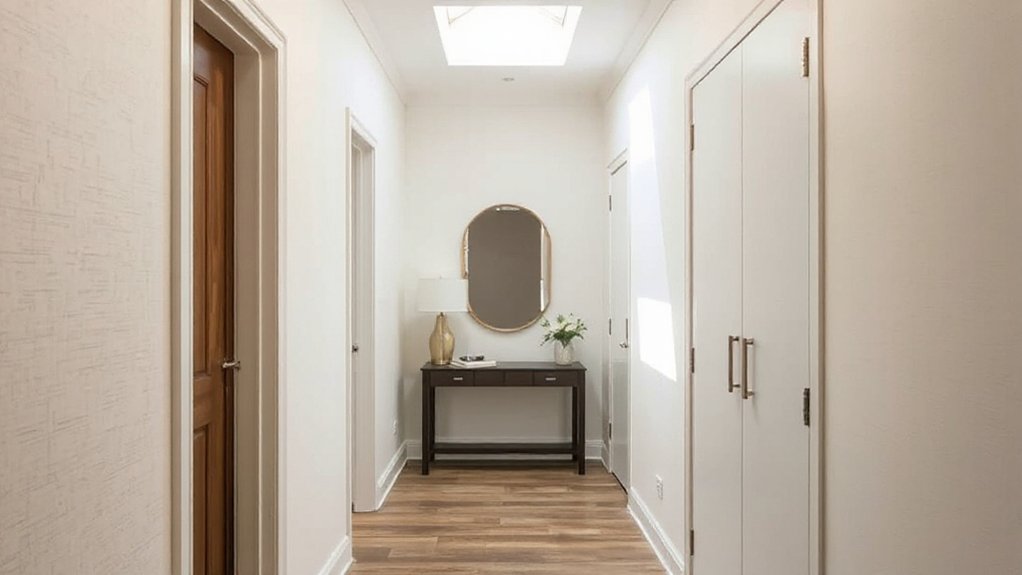
What if you could give a premium look to your hallway without a hefty renovation bill? You can, with smart wall treatments that feel luxe yet affordable. Choose finishes that reflect light, like pale, warm neutrals and matte textures, to create roomier vibes.
Use subtle architectural details—mock panels, beveled edges, or buoyant baseboards—to add depth without breaking the bank. Integrate acoustic treatments behind artwork or in high-traffic zones to improve sound without clutter.
Focus on cohesive color and texture so the space reads premium rather than busy. Accessorize with purpose, keeping surfaces clean and intentional.
1) Faux-panel effects using wide planks or wallpaper with raised texture
2) Chalk-painted or lime-washed walls for warmth
3) Strategic lighting to highlight wall features
4) Acoustic panels disguised as art or framed tiles
Clever Storage Hacks to Create a Clutter-Free Corridor
Clever storage can turn a cluttered corridor into a calm, functional space. You’ll start by choosing slim, high-density solutions that don’t crowd the eye. Install wall-mounted shelves at varying depths to hold daily essentials, baskets, and a compact shoe rack near the entry.
Use hooks and a peg rail for coats, bags, and keys, keeping floors clear. Opt for hidden storage behind decorative elements—artful canvases or a shallow console with a lift lid.
Add a bench with built-in cubbies to invite seating while tiding items away. Integrate artistic murals or botanical installations as visual anchors, guiding the eye upward and creating intentional rhythm.
Maintain order with a simple daily reset: return items to their place, and the corridor remains inviting and purposeful.
Affordable Art and Mirrors That Elevate the Hallway
You can elevate your hallway without breaking the bank by choosing affordable art that speaks to your space and your taste.
Pair budget-friendly mirrors with the art to bounce light and create the illusion of more room.
Focus on cohesive color, scale, and placement to anchor the hallway’s style with practical impact.
Affordable Art Choices
Affordable art can dramatically elevate a hallway without breaking the bank. You don’t need museum pricing to create impact; choose pieces that resonate and complement your space. Gallery walls become focal points when you mix scales, textures, and color pops.
For cohesion, repeat a few tones across frames and accessories, tying the corridor together. When you pick art, consider lightweight options for easy swapping as moods shift. Statement lighting accentuates your choices, casting flattering shadows and guiding the eye along the wall.
- Curate a small gallery rail with mixed frame styles for texture
- Use affordable prints in a cohesive color palette to maintain harmony
- Layer art with mirrors strategically to bounce light (without overcrowding)
- Rotate pieces seasonally to keep the space fresh and inviting
Budget-Friendly Mirrors
Mirrors are a smart shortcut to brighten a hallway without a big budget. You’ll find impact in affordable shapes, framings, and placements that feel intentional, not throwaway.
Begin with a few well-chosen pieces rather than a wall of glass; mix sizes to create rhythm, not clutter. Vintage frames add character without breaking the bank, especially when you repaint them in a cohesive tone that ties your space together.
Look for mirrors with slim profiles for narrow walls and opt for beveled edges to catch light without shouting.
Pair mirrors with decor accents that reinforce style, like a pair of statement vases on a console to ground the arrangement.
Keep clearance around doors and switch plates for clean, easy access and a confident, welcoming hallway.
Elevating Hallway Style
Artfully elevate a hallway with art and mirrors that feel intentional, not filler. You’ll create a cohesive vignette by choosing pieces that echo your space’s vibe and your senses of belonging, not just trends.
Prioritize vintage lighting to warm the corridor and invite connection, then add artistic murals or framed statements that tell your story without shouting.
- Curate a small gallery of vertically oriented art and mirrors that reflect the light and widen the space.
- Mix vintage lighting with clean, modern frames to balance old and new.
- Select murals or prints with colors that harmonize with your wall tones.
- Opt for versatile pieces that you can rearrange seasonally for fresh cohesion.
Floor Tricks: Runners, Mats, and Cheap Upgrades That Matter
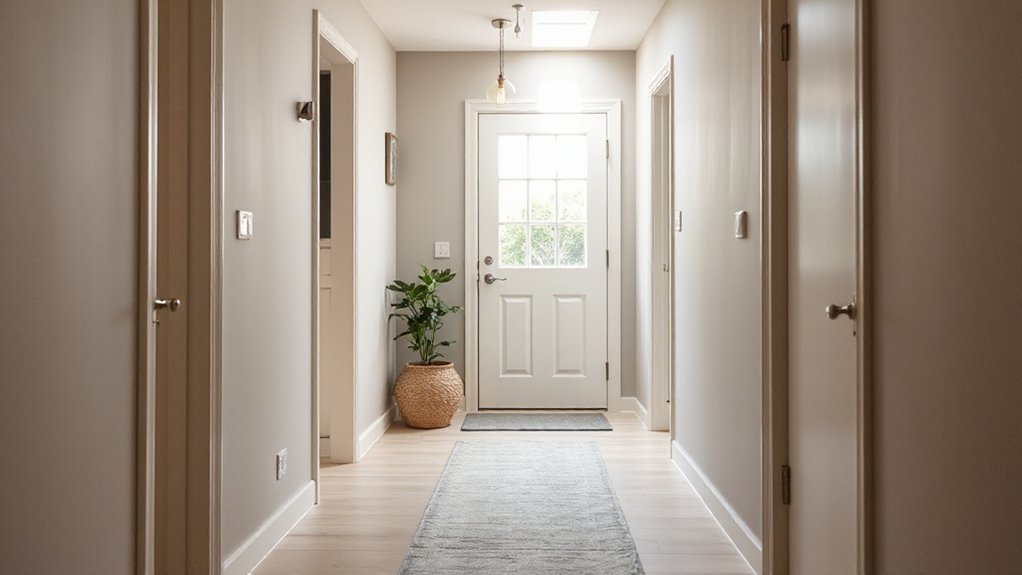
Are you maximizing hallway impact with simple floor tricks? Start with a runner that echoes your vibe—soft fibers for warmth, or a flat weave for durability. Place it lengthwise to define the path and unify disparate elements.
Add a mat near every entry, but skip bulky designs; choose low-profile options that trap less dirt and feel intentional. Cheap upgrades matter: a bordered rug, a non-slip pad, and a coordinating curb edge to prevent curling.
Layer textures sparingly to keep the space breathable. Consider decorative wall decals or a statement ceiling treatment to draw the eye upward, balancing floor-focused changes.
Keep color harmony in mind so your hallway feels cohesive, welcoming, and belonging, not cluttered or chaotic.
Upcycling Furniture for a Welcoming Foyer Look
Upcycle your console to set the foyer tone, pairing a fresh coat with hardware that lifts its silhouette. Keep character by preserving edge marks or patina that tell a story, while choosing a finish that complements your space.
Use intentional styling—a bold bottoned lamp, a lean tray, and textures that invite touch—to create a welcoming first impression.
Upcycled Console Styling
Could a simple console transform your entryway into a warm, functional welcome? Upcycled styling proves you don’t need new to feel cared for. Start with a vintage console frame, then layer texture and color for depth. You’ll curate pieces that invite touch and conversation, not clutter.
1) Select a salvaged finish or patina to honor history.
2) Add a small, opaque lamp for soft, welcoming light.
3) Pair vintage textiles with simple hardware for cohesion.
4) Introduce an artistic mural-inspired focal piece to anchor the space.
This approach feels intentional, practical, and inclusive—neighbors and guests sense belonging as soon as they step inside.
Finish with a tray for keys and a basket for mail, keeping the foyer calm and functional.
Fresh Coat Finishes
Prep surfaces well—clean, sand, and prime—so you don’t waste effort. Pick finishes that suit the piece and the room’s lighting; matte hides wear, satin adds subtle sheen, and gloss highlights architectural details.
Apply even coats, seal with a durable finish, and let each layer cure fully before reassembling. Coordinate with lighting fixtures to enhance mood—warmer tones under warm LEDs feel inviting, cooler tones under daylight lamps feel fresh.
Finish pieces first, then integrate them into the foyer for a cohesive, welcoming entry.
Preserved Character Accents
- Restore a chipped console with a soft glaze, showcasing its grain and history.
- Pair a repurposed mirror with a slim frame to amplify light and space.
- Refinish a weathered bench, preserving patina as a statement piece.
- Source salvaged hardware or shelving to add character without clutter.
These moves cultivate preserved character accents that feel intentional, not gimmicky. You’ll notice visitors respond to the warmth and sense of belonging your foyer conveys.
Keep contrasts gentle—light wood with neutral paint, or a dark accent against pale walls. The result: vintage charm that integrates, not competes, with modern decor.
Small Details With Big Payoff: Hardware and Accessories
Small details matter: the right hardware and accessories can elevate your hallway’s look without costing a fortune. You’ll notice immediate cohesion when you choose durable knobs, hooks, and hinges with a shared finish.
Focus on hardware upgrades that echo your style—matte black for modern edges, brass for warmth, or satin nickel for versatility. Select accessory accents like slim picture ledges, minimalist wall hooks, and coordinating mail slots to create purposeful pockets for daily routines.
Prioritize consistency in material and finish to avoid jarring contrasts. Installations should feel intentional, not cluttered; measure and plan before drilling.
With thoughtful choices, you reinforce belonging—your space reads as curated, affordable, and welcoming, inviting you and guests to linger and connect in a streamlined, confident flow.
Cohesive Styling on a Budget: Accessorizing Across the Hall
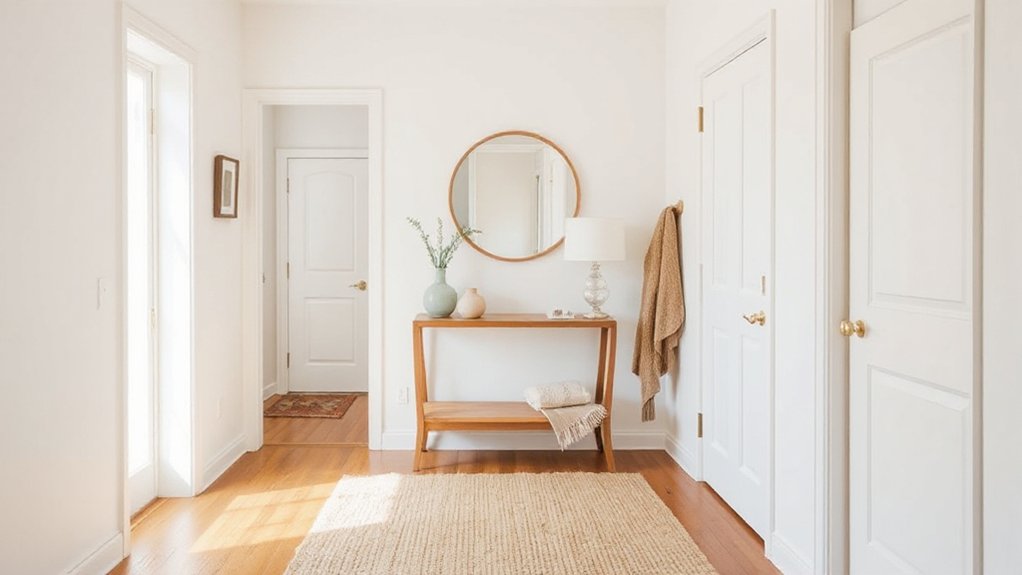
To keep your hall cohesive on a budget, connect each zone with a unifying material or finish and let it guide accessory choices from end to end. You’ll reinforce belonging by choosing items that echo texture, color, or metal across the space, creating a curated walk.
Seasonal decor can rotate through displays without breaking harmony, while artistic wall displays anchor each zone with intentional rhythm. Keep scale consistent and avoid clutter—purposeful objects feel intentional and inviting.
- Mirror frames in the same metallic or wood tone as photo ledges
- Seasonal decor accents that repeat subtly in color and finish
- Gallery-style wall displays using a unified mat or backing
- Object grouping that cycles themes across the hall for cohesion
Seasonal Refreshes to Keep Costs Low
Seasonal refreshes are a practical way to keep costs low while preserving a cohesive hallway look. You can swap small accents, not entire collections, to signal seasonal shifts without overhauling the space.
Plan a simple calendar: spring florals, autumn textures, winter greenery, and summer lightness. Use seasonal decor within a predictable palette to maintain belonging and harmony.
Budget planning should focus on versatile pieces—ceramic vases, neutral throws, and framed art that adapts across seasons. Invest once in durable basics, then rotate affordable accessories to refresh mood.
Keep receipts and track every swap to prevent overspending. Lean into DIY touches when appropriate, like handmade garlands or pressed leaves, to add personality without breaking the bank.
This approach makes your hallway feel current and welcoming year-round.
Smart Layouts for Budget Lighting That Dramatically Impacts Space
You don’t need a chandelier to transform your hallway—smart, budget-friendly lighting layouts can make the space feel bigger, brighter, and more purposeful. With thoughtful placement, you guide movement, draw attention to furnishing essentials, and support your wall art selection without clutter.
- Map zones: use ambient ceiling or wall wash to even out shadows and highlight artwork.
- Layer light: combine task, ambient, and accent to keep the area flexible for work, entry, or relaxing moments.
- Dimmer strategy: install affordable dimmers to modulate mood and preserve the illusion of space.
- Color-balanced fixtures: pick warm whites near human activity and cooler tones for display walls to sharpen detail.
Quick Fixes for Narrow Halls: Spacing, Scale, and Balance
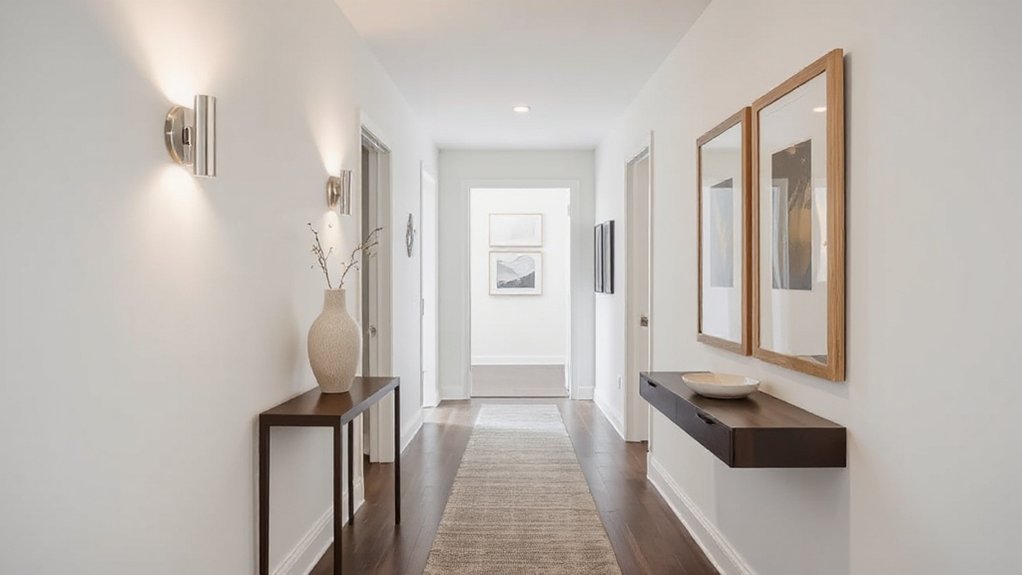
Long, narrow halls demand strategic spacing, scaled elements, and careful balance to feel welcoming rather than cramped. You’ll create perception tricks with you in control: keep furniture light, low-profile, and aligned to a single path.
Use consistent distance between wall art and lighting to avoid visual clutter; decorative wall art should be single, bold pieces or a tight, three-piece trio to maintain rhythm without crowding.
Scale matters: choose a stylish rug option that anchors the corridor without overwhelming its width—think runners in muted tones and subtle patterns.
Balance is achieved by symmetry or deliberate asymmetry that still reads cohesive.
Finally, reflect light with mirrors or glossy surfaces, so the hall amplifies space rather than shrinking it.
How to Shop Smart: Sales, Thrift Finds, and DIY Materials
Smart shopping for a hallway makeover hinges on timing, value, and materials that survive high traffic. You’ll build a stylish space without overspending by targeting sales, thrift finds, and DIY materials that fit your vibe.
1) Look for durable, easy-care items during end-of-season clearance or local sales to stretch every dollar.
2) Scout thrift stores for vintage textiles and eclectic accessories that add character without price gouging.
3) Repurpose DIY materials—paint, wallpaper samples, or salvaged wood—to customize edges and accents.
4) Compare quality, weight, and installation ease before buying, and test fabrics for wear and staining resistance.
Shop with intention, mix vintage textiles with modern basics, and curate accessories that feel like you. Belonging comes from thoughtful choices.
Maintenance Tricks to Keep a Stylish Hallway Looking New
To keep a stylish hallway looking new, establish a simple routine that tackles dirt and scuffs before they set in. You’ll keep surfaces clean with a quick wipe-down weekly, then tackle high-traffic spots with a gentle cleaner to prevent buildup. Dust corners and baseboards every few days to avoid dull edges.
Maintain furniture arrangement so traffic flows smoothly and shoes don’t scrape walls; rotate pieces seasonally to balance wear. Use doormats and a dedicated catchall tray to limit clutter, reinforcing a sense of belonging. Seasonal decorations should be light and purposefully placed, avoiding overloading walls or shelves.
Address minor dings quickly with touch-up pens or wax sticks, preserving color and texture. Finally, seal occasional gaps to minimize drafts, keeping the hallway cohesive and fresh.
Frequently Asked Questions
How Can I Measure My Hallway for Scale?
You measure your hallway by height, width, and length, plus door openings and alcoves. Add margins for walls, baseboards, and trim. Then plan for custom wallpaper and wall mounted mirrors to accent scale and storage.
What Under-$50 Update Yields the Most Impact?
A decorative mirrors upgrade instantly amplifies light, like a beacon in a hallway. You’ll hang decorative mirrors and wall art, choosing cohesive frames; this small investment yields big impact, feels intentional, and helps you belong in a polished space.
Which Colors Visually Widen a Narrow Hallway?
You should pick light, cool colors—whites, creams, pale grays—to visually widen a narrow hallway. This uses color psychology and visual illusion, creating brightness and depth. You’ll feel more welcome, spacious, and confident in your space.
How to Choose Durable, Budget-Friendly Lighting?
Choose durable, budget-friendly lighting by prioritizing decorative fixtures with sturdy builds and easy maintenance, and select energy efficient bulbs for long-term savings. You’ll feel confident, supported, and part of a practical, value-focused design community.
What Safety Tips Save Money on Hallway Upgrades?
You’ll save money by smartly wiring lighting, mounting decorative wall decals, and choosing affordable storage solutions. Don’t rush; measure gaps, use outlet covers, and keep wires tidy. You’ll feel assured, connected, and proudly budget-conscious while upgrading safely.
Conclusion
With a clear budget and smart shortcuts, you’ll turn a narrow hallway into a polished, welcoming corridor. Start small, measure twice, and don’t overthink it. You’ll notice the impact when color, lighting, and layout align—like a tailor-made suit that fits you perfectly. Anecdotally, a thrifted mirror and simple runner can transform a 6‑meter hall into a brighter, larger feel, saving money while delivering a premium look. Stay practical, stay curious, and keep tweaking until it sings.