
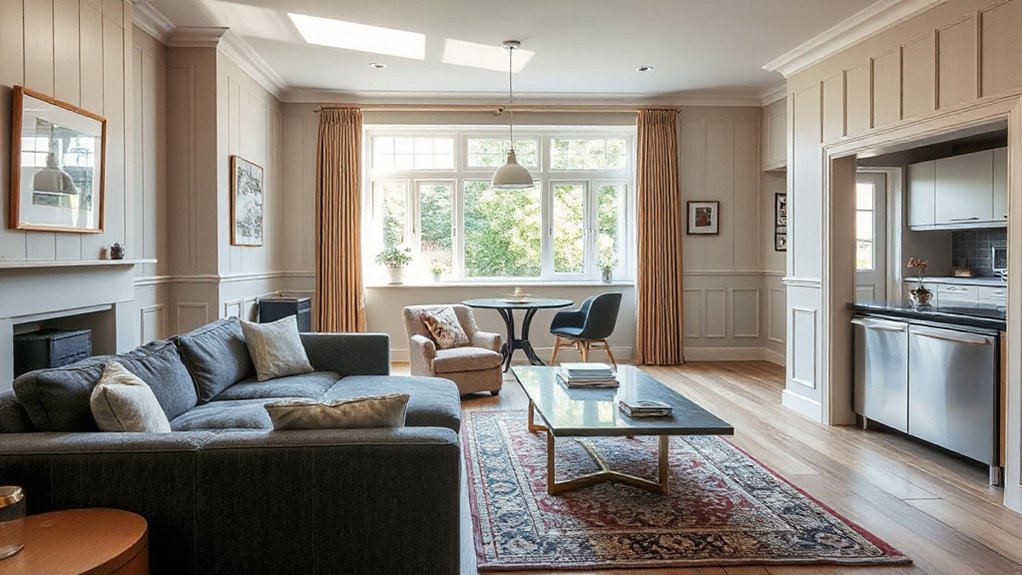
You aim to preserve the 70s character, improve energy performance, and upgrade comfort; you balance authenticity with efficiency, you coordinate safeguards with style, you plan for long-term resilience while enabling smart efficiencies. This approach demands tight decisions on airtightness, glazing, and insulation, plus careful selection of fixtures that echo the era without compromising current standards. The choices you make now will determine how smoothly the retrofit blends into daily life, and how far you can push comfort while protecting what you value.
Why a 1970S UK Home Benefits From Targeted Modernisation
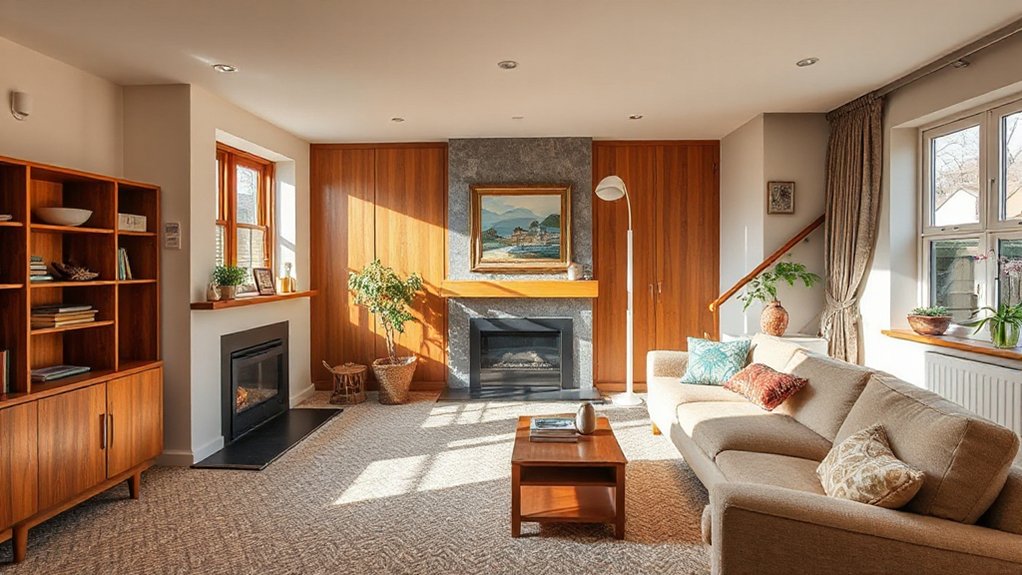
Targeted modernisation makes sense for a 1970s UK home because these properties were built with different standards and patterns of use than today’s households. You benefit from updating this mismatch by aligning structural, electrical, and layout decisions with current needs, not nostalgia alone.
Targeted changes preserve the core framework while reducing energy waste and improving safety, reliability, and convenience. You’ll often find that modest interventions yield outsized gains in comfort and value, without eroding the home’s character.
Retro aesthetics can be retained or reinterpreted, offering a deliberate tie to the era while you gain modern performance. The nostalgic appeal remains a selling point, yet you gain practical advantages: improved daylight use, better room flow, and lower running costs through smarter planning and durable materials.
Priorities for Year-Round Comfort: Insulation, Airtightness, and Efficient Glazing
Insulating well, sealing air leaks, and choosing efficient glazing are the first moves for year-round comfort in a 1970s UK home. You’ll reduce heat loss, stabilize temperatures, and lower demand on heating systems by targeting the fabric first.
Priorities include continuous insulation, airtight junctions, and low‑U‑value glazing that minimizes solar gain in summer while preserving winter warmth. Pairing these with a well‑designed background ventilation avoids condensation without compromising efficiency.
Smart thermostats optimize occupancy patterns, modulating heat and airflows to prevent overshoot and drafts. Integrating renewable energy sources, where feasible, shifts the balance from peak fossil use to steady, lower‑carbon operation, enhancing resilience during cold snaps.
The result is a clearer, calmer interior climate with reduced running costs and improved comfort year‑round.
Budget-Smart Upgrades That Lower Energy Bills
After tightening up the fabric, you can make smart, budget-conscious choices that reduce bills without major renovations. You should focus on targeted measures that deliver measurable gains, avoiding overinvestment.
Solar panels offer a long-term payoff by offsetting daytime electricity use, especially if you pair them with efficient appliances and smart scheduling.
Smart thermostats optimise heating and cooling by learning your patterns and adjusting to occupancy, reducing comfort waste without sacrificing performance.
Prioritize simple retrofits: weather-strip doors, seal gaps around loft hatches, and upgrade to low-flow, high-efficiency fixtures.
Monitor consumption with a straightforward meter or app, and benchmark before-and-after bills to verify impact.
Keep construction minimal and reversible where possible, preserving future options while improving day-to-day efficiency.
Best Glazing for 1970s UK Homes: Styles, U-Values, and Longevity
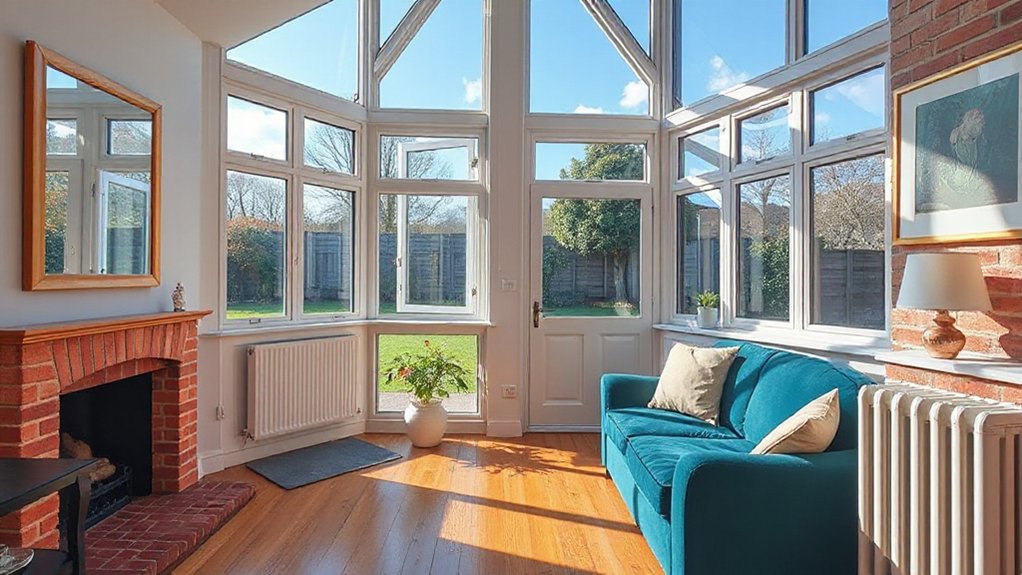
For 1970s UK homes, glazing choices hinge on balancing aesthetic that suits the era with performance that reduces heat loss, since many originals were single-glazed and poorly sealed.
You’ll aim for styles that preserve character while improving insulation, such as casement and top-hung designs that can incorporate slim frames and authentic sightlines.
Double glazing remains the simplest path to meaningful gains, delivering improved comfort and reduced drafts without erasing period cues.
When evaluating options, reference u value standards to quantify efficiency, targeting lower numerical values that reflect better insulation.
Consider spacer bars, argon fills, and low-emissivity coatings to minimize heat transfer further.
Durability matters; choose certified installers and sturdy hardware to ensure decades of reliable performance in UK climates.
Kitchen Refreshes That Preserve Mid-Century Charm
If you want to refresh a mid-century kitchen without sacrificing its period charm, focus on preserving key design cues while upgrading performance. You’ll target form and function without bold overhauls, prioritising clean lines, timber tones, and understated hardware that echo the era.
Start with cabinetry: replace interiors for durability while keeping doors with slim profiles and simple handles. Upgrade appliances to energy-efficient models that fit the original footprint, avoiding bulky fronts.
Floors and countertops should contrast with warm wood or muted laminates, preserving the tactile feel of vintage surfaces.
Introduce Vintage fixtures sparingly for authenticity, and use Retro color schemes as accents rather than the whole scheme.
Seams, trims, and joinery should remain crisp to maintain mid-century legibility and coherence.
Lighting Improvements: Ambience, Temperature, and Style
Lighting can transform a 1970s UK home by balancing ambience, temperature, and style in a way that respects the era while supporting modern comfort. You should map lighting to room function, using layered sources to control mood without overpowering architectural features.
Smart lighting enables precise schedules, scene presets, and remote adjustment, reducing energy waste while maintaining consistent ambience. For living spaces, choose warmer temps and dimmable fixtures to cultivate welcoming, conversational atmospheres.
For kitchens, favor cooler, crisp light that enhances task visibility. Monitor ambient temperature through lighting placement and heat output, avoiding glare near seating and windows.
Style-forward options—sconces, linear LEDs, and vintage-inspired diffusers—preserve mid-century character while enabling contemporary versatility. Integrate controls with wall switches and voice assistants for seamless, practical operation.
Efficient Plumbing and Heating Upgrades You Can Implement Now
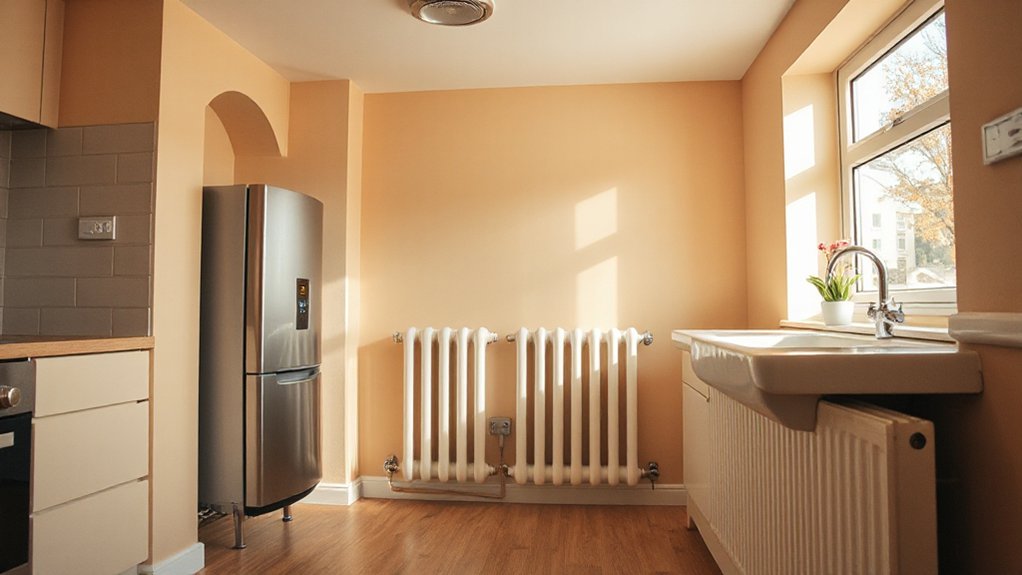
Efficient plumbing and heating upgrades you can implement now focus on reducing consumption while boosting comfort. You’ll assess system efficiency, prioritising targeted improvements over costly overhauls.
Begin with a high-efficiency boiler or heat pump if your current unit is aged, supported by modern controls. Install Smart thermostats to modulate heating schedules, aligning demand with occupancy and weather.
Leverage zoning to heat only on main living floors, lowering waste. Improve water efficiency with low-flow fixtures and aerators to cut hot-water demand without sacrificing experience.
Insulate pipes and review radiator performance, balancing heat distribution. Address Water conservation through pressure optimization and leak detection, preventing hidden losses.
Document energy savings, then iterate controls as seasons shift. This approach sustains comfort while minimising ongoing consumption.
Durable Finishes and Materials for UK Climates
Durable finishes and materials matter in UK climates because long-lasting performance reduces maintenance costs and temperature-driven energy waste. You assess performance by climate exposure, maintenance cycles, and material resilience, not just aesthetic appeal.
In practice, choose surfaces with low water absorption, high UV resistance, and proven stability under humidity swings. Eco-friendly finishes can meet durability goals without compromising indoor air quality, while vintage-inspired materials offer legible authenticity that still performs under modern standards.
For walls, look to breathable yet protective coatings that tolerate damp seasons. For floors, opt for engineered woods or stone alternatives with robust tolerance to traffic. Consider sealants, paints, and binders that resist cracking and fading.
Align choices with expected use, ventilation, and life-cycle costs to sustain comfort and value.
Planning and Collaboration: Working With Builders and Designers Who Understand 70S Bones
You’ll gauge how builder-designer synergy can honor 70s bones while guiding a coherent, modern plan.
Focusing on preserving structural integrity and a shared vision keeps decisions aligned and changes feasible.
The discussion should frame collaboration as a practical workflow, not just a stylistic preference, ensuring both parties respect the era’s framework.
Builder-Designer Synergy in 70s
Effective collaboration between builders and designers who grasp 1970s foundations is essential for authentic modernization. You’ll map goals with practical benchmarks, ensuring that architectural detailing informs every choice rather than being ornamental afterthoughts.
In this era, design decisions hinge on structural realities, so you collaborate to align aesthetics with what the bones can support. You assess renovation challenges early—timber framing, partition layouts, and service runs—so solutions feel seamless, not retrofitted.
Your dialogue centers on sourcing compatible materials, finishes, and fixtures that echo 70s character while meeting today’s standards. You document constraints, agree on phased milestones, and maintain clear ownership of decisions.
This synergy reduces revisions, preserves lineage, and yields a coherent, modern flow that respects the era’s spatial logic.
Preserving Structural Integrity
When planning with builders and designers who understand 70s bones, you start by mapping the building’s load paths, structural constraints, and potential timber weaknesses. Then, you align them with proposed updates.
You translate those findings into a prioritized, verifiable plan that preserves longitudinal stability while enabling modernisation. Focus on diagnosing hidden decay, joint slack, and load transfer at shear walls, beam-lap connections, and roof timbers.
Your decisions hinge on measurable, auditable criteria rather than guesswork. Emphasise structural compatibility with new materials, limiting invasive alterations.
Include foundation reinforcement where pushing loads or soft ground threatens performance, and guarantee roof framing remains coherent with updated insulation strategies.
Document decisions, tests, and contingencies to guide contractors and avoid future retrofits. You safeguard integrity while enabling efficient, durable upgrades.
Collaborative Vision Alignment
Collaborative vision alignment starts with a shared, evidence-based brief you and the project team can verify against in real time. You map objectives to 70s bones, ensuring every decision aligns with structural realities and aesthetic intent.
In practice, you establish clear roles, milestones, and decision gates so designers, builders, and trades stay synchronized. You prioritize transparent documentation, version control, and on-site check-ins to catch drift early.
You assess constraints—ceiling heights, column spans, and load paths—before proposing layout changes that affect interior decor and outdoor landscaping.
You foster a culture of constructive critique, using room-by-room benchmarks and 3D previews to test feasibility.
You track risks, costs, and timelines with precision, avoiding scope creep while maintaining room for thoughtful, authentic 70s revival.
Frequently Asked Questions
How Long Does a Targeted Modernisation Project Typically Take?
A targeted modernisation project typically takes several weeks to a few months, depending on scope and permits. You’ll want clear milestones. Interior lighting upgrades boost energy efficiency, minimize disruption, and keep costs predictable while you evaluate progress.
What Are the Upfront Costs vs. Long-Term Savings?
Upfront costs vary, but energy efficiency upgrades typically pay back over years through lower bills, while historic preservation may limit options yet protect value; long-term savings hinge on insulation, efficient glazing, and maintenance, balancing upfront spend with projected energy reductions.
Can I Modernise Without Removing Original 1970S Features?
You can modernise without removing original 1970s features, balancing function with preservation tips and 1970s architecture traits; preserve fireplaces and timber, integrate discrete tech, and document changes for future restoration, analyzing trade-offs and costs with precise, contextual reasoning.
Which Tradespeople Are Best for 70S UK Homes?
Dreamers, you’ll want skilled tradespeople: a conservation-friendly architect, structural engineer, reputable builders, plasterers, and electricians. Choose specialists in vintage charm preservation and structural integrity, who balance authenticity with modern safety, budgeting, and precise, contextual planning. Trust proven references.
How Do Planning Permissions Affect Cosmetic Updates?
You’ll find planning permissions can constrain cosmetic updates, as historic preservation and design regulations guide alterations. You’ll need to assess listed status, impact on exterior appearance, and potential exemptions, then document justifications to guarantee compliant, context-aware modernization.
Conclusion
You’ll finish with a home that nods to the 70s while outperforming today’s standards. Prioritise airtightness, efficient glazing, and solid insulation, then layer in reversible updates like solar and smart controls. Work closely with builders who respect proportion, structure, and period details, ensuring every upgrade adds value without erasing character. The result is a durable, energy-smart UK home that feels authentic, cohesive, and timeless—like a well-preserved classic that’s quietly ahead of its time. A single thread, beautifully reinforced.